Artwork
A painting on a harpsichord lid with a party by a river
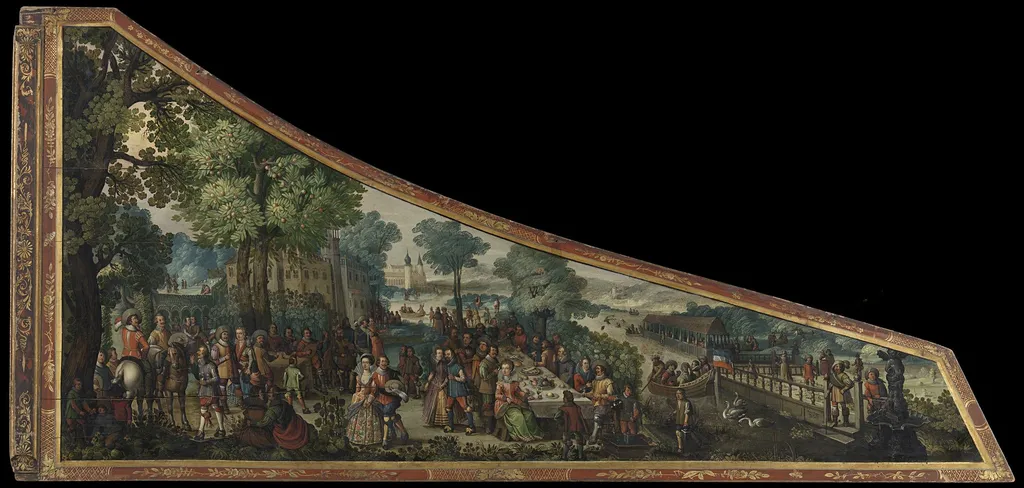
A painting on a harpsichord lid with a party by a river is an oil painting by the Dutch Golden Age artist Philip Schey. It dates from 1626 and is held in the collection of the Rijksmuseum.
About this work
Technique & Style
The composition incorporates architectural and natural elements, including a house and trees, within the landscape setting.
Created in 1626 by Philip Schey, this work is executed in oil paint on a wooden panel. The support functions specifically as the lid of a harpsichord, measuring 79.5 cm in height and 170 cm in width. Stylistically, the piece is classified as a genre scene depicting a social gathering situated beside a river.
The composition incorporates architectural and natural elements, including a house and trees, within the landscape setting. Produced in the Low Countries, the painting combines decorative utility with narrative imagery typical of the period.
History & Provenance
The painting was created in 1626 by Philip Schey, depicting a party by a river on a harpsichord lid. It was made in the Low Countries and painted in oil on panel, measuring 79.5 cm in height and 170 cm in width. The work entered the collection of the Rijksmuseum, Nederlandsch Museum voor Geschiedenis en Kunst, where it remains on display.
The piece was commissioned as a decorative element for a harpsichord lid, reflecting the artistic trends of the Dutch Golden Age. Its creation history is documented through stylistic analysis and archival records pointing to Schey's active period in the 1620s. The dating of 1626 is confirmed by the inception date recorded in the source material.
Overview
Created in 1626 by Philip Schey, this oil painting occupies the lid of a harpsichord and presents a bustling riverside gathering. The composition combines a festive crowd, a modest building, and a prominent tree, all rendered in a palette of muted greens and earthy browns. The work is part of the Rijksmuseum’s collection and exemplifies the genre scenes popular in early‑17th‑century Dutch art.
Subject & Meaning
The scene captures a convivial outdoor party beside a river, where elegantly dressed figures mingle around a banquet table laden with food and drink. Some participants converse, others stroll or ride horses, while a dog rests near the spread and a small boat drifts on the water. The inclusion of a castle‑like structure and a distant bridge suggests a leisurely leisure setting rather than a specific narrative.
Context
Genre paintings of this period often depicted everyday celebrations, reflecting the prosperity and social customs of the Dutch Republic. Schey’s choice to place the scene on a musical instrument underscores the era’s interdisciplinary appreciation of art, music, and domestic leisure, linking auditory and visual enjoyment in a single object.
Artist & collection
Artist
Philip Schey painted playful scenes on harpsichord lids, turning the inside of the instrument into a tiny party.

 Deksel van een klavecimbel
 Death of Euridice
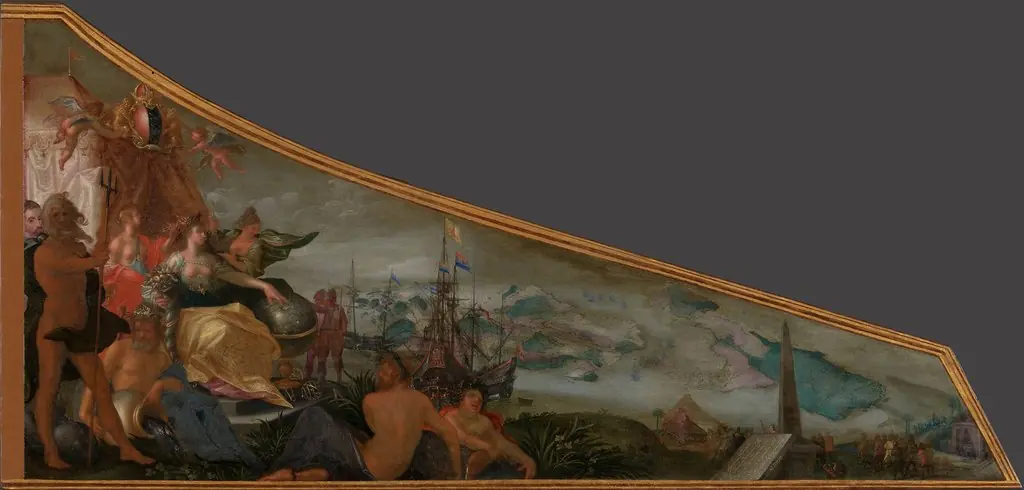 Harpsichord Lid showing an Allegory of Amsterdam as the Center of World Trade
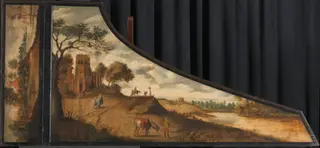 Deksel van een klavecimbel
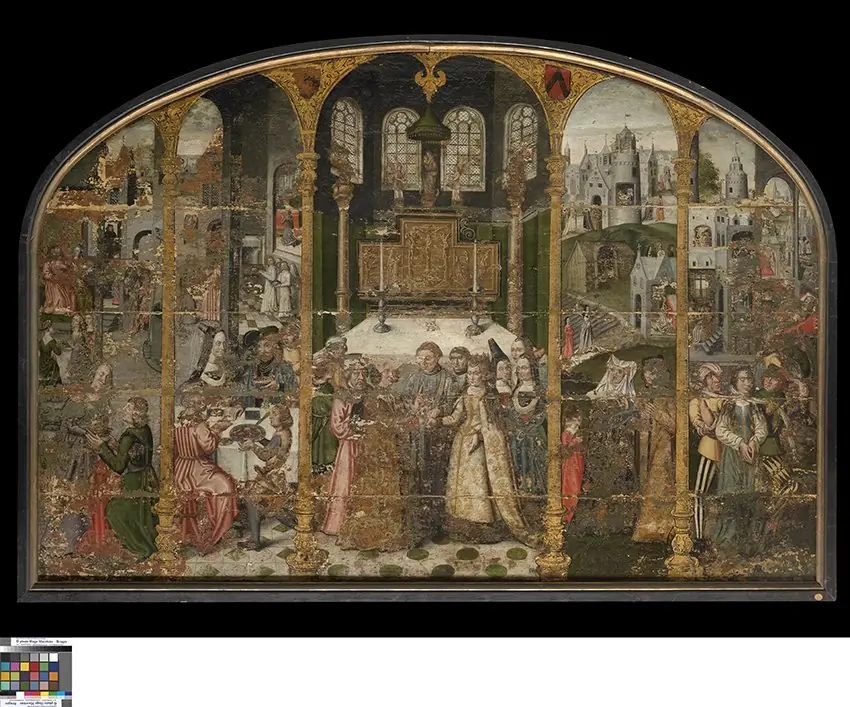 Legende van de heilige Godelieve
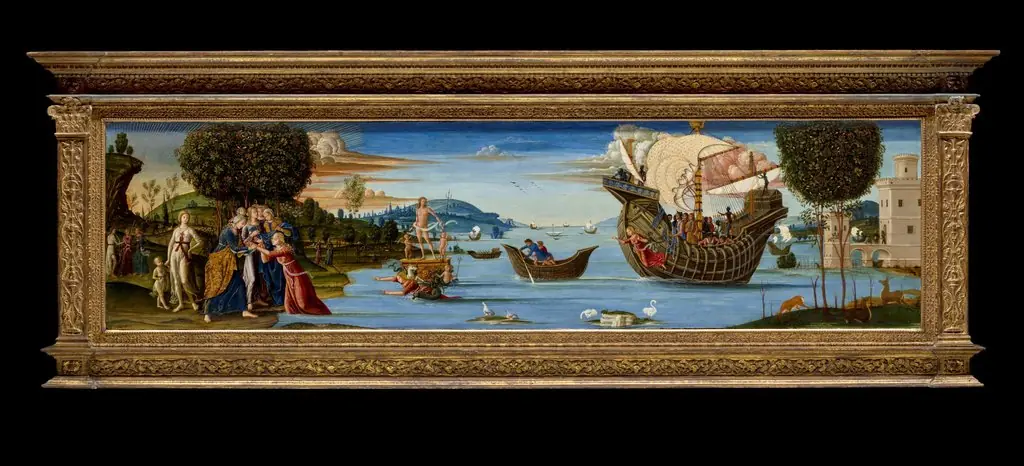 The Beloved of Enalus Sacrificed to Poseidon and Spared
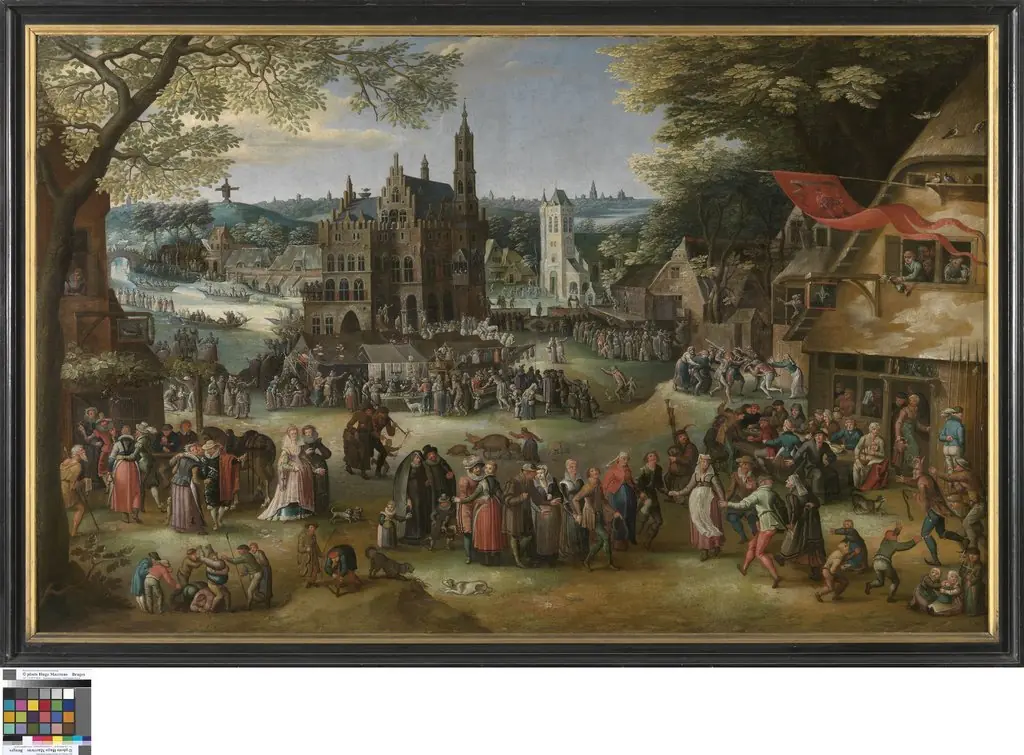 Dorpskermis
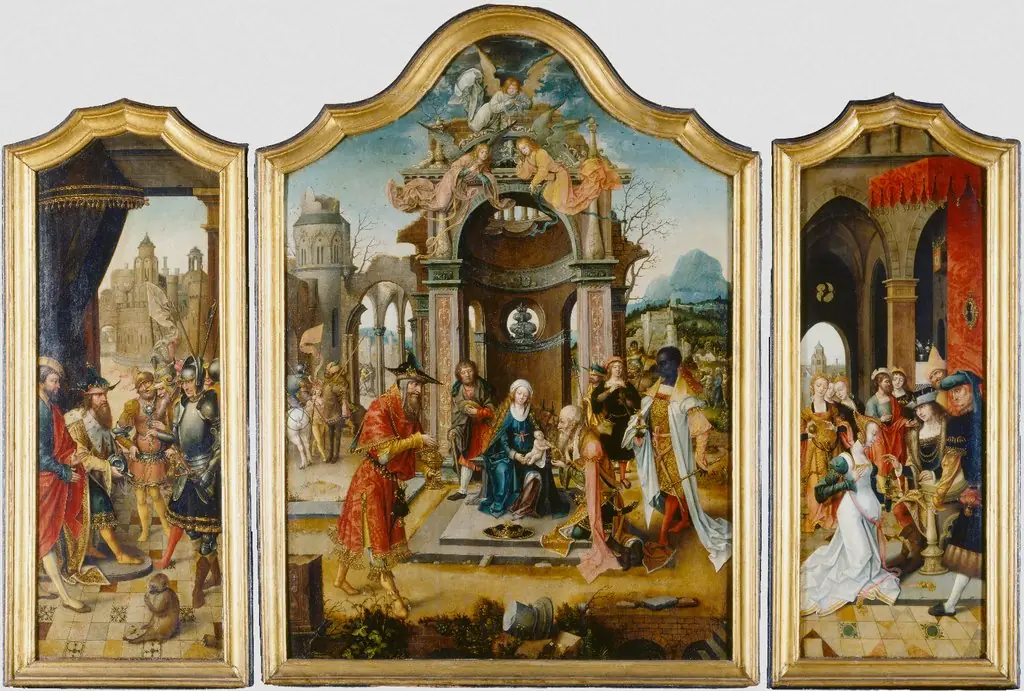 Triptych of the Adoration of the Magi
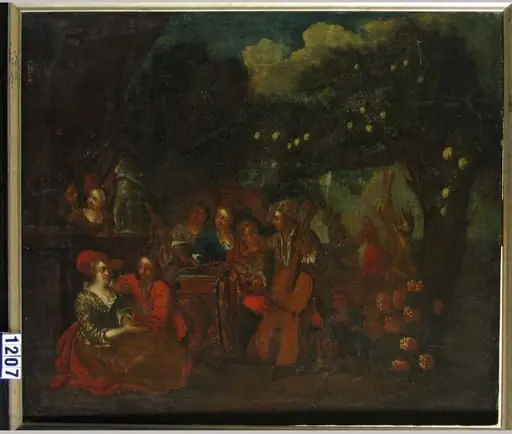 Societate cu vânat (pandant: Societate veselă cu vânat)
 Triptych with Adoration of the Magi (center and inner wings), Saint Antony Abbot (left, outer wing) and Saint Adrian (right, outer wing)
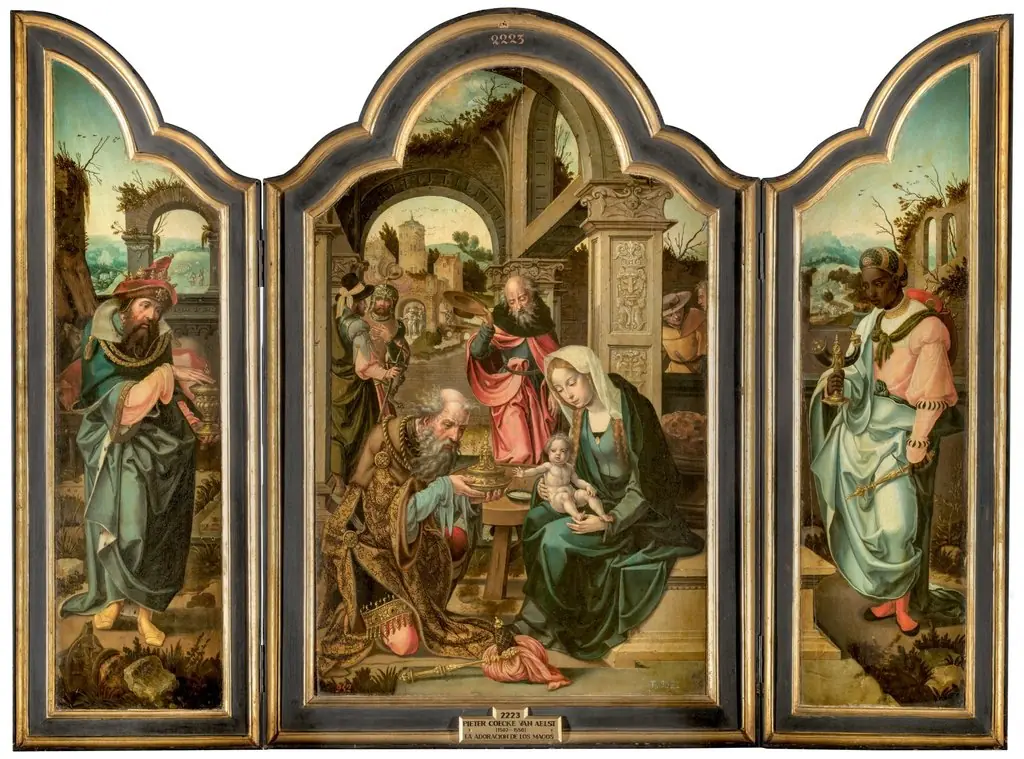 The Adoration of the Magi
- A painting on a harpsichord lid with a hilly landscape and travelers