Artwork
The Husbandman
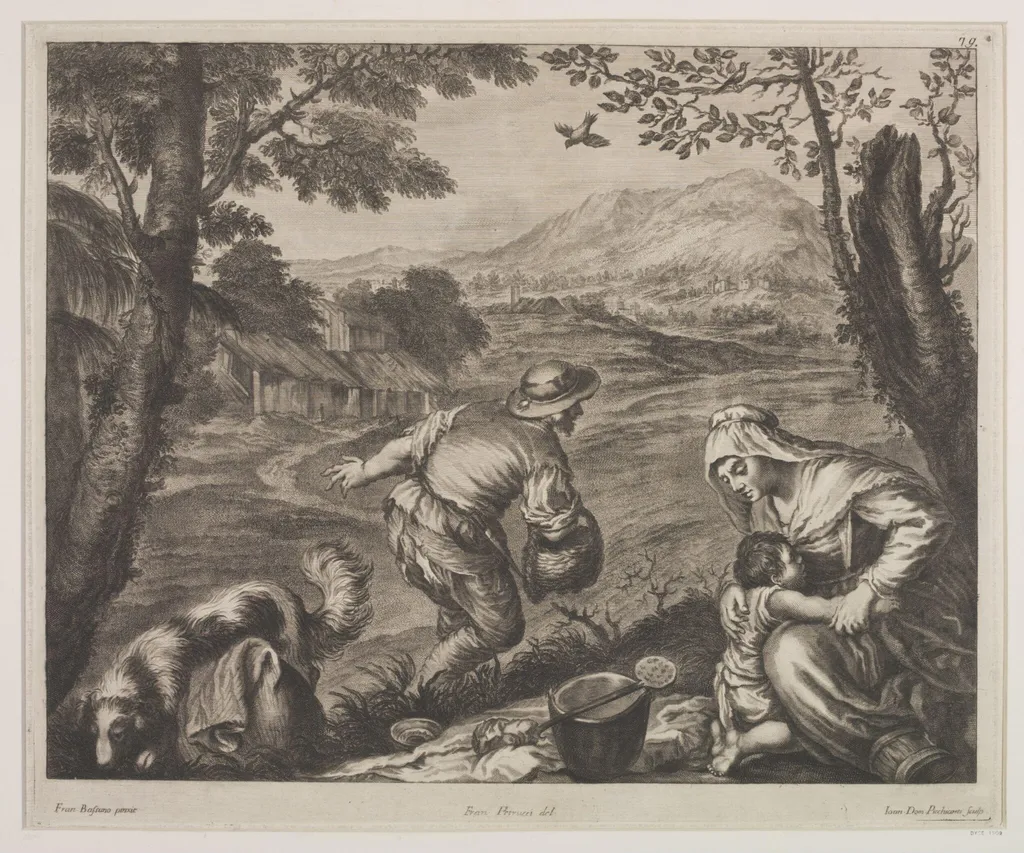
The Husbandman is a print by Giovanni Domenico Picchianti. It dates from 1750 and is held in the collection of the Victoria and Albert Museum.
About this work
Overview
The work is an 18th‑century copper engraving on paper, produced in 1750 by Giovanni Domenico Picchianti. It reproduces a composition originally drawn by Francesco Bassano and long associated with a Titian attribution in the Grand Duke of Tuscany’s Uffizi collection. The image presents a tranquil rural scene centered on a family engaged in agricultural activity.
Subject & Meaning
At the foreground, a woman cradles an infant while a man stands nearby, both dressed in modest, plain garments. Behind them, a village nestles among trees and a distant mountain range, suggesting a self‑sufficient countryside. The portrayal emphasizes everyday labor and familial bonds, echoing the pastoral themes prevalent in 16th‑century Venetian art.
Technique & Style
Picchianti’s engraving translates Bassano’s composition into a tonal range of fine lines and cross‑hatching, creating depth through gradations of light and shadow. The sky is rendered in soft blue tones, while foliage and distant hills appear in muted greens and browns, achieving a sense of atmospheric perspective within the limits of the print medium.
History & Provenance
The image was once catalogued as a work by Titian, reflecting the historical practice of attributing pastoral subjects to the master. It later entered the Uffizi’s collection under the Grand Duke of Tuscany, where it was documented as a reproduction after Bassano’s design, illustrating the 18th‑century interest in disseminating earlier Venetian compositions.
Context
Rural genre scenes were a staple of Venetian painting in the 1500s, often used to convey moral or idyllic notions of country life. By the mid‑1700s, such images were frequently reproduced in prints to satisfy a market for affordable copies of celebrated compositions, allowing broader audiences to engage with the visual language of the earlier period.
Own this work as a print
Artist & collection
Artist
Giovanni Domenico Picchianti made prints in late 17th to mid-18th-century Italy. His prints show everyday life and sacred scenes: try The Husbandman, a quiet farming scene in fine lines, or Virgin and Child, a gentle…

 Robbers on Horseback
 The Marriage of St. Catherine
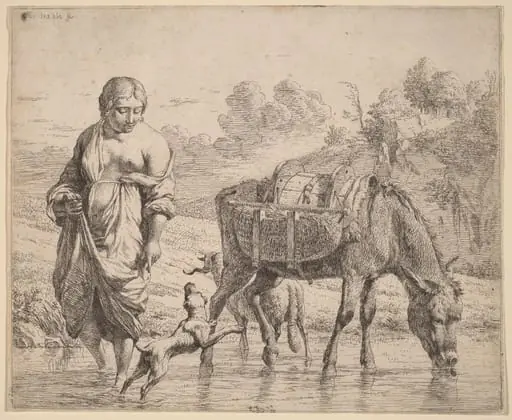 Woman Crossing a Stream
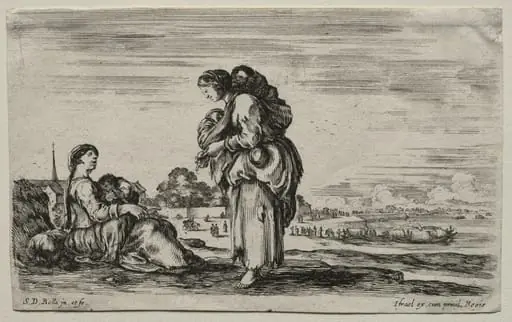 Various Figures and Landscapes: Two Mothers Chatting Together
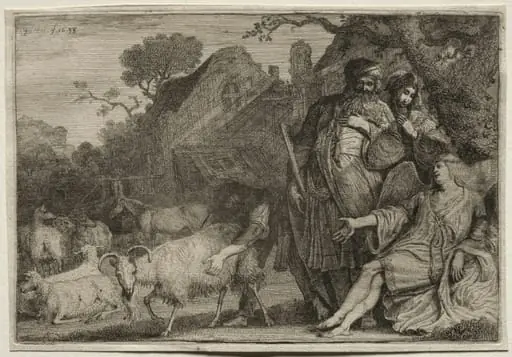 An Angel Foretells the Birth of Abraham's Son
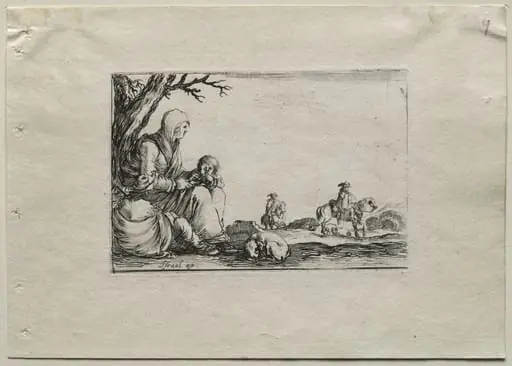 Caprices: Seated Beggar Woman with Two Children
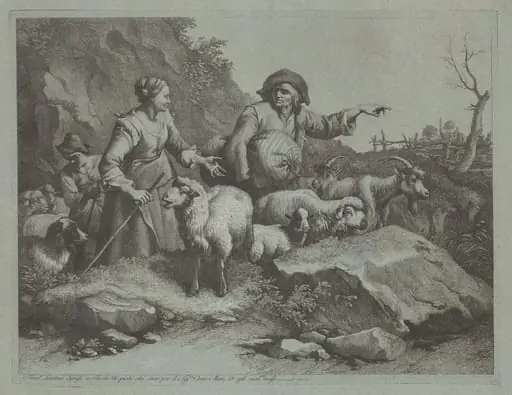 Peasant Man with a Sack and Two Shepherdesses
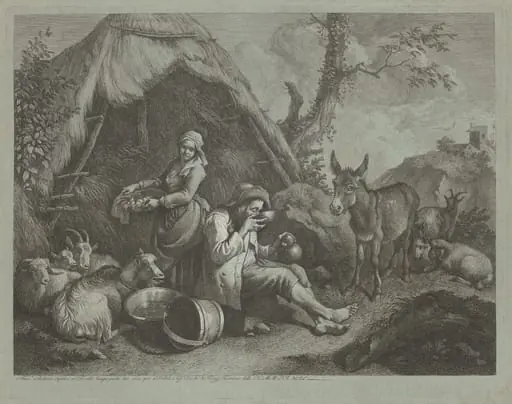 Seated Old Man and Woman with a Basket of Eggs
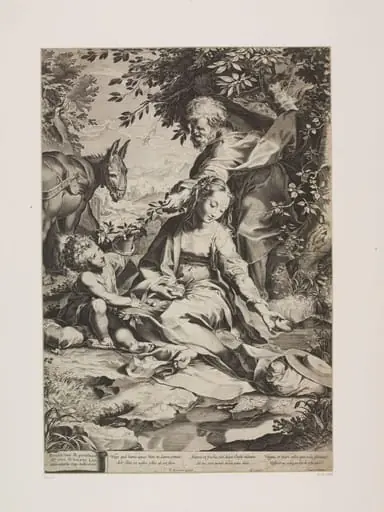 Repose in Egypt
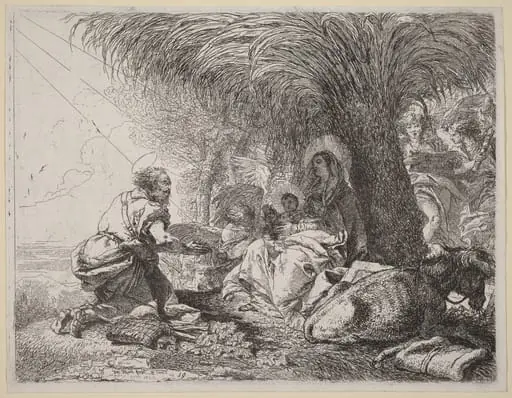 The Rest on the Flight with Joseph in Adoration
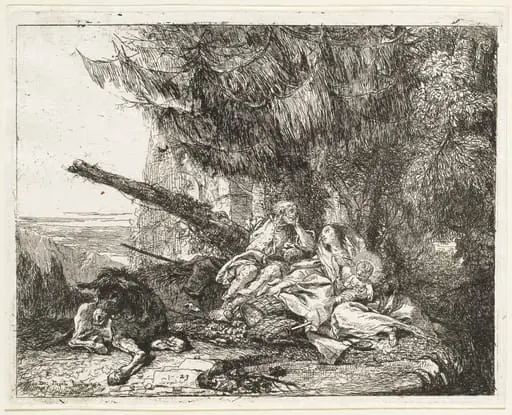 The Rest on the Flight, with Holy Family under a Tree
- Moses Striking the Rock