Artwork
Classical Landscape
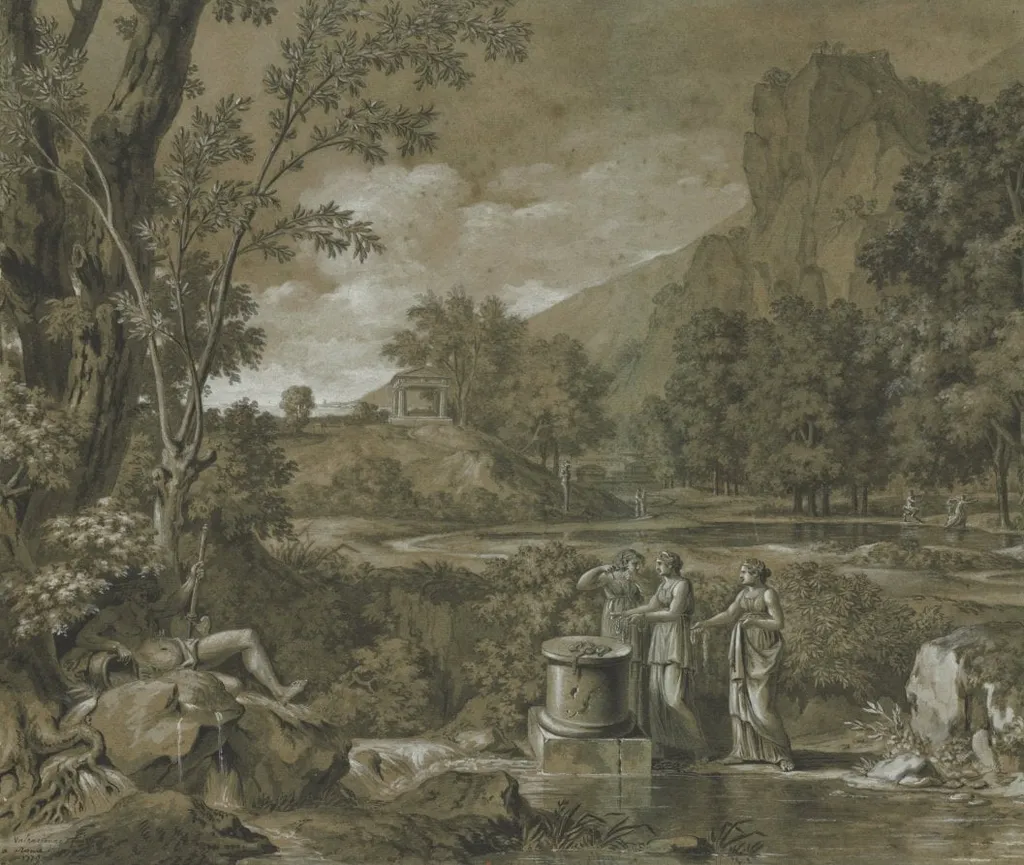
Classical Landscape is a drawing by the Romanticist artist Pierre Henri de Valenciennes. It dates from 1779 and is held in the collection of the Cleveland Museum of Art.
- Accession no.
- 1980.91
- Credit line
- Purchase from the J. H. Wade Fund
About this work
Overview
Pierre‑Henri de Valenciennes, a prominent French landscape artist of the late 1700s, produced this drawing that combines a tranquil hillside setting with a classical narrative. The composition features olive trees, a weathered stone bridge, and a solitary figure in a red coat moving toward a distant village, while three maidens are depicted cutting their hair and presenting it to a river deity.
Subject & Meaning
The scene merges everyday rural life with mythological ritual: the three young women, engaged in the act of offering their hair, evoke ancient sacrificial customs, suggesting a harmonious relationship between humanity and the natural world. Their gesture toward the river god underscores the theme of reverence for water as a life‑giving force.
Technique & Style
Valenciennes employs a softened, atmospheric approach reminiscent of sfumato, allowing edges to dissolve into one another and giving the landscape a dreamlike quality. The subtle gradations of tone guide the viewer’s eye, while the red coat of the lone traveler provides a focal point that punctuates the otherwise muted palette.
History & Provenance
The drawing reflects Valenciennes’ theoretical writings, particularly his treatise Elements of Practical Perspective, in which he advocated for “seeing nature as it could be.” By rearranging observed elements into an idealized composition, the work exemplifies his belief that imagination should augment direct observation.
Context
Created during a period when French artists were increasingly interested in classical antiquity and the moralizing potential of landscape, the piece aligns with contemporary debates about the role of the artist as both observer and creator. Valenciennes’ emphasis on imaginative reconstruction positioned him at the forefront of this discourse.
Artist & collection

Artist
Pierre-Henri de Valenciennes (6 December 1750 – 16 February 1819) was a French painter. A neoclassicist artist, he was influential in elevating the status of En plein air (open-air painting).

 Italienisch-klassische Landschaft
 I was also in Arcadia (Kai ego en Arkadia)
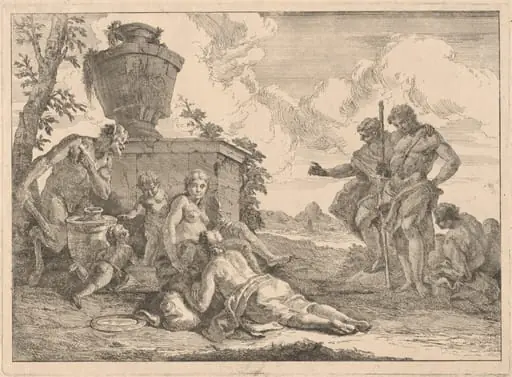 A Satyr with a Staff and Seven Other Figures
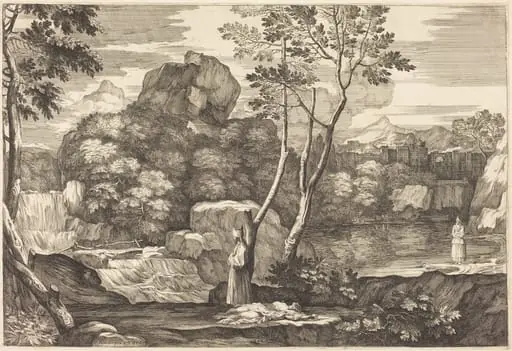 The Levite and the Priest Pass the Man Without Helping Him
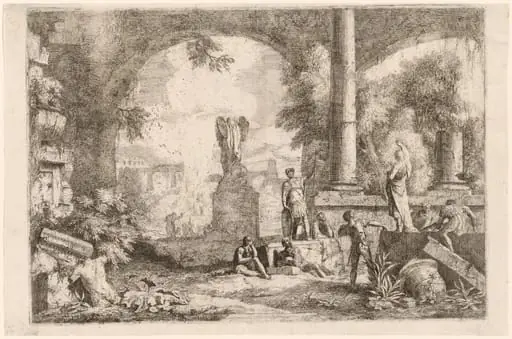 Capriccio of Antique Ruins with Men Gazing at a Classical Orator
 Et landskab med bjerge, en flod og et stort monument
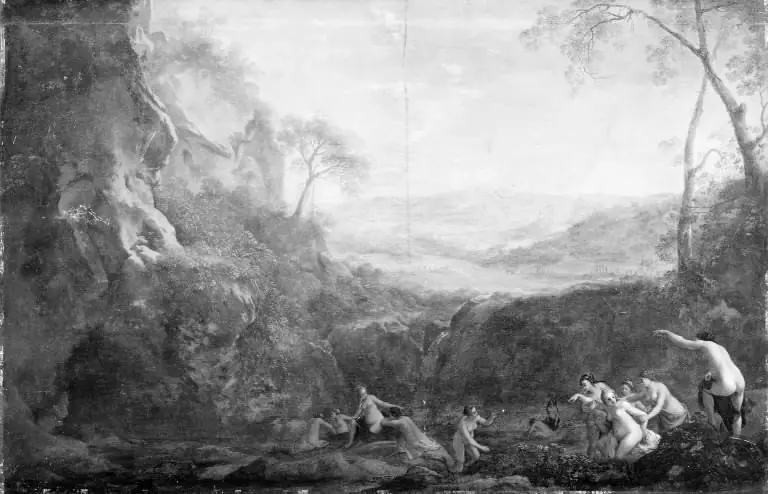 Landscape with Diana and Nymphs
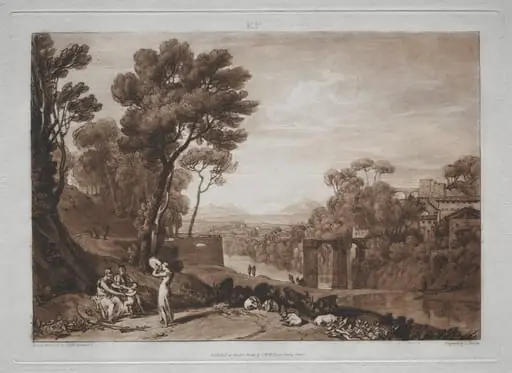 Liber Studiorum: The Woman and the Tambourine
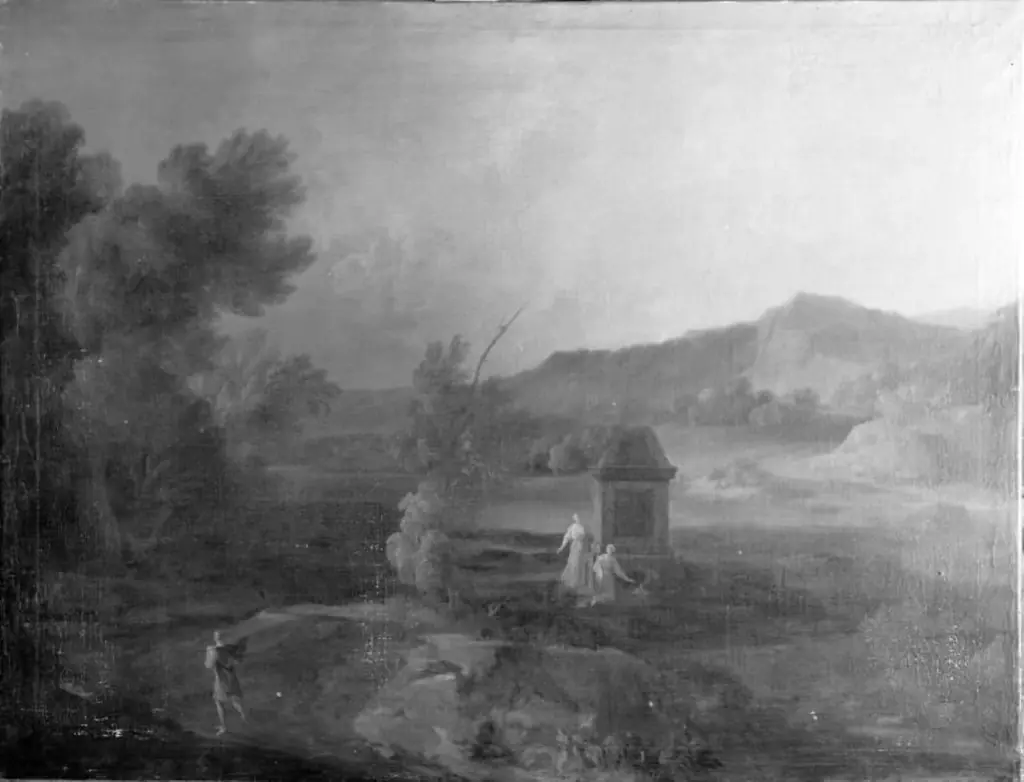 Et landskab med bjerge, en flod og et stort monument
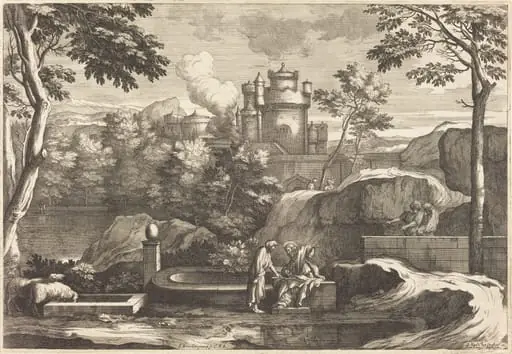 Jesus and the Samaritan