Artwork
Composition in Color B
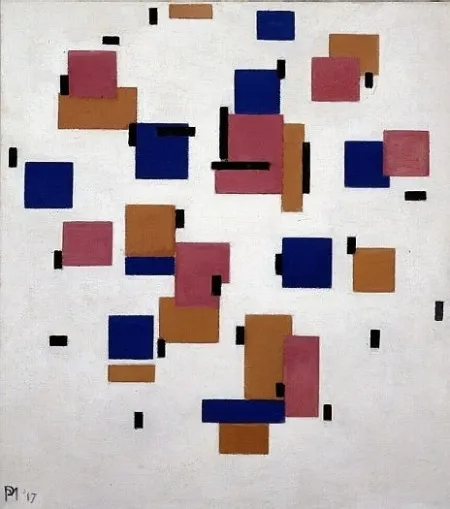
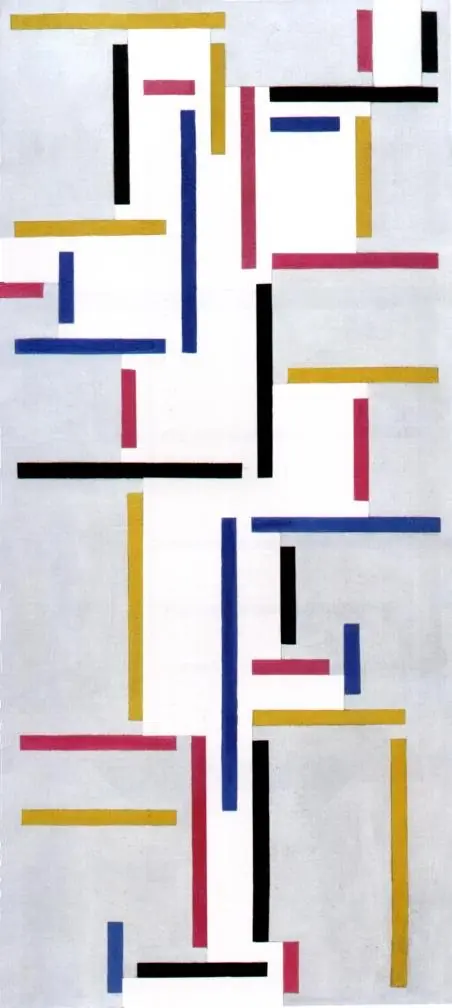
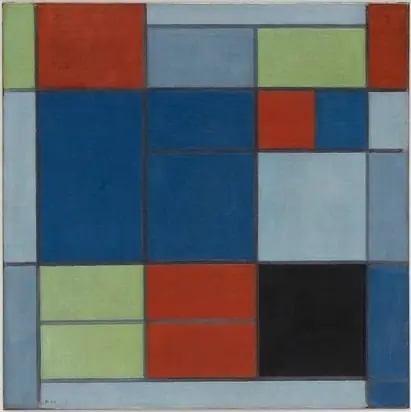
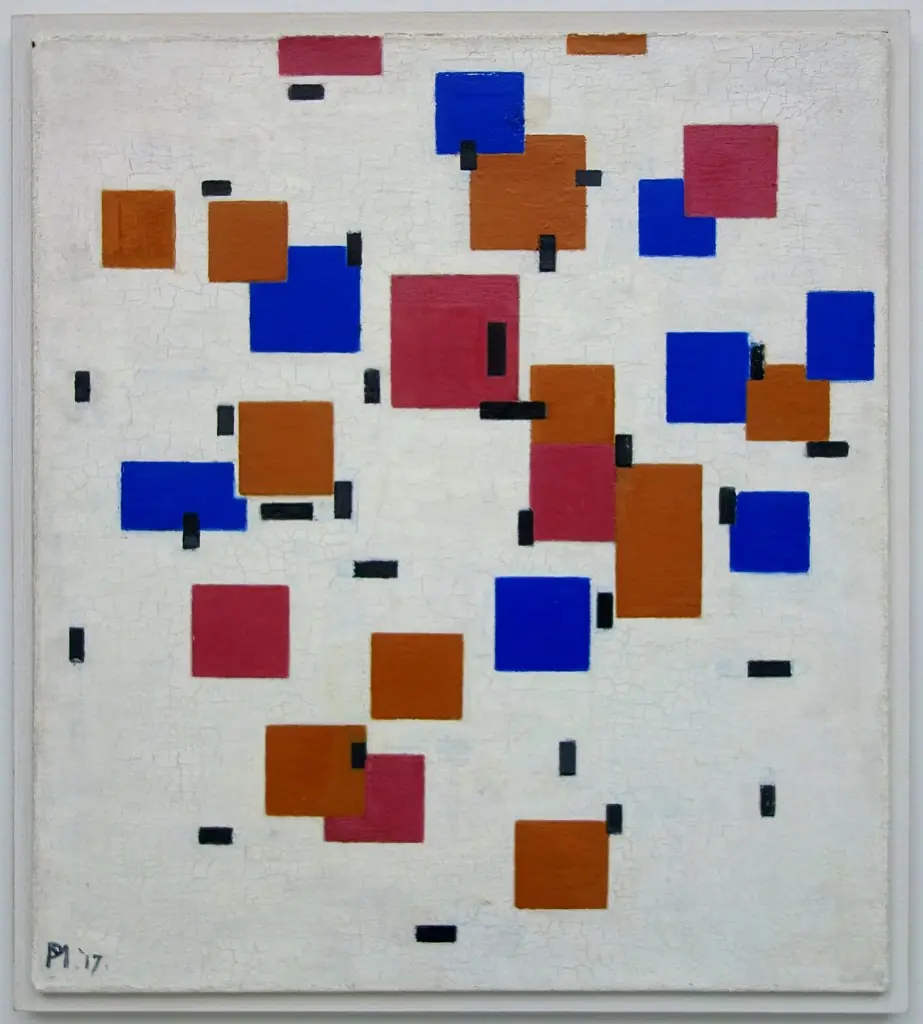
Composition in Color B is an oil painting by the De Stijl artist Piet Mondrian. It dates from 1917 and is held in the collection of the Kröller-Müller Museum.
About this work
Overview
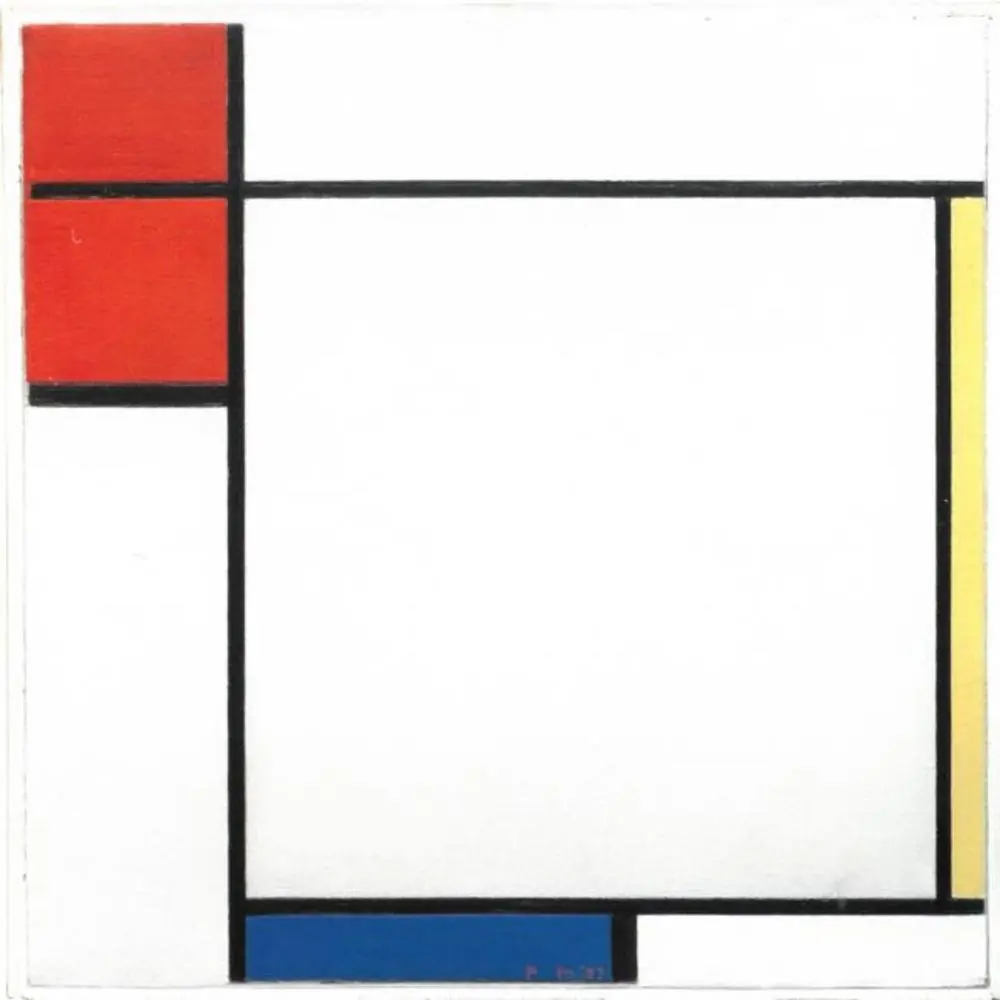
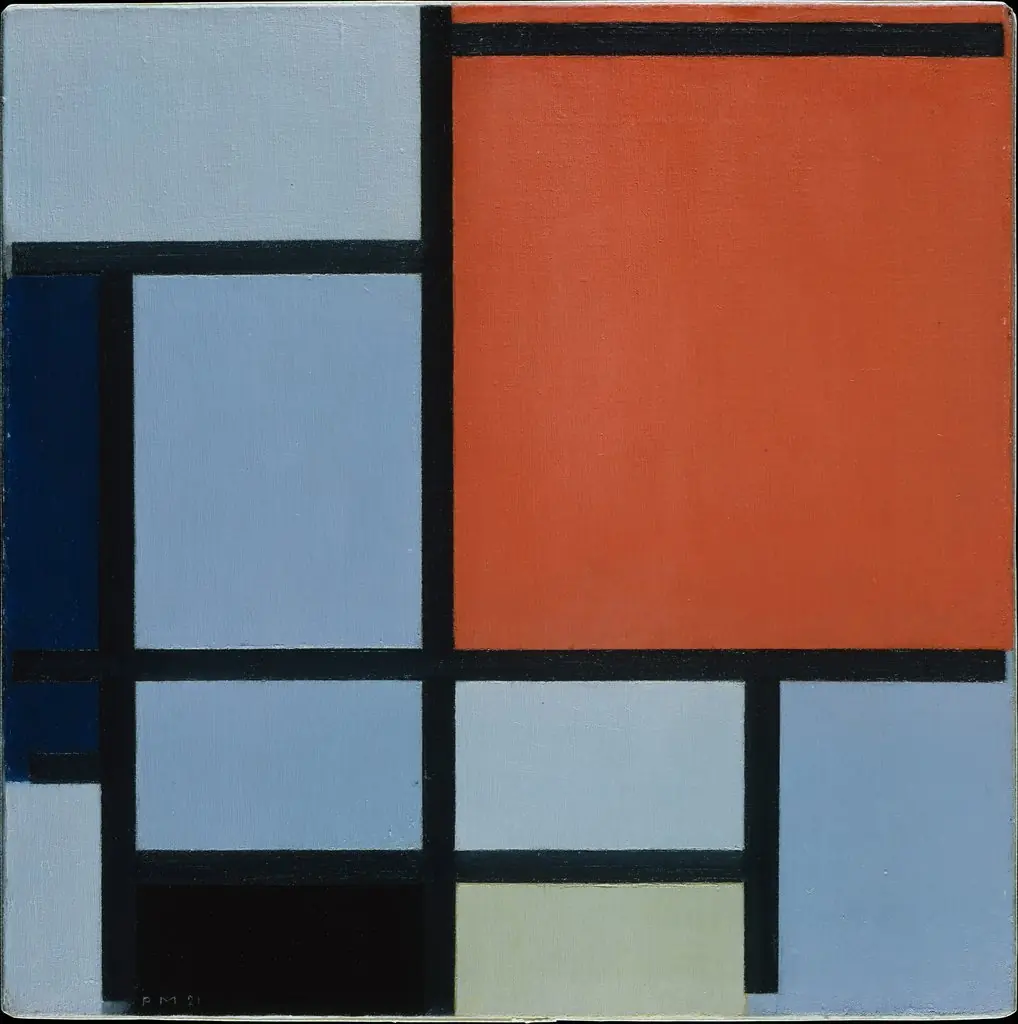
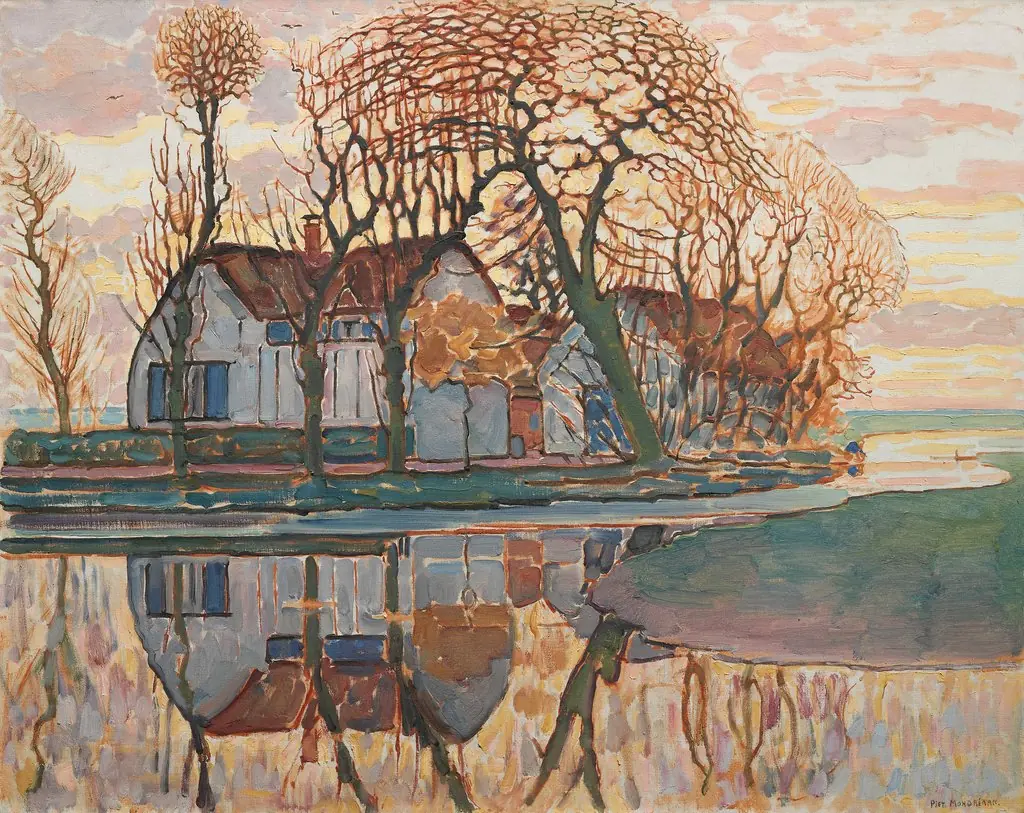
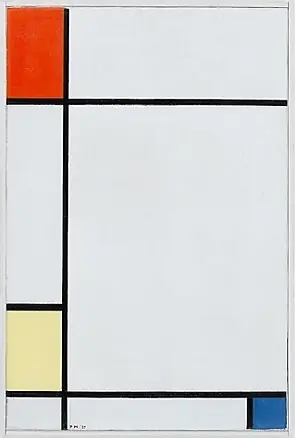
Piet Mondrian painted Composition in Color B in 1917 using oil on canvas. This work emerged during his transition from representational art to pure abstraction, aligning with the ideals of the Dutch De Stijl movement. It reflects his ongoing effort to distill visual experience into essential forms and colors, moving away from naturalistic depiction toward a structured, non-objective language.
Subject & Meaning
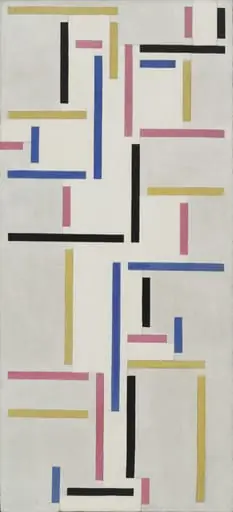
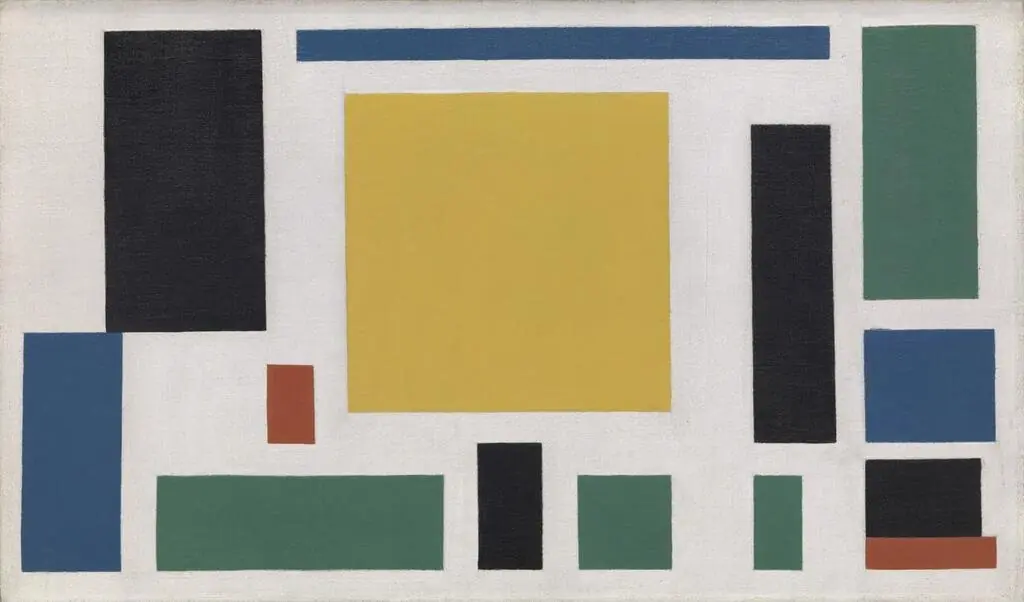
The painting does not depict a recognizable scene but instead proposes an abstract equilibrium through color and form. Rectangles in pink, blue, brown, and other hues are arranged without symmetry, creating a sense of rhythmic tension. Mondrian sought to express universal harmony through these relationships, viewing them as visual analogues to underlying cosmic order.
Technique & Style
Mondrian applied oil paint in flat, unmodulated planes, avoiding brushstroke expression or texture. The rectangles vary in size and opacity, some overlapping to suggest spatial depth without perspective. Colors are deliberately chosen from his limited palette, primary hues alongside neutrals, emphasizing contrast and balance over decorative effect.
History & Provenance
Created in 1917, the painting entered the collection of the Kröller-Müller Museum in the Netherlands, where it remains today. It was produced during a formative period for De Stijl, shortly after Mondrian co-founded the movement. The work was likely exhibited in early De Stijl circles and acquired by the museum through its focus on modernist pioneers.
Context
In 1917, Europe was in the midst of war, and many artists sought new systems of order. Mondrian, influenced by Theosophy and contemporary philosophy, believed abstraction could reveal spiritual truths. Composition in Color B reflects this search, rejecting narrative and emotion in favor of geometric purity as a response to societal fragmentation.
Legacy
This painting exemplifies Mondrian’s early move toward the strict grids of his later years. While less rigid than his mature works, it demonstrates the foundational principles that would influence modern design, architecture, and minimalist art. Its presence in the Kröller-Müller Museum underscores its role in documenting the evolution of 20th-century abstraction.
Artist & collection

Artist
Pieter Cornelis Mondriaan (Dutch:; 7 March 1872 – 1 February 1944), known after 1911 as Piet Mondrian (, US also; Dutch: ), was a Dutch painter and art theoretician, who is regarded as one of the greatest artists of the 20th century.