Artwork
Still-life
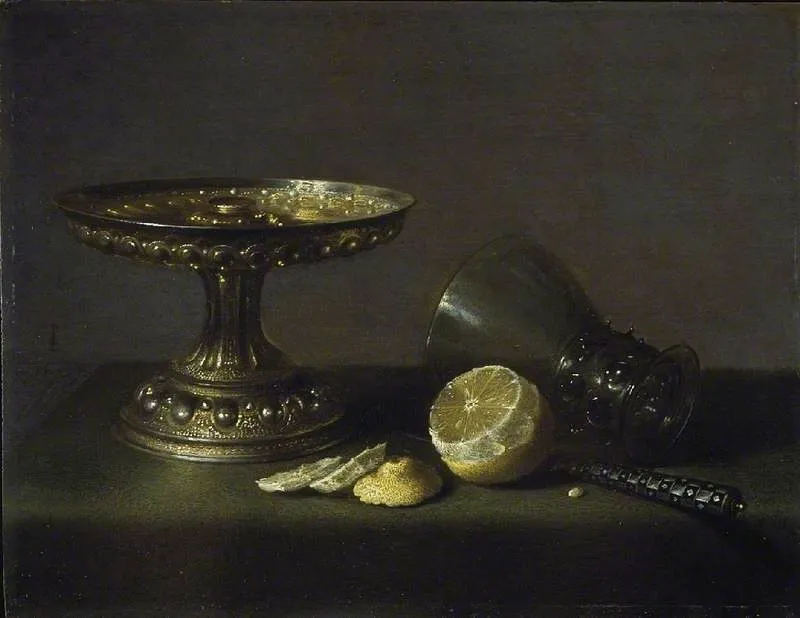
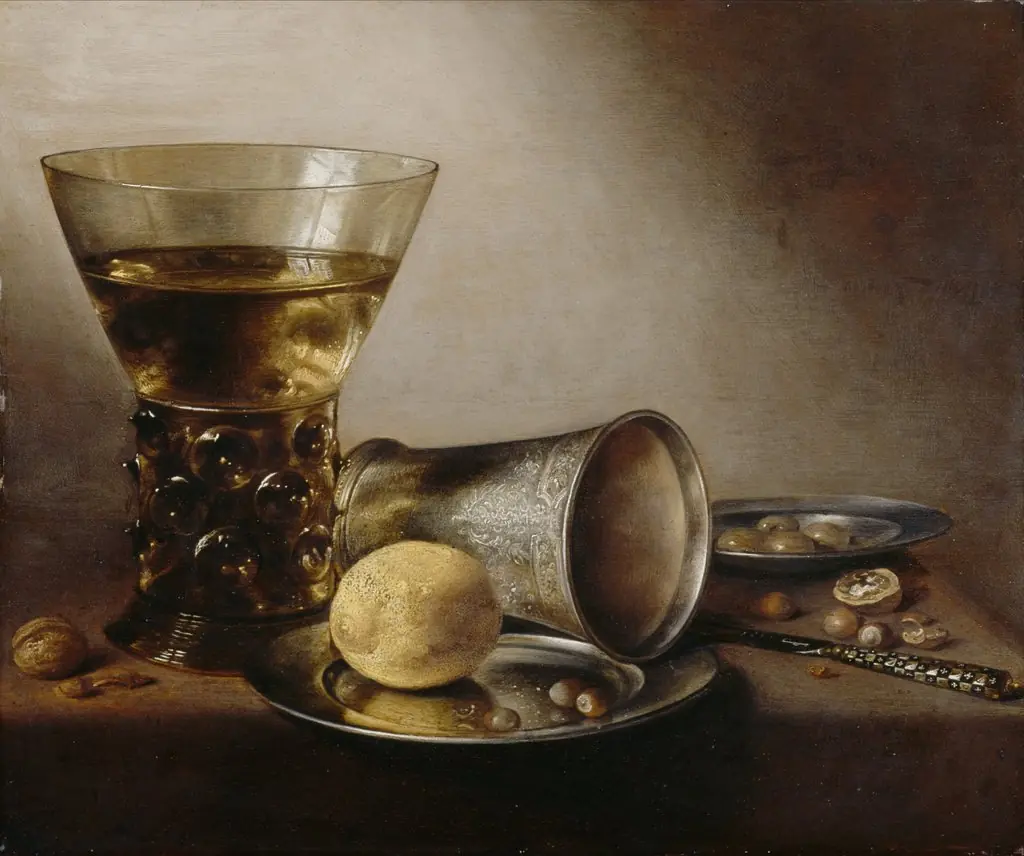
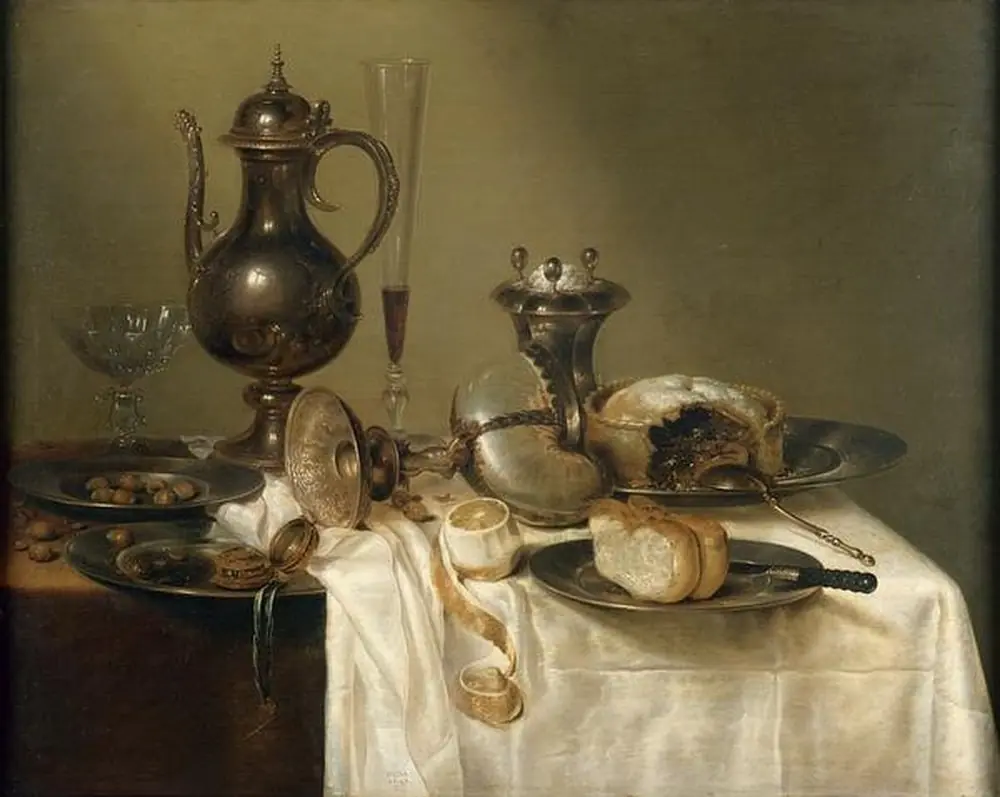
Still-life is an oil painting by the Dutch Golden Age artist Pieter Claesz. It dates from 1630 and is held in the collection of the Fitzwilliam Museum.
About this work
Technique & Style
Created in 1630, this still life is executed in oil paint on a panel support.
Created in 1630, this still life is executed in oil paint on a panel support. The work measures 25.1 cm in height and 32.7 cm in width. The medium and support combination is characteristic of the period's Dutch still-life tradition, allowing for precise rendering of textures and reflective surfaces.
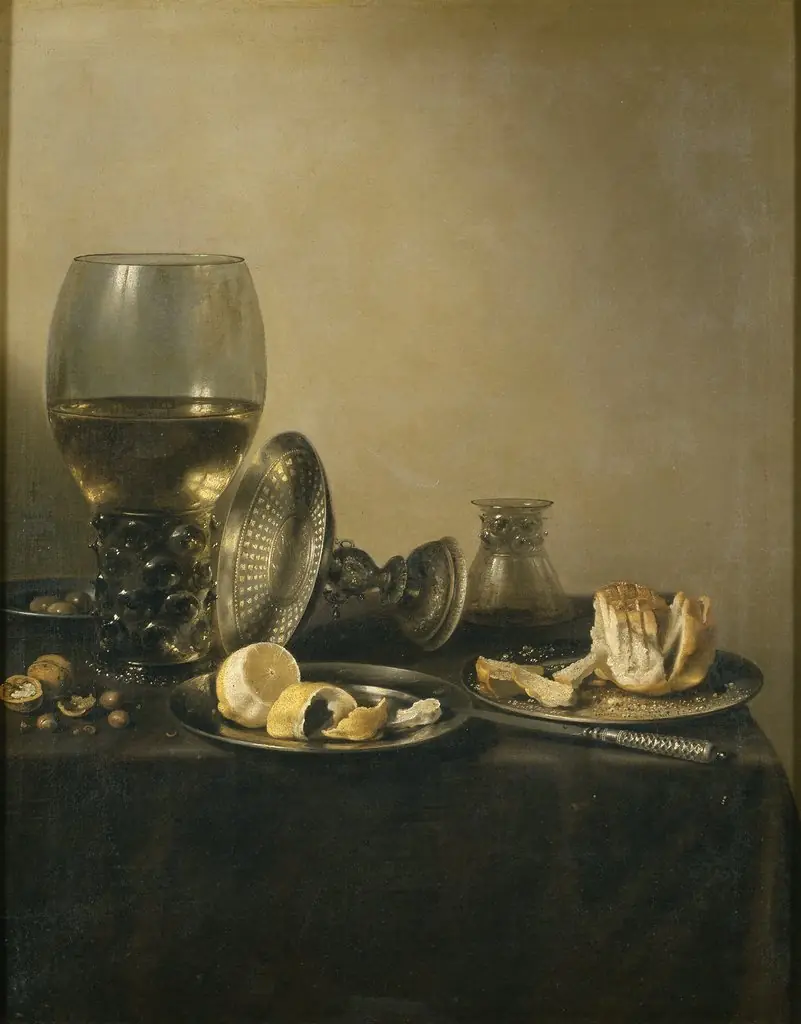
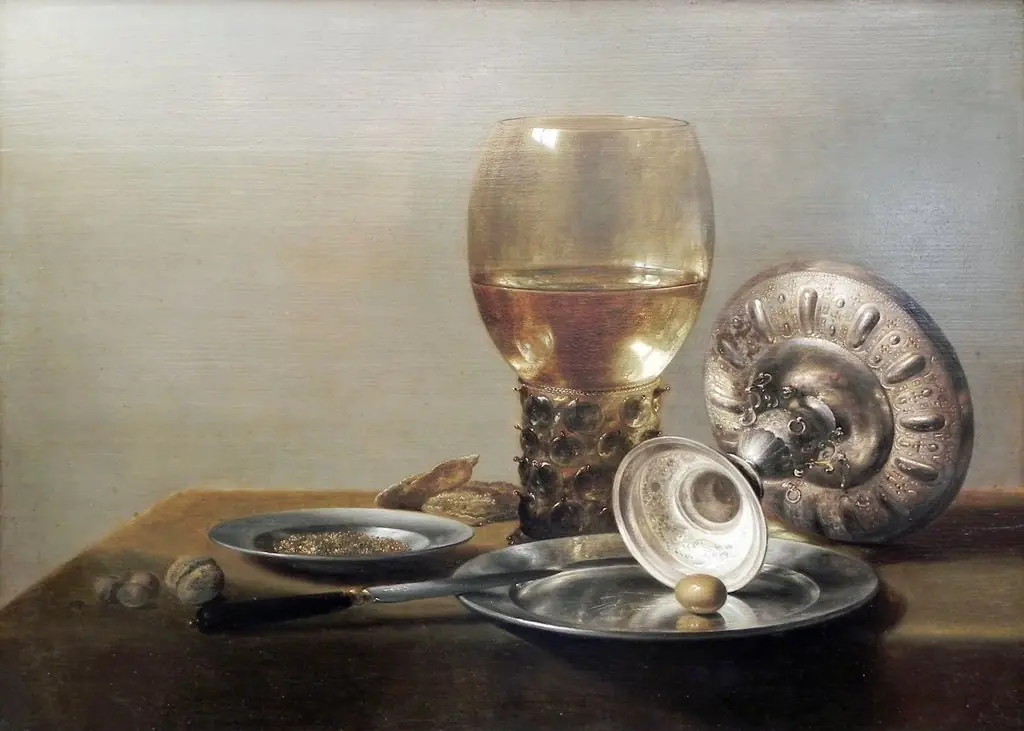
The painting depicts specific objects including a tazza, a berkemeyer, a lemon, and a knife, arranged to demonstrate the artist's handling of light and form within a compact, horizontal format.
History & Provenance
The painting was created in 1630 by Pieter Claesz. It measures 25.1 cm in height and 32.7 cm in width and is executed in oil paint on panel. The work entered the collection of the Fitzwilliam Museum through a bequest from Daniel Mesman in 1834.
Its provenance traces back to the artist himself before passing into the possession of Daniel Mesman, who later donated it to the museum. The painting remains part of the museum's permanent collection. The work is catalogued under accession number 294.
The painting is held at the Fitzwilliam Museum with inventory number 294. It was acquired by bequest from Daniel Mesman in 1834. The work has been exhibited at the Fitzwilliam Museum in the exhibition "Dutch and Flemish Paintings from the 17th Century" and at the Kunsthistorisches Museum in the exhibition "Dutch Still Life in the 17th Century".
Legacy
Pieter Claesz's 1630 still-life influenced later Dutch banquet scenes through its crisp lighting and modest compositional balance, a legacy documented in museum records and scholarly surveys of Dutch Golden Age painting. The work remains part of the Fitzwilliam Museum's collection, acquired by bequest in 1834, and is frequently cited in studies of early banquet still-life development. Its legacy is anchored in provenance details from Daniel Mesman's bequest and the museum's acquisition history, with its formal dimensions of 25.1 x 32.7 cm preserving the original panel format.
The painting's attribution to Claesz and its stylistic elements, such as the depiction of a tazza, berkemeyer, lemon, and knife, have shaped later interpretations of banquet scenes, particularly in the works of Pieter Claesz and his followers. The legacy is further reinforced by its presence in the Fitzwilliam Museum's collection, where it is cataloged under accession number 294 and attributed to Daniel Mesman's bequest in 1834.
Overview
Pieter Claesz’s oil painting, dated around 1630, presents a modest arrangement of everyday objects on a darkened surface. The composition is dominated by a reflective metal cup on an ornamental stand, a half‑peeled lemon, a cluster of sugar cubes, and a knife with a dark‑toned handle, all set against an almost black background that heightens their visual contrast.
Subject & Meaning
The work exemplifies the 17th‑century Dutch still‑life tradition, focusing on the transient nature of material goods. By juxtaposing perishable fruit, a utilitarian knife, and sweet sugar, Claesz invites contemplation of abundance, consumption, and the fleeting pleasures of the senses, themes common in the moralizing genre of vanitas imagery.
Artist & collection

- Still Life
 Still Life with Oysters
 Porringer and Nautilus Cup
 Still Life with Roemer
 Still Life of Kitchen Utensils with Fruit and Game
 Still Life with Fruit
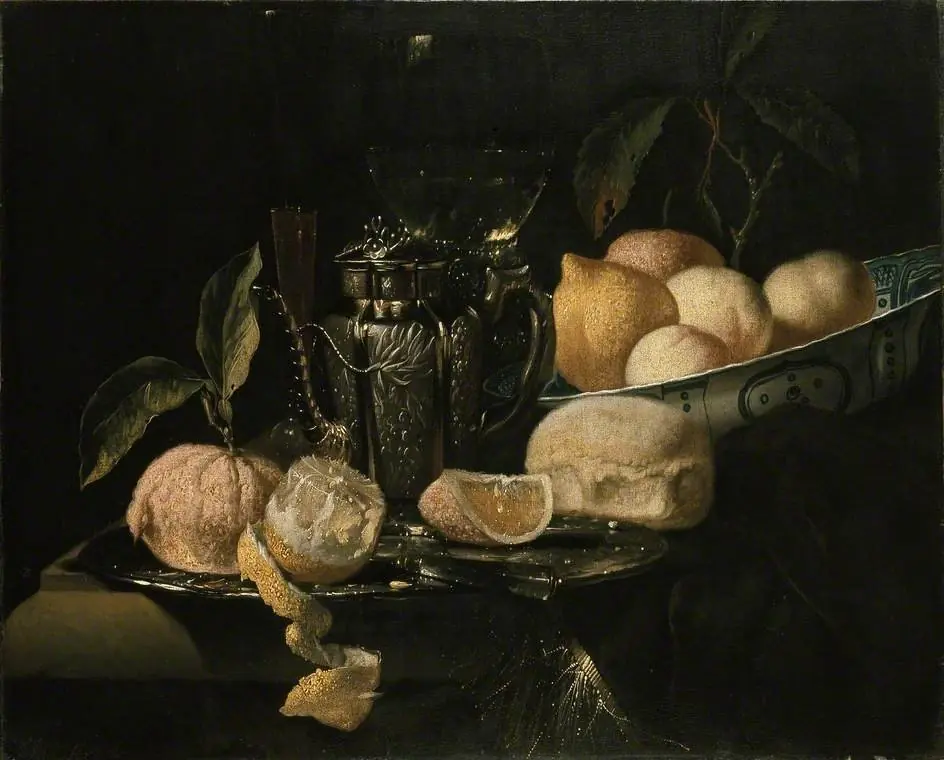 Still Life with Fruit
 Still life with fruit and wine glass
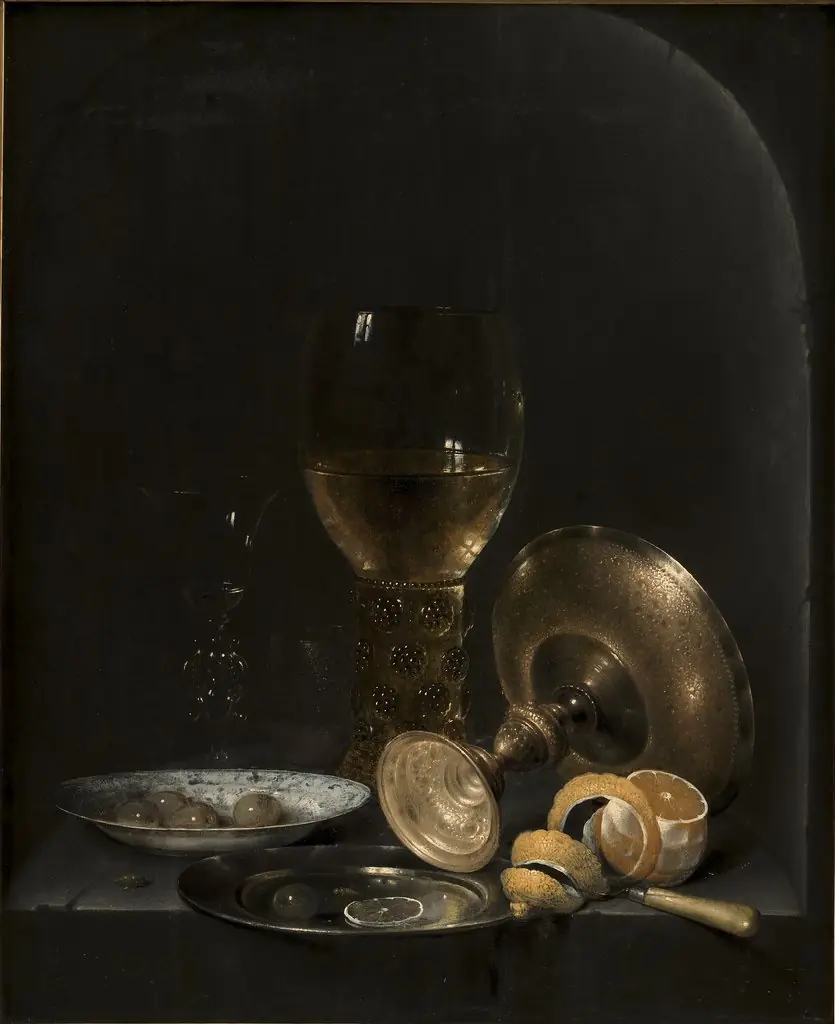 Still life. Breakfast Piece in a Stone Niche
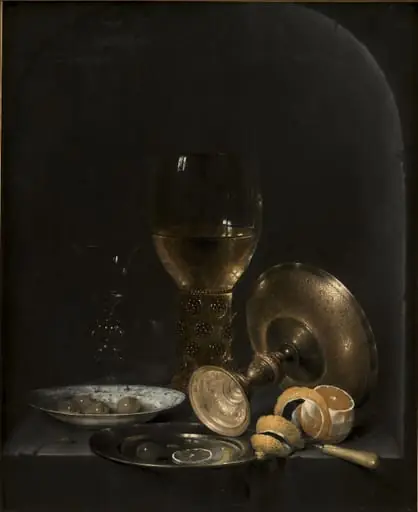 Still life. Breakfast Piece in a Stone Niche
 Still life with decanter, nautilus cup, wine glasses and pie