Artwork
Still Life (rejoined to its left half in 1956)
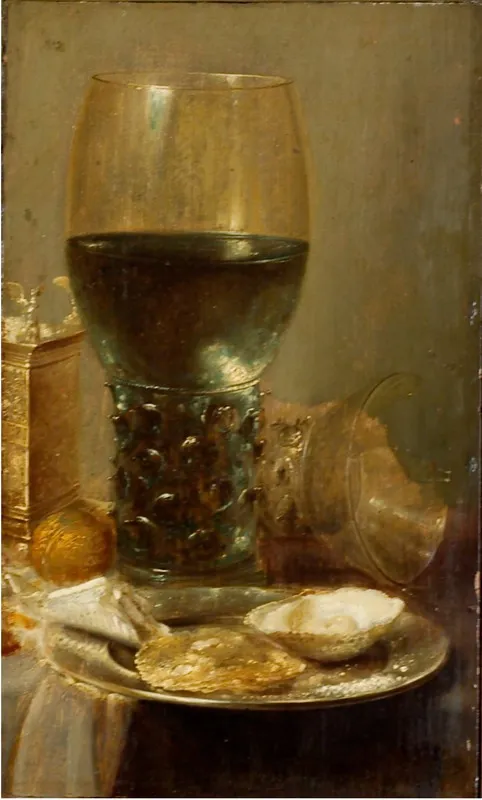
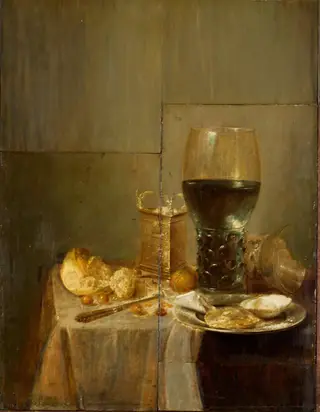
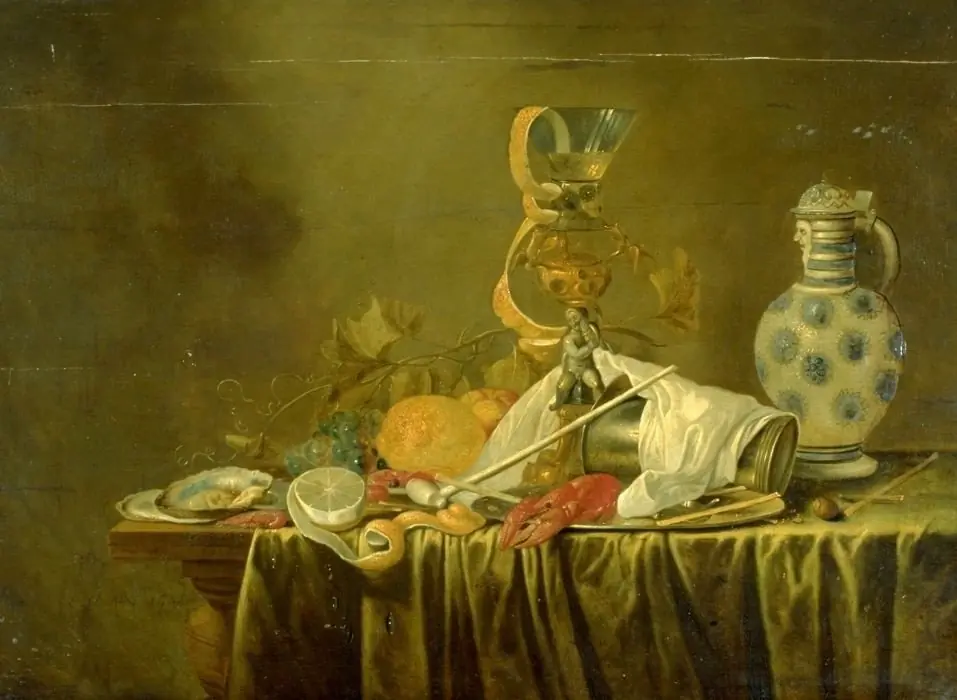
Still Life (rejoined to its left half in 1956) is an oil painting by the Dutch Golden Age artist Pieter Claesz. It dates from 1636 and is held in the collection of the Statens Museum for Kunst.
About this work
Technique & Style
Handling is characteristic of Claesz’s mature still-life practice of the 1630s, with a restrained palette dominated by muted browns, grays, and silvery whites.
The work is painted in oil on a wood panel measuring 46 cm in height by 27.5 cm in width.
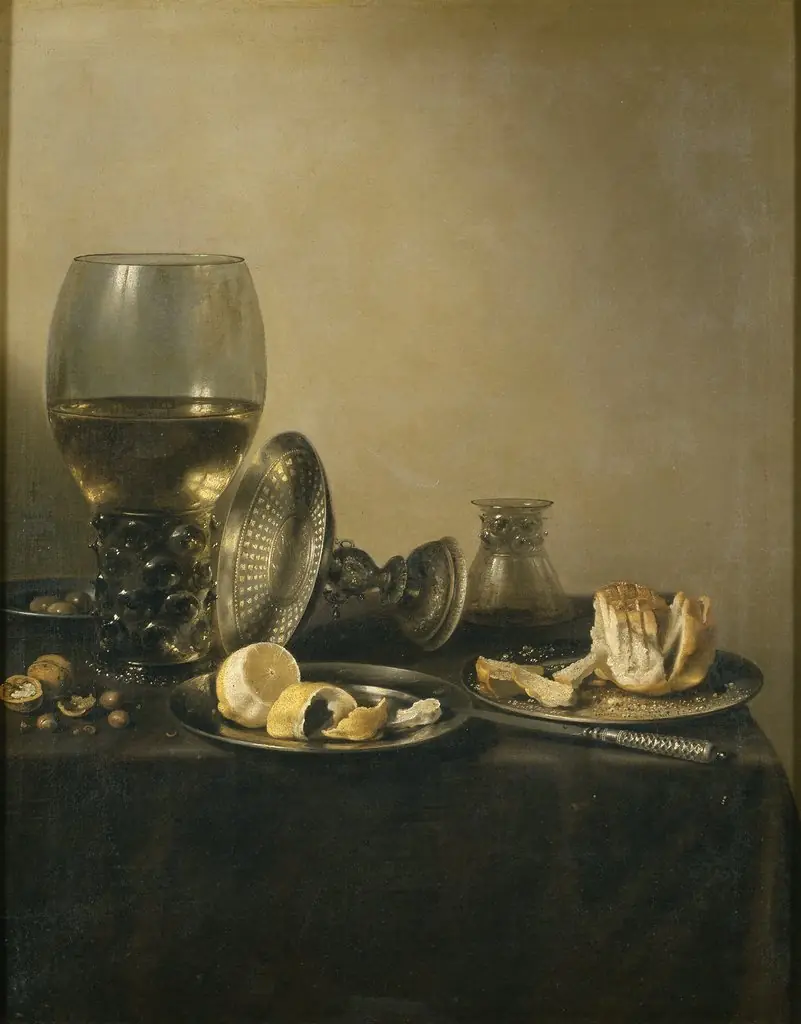
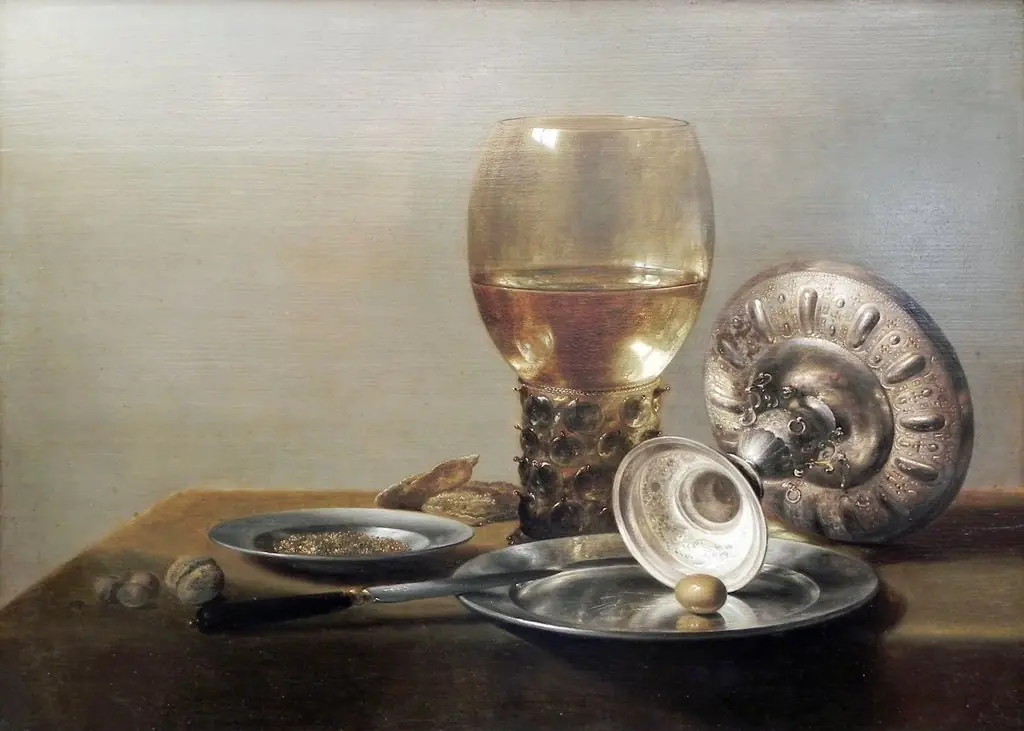
Handling is characteristic of Claesz’s mature still-life practice of the 1630s, with a restrained palette dominated by muted browns, grays, and silvery whites. The brushwork is precise, employing fine, controlled strokes to render reflections on glass and the translucent flesh of the oyster. The composition is anchored by the dark walnut in the foreground, against which the rummer and berkemeyer are silhouetted, their forms stabilized by a carefully balanced play of light and shadow.
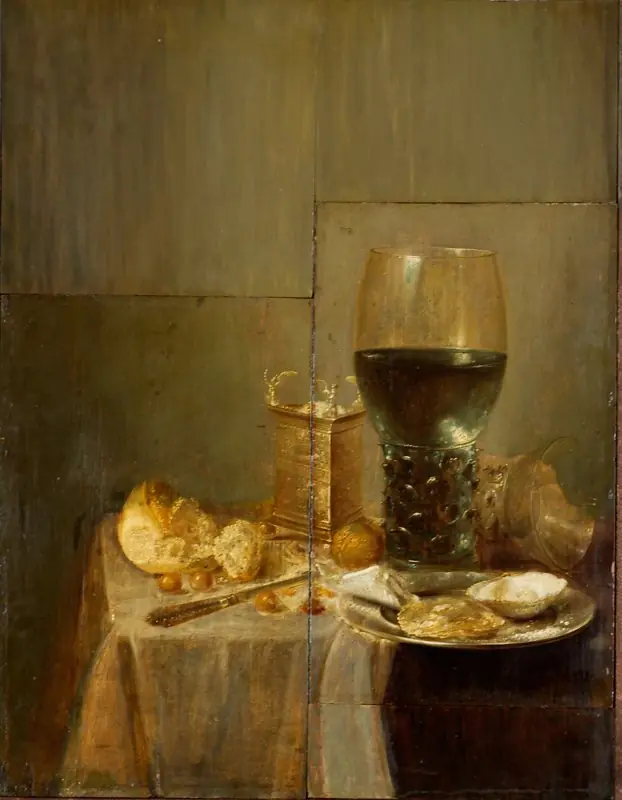
The painting’s surface shows evidence of later rejoining, with the left half reattached in 1956 after separation, a history reflected in the visible join line and minor retouching along the left edge.
History & Provenance
Created by Pieter Claesz in 1636, this oil painting on panel was originally conceived as one half of a larger composition. The work remained fragmented for two centuries until 1956, when it was physically rejoined with its missing left half to restore the complete still life. The piece currently resides in the collection of the Statens Museum for Kunst, where it is cataloged as a painting fragment that has been reunited. Its dimensions measure 46 cm in height and 27.5 cm in width.
Overview
Pieter Claesz’s oil painting, executed in 1636, presents a modest still‑life arrangement that was later physically rejoined to its original left side in 1956. The work is part of the collection of Denmark’s Statens Museum for Kunst and exemplifies the Dutch still‑life tradition of the early seventeenth century.
Subject & Meaning
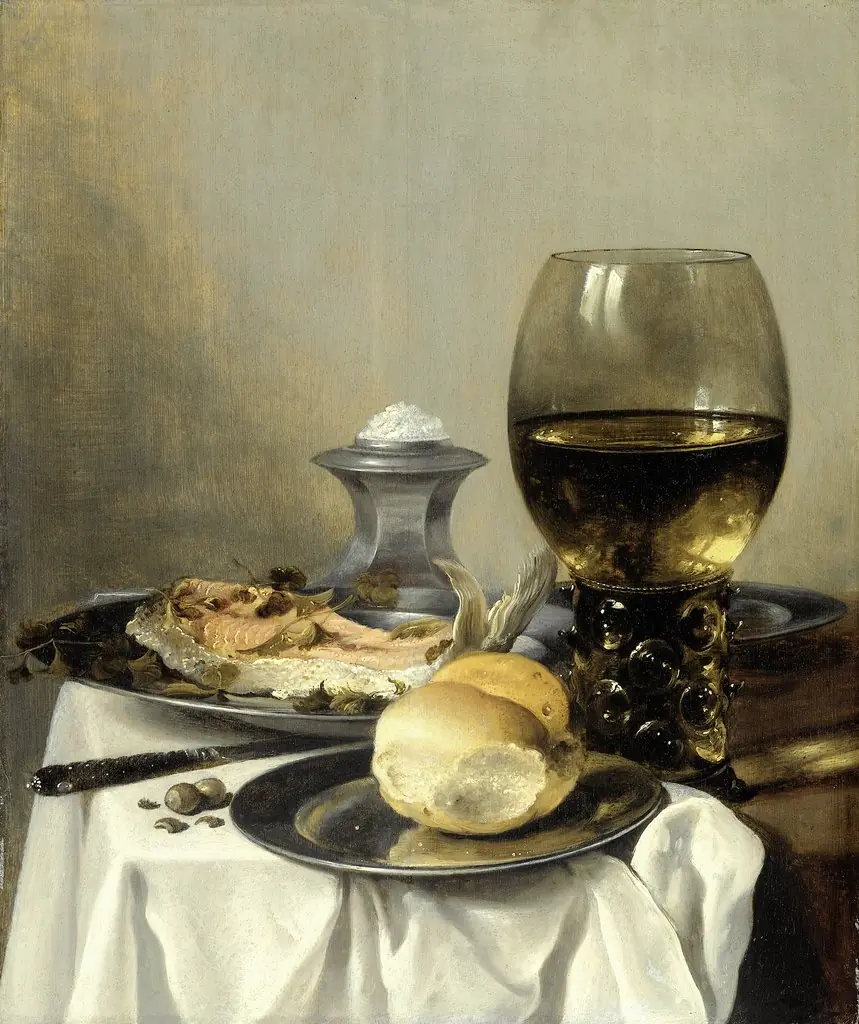
The composition centers on a tall rummer glass filled with dark wine, a tipped silver cup, a plate bearing two half‑peeled oysters, a few powdered pastries, and a solitary walnut. The objects, rendered with careful attention to texture, suggest a fleeting banquet scene and invite contemplation of transience and the pleasures of the table.
Artist & collection

 Still Life
 Still Life
 Still Life
 Still Life
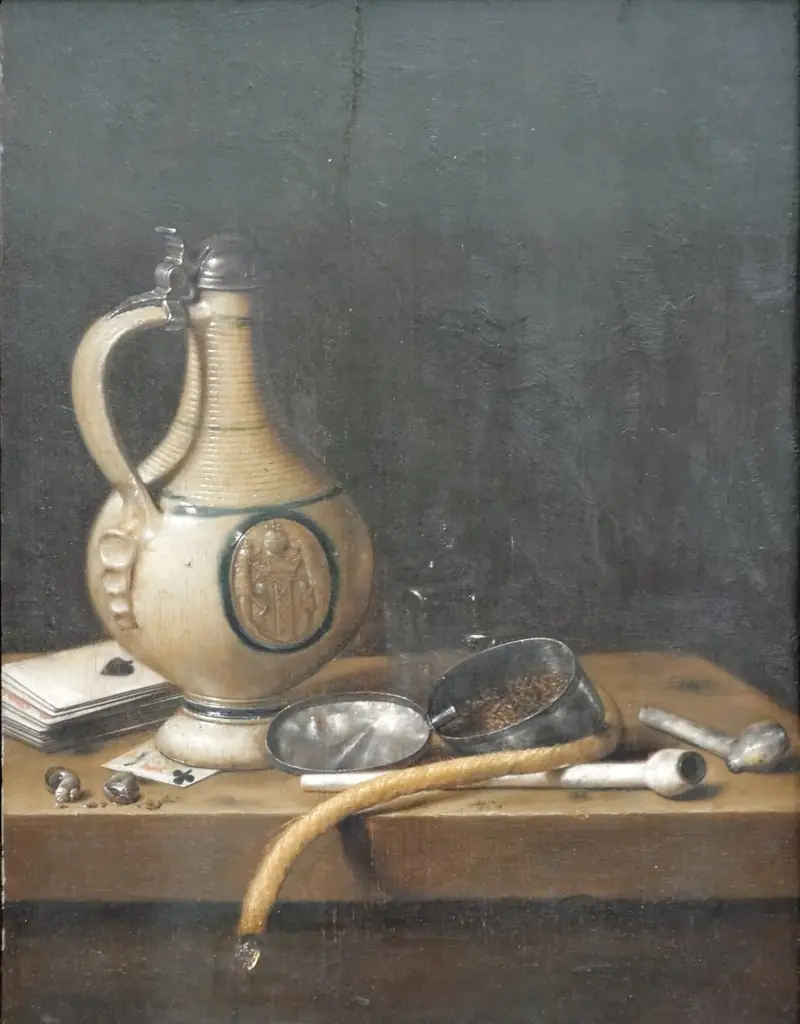 Still Life with Smoking Paraphernalia
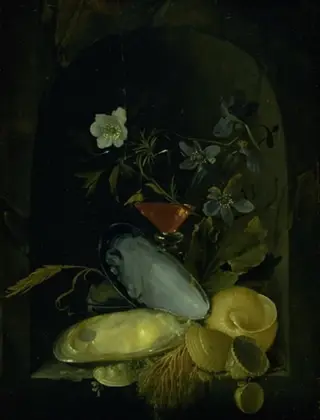 Still Life with Cockleshells and Blue Anemones
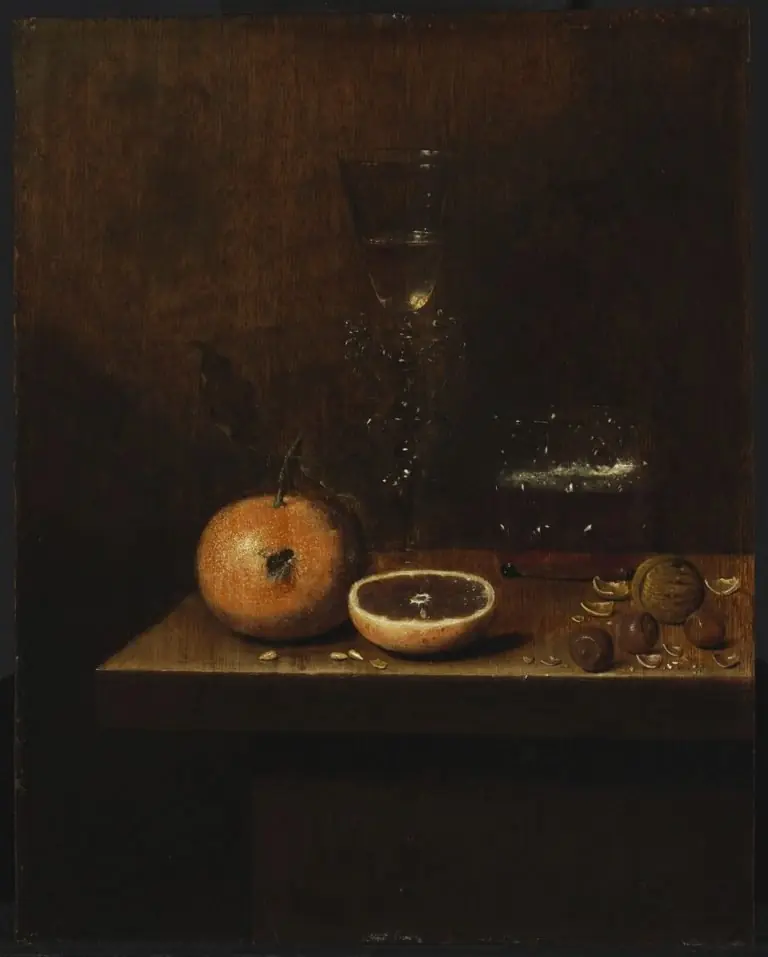 Still Life with Orange and Venetian Glass
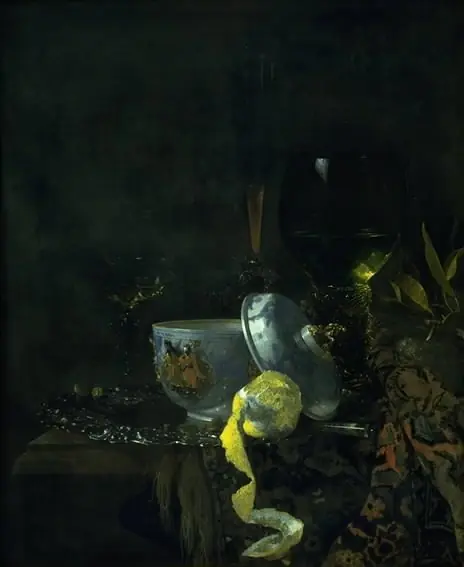 Pronk Still Life with a Chinese Sugar Bowl
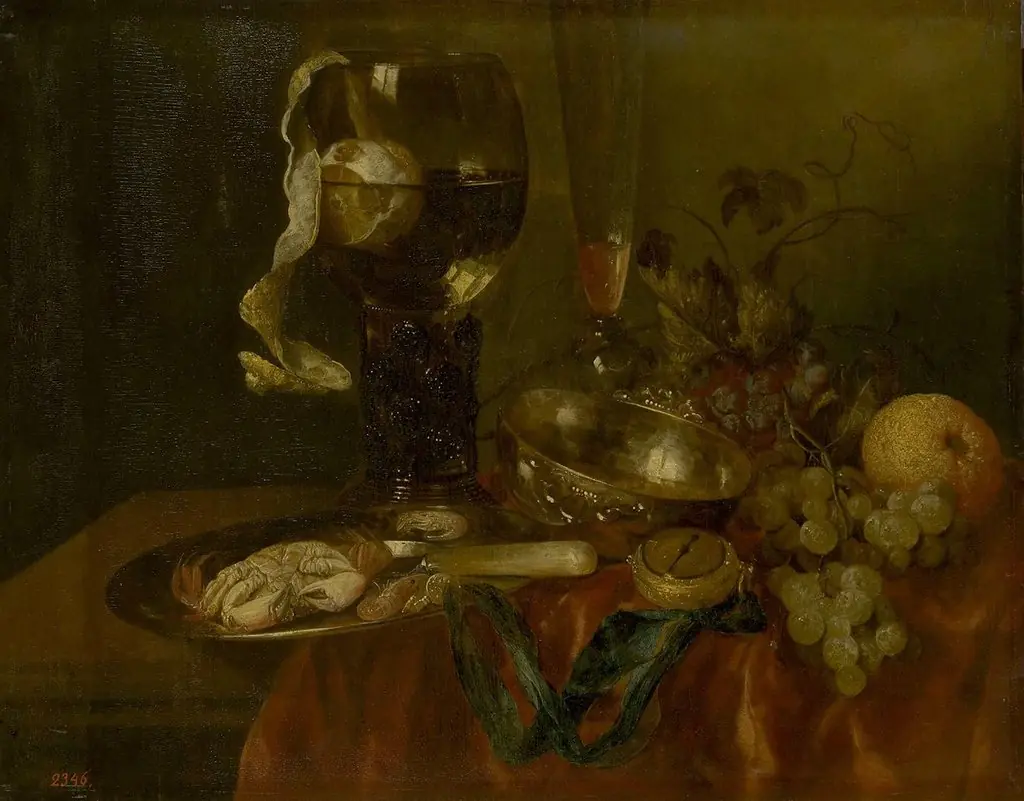 Snack (Still Life with Crab, Fruit and Clock)
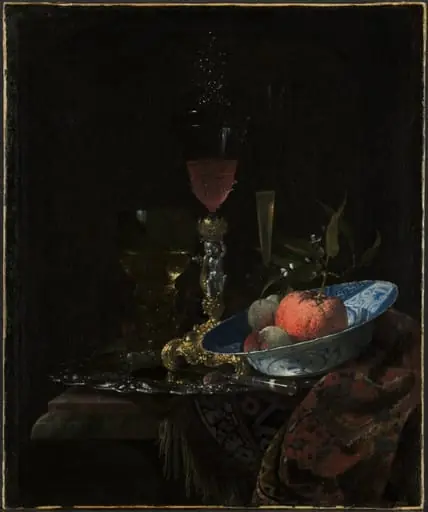 Wineglass and a Bowl of Fruit
 Still life with wine glass and stoneware jug