Artwork
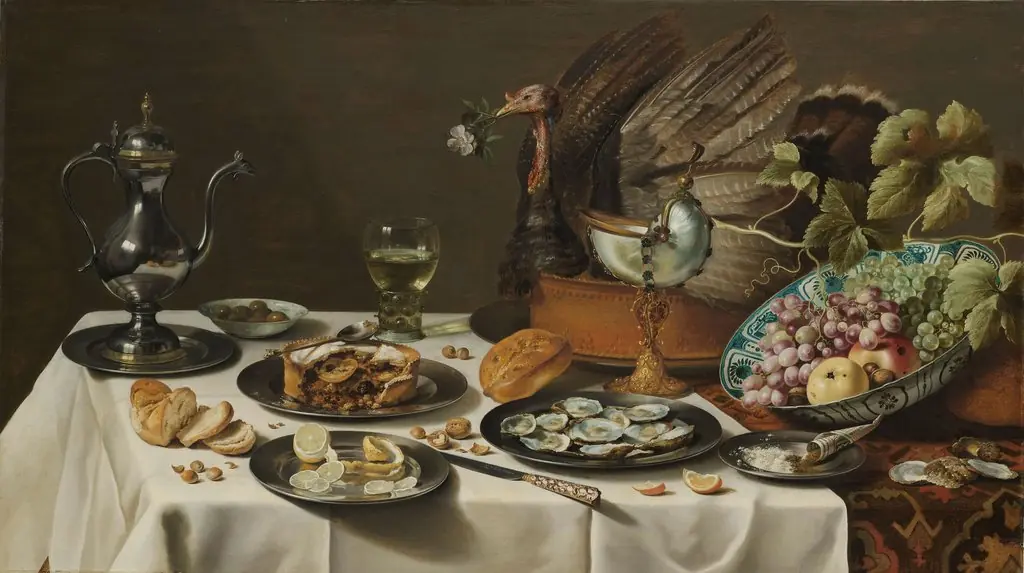
Tabletop Still Life with Mince Pie and Basket of Grapes
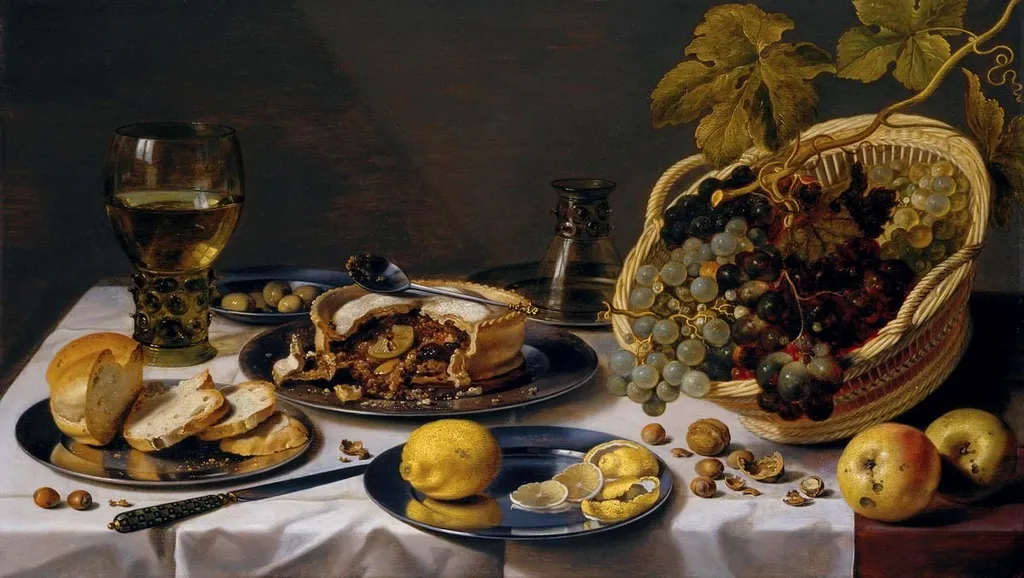
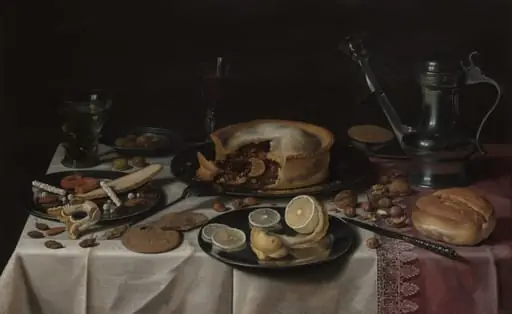
Tabletop Still Life with Mince Pie and Basket of Grapes is an oil painting by the Dutch Golden Age artist Pieter Claesz. It dates from 1625 and is held in the collection of the Museum of Fine Arts, Houston.
About this work
Subject & Meaning
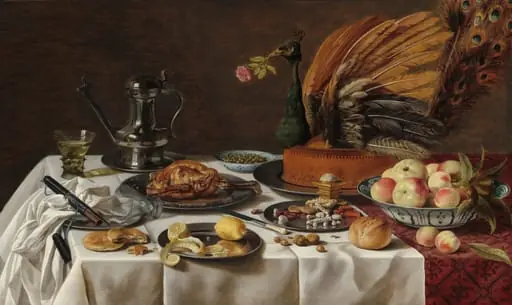
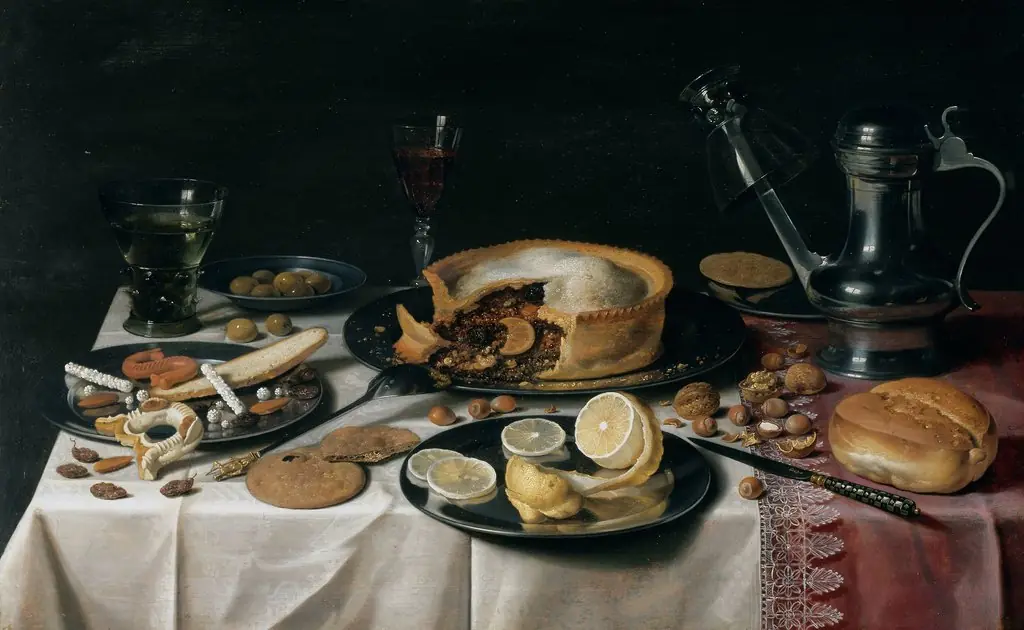
The work depicts a tabletop arrangement featuring a mince pie alongside a basket filled with grapes. Additional elements within the composition include a lemon, bread, a spoon, a knife, and a tablecloth. As a still life, the painting focuses on the representation of these everyday food items and domestic objects arranged on a surface.
History & Provenance
It was exhibited in 1965 at the Museum of Fine Arts, Houston, in the installation “Dutch and Flemish Still Life Paintings from the Collection.
Tabletop Still Life with Mince Pie and Basket of Grapes is an oil painting on panel by Pieter Claesz, created in 1625. The work measures 42.5 cm by 74 cm and depicts a tabletop scene with a mince pie, grapes in a basket, a spoon, a knife, bread, and a lemon. It was owned by Edward Speelman and is part of the collection at the Museum of Fine Arts, Houston.
The painting is held by the Museum of Fine Arts, Houston, where it is catalogued as accession number 65.1349.
It was exhibited in 1965 at the Museum of Fine Arts, Houston, in the installation “Dutch and Flemish Still Life Paintings from the Collection.”
According to the museum’s records, the work entered the collection in 1965 through purchase from the dealer Edward Speelman.
Overview
Created in 1625, this oil painting by Dutch still‑life specialist Pieter Claesz presents a modest banquet arranged on a white‑covered tabletop. The composition includes a partially sliced mince pie, a glass of clear liquid, a decorative knife, a basket brimming with grapes, lemons on a small plate, and scattered nuts. The objects are set against a deep, muted background that heightens their visual presence.
Technique & Style
Claesz employs a pronounced chiaroscuro, using strong contrasts between illuminated objects and a dark rear space to model forms in three dimensions. Fine brushwork renders the glossy skins of grapes and the crisp crust of the pie, while subtle glazes suggest the translucency of the glass and the texture of the linen covering.
Context
During the early seventeenth century, Dutch artists increasingly focused on domestic interiors and the detailed rendering of food, reflecting both the prosperity of the merchant class and a cultural preoccupation with moralizing symbolism. Claesz’s composition aligns with this trend, offering a quiet, observational study rather than an elaborate narrative scene.
Artist & collection