Artwork
Venus and Adonis
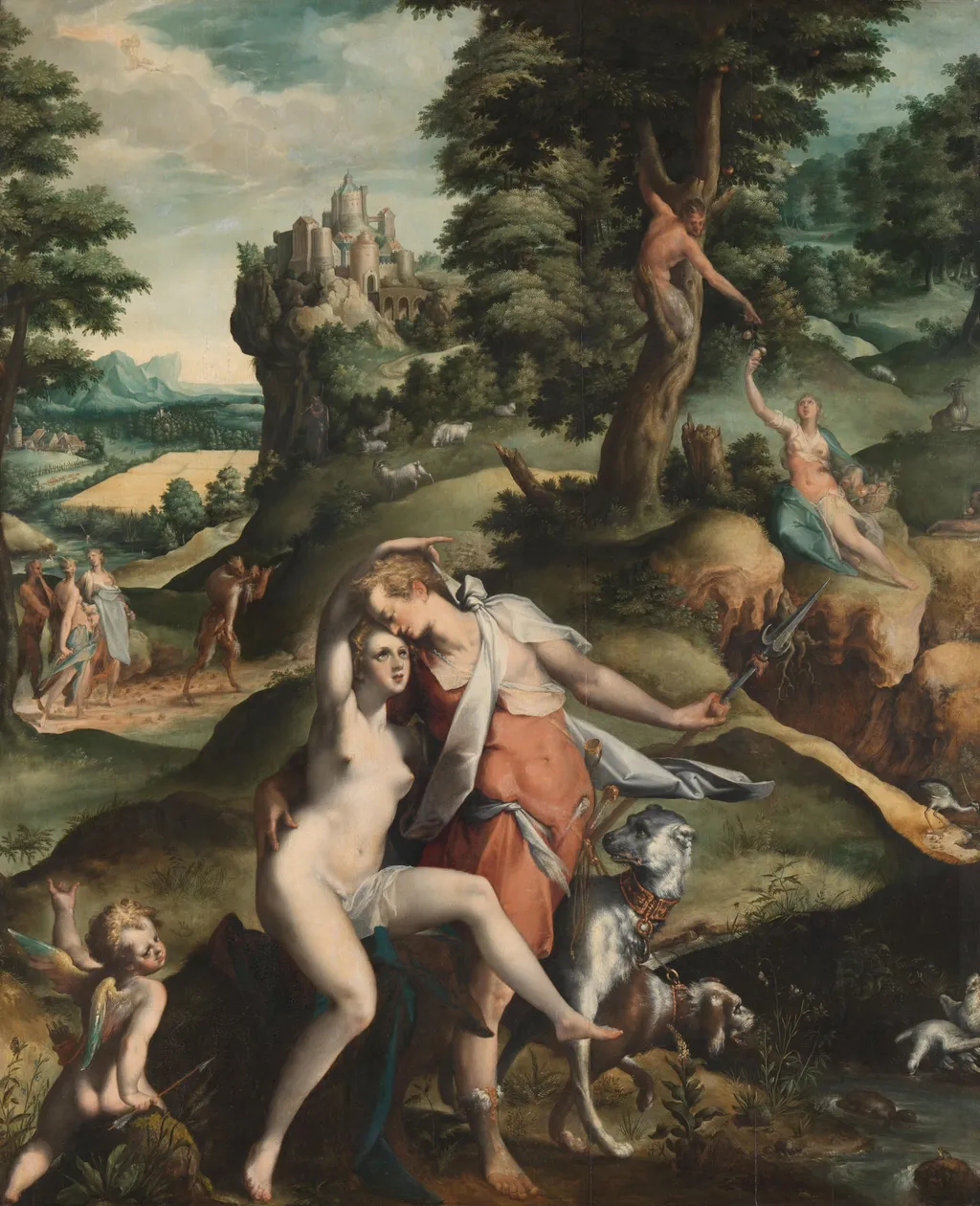
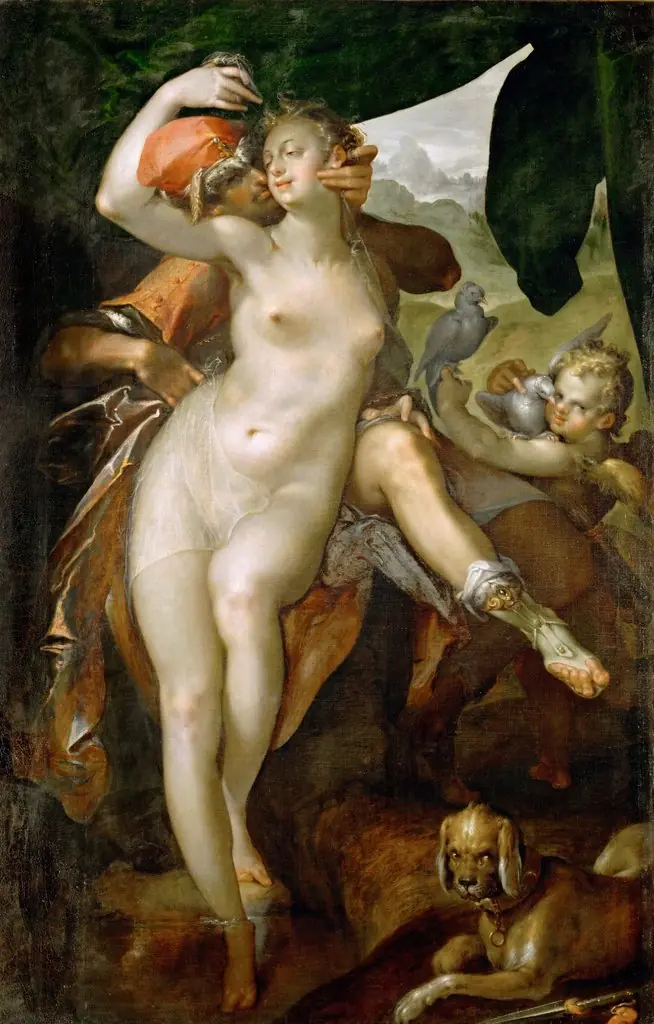
Venus and Adonis is an unspecified painting by the Mannerist artist Bartholomeus Spranger. It dates from 1585 and is held in the collection of the Rijksmuseum.
About this work
Subject & Meaning
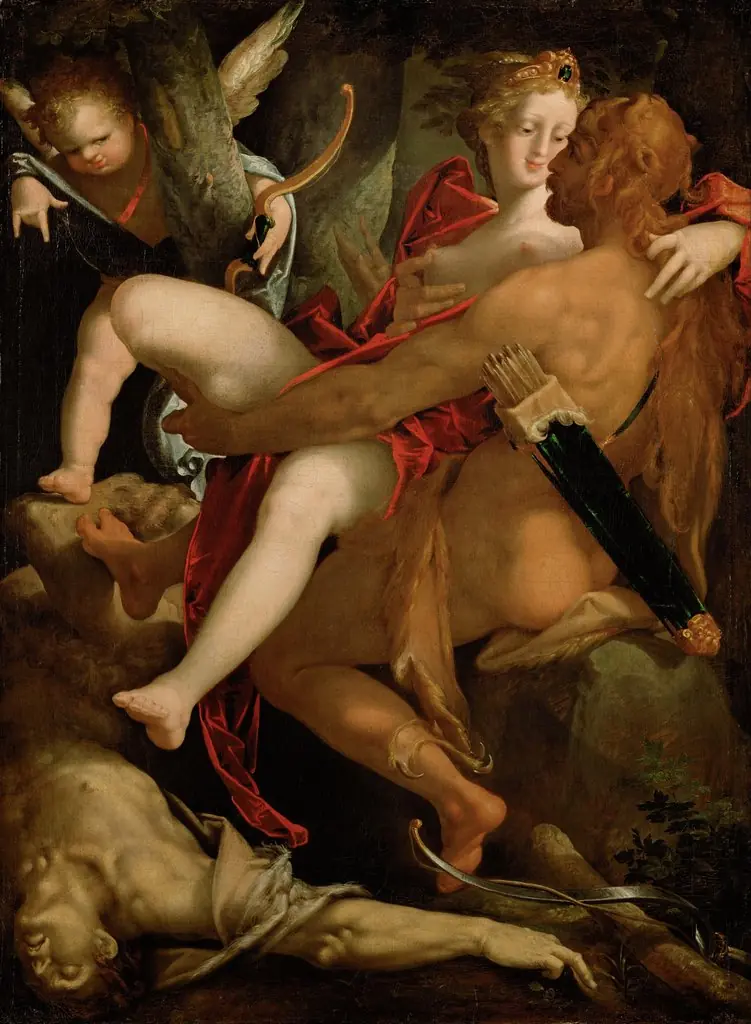
Bartholomeus Spranger's Venus and Adonis is a mythological painting executed in the Northern Mannerist style, depicting the classic Ovidian narrative of the goddess of love and her mortal hunter. As a work created for the court of Emperor Rudolf II, the piece aligns with the patron's preference for complex mythological scenes featuring sensuality and elegantly posed, elongated figures. The subject matter reflects the artist's broader practice of producing mythological nudes that often contained esoteric or philosophical allusions relevant to the Late-Renaissance intellectual climate of Prague.
While the specific iconographic details of this particular composition are not described in the provided sources, the work functions within Spranger's known oeuvre as an exploration of eroticism and classical mythology, characteristic of his role as a court painter who blended Netherlandish and Italian influences to satisfy the aesthetic tastes of the Holy Roman Emperor.
Technique & Style
Characterized by sensuality and complex compositions, the painting features smoothly modeled, elongated figures arranged in elegant, often paradoxical poses.
Bartholomeus Spranger’s Venus and Adonis is an oil painting created circa 1585–1590, executed on a canvas support. The work exemplifies Northern Mannerism, a style Spranger developed while serving as court painter to Rudolf II in Prague. Characterized by sensuality and complex compositions, the painting features smoothly modeled, elongated figures arranged in elegant, often paradoxical poses.
The handling of paint emphasizes a pearlescent sheen in the colors and utilizes strong light-and-dark contrasts to enhance the dramatic effect. While Spranger was also proficient in fresco, tempera, and sculpture, this specific work relies on the fluidity of oil to render the mythological scene with a decorative richness. The figures display the artist's signature integration of Netherlandish precision with Italian Mannerist influences, resulting in a composition that balances eroticism with sophisticated artistic invention.
History & Provenance
The painting Venus and Adonis by Bartholomeus Spranger is dated to approximately 1585–1590. It was created during the artist's tenure as court painter to Holy Roman Emperor Rudolf II in Prague, a position Spranger assumed in 1581 following his service to Maximilian II. The work belongs to a continuous stream of mythological scenes with nudes that Spranger supplied specifically to satisfy the emperor's aesthetic preferences and esoteric philosophical interests.
While the precise commission details for this specific canvas are not explicitly recorded in the available sources, the piece aligns with the patronage pattern where Rudolf II regularly visited Spranger's studio to receive such works. The painting was produced in Prague between 1581 and Spranger's death in 1611, reflecting the Northern Mannerist style developed under the emperor's direct influence.
Venus and Adonis is held in the Kunsthistorisches Museum in Vienna as part of the Imperial collection, with inventory number Inv. 67. It was created by Bartholomeus Spranger around 1585–1590. The work has been exhibited in a 2022 exhibition on art at Rudolf's court at the British Museum and appears in the museum's permanent display of Rudolf II's collection.
The painting was also included in the 2014 publication "Bartholomeus Spranger. Splendor and Eroticism in Imperial Prague. The Complete Works" and is listed among the holdings of the Kunsthistorisches Museum.
It is one of three oil paintings by Spranger in the Blanton Art Museum in Austin, Texas, alongside Saint Catherine, Saint Ursula, and Saint Margaret.
Context
Bartholomeus Spranger's Venus and Adonis (c. 1585–c. 1590) belongs to the body of mythological nudes he produced continuously for Emperor Rudolf II after being appointed court painter in Prague in 1581. His work is regarded as the most characteristic expression of the final phase of Northern Mannerism, a style that stressed sensuality through smoothly modeled, elongated figures in elegant, often complex poses.
Spranger's idiom fused Netherlandish training with Italian influences absorbed in Rome and Parma, particularly the Roman Mannerists, and was shaped by Rudolf's esoteric Late-Renaissance tastes. His paintings were disseminated across Europe through engravings by Hendrick Goltzius and Aegidius Sadeler, giving him considerable influence on artists in Prague and the Dutch Republic, including the Haarlem Mannerists. Karel van Mander devoted a biography to him in the Schilder-boeck (1604).
Scholarship positions Spranger, alongside Frans Floris and the Romanists, as a transmitter of Italian Mannerism north of the Alps and a forerunner of Baroque painting, anticipating Peter Paul Rubens.
Legacy
Bartholomeus Spranger's Venus and Adonis became emblematic of Rudolf II's court aesthetic, where erotic mythological subjects served both artistic and propagandistic purposes. His sensual, elongated figures influenced Northern Mannerist artists across Europe, particularly through Hendrick Goltzius's widely circulated engravings. The painting's dissemination helped establish Spranger's reputation as a master of courtly eroticism, a legacy noted by Karel van Mander in 1604 and later scholars like Kaufmann (1988).
His stylistic innovations in depicting mythological narratives with esoteric undertones shaped the work of Rubens and subsequent Baroque painters, cementing his role as a pivotal figure in the transmission of Italianate Mannerism north of the Alps.
Overview
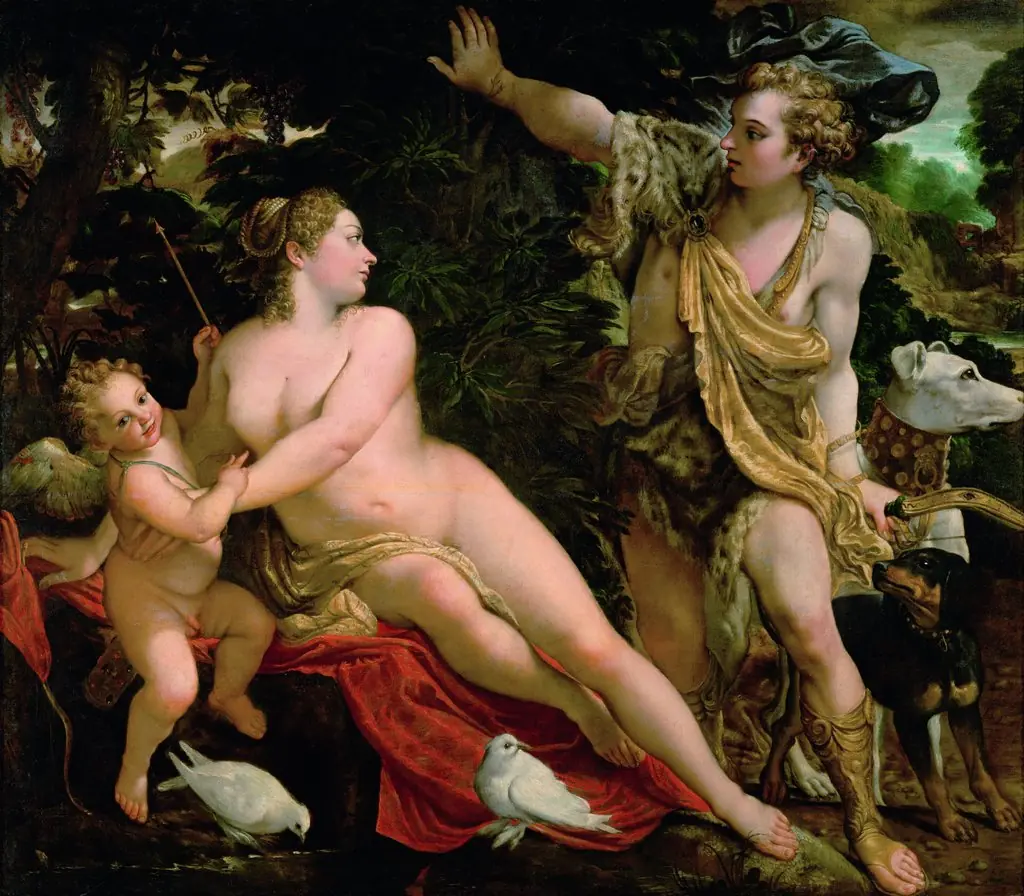
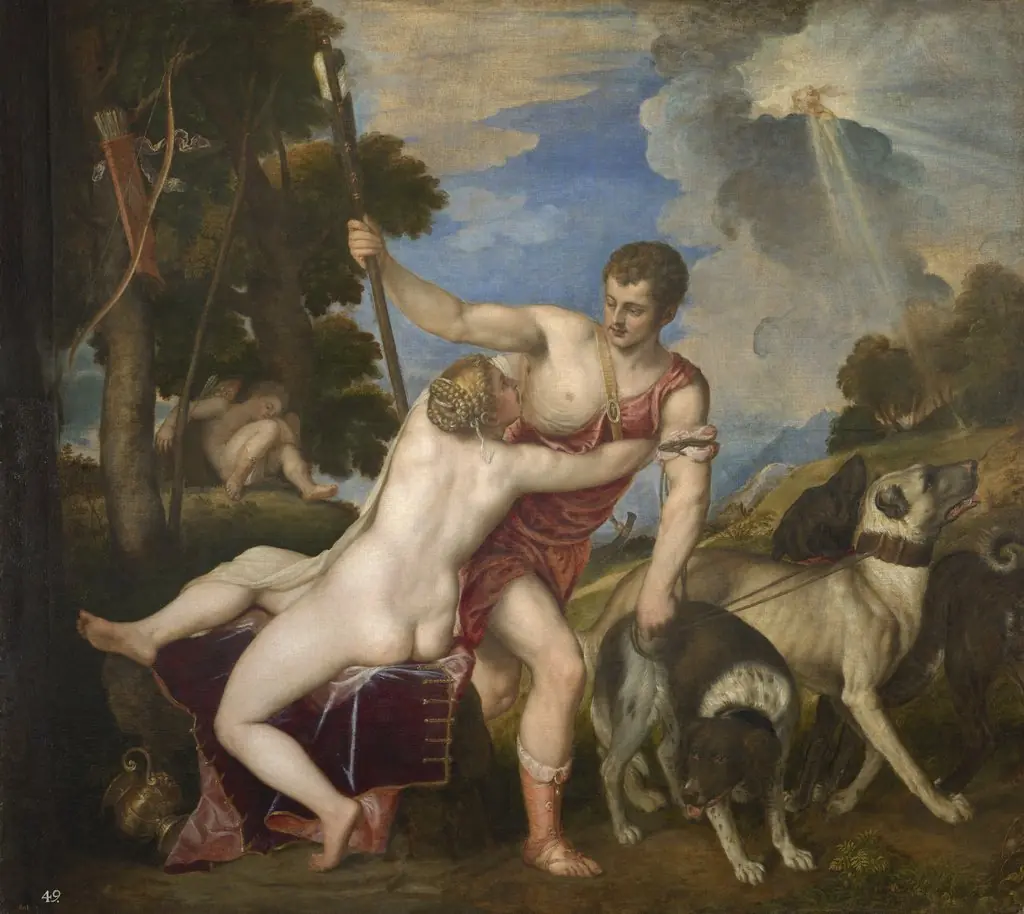
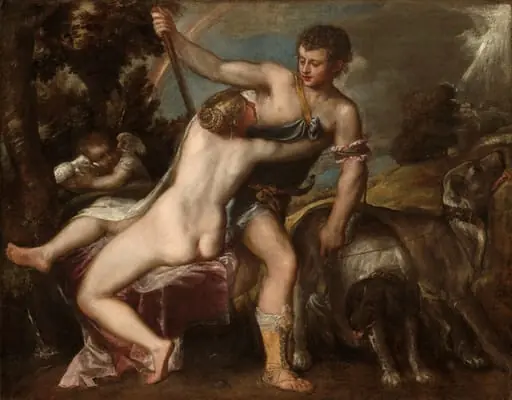
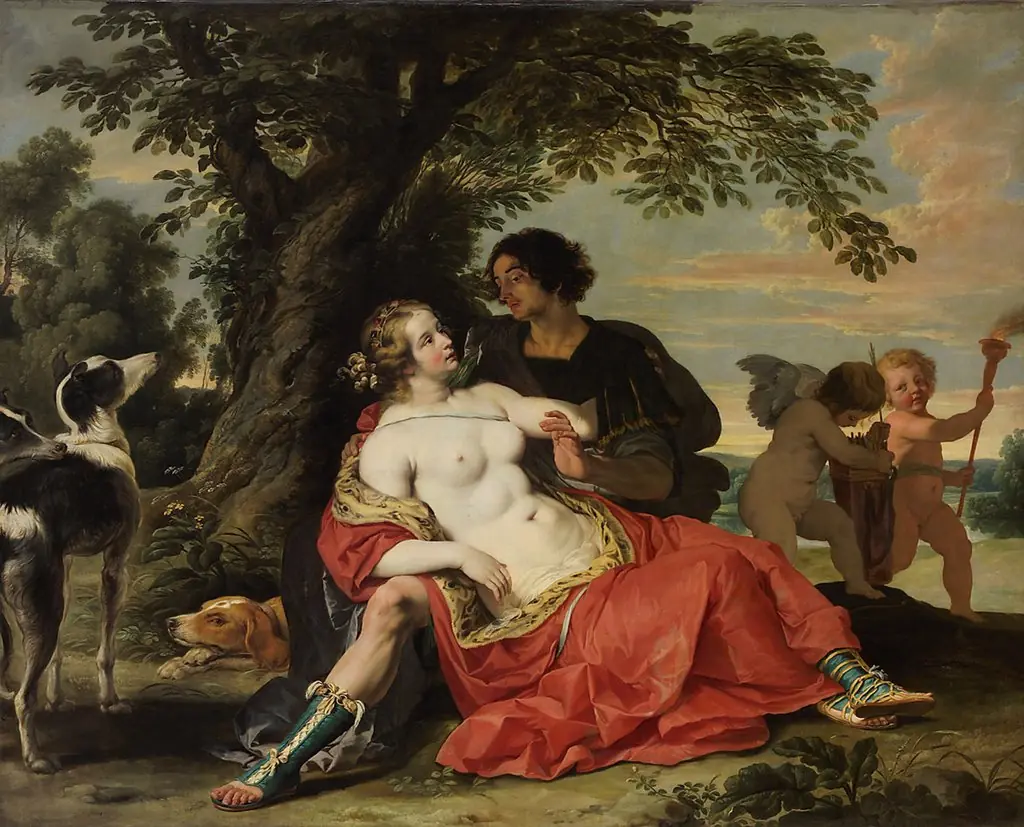
The painting depicts the mythological scene in which Venus, the goddess of love, attempts to dissuade her mortal lover Adonis from going hunting. Despite her pleas, Adonis is slain by a boar, while Cupid reacts with alarm. The composition combines elongated figures with a landscape that references an earlier 16th‑century model.
Own this work as a print
Artist & collection
Artist
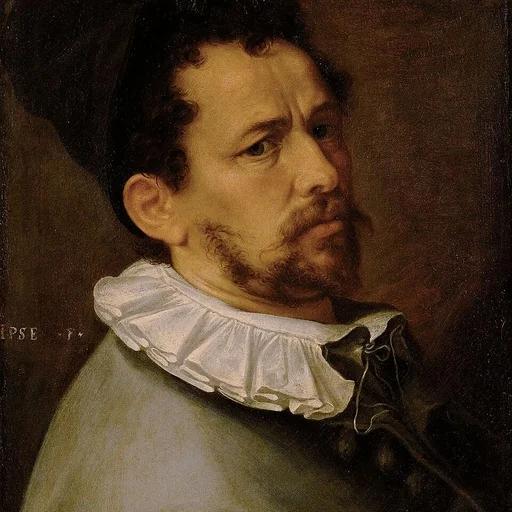
Bartholomeus Spranger or Bartholomaeus Spranger (21 March 1546 – 27 June 1611) was a Flemish painter, draughtsman, sculptor, and designer of prints.