Artwork
The Gevangenpoort and the Plaats, The Hague
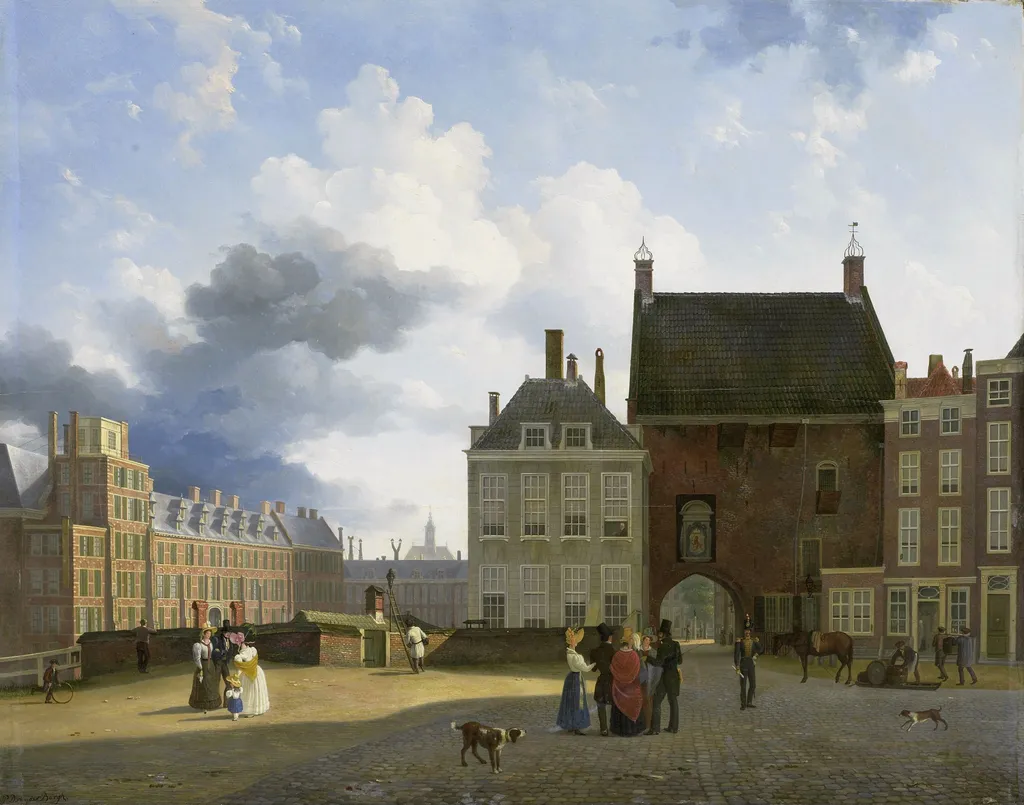
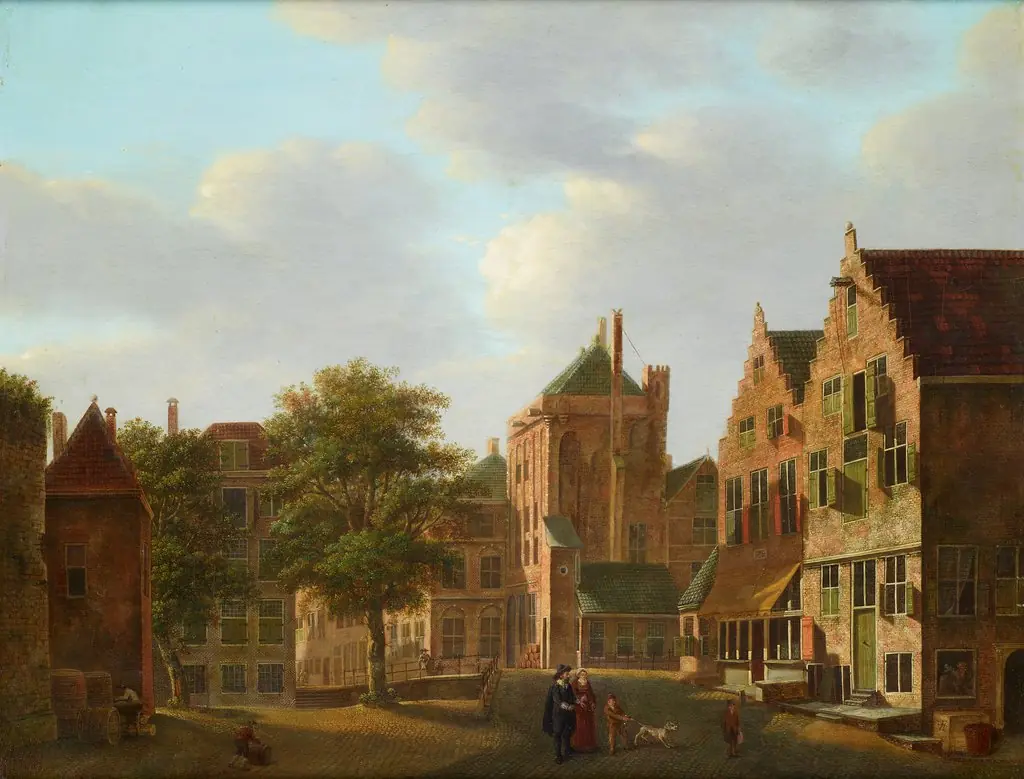
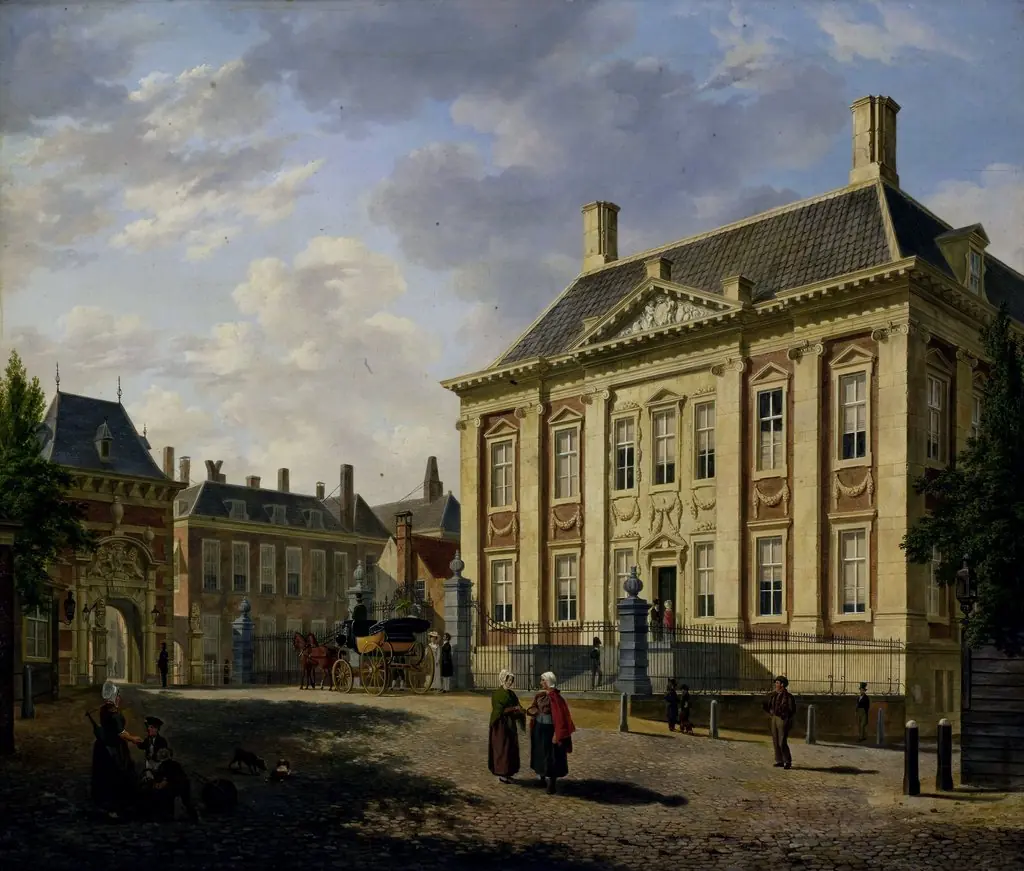
The Gevangenpoort and the Plaats, The Hague is an oil painting by the Barbizon school artist Pieter Daniel van der Burgh. It dates from 1850 and is held in the collection of the Rijksmuseum. Created circa 1850, this oil on canvas presents a modest urban scene of The Hague’s Gevangenpoort and the adjacent square.
About this work
Technique & Style
Executed in 1850, this cityscape by Pieter Daniel van der Burgh utilizes oil paint applied to a wooden panel support.
Executed in 1850, this cityscape by Pieter Daniel van der Burgh utilizes oil paint applied to a wooden panel support. The work measures 47.5 cm in height and 59.5 cm in width. As a representative example of the genre, the composition depicts the Gevangenpoort and the Plaats in The Hague, capturing the architectural details of the site through the artist's handling of the oil medium on the rigid surface of the panel.
History & Provenance
The painting was created in 1850 by Pieter Daniel van der Burgh as an oil work on panel measuring 47.5 cm by 59.5 cm, depicting the Gevangenpoort and the Markt in The Hague. It entered the collection of the Rijksmuseum and the Instituut Collectie Nederland, and is also associated with Villa Welgelegen, where it remains part of the institutional holdings. The work is classified as a cityscape within the broader corpus of 19th-century Dutch urban genre painting.
The work is held in the Rijksmuseum collection. Its inventory number is not specified in the sources. The painting was created in 1850 and has been exhibited at the Rijksmuseum.
Exhibition history includes a showing at the Rijksmuseum.
The painting is classified as a cityscape and executed in oil paint on panel, measuring 47.5 cm by 59.5 cm.
Overview
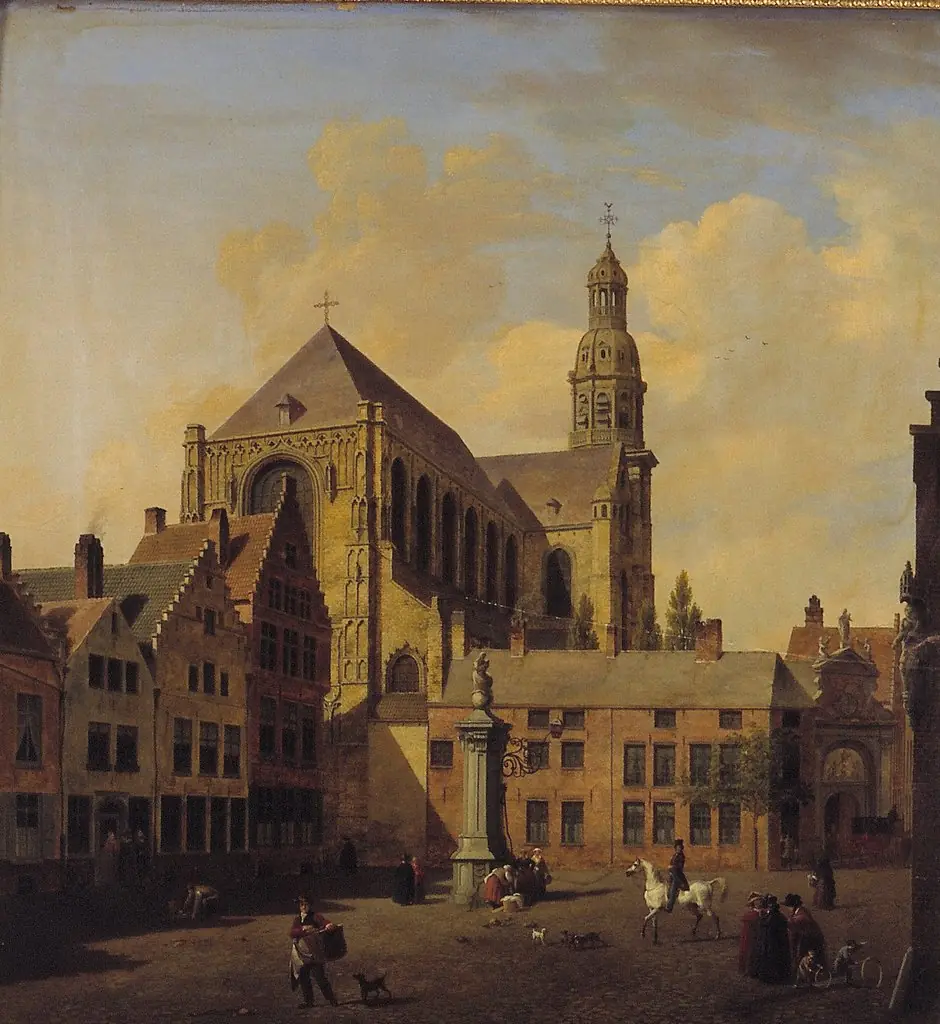
Created circa 1850, this oil on canvas presents a modest urban scene of The Hague’s Gevangenpoort and the adjacent square. The composition centers on a substantial brick edifice with an arched portal and tiled roof, framed by surrounding buildings under a cloudy sky. Figures populate the foreground, strolling or standing, while a dog adds a touch of everyday activity.
Subject & Meaning
The work records a moment of ordinary civic life, emphasizing the rhythm of a public space rather than a specific event. By depicting pedestrians, a canine companion, and the architectural details of the historic gate, the painter conveys the continuity of daily routines within a recognizable urban setting.
Own this work as a print
Artist & collection
Artist
Pieter Daniel van der Burgh or P. D. van der Burgh (1805–1879) was a Dutch landscape painter. He was a pupil of his father, Hendrik van der Burgh (1769–1858). He is known for landscapes, but also made portraits and still life paintings.