Artwork
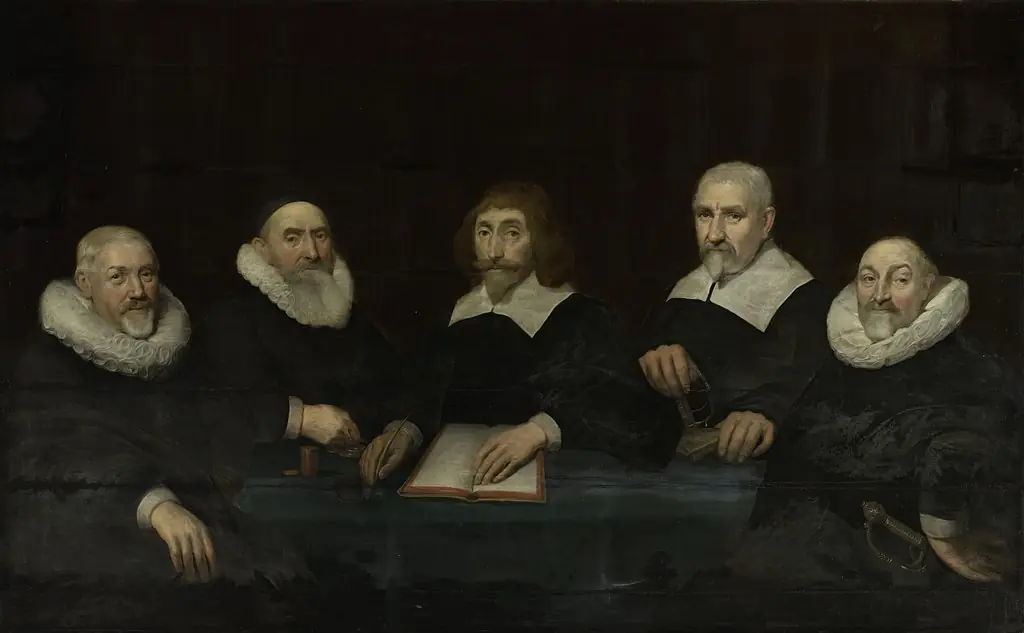
Six regents and the housemaster of the Oude Zijds Almshouse for the outdoor relief of the poor, Amsterdam, 1675
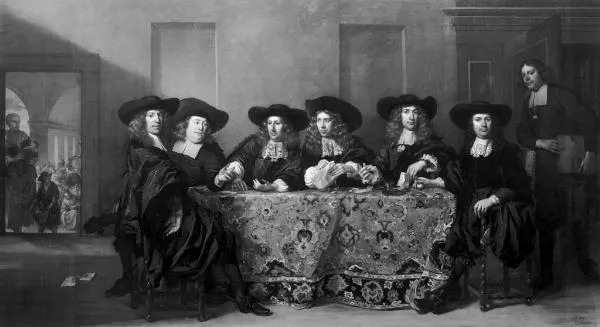
Six regents and the housemaster of the Oude Zijds Almshouse for the outdoor relief of the poor, Amsterdam, 1675 is an oil painting by the Dutch Golden Age artist Pieter van Anraedt. It dates from 1675 and is held in the collection of the Rijksmuseum.
About this work
Subject & Meaning
Their shared purpose reflects the social ethos of 17th-century Amsterdam, where charitable institutions were closely tied to civic leadership.
The painting shows six regents and the housemaster of the Oude Zijds Almshouse in Amsterdam, depicted together as a group portrait celebrating their role in administering outdoor relief to the poor. The composition emphasizes collective authority and charitable responsibility within the institution.
The work belongs to the tradition of regent group portraits, a genre that highlighted civic duty and moral oversight. Though individual identities are not singled out, the figures are presented with dignified stillness, symbolizing stability and governance. Their shared purpose reflects the social ethos of 17th-century Amsterdam, where charitable institutions were closely tied to civic leadership.
Technique & Style
The painting is executed in oil on canvas, typical of 17th-century Dutch group portraits. It portrays six regents and the housemaster of the Oude Zijds Almshouse, rendered with naturalistic detail and careful handling of light to emphasize individual expressions within the collective composition. The formal arrangement reflects the hierarchical social order of the institution, while the stylistic use of chiaroscuro and precise brushwork aligns with the realism characteristic of Amsterdam portraiture of the period.
The work measures 237 cm in height and 425 cm in width, maintaining its original scale and support.
The formal qualities emphasize symmetry, balanced composition, and restrained coloration, contributing to a dignified and authoritative presence. The handling of facial features and gestures conveys distinct personalities among the subjects, showcasing the artist’s skill in capturing both individuality and group cohesion. The medium’s application demonstrates technical proficiency in layering and blending to achieve depth and texture.
History & Provenance
The painting was commissioned by the Oude Zijds Almshouse in Amsterdam as an outdoor relief group portrait of its regents and housemaster in 1675. It was created by Pieter van Anraedt, who signed and dated the work that year, employing oil paint on canvas in the standard genre of regent group portraits. The artwork entered the collection of the Rijksmuseum and the Amsterdam Museum, remaining in the institution's custody thereafter.
Dating to 1675, the piece measures 237 cm in height by 425 cm in width, reflecting its original commission and creation history within the almshouse context.
Overview
Painted in 1675, this group portrait by Pieter van Anraedt depicts six regents and the housemaster of the Oude Zijds Almshouse in Amsterdam. The composition arranges the officials around a long table draped in a rich cloth, emphasizing their collective authority and the institution's order. Dressed in the somber black robes and wide-brimmed hats characteristic of Dutch civic leaders of the era, the figures engage in quiet administrative activity; one leans forward on the table, while another holds a document, suggesting the ongoing management of poor relief.
A servant stands in the background doorway, adding depth and reinforcing the hierarchy within the scene. Van Anraedt employs a restrained palette and controlled lighting, likely entering from a window on the left, to model the figures with a sense of solidity and realism. This work exemplifies the artist's mature style, bridging the gap between the earlier, more rigid group portraits and the softer, more atmospheric approaches of the late Dutch Golden Age.
Created just three years before the artist's death, it stands as a significant example of Amsterdam civic portraiture, documenting the social welfare structures of the city with dignity and precision.
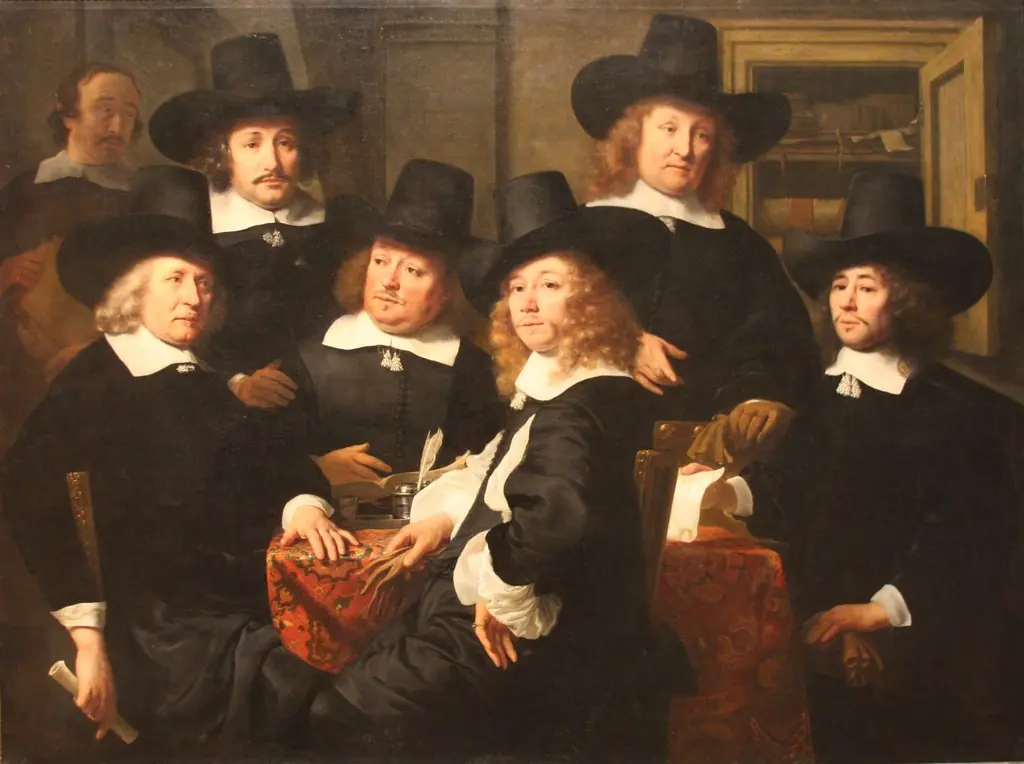
Artist & collection
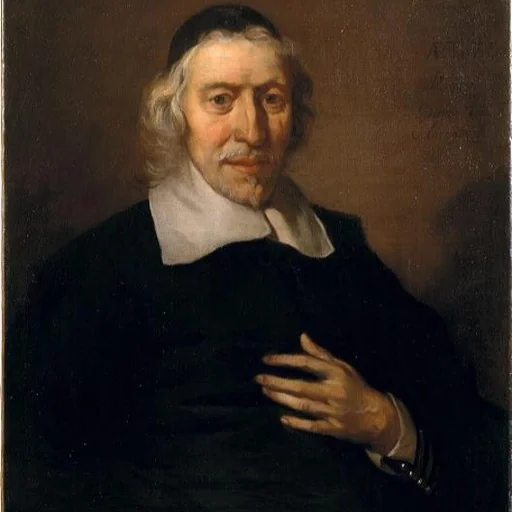

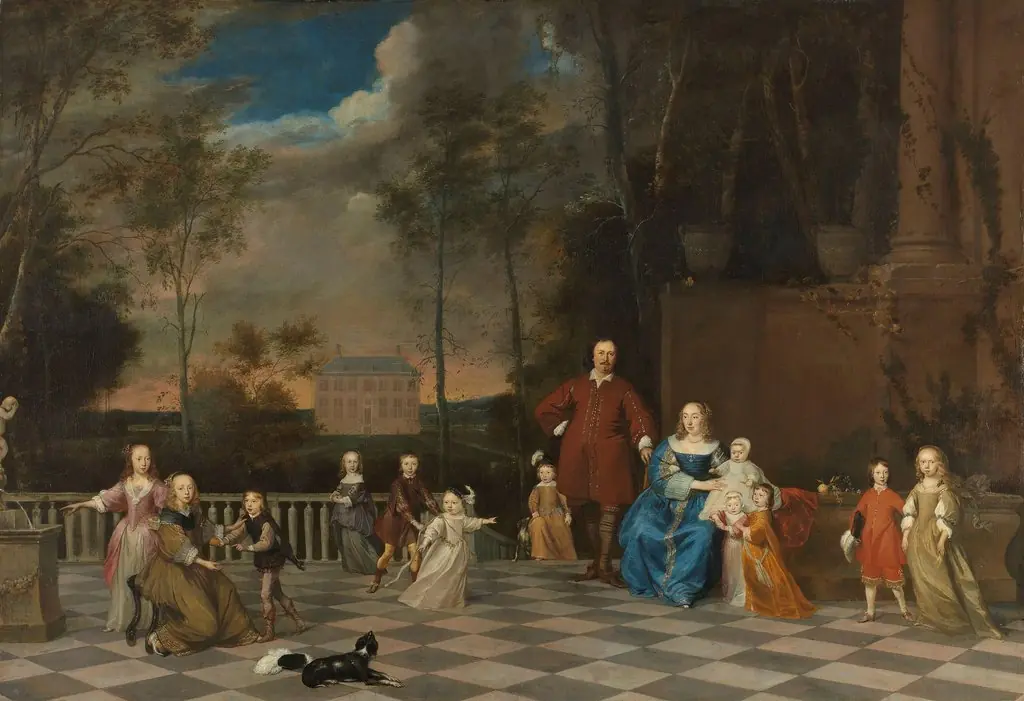
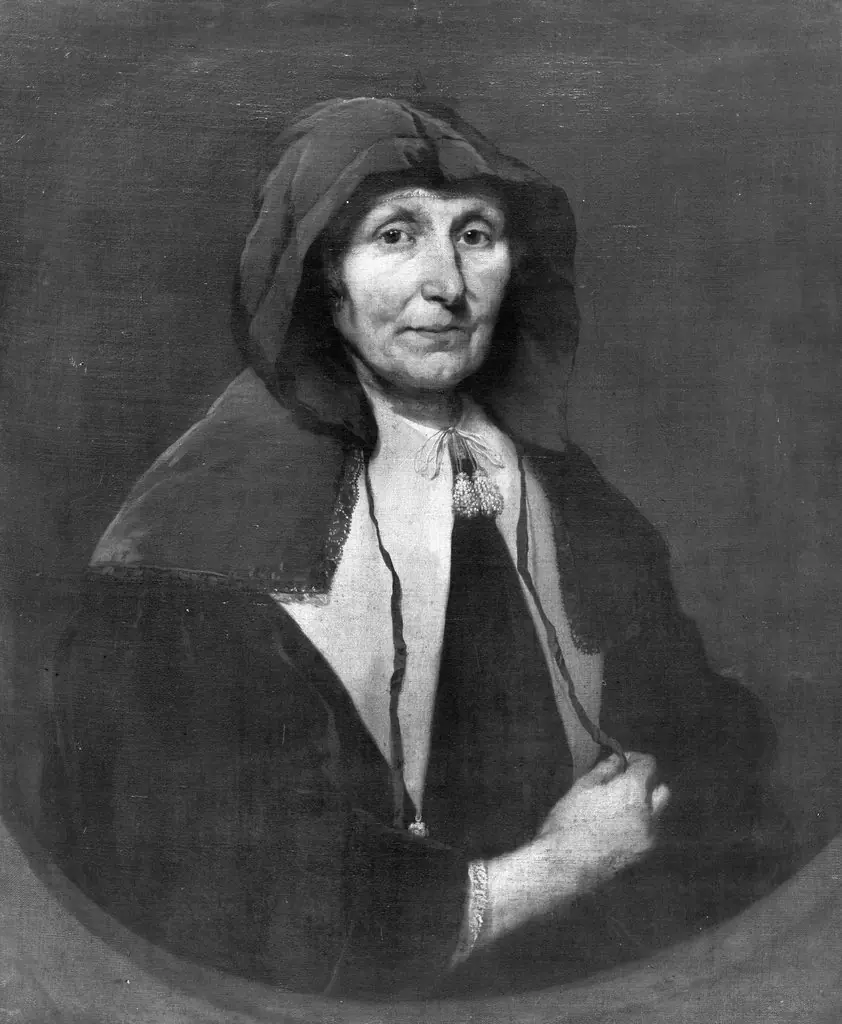
- Six regents and the beadle of the Nieuwe Zijds institute for the outdoor relief of the poor
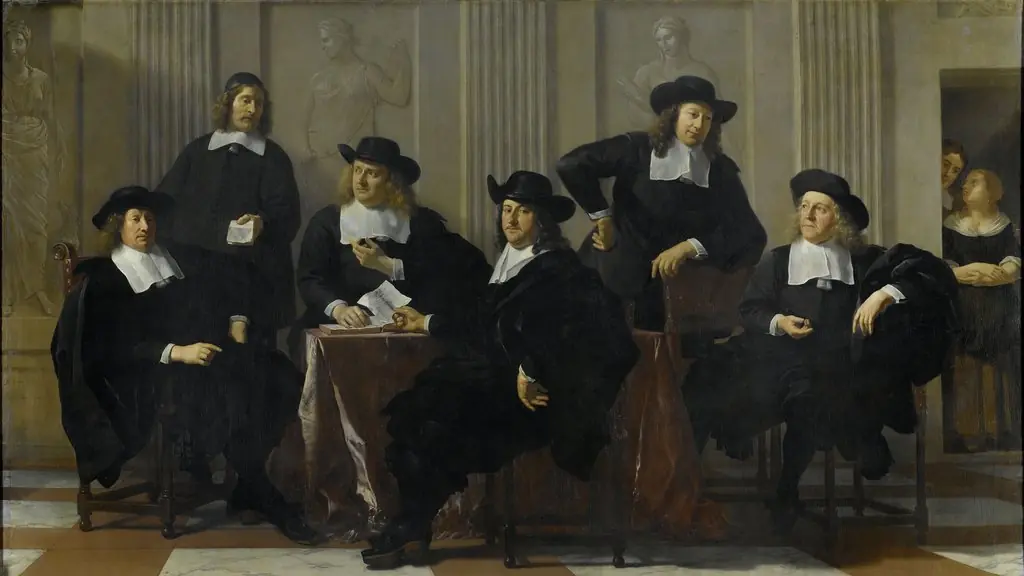 The Regents of the Spinhuis and Nieuwe Werkhuis, Amsterdam
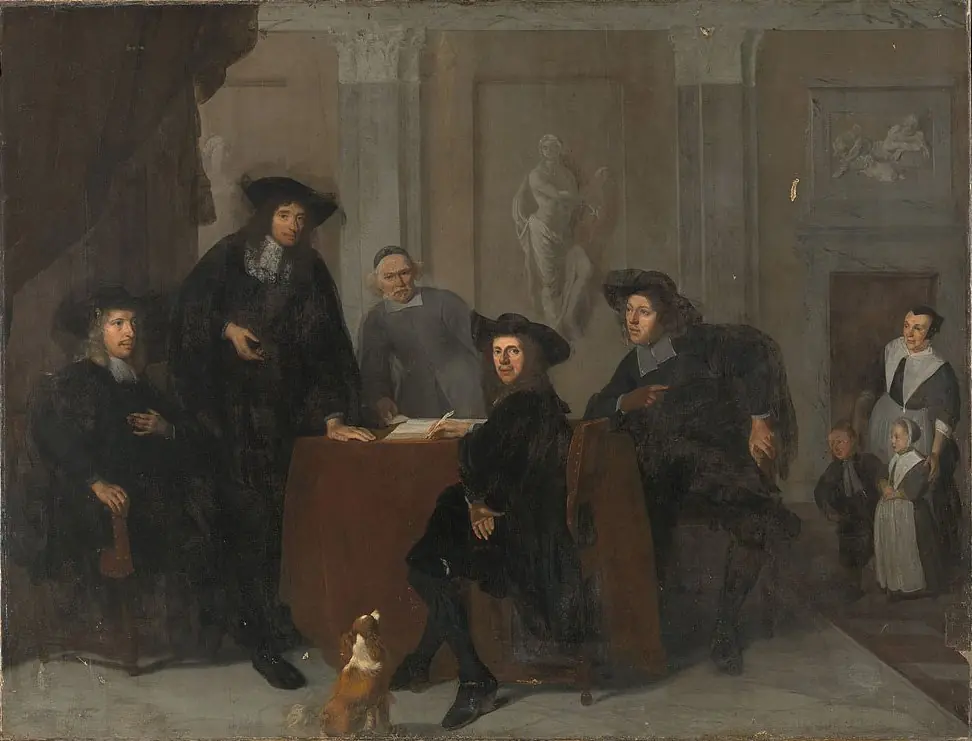 Regents of the Leper's house in Amsterdam
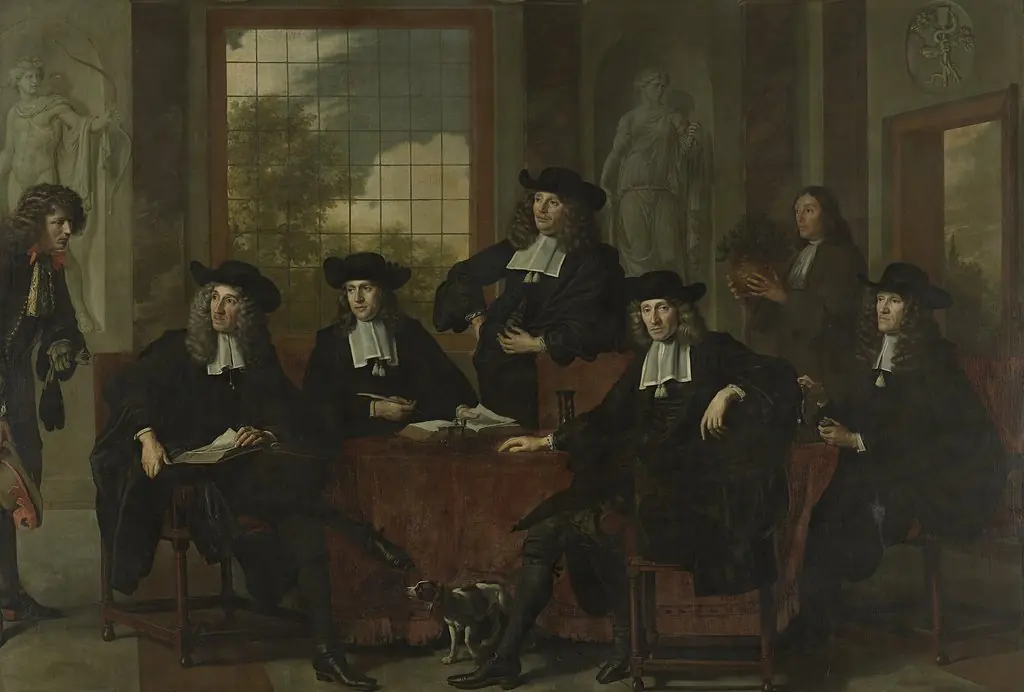 The superintendents of the Collegium Medicum in Amsterdam
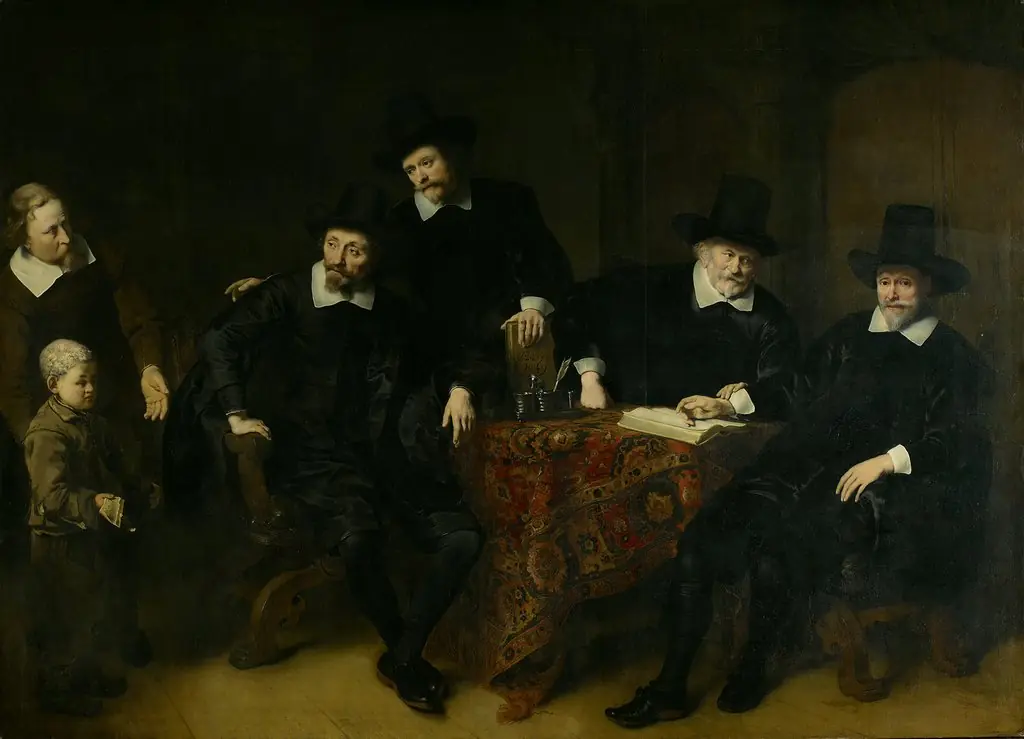 The Regents of the Leper's house in Amsterdam in 1649
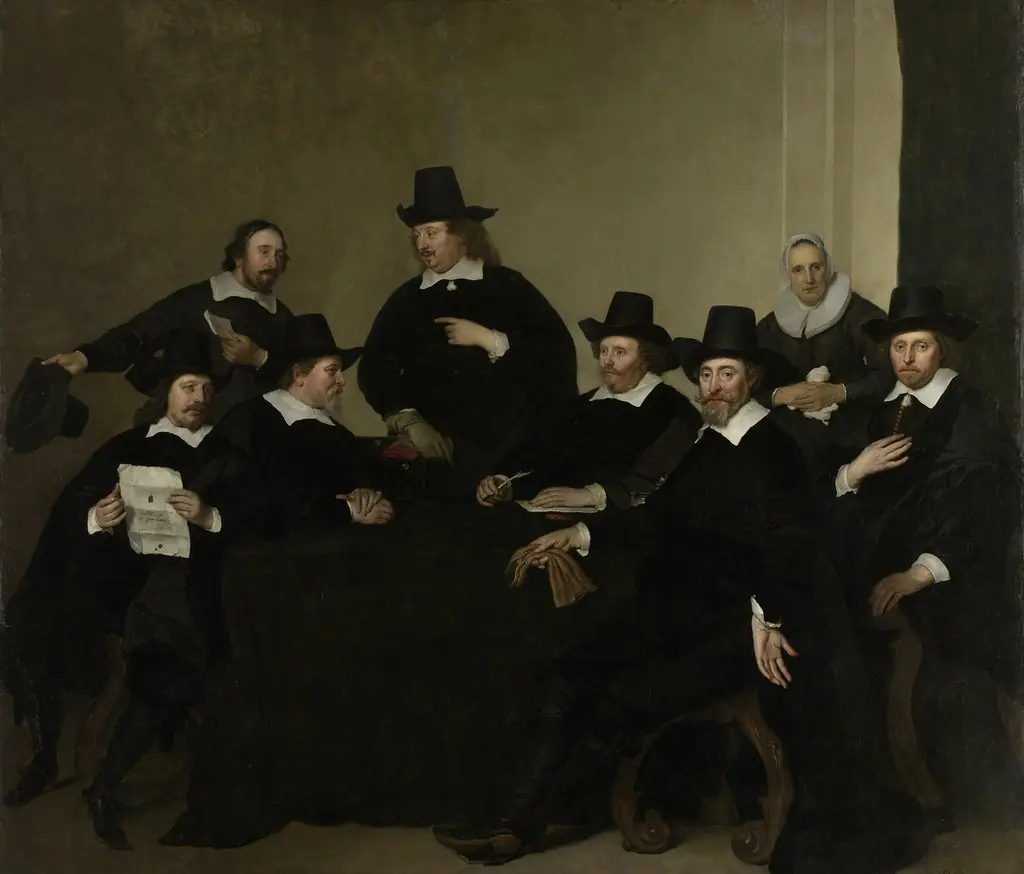 The regents of the Nieuwe Zijds institute for the outdoor relief of the poor, Amsterdam, ca 1650
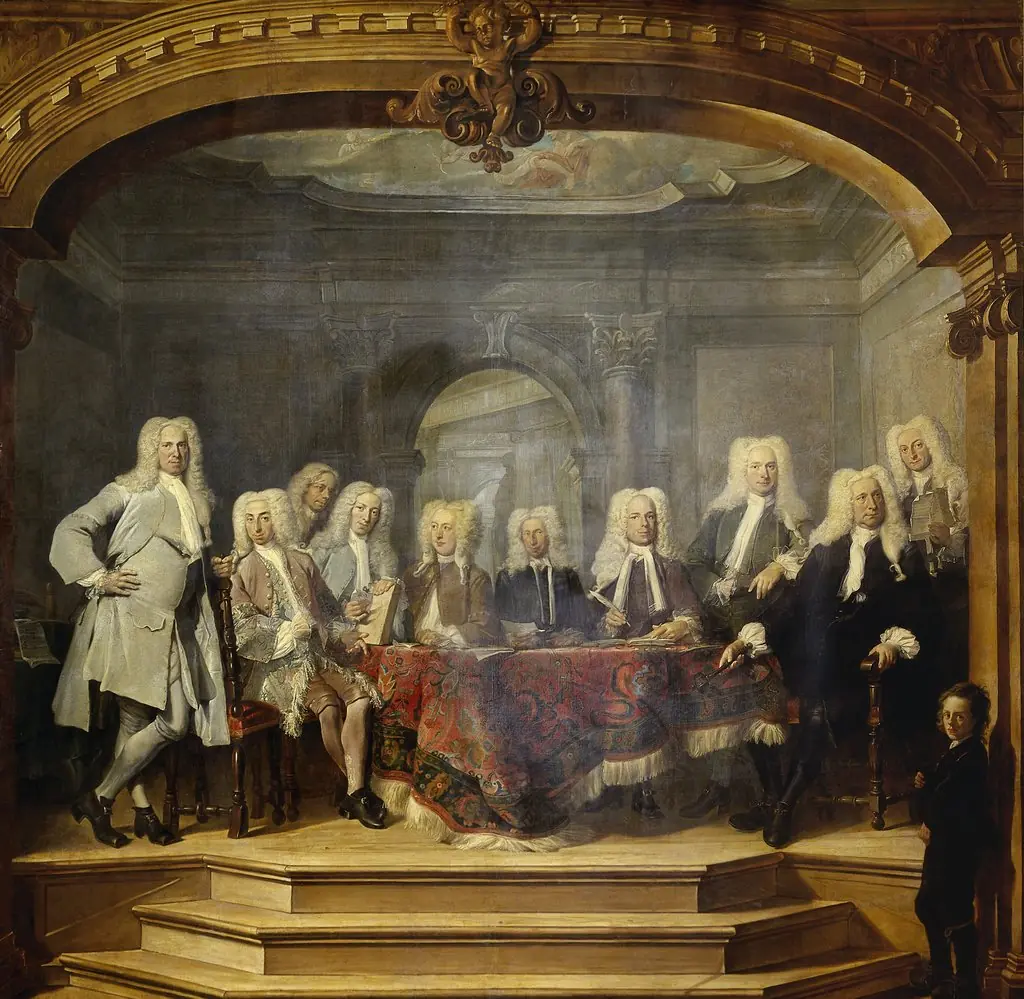 Regents of the Almshouse in 1729
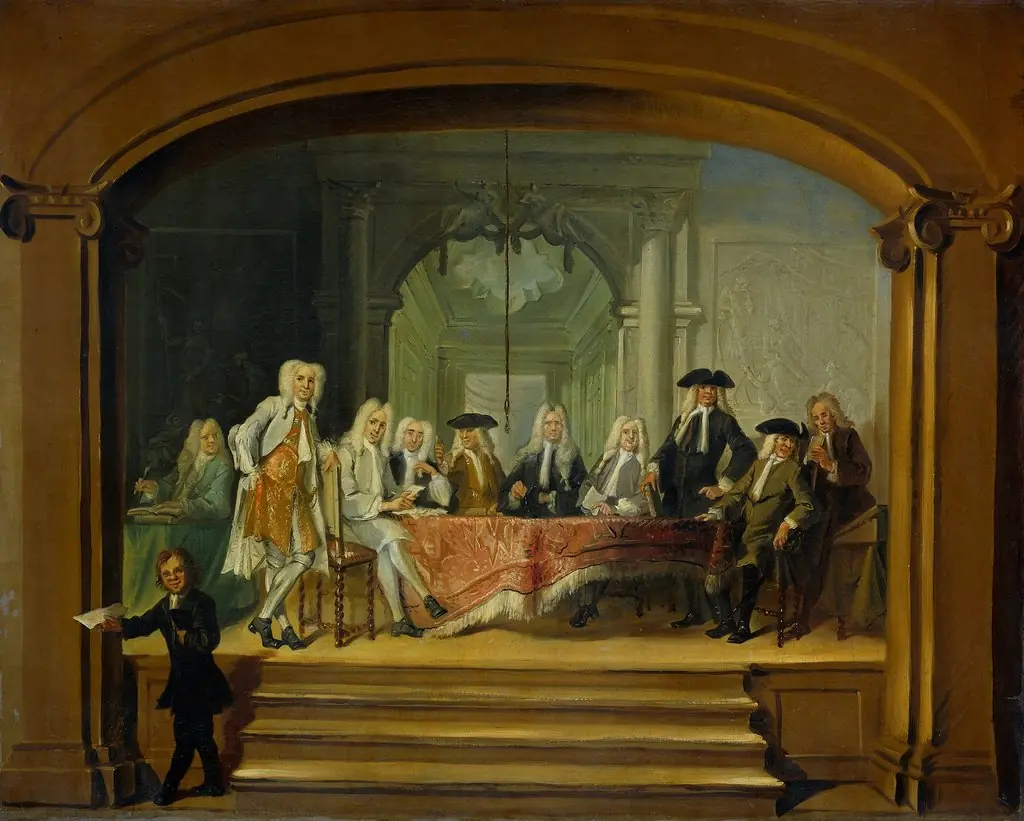 Regents of the Almshouse, 1729
 The regents of the Tuchthuis (house of correction) in Middelburg, 1643