Artwork
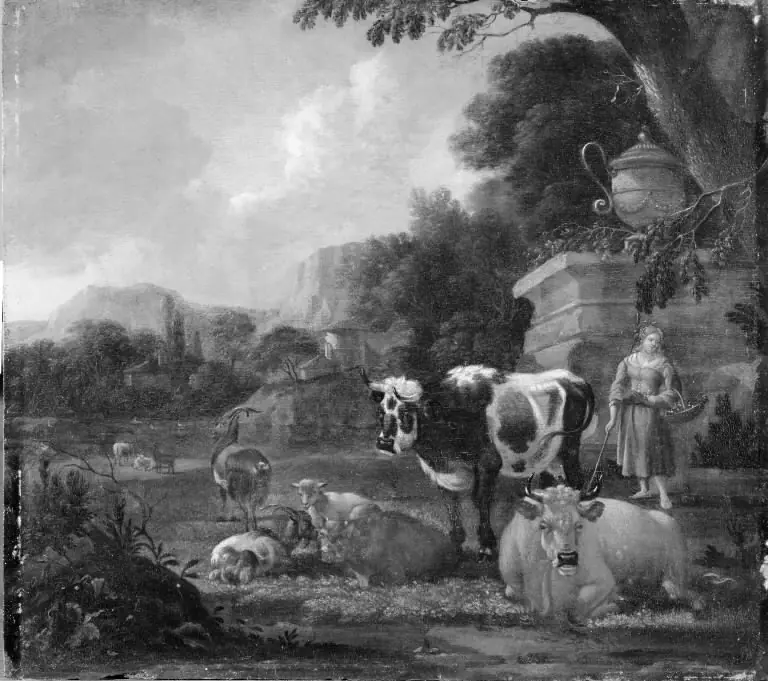
Viehstück mit Hirtin
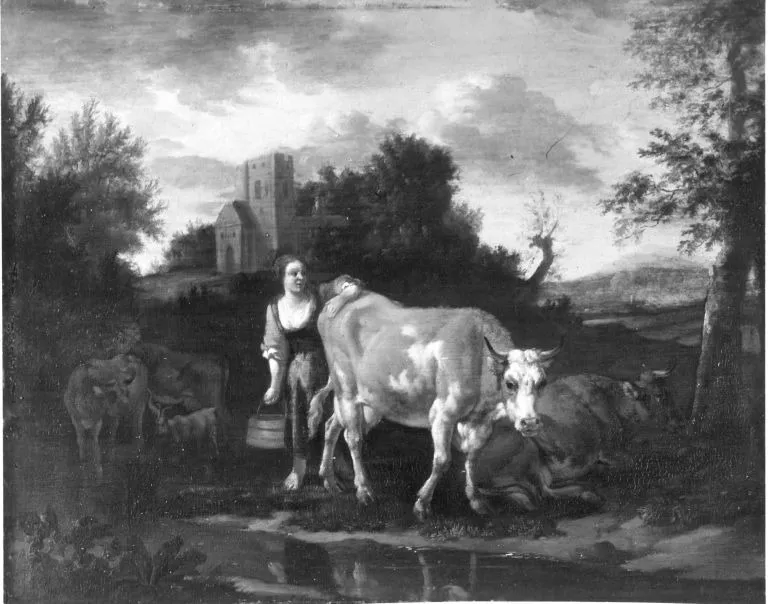
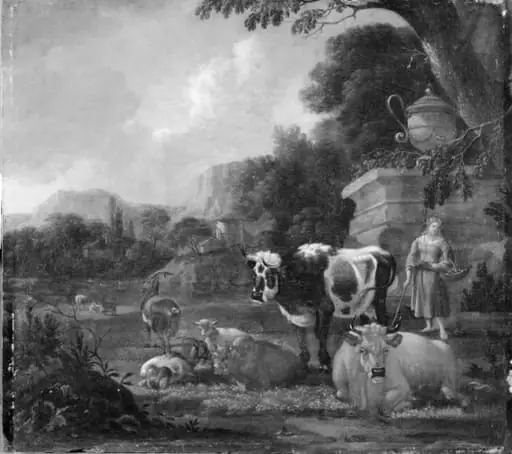
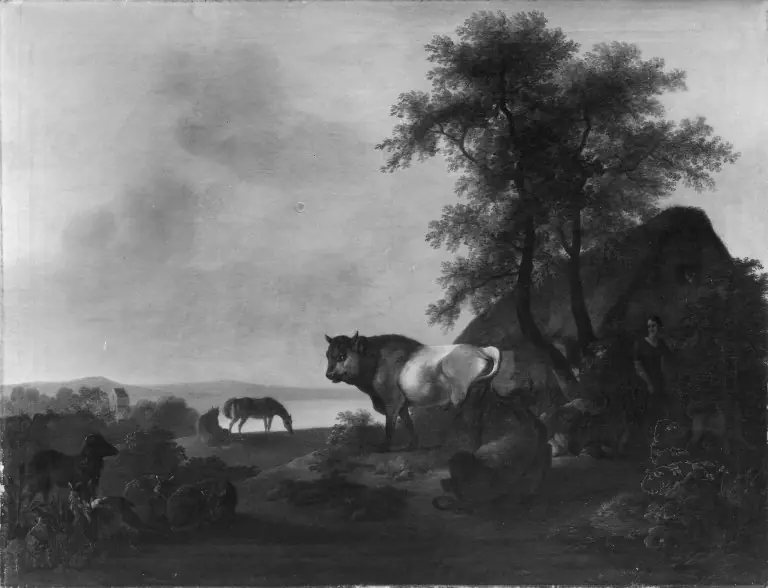
Viehstück mit Hirtin is an unspecified painting by the Dutch Golden Age artist Pieter van der Leeuw. It dates from 1671 and is held in the collection of the Bavarian State Painting Collections.
About this work
Overview
Active in his hometown, he joined the local painters’ guild Pictura in 1669 and later held a leadership role within it.
Pieter van der Leeuw, a Dutch painter born in Dordrecht in 1647, completed Viehstück mit Hirtin in 1671. Active in his hometown, he joined the local painters’ guild Pictura in 1669 and later held a leadership role within it. This work exemplifies the Italianate landscape tradition popular among Dutch artists of the period, blending naturalistic detail with a soft, atmospheric tone characteristic of the era’s pastoral imagery.
Subject & Meaning
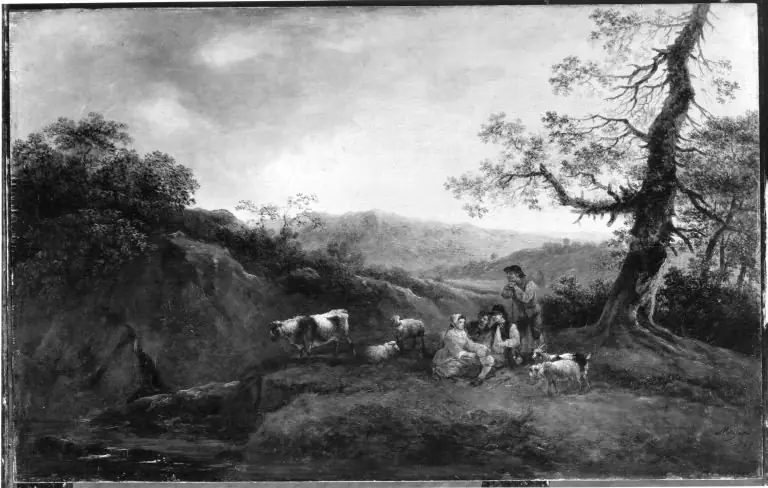
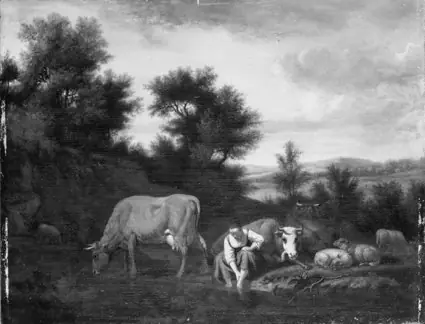
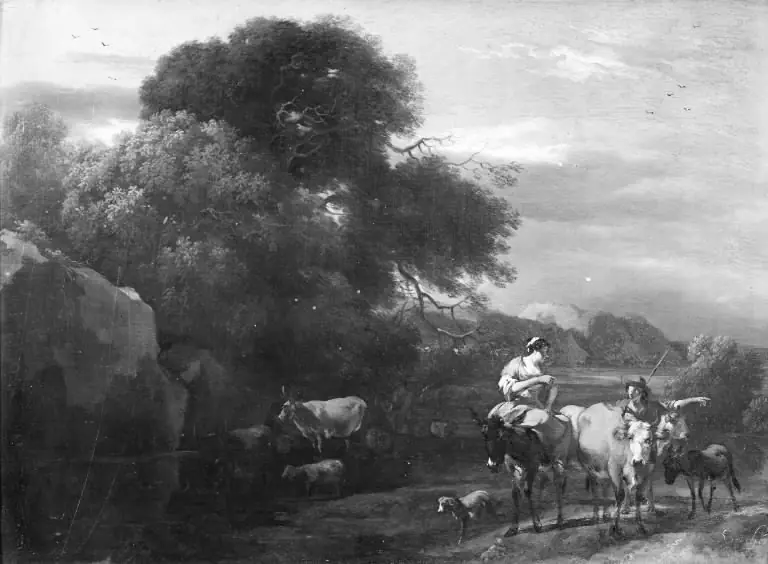
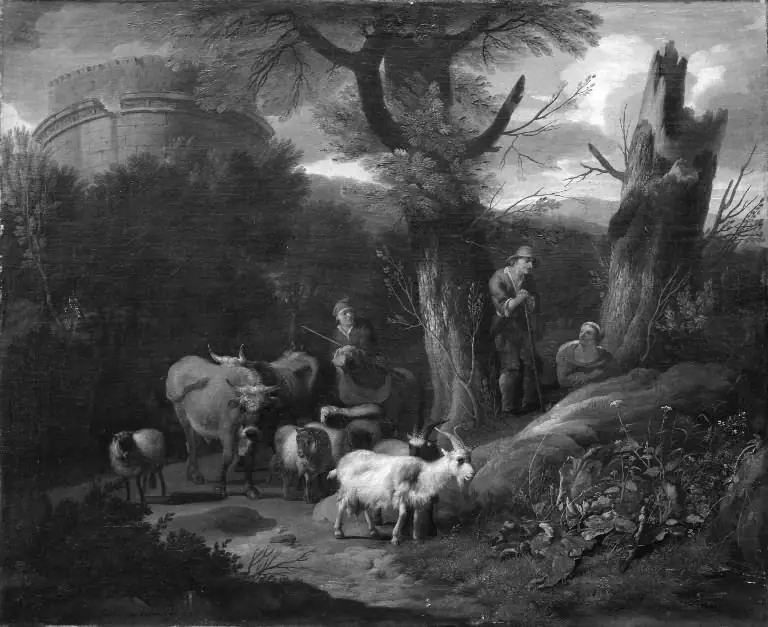
The painting presents a quiet rural moment: a woman in a dark dress and white apron stands beside a large cow, holding a bucket, while smaller livestock graze nearby. The scene avoids narrative drama, instead emphasizing stillness and routine. The shepherdess is not idealized but presented as part of the landscape, suggesting an unembellished view of agricultural life, rooted in observation rather than myth or allegory.
Technique & Style
Van der Leeuw employs subtle gradations of light to model forms and suggest depth, with soft shadows defining the cow’s hide and the folds of the woman’s clothing. The sky, lightly clouded, diffuses natural illumination across the scene. Brushwork is restrained yet precise, particularly in rendering foliage and water reflections.
The composition guides the eye from the foreground figure to the distant animals and hazy horizon, reinforcing spatial harmony.
History & Provenance
Created during Van der Leeuw’s early career, the painting reflects his development within Dordrecht’s artistic community. While its early ownership is undocumented, it aligns with the tastes of mid-seventeenth-century Dutch collectors who favored tranquil, labor-oriented landscapes. The work has remained within private collections since its creation, with no known public exhibition prior to the 20th century.
Context
In the Dutch Golden Age, pastoral scenes like this one responded to urban audiences’ fascination with rural simplicity. Artists such as Adriaen van de Velde influenced Van der Leeuw’s approach, blending Italianate compositional light with Dutch topographical accuracy. Unlike grand historical paintings, these works appealed to middle-class patrons seeking calm, familiar imagery that affirmed the dignity of everyday life.
Legacy
Van der Leeuw’s oeuvre remains relatively obscure compared to his contemporaries, and Viehstück mit Hirtin is among the few securely attributed works. It stands as a quiet example of provincial Dutch landscape painting, illustrating how regional artists adapted broader stylistic trends to intimate, locally grounded subjects. The painting contributes to understanding the diversity of pastoral imagery beyond the most famous names of the era.
Artist & collection
Artist
Pieter van der Leeuw (1647, in Dordrecht – 1679, in Dordrecht) was a Dutch Golden Age landscape painter.