Artwork
Flock of Goats
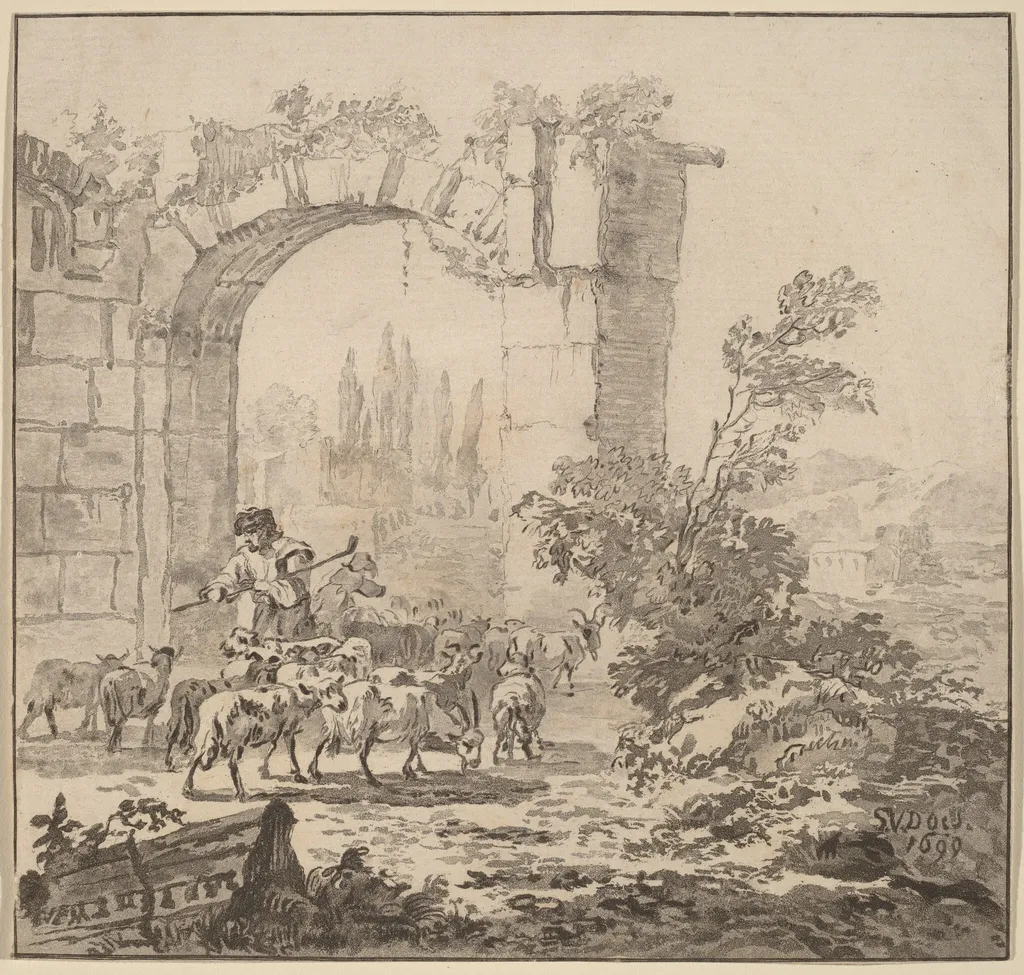
Flock of Goats is a chalk print by the Romanticist artist Cornelis Ploos van Amstel. It dates from 1781 and is held in the collection of the National Gallery of Art.
- Inscription
- Inscribed:lower right in image: S.V.Does / 1699; verso in center in graphite: Geoffererd aan myne waarde / vriend den ... Heer / Jo an Lublink de Jr. PvAms / Amsterdam / 14 Maart 1786; verso along bottom in graphite: Simon van der Does del 1699 / Ploos van Amstel ... F. 178...
About this work
Overview
Flock of Goats is a print created in 1781 by Cornelis Ploos van Amstel, executed in chalk manner and aquatint with black ink on laid paper.
Flock of Goats is a print created in 1781 by Cornelis Ploos van Amstel, executed in chalk manner and aquatint with black ink on laid paper. The work captures a pastoral scene featuring a group of goats within a quiet landscape. Its tonal range and delicate texture reflect the artist’s mastery of intaglio techniques, producing a muted, atmospheric effect that distinguishes it from sharper linear prints of the period.
Subject & Meaning
The composition centers on a small herd of goats scattered across a gentle hillside, some standing, others resting. The animals are rendered with careful attention to posture and natural behavior, suggesting an observation of rural life rather than idealized symbolism. The absence of human figures and the quiet setting evoke a contemplative mood, aligning with 18th-century interests in nature’s quiet dignity.
Technique & Style
Ploos van Amstel employed chalk manner and aquatint to achieve subtle gradations of gray, mimicking the softness of chalk drawings. These techniques allowed for a hazy, atmospheric rendering of fur, foliage, and terrain, avoiding hard outlines. The result is a tactile, almost ethereal quality, where form emerges through tone rather than line, reflecting a shift toward expressive printmaking in the late Enlightenment.
History & Provenance
Created in 1781, the print belongs to a series of landscape and animal studies by Ploos van Amstel, a Dutch artist known for his experimental printmaking. Few impressions of this work survive, and its early ownership is undocumented. It was likely produced in small numbers for private collectors interested in naturalistic subjects, rather than for broad commercial distribution.
Context
In the decades before Romanticism fully emerged, artists across Europe began turning to nature for emotional resonance. Ploos van Amstel’s focus on humble animals in unidealized settings reflects this trend, paralleling contemporaneous Dutch and English prints that valued quiet observation over grand narrative. His work sits between Enlightenment empiricism and the coming Romantic sensibility.
Legacy
Though not widely known today, Ploos van Amstel’s prints influenced later Dutch printmakers interested in tonal experimentation. Flock of Goats exemplifies a transitional moment in print culture, where technical innovation served a quiet, observational aesthetic. It remains a modest but significant example of how printmaking expanded beyond reproduction into personal artistic expression.
Own this work as a print
Artist & collection

 Portrait of Cornelis Ploos van Amstel
 Portrait of Elisabeth Troost (1730-1790)
 Johannes Monnikhoff (1707-1787)
 Portrait of Elisabeth Troost (1730-1790)
 Scene from the Play 'Lubbert Lubbertse of de geadelde boer' by M. van Breda
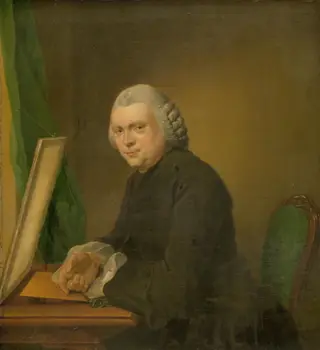 Portrait of Cornelis Ploos van Amstel
 Cavalier and Lady with a Page
 Pancake Woman
- Landscape with Bridge
 Building in Ruins at the Side of a River
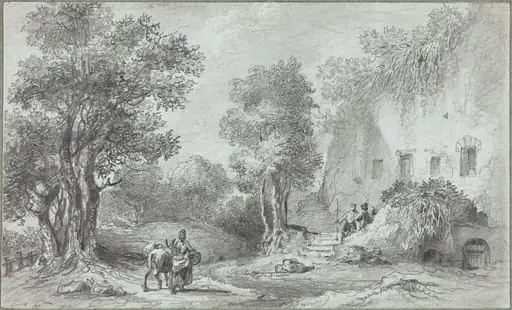 Landscape with Peasants before an Inn
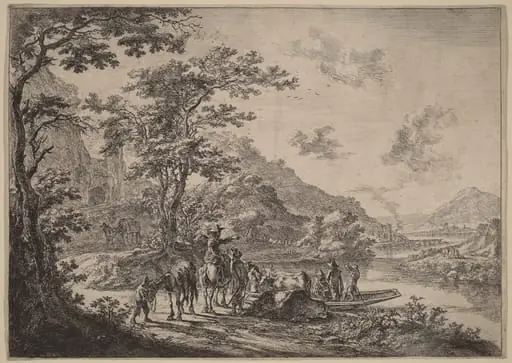 View of the Tiber in the Campagna
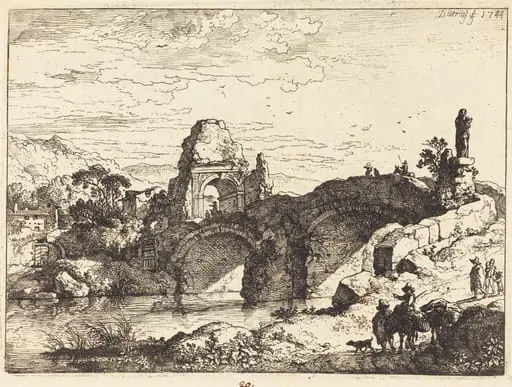 Landscape with a Bridge and Ruined Tower
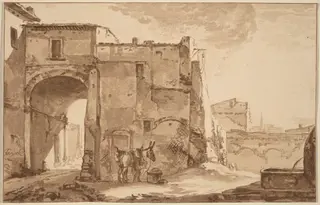 Gateway with Traveler and Mule
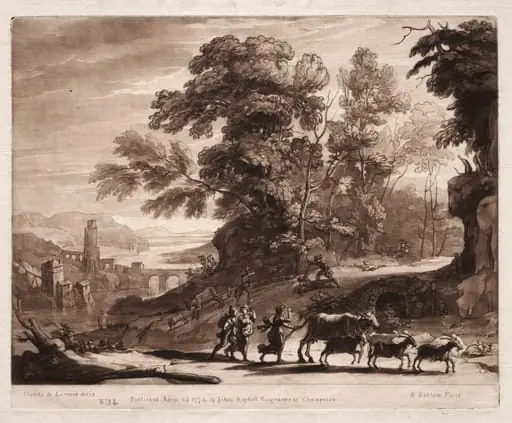 Liber Veritatis: No. 34, Peasants with Cattle attacked by Bandits
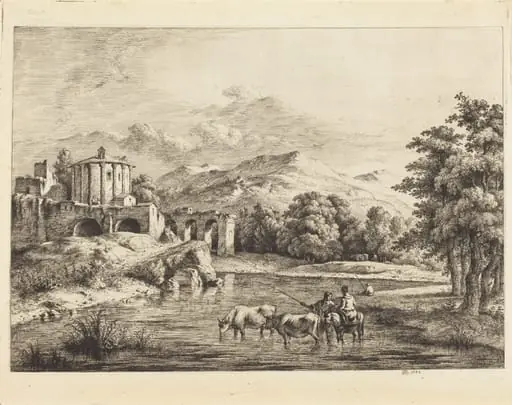 The Temple of Vesta
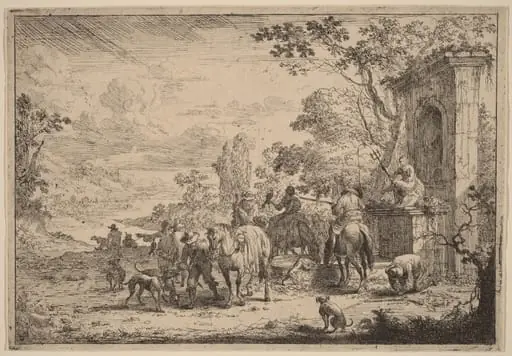 Huntsmen Resting
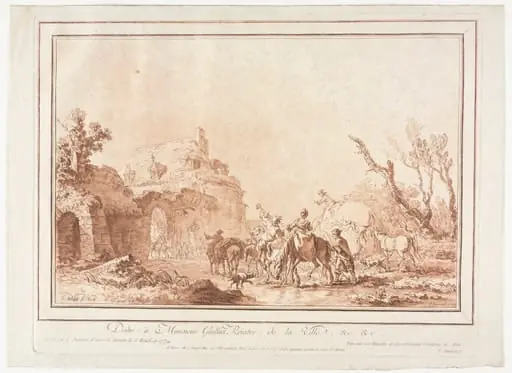 Before the Rampart of a Village
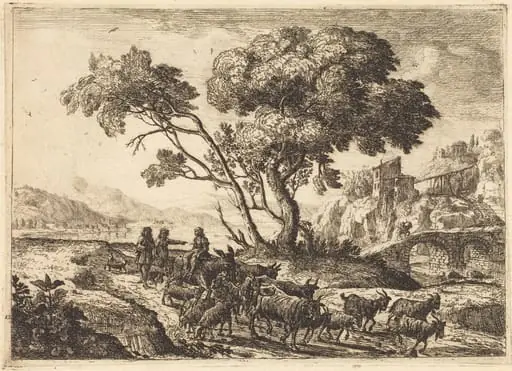 Departure for the Fields
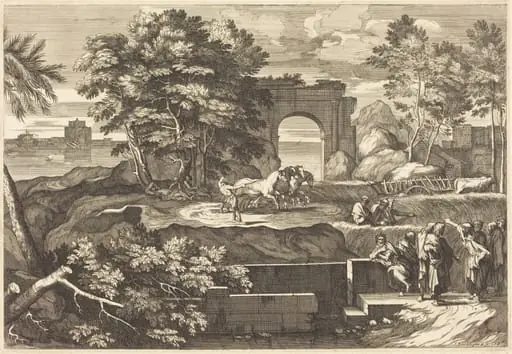 The Pharisees Complain to Our Lord