Artwork
The Prophet Elijah and the Widow of Zarephath
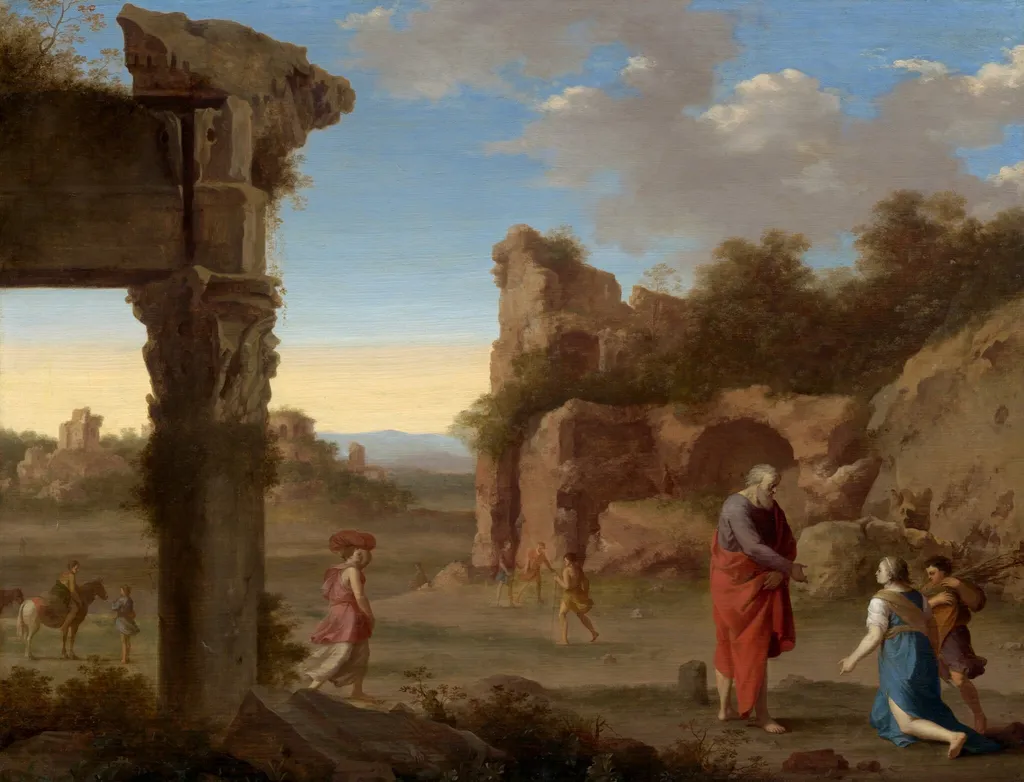
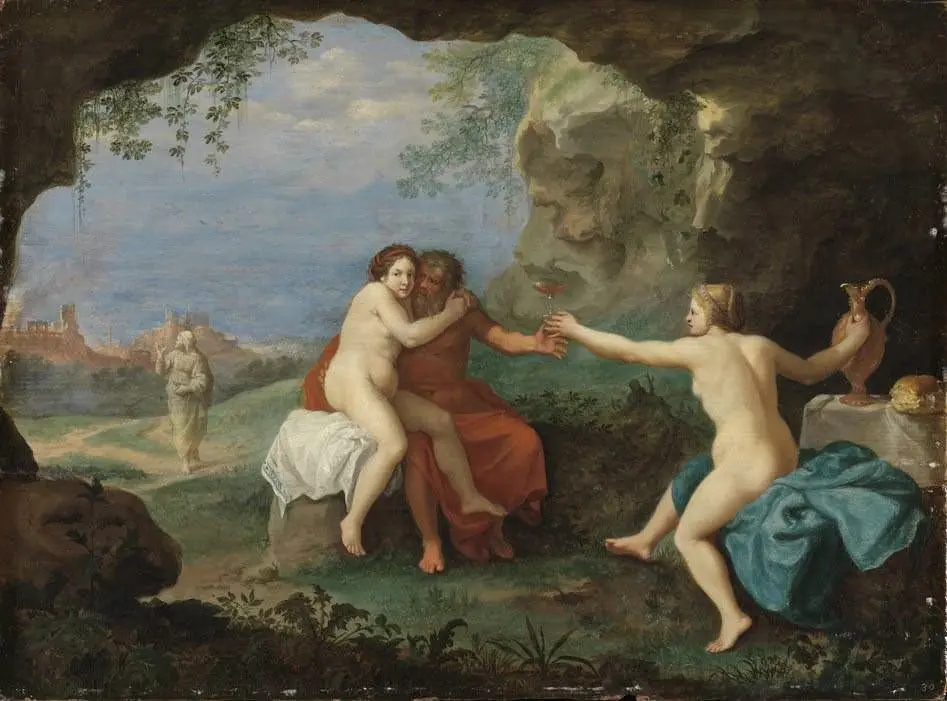
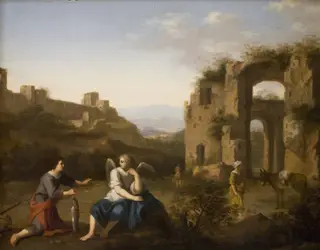
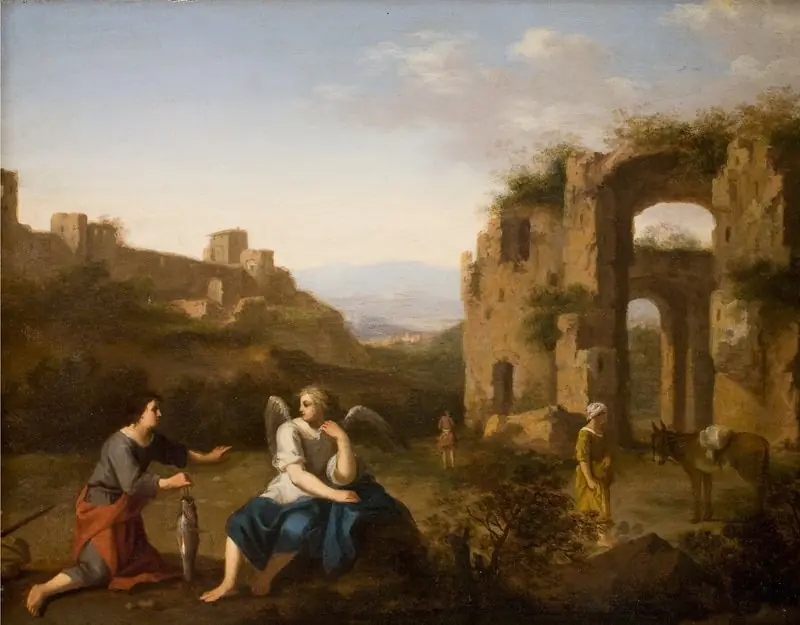
The Prophet Elijah and the Widow of Zarephath is an oil painting by the Baroque artist Cornelius van Poelenburgh. It dates from 1630 and is held in the collection of the National Gallery of Art.
About this work
Subject & Meaning
The iconography emphasizes the miraculous multiplication of flour and oil, symbolizing God’s providence and the reward for faith.
Cornelis van Poelenburch’s The Prophet Elijah and the Widow of Zarephath (1630) depicts the biblical episode from 1 Kings 17:8–16, where the prophet Elijah encounters a widow gathering sticks near Zarephath. The scene centers on the moment of divine intervention: Elijah, identifiable by his prophetic garb, requests sustenance from the impoverished widow, who, despite her scarcity, shares her last meal. The iconography emphasizes the miraculous multiplication of flour and oil, symbolizing God’s providence and the reward for faith.
The widow’s gesture of offering and Elijah’s outstretched hand underscore themes of charity, trust, and divine mercy, while the barren landscape reinforces the miracle’s significance against a backdrop of deprivation.
Technique & Style
Executed in 1630, this religious painting by Cornelis van Poelenburch utilizes oil paint applied to a wooden panel support. The work measures 35.6 centimeters in height and 47 centimeters in width. Physical examination of the verso reveals the presence of unidentified wax seals and a stenciled label from the dealer Thos.
Agnew and Sons, bearing the stock number 3792. While the specific handling of the brushwork and the current conservation state are not detailed in the available records, the piece is classified as a small-scale cabinet painting typical of the artist's output during this period. The medium and support combination reflects standard seventeenth-century Netherlandish practices for works of this intimate dimension.
History & Provenance
Cornelis van Poelenburch executed this oil on panel in 1630. The work's documented ownership begins with the Cottin collection, appearing in a Paris auction conducted by Pierre Remy and Sieur Helle between November and December 1752, where it was sold as a pendant to a depiction of Abraham and Isaac. Le Brun acquired the piece at that sale.
Centuries later, the painting appeared at Sotheby's in London on February 21, 1962, before passing to the dealer Thos. Agnew and Sons. On May 29, 1963, Agnew's sold the work to Joseph F. McCrindle of New York.
McCrindle retained the painting until 2004, when he donated it to the National Gallery of Art in Washington, D.C.
Overview
The Prophet Elijah and the Widow of Zarephath is an oil painting on panel created by Cornelis van Poelenburch around 1630. This religious work depicts a scene from the biblical narrative, focusing on the prophet Elijah. The composition presents a quiet interaction between Elijah and the widow, capturing a specific moment within their larger story.
Own this work as a print
Artist & collection
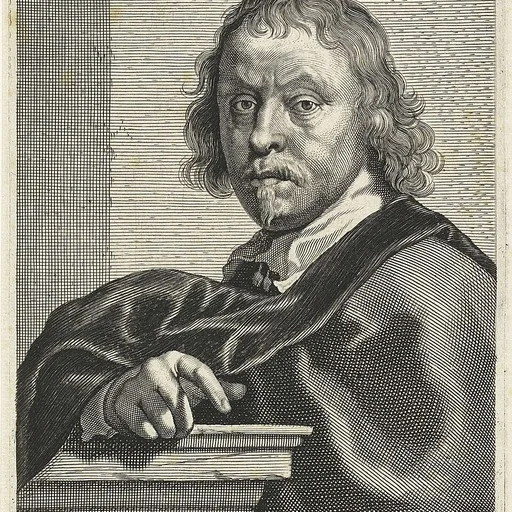
Artist
Cornelis van Poelenburgh or Cornelis van Poelenburch (1594 – 12 August 1667), was a Dutch landscape painter and draughtsman.