Artwork
The Judgment of Paris

The Judgment of Paris is an oil painting by the Baroque artist Claude Lorrain. It dates from 1646 and is held in the collection of the National Gallery of Art.
About this work
Subject & Meaning
Claude Lorrain's 1645 painting depicts the mythological Judgment of Paris, a narrative drawn from classical antiquity.
Claude Lorrain's 1645 painting depicts the mythological Judgment of Paris, a narrative drawn from classical antiquity. The work illustrates the moment Paris, a Trojan prince, is tasked by the gods to award a golden apple to the most beautiful of three goddesses: Hera, Athena, and Aphrodite. As a mythological painting, the subject serves as an allegory for the conflict between duty, wisdom, and desire, with the goddesses often symbolizing sovereignty, strategic warfare, and love respectively.
The composition typically captures the divine assembly in a pastoral setting, blending the human drama of the choice with the serene landscape characteristic of Lorrain's style. This specific narrative represents the pivotal event that ultimately leads to the Trojan War.
History & Provenance
Claude Lorrain completed this oil on canvas in 1645, having been commissioned by François du Val, marquis de Fontenay-Mareuil. The work remained in France for much of the eighteenth century, recorded in the collection of Le Danois by circa 1740 and subsequently owned by Angran, vicomte de Fonspertuis, by 1747. Following Angran's death, the painting appeared in his estate sale conducted by E.F. Gersaint in Paris in March 1748.
The artwork later entered the London market, where it was offered at Christie's in July 1819 and May 1820 under the ownership of a Mr. David, though it failed to sell initially before passing to Urbino Pizzetta. After disappearing from auction records for over a century, the piece was acquired in 1912 by the father of Miss V. Price in England. It remained in her family until her estate sold it at Sotheby's in July 1966, after which Thomas Agnew & Sons purchased it and sold it to the National Gallery of Art in February 1969.
The painting is held in the collection of the National Gallery of Art in Washington, D.C., having been acquired by the institution on February 13, 1969. The work entered the museum's holdings through Thomas Agnew & Sons, Ltd. of London, following a sale at Sotheby's in 1966 where it was offered by Miss V. Price, who had inherited it from her father.
Prior to its current residence, the artwork circulated through several private collections, including those of the Marquis de Fontenay-Mareuil, who originally commissioned it, and the Vicomte de Fonspertuis, whose estate sold the piece in Paris in 1748. It later appeared in London sales in 1819 and 1820 under the ownership of a Mr. David before passing to Urbino Pizzetta.
Overview
Claude Lorrain's The Judgment of Paris, an oil on canvas from 1646, exemplifies the French Classical Baroque style. This painting depicts a scene from classical mythology, set within an expansive natural environment. It showcases Lorrain's characteristic method of integrating mythological figures into detailed landscapes, thereby elevating the genre beyond mere scenery to a form of history painting.
Technique & Style
Rendered in oil on canvas, the painting reflects the French Classical Baroque aesthetic through its balanced composition and evocative atmosphere. Lorrain masterfully utilizes contrasts of light and shadow, known as chiaroscuro, to create a profound sense of depth across the broad landscape. This technique, coupled with the meticulous depiction of nature, enhances the narrative's visual and emotional resonance, transforming the landscape into a stage for classical history.
Context
Claude Lorrain, a significant Baroque painter, draughtsman, and etcher, originated from the Duchy of Lorraine but spent most of his professional life in Italy. He became celebrated for his landscape compositions, a genre he often enriched by including small figures. These figures, frequently derived from classical antiquity or biblical texts, imbued his landscapes with historical or mythological import, a practice clearly demonstrated in The Judgment of Paris.

Own this work as a print
Artist & collection

Artist
Claude Lorrain (French:; born Claude Gellée, called le Lorrain in French; traditionally just Claude in English; c.


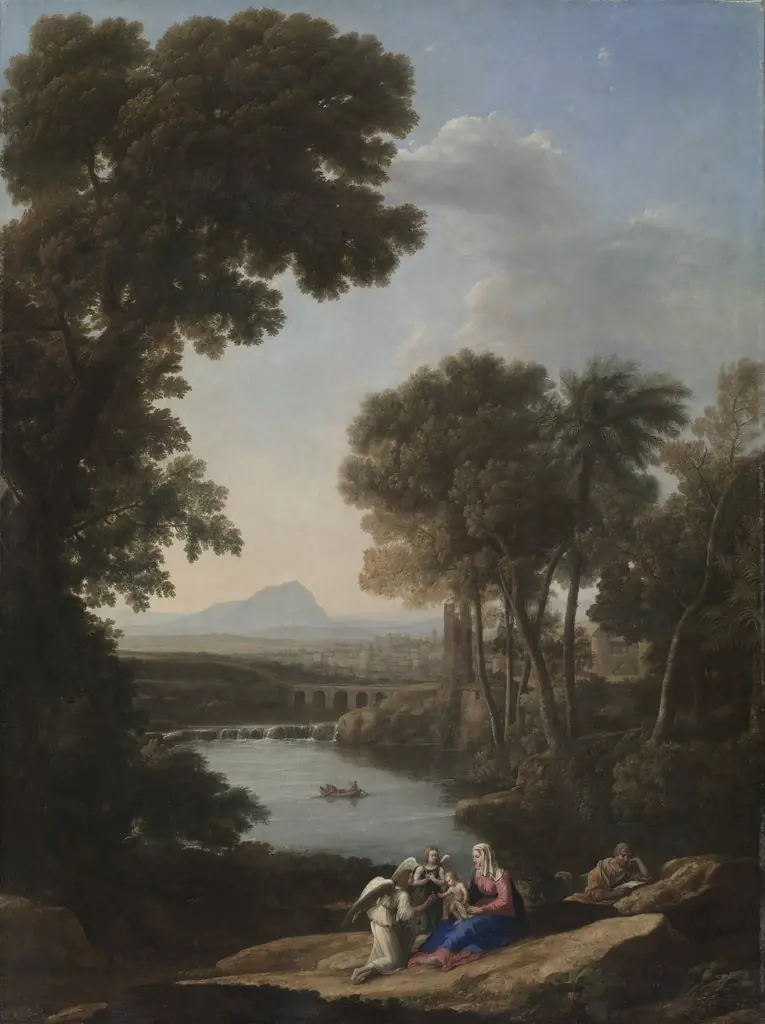
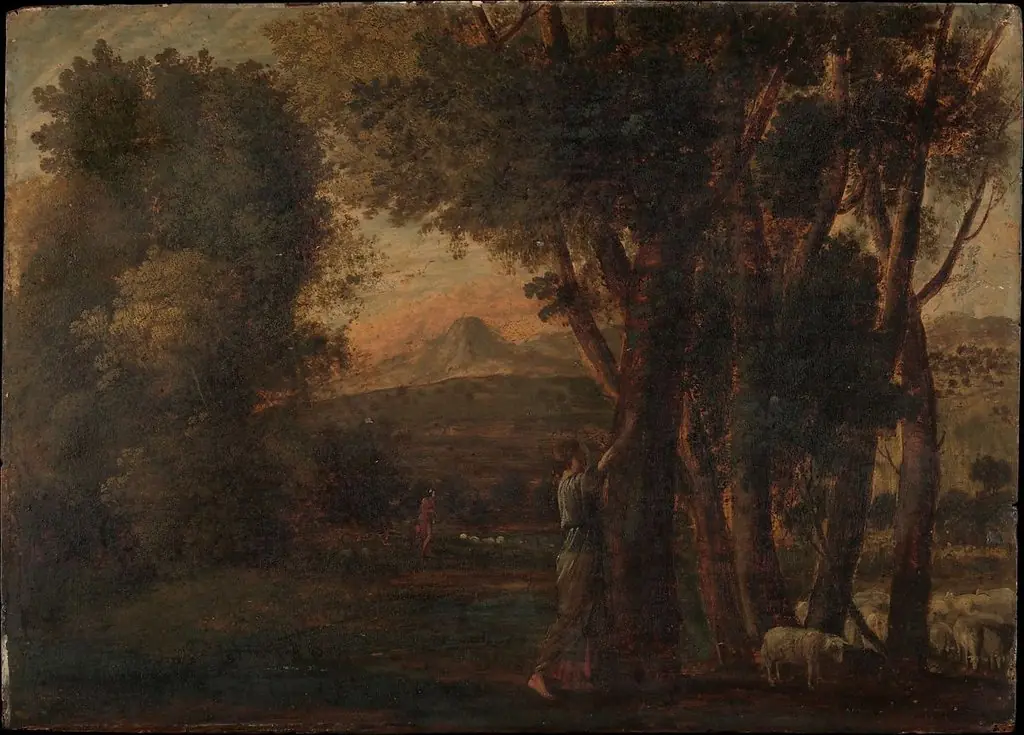

- Italian Landscape
 Mount Athos Carved as a Monument to Alexander the Great
 View of Tivoli with the Flight into Egypt
 Landscape with Polyphemus
 Italian Landscape
 Christ Healing the Blind Man at Jericho
 An Italian Landscape with Staffage from the Latona Story
 Shepherdess and Shepherd with Sheep and Goats
 Classical Landscape with Diana (?) and her Nymphs
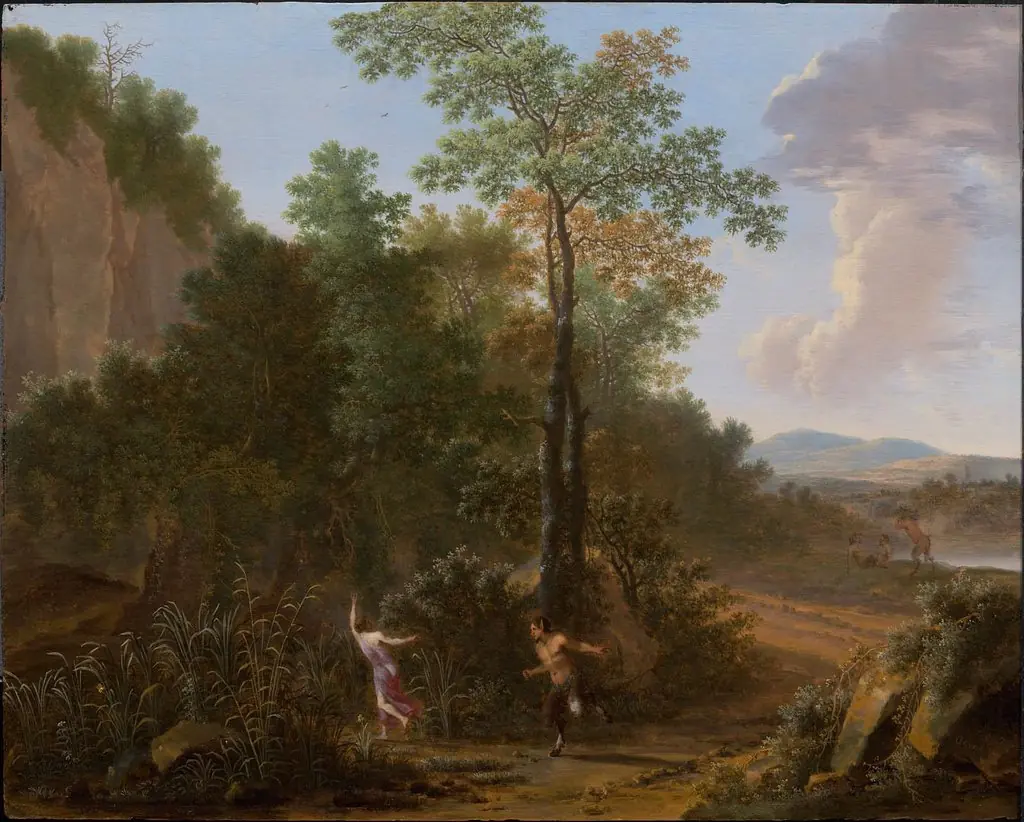 Pan and Syrinx
 Mercury and Argus
 Kylpeviä nymfejä