Artwork
The Expulsion from Paradise
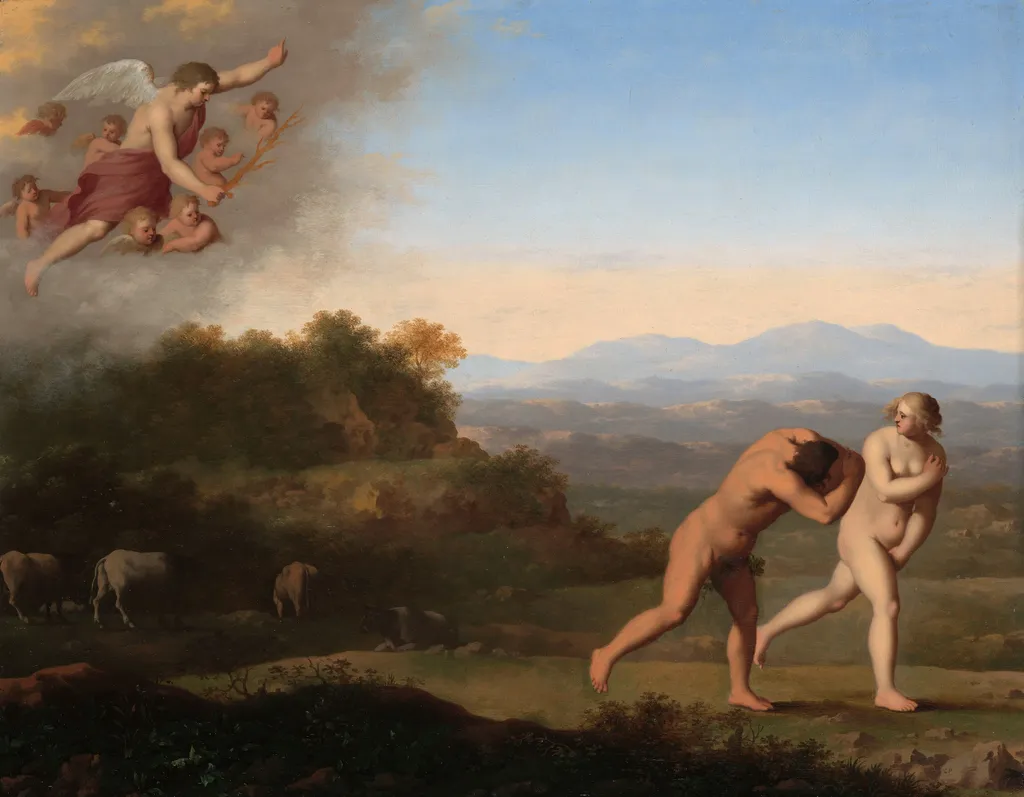
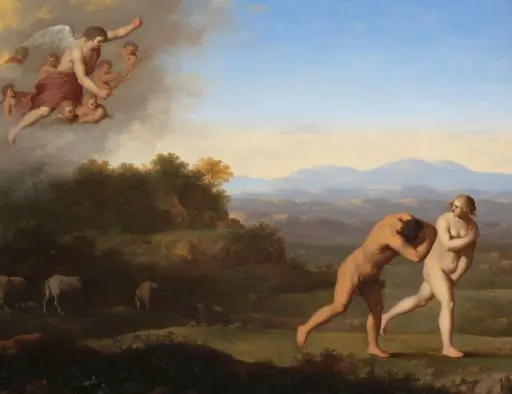
The Expulsion from Paradise is an oil painting by the Dutch Golden Age artist Cornelius van Poelenburgh. It dates from 1646 and is held in the collection of the Rijksmuseum.
About this work
Subject & Meaning
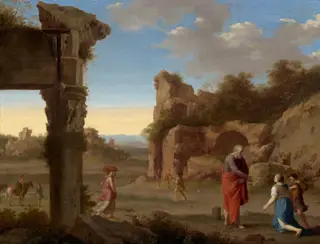
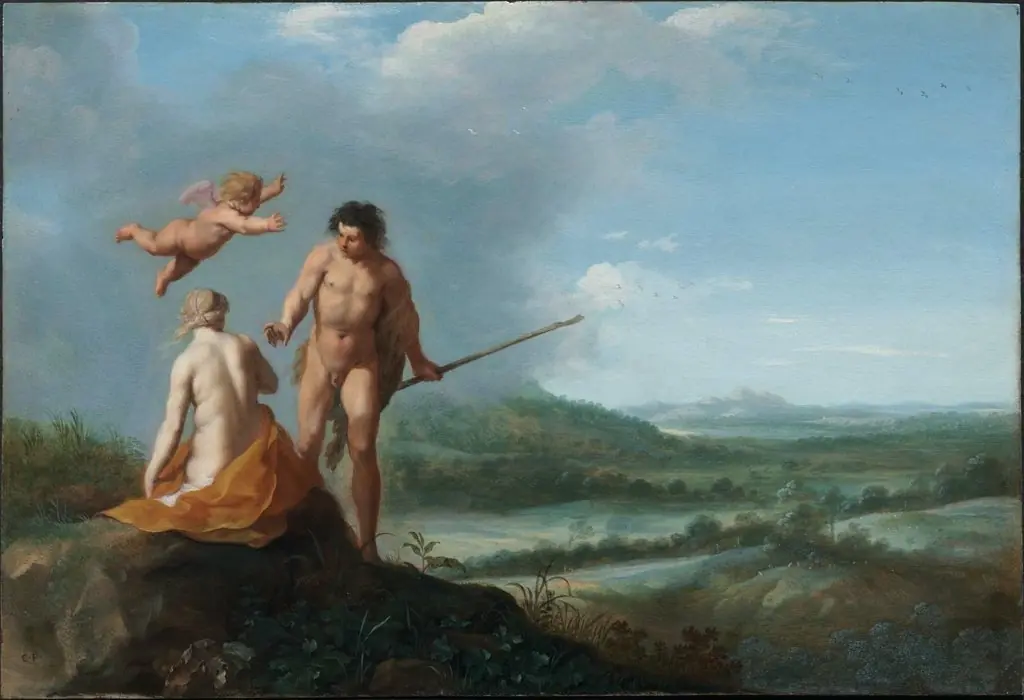
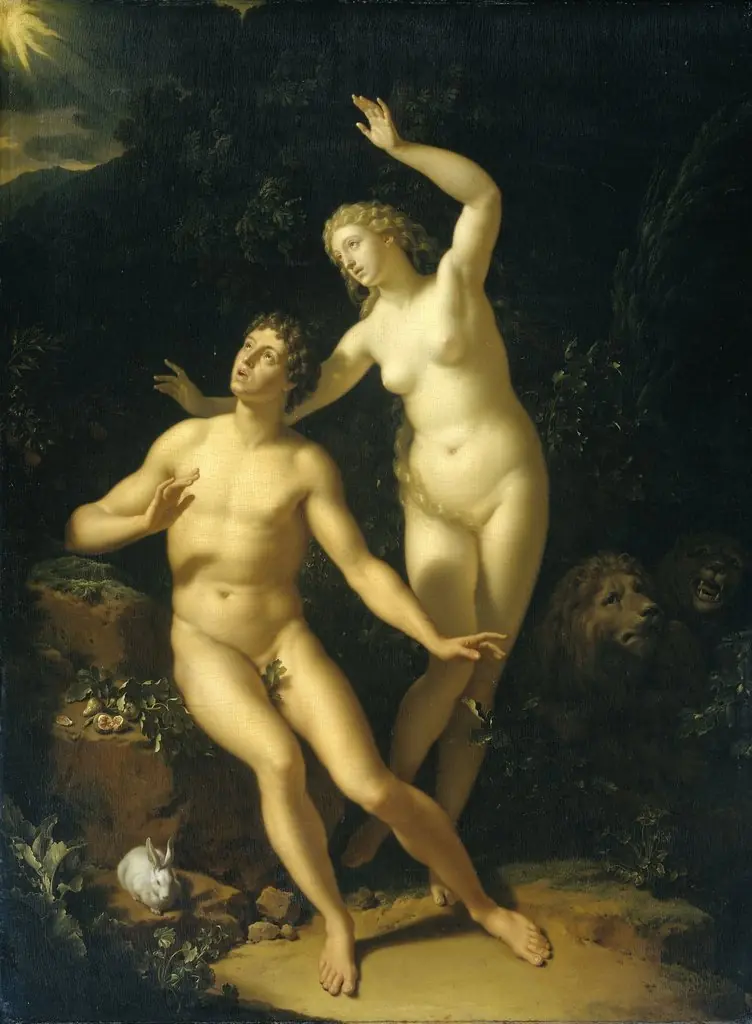
Cornelis van Poelenburch's 1646 oil painting, The Expulsion from Paradise, visually narrates the biblical moment of Adam and Eve's banishment from Eden.
Cornelis van Poelenburch's 1646 oil painting, The Expulsion from Paradise, visually narrates the biblical moment of Adam and Eve's banishment from Eden. The work's primary subject is the expulsion of the first couple, a theme central to religious art. Iconographically, the composition features the nude figures of Adam and Eve alongside an angel, who enforces their departure.
As a landscape painting, the setting frames the couple's transition from a state of grace to exile. The depiction of nudity serves to highlight the loss of innocence following their transgression. By focusing on the emotional and physical act of leaving paradise, the artwork represents the foundational theological concept of humanity's fall and subsequent separation from the divine presence.
Technique & Style
The Expulsion from Paradise is an oil painting on panel, measuring 30 by 38 centimetres. Executed in 1646 by Cornelis van Poelenburch, the work belongs to the religious art genre and integrates multiple pictorial categories, including nude and landscape painting. The depiction of Adam and Eve at the moment of their expulsion, accompanied by an angel, situates the biblical narrative within a natural setting.
The small scale of the panel support suggests an intimate, finely detailed handling characteristic of Dutch Golden Age cabinet pictures. The medium of oil on panel allows for precise rendering of the human form and landscape elements, typical of van Poelenburch's refined technique.
History & Provenance
Cornelis van Poelenburch painted The Expulsion from Paradise in 1646 in oil on a panel measuring 30 by 38 cm. The work depicts the biblical expulsion of Adam and Eve from Eden, led by an angel, consistent with the artist's small-scale cabinet paintings of religious subjects set in Italianate landscapes. It later formed part of the collection of Adriaan Leonard van Heteren Gevers, the Kabinet van Heteren Gevers, which entered the Rijksmuseum in Amsterdam, where the painting remains. While a specific accession inventory number is not detailed in the provided records, the work is classified as a religious painting incorporating nude figures and landscape elements, consistent with the artist's style during the mid-seventeenth century.
Overview
Cornelius van Poelenburgh's The Expulsion from Paradise, an oil painting from 1646, exemplifies his characteristic small-scale biblical scenes set within Italianate landscapes. The work captures the dramatic moment when Adam and Eve are cast out of Eden by an angel. It is a notable example of Dutch Golden Age painting and is housed in the Rijksmuseum.
Context
Created in 1646, this work reflects the artistic trends of the Dutch Golden Age, a period of significant cultural and artistic flourishing in the Netherlands. Cornelius van Poelenburgh, known for his small-scale compositions, spent time in Rome during the early 17th century. His exposure to classical and Italianate landscapes profoundly influenced his distinctive approach to integrating biblical narratives into pastoral settings, a characteristic feature of his oeuvre.
Own this work as a print
Artist & collection
Artist
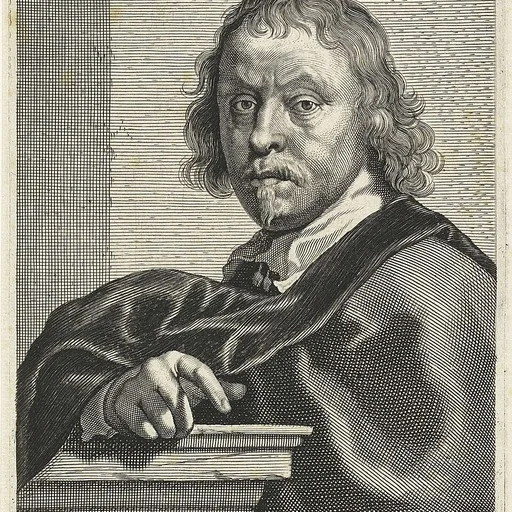
Cornelis van Poelenburgh or Cornelis van Poelenburch (1594 – 12 August 1667), was a Dutch landscape painter and draughtsman.