Artwork
Bathing girls
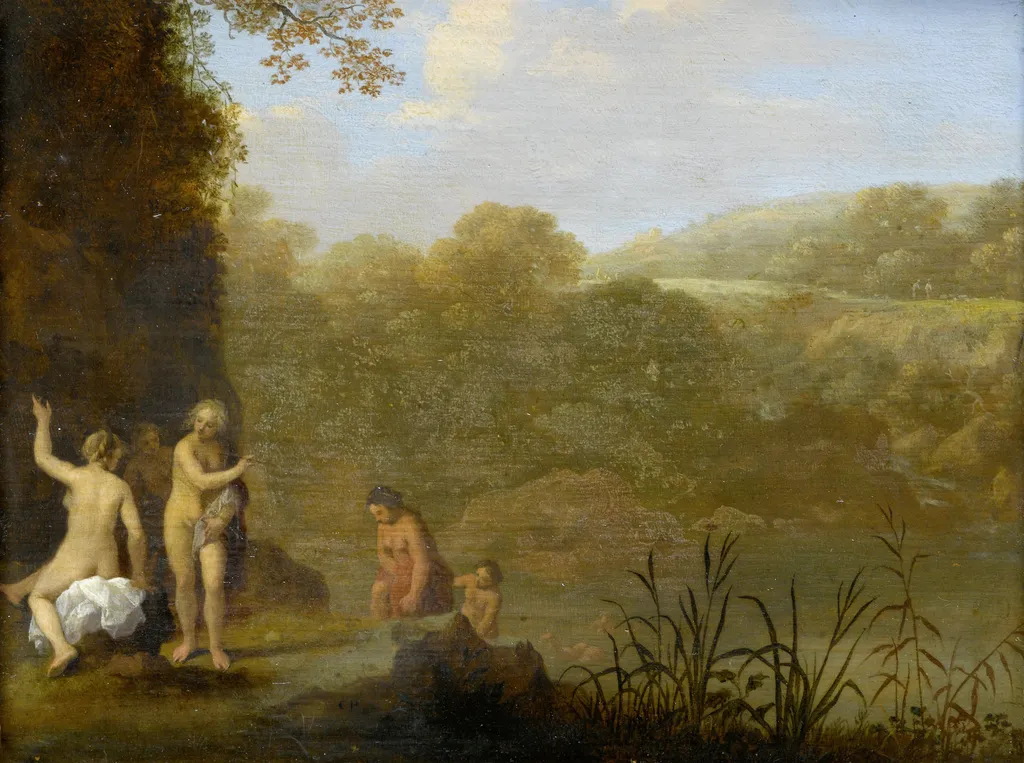
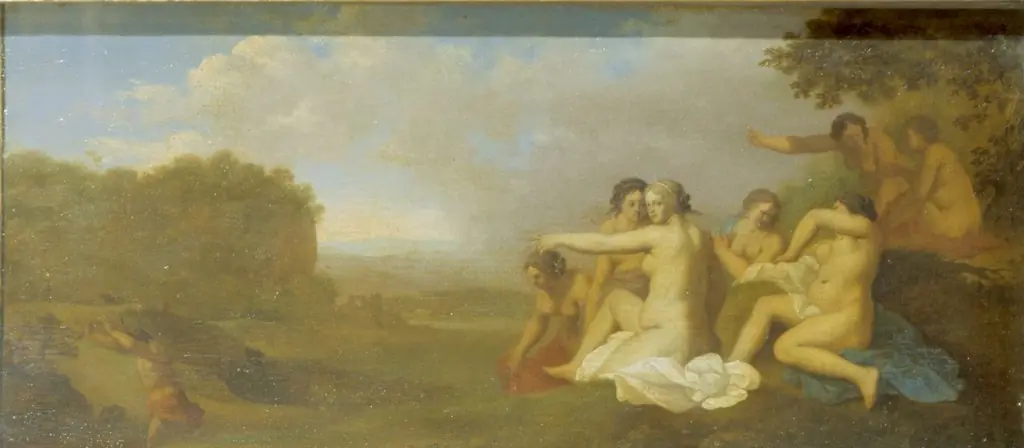
Bathing girls is an oil painting by the Dutch Golden Age artist Cornelius van Poelenburgh. It dates from 1646 and is held in the collection of the Rijksmuseum.
About this work
Technique & Style
The artist’s handling is characterized by fine, meticulous brushwork, particularly evident in the delicate rendering of foliage, flesh, and water.
Cornelius van Poelenburgh’s Bathing girls (1646) is executed in oil paint on a wooden panel support, measuring 13.5 × 18 cm. The artist’s handling is characterized by fine, meticulous brushwork, particularly evident in the delicate rendering of foliage, flesh, and water. The medium’s luminous quality allows for subtle gradations of light and shadow, enhancing the idyllic, pastoral atmosphere.
Stylistically, the work aligns with the Dutch Italianate tradition, combining Northern European precision with Italianate landscape elements. The figures, though nude, are idealized rather than naturalistic, posed within a serene, arcadian setting. The composition’s shallow spatial depth and emphasis on harmonious color relationships reflect van Poelenburgh’s focus on decorative elegance and classical themes.
History & Provenance
Cornelius van Poelenburgh painted Bathing girls in 1646, as established by its inception date. The work was executed in oil on panel, measuring 13.5 × 18 cm. No direct documentation of its initial commission or early ownership has surfaced, though it later entered the collection of Adriaan Leonard van Heteren Gevers, a notable Dutch art collector.
Following Van Heteren Gevers’ ownership, the painting became part of the Kabinet van Heteren Gevers, a curated assemblage of artworks. It was subsequently acquired by the Rijksmuseum in Amsterdam, where it remains in the institution’s holdings.
Cornelius van Poelenburgh's painting Bathing girls (1646) is held in the collection of the Rijksmuseum in Amsterdam. The work forms part of the Kabinet van Heteren Gevers, a specific bequest within the museum's holdings. It was originally owned by Adriaan Leonard van Heteren Gevers before entering the public collection.
The painting is executed in oil on panel and measures 13.5 cm in height by 18 cm in width.
The provided sources do not contain specific details regarding the work's accession number or a record of its exhibition history.
Context
The work Bathing girls by Cornelius van Poelenburgh holds a significant place in 17th-century Dutch painting, reflecting the period's fascination with idealized landscapes and figure studies. Its creation in 1646 aligns with the artist's documented activity during the Dutch Golden Age, though it diverges from typical genre scenes by combining landscape elements with a small-scale nude figure group. The painting's composition and execution demonstrate techniques characteristic of Van Poelenburgh's approach to blending naturalistic settings with mythological or allegorical subjects.
As part of the Rijksmuseum's collection since its acquisition by Adriaan Leonard van Heteren Gevers, the work contributes to scholarly understanding of Dutch Baroque landscape painting's evolution and the artist's role in bridging traditional and innovative practices within the era's art market.
Scholarship emphasizes its importance as an example of specialized painting genres popular among collectors, while its stylistic features continue to inform analyses of Dutch art's technical and thematic developments.
Overview
Cornelius van Poelenburgh’s oil painting Bathing Girls was completed in 1646. Executed on a modestly sized panel, the work presents a tranquil woodland scene where several nude figures are shown bathing beside a water source. The composition reflects the artist’s characteristic blend of landscape and figural elements, typical of his output during his Roman period.
Subject & Meaning
The central motif features young women immersed in a natural setting, their bodies rendered with a calm, unembellished realism. The surrounding trees and foliage frame the figures, suggesting an intimate interaction between humanity and nature. While the scene lacks overt narrative, it evokes themes of leisure, purity, and the pastoral ideal prevalent in 17th‑century Dutch art.

Own this work as a print
Artist & collection
Artist
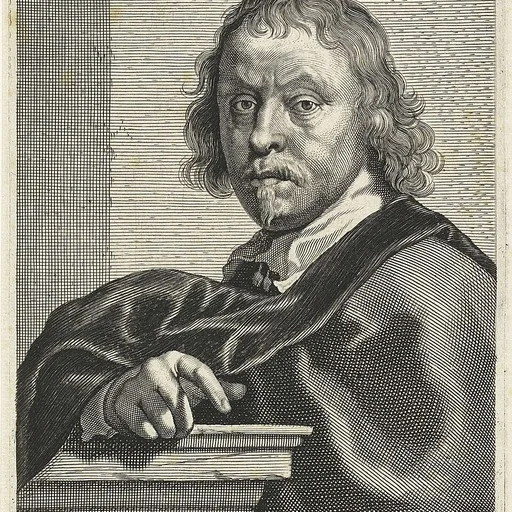
Cornelis van Poelenburgh or Cornelis van Poelenburch (1594 – 12 August 1667), was a Dutch landscape painter and draughtsman.


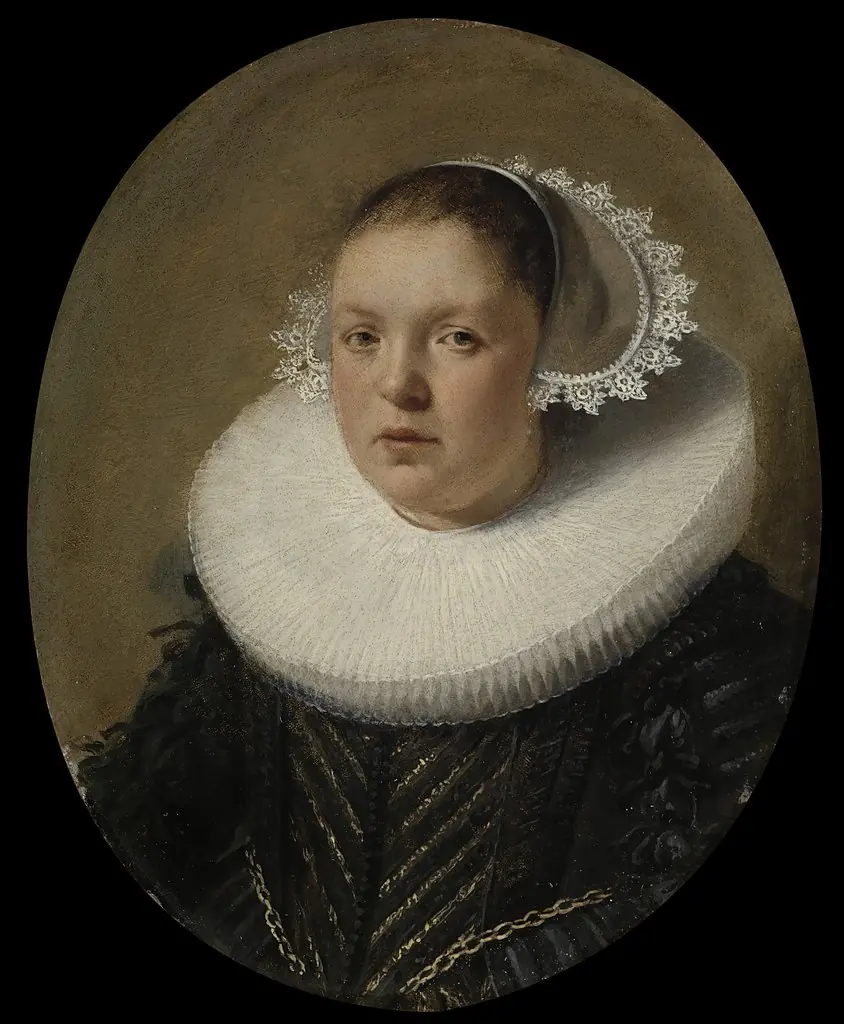
- Bathing Nymphs
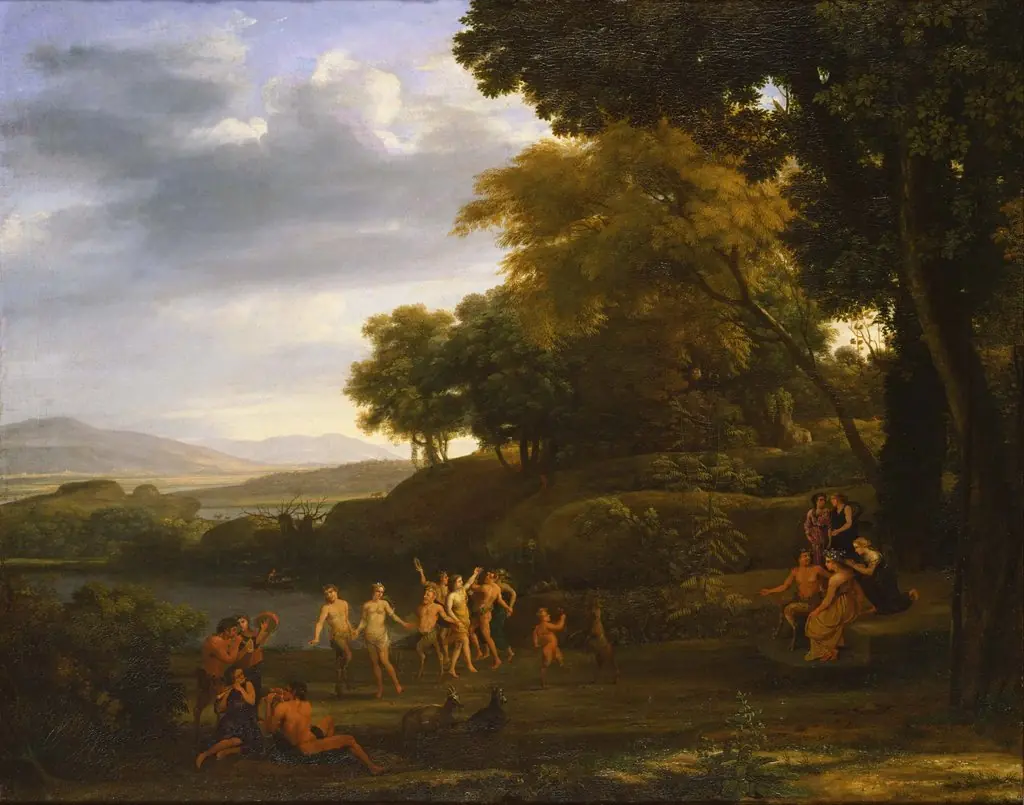 Landscape with Dancing Satyrs and Nymphs
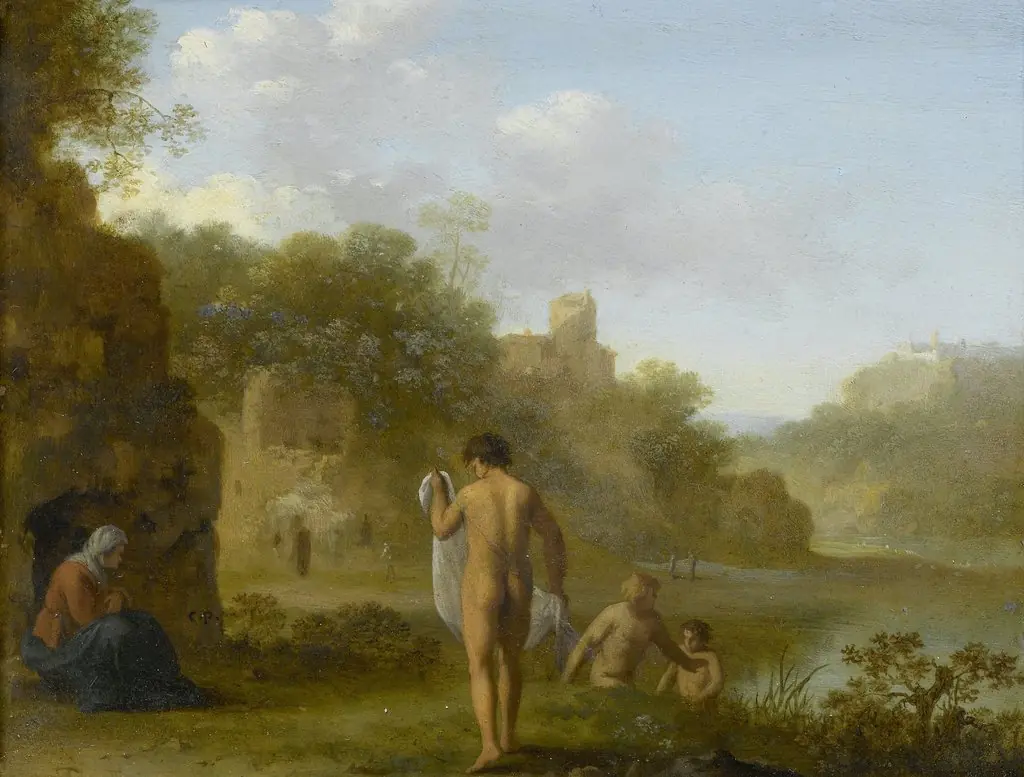 Bathing men
 Diana and her Attendants
 Nymphs in the Bath
 Wooded Landscape with Bathing Nymps
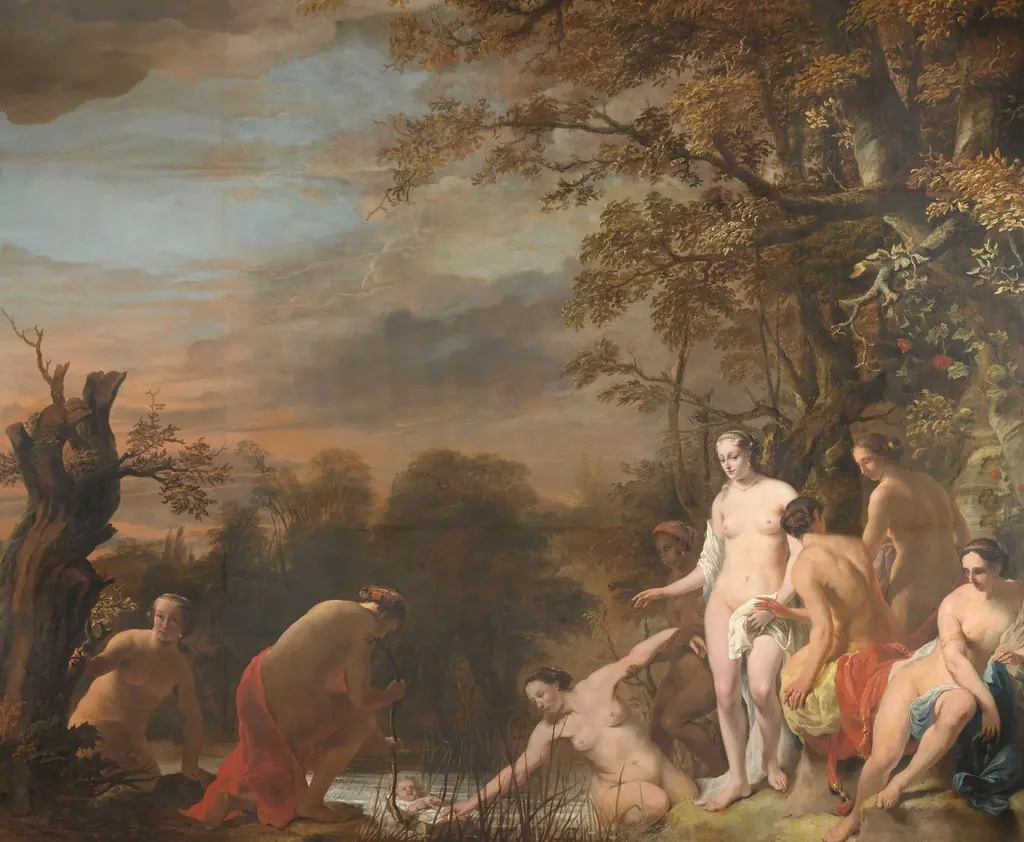 Pharaoh's daughter discovers Moses in the rush basket
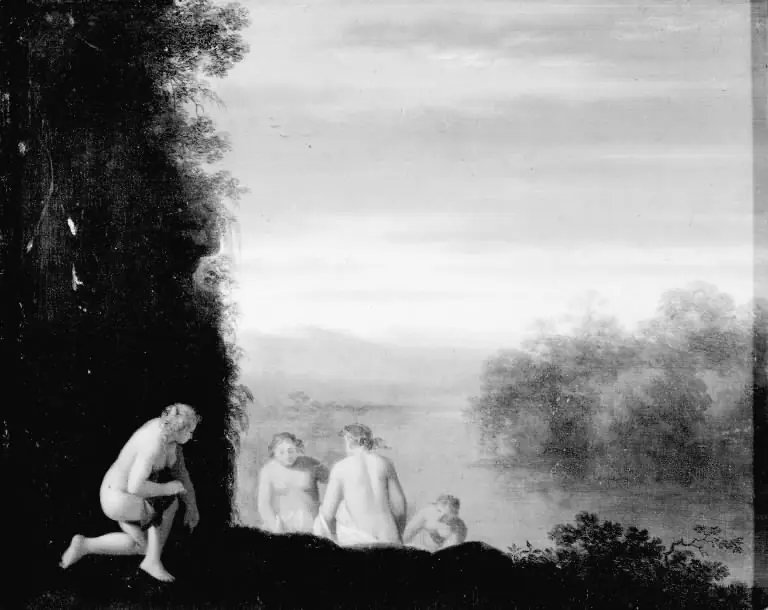 Nymphs in the Bath
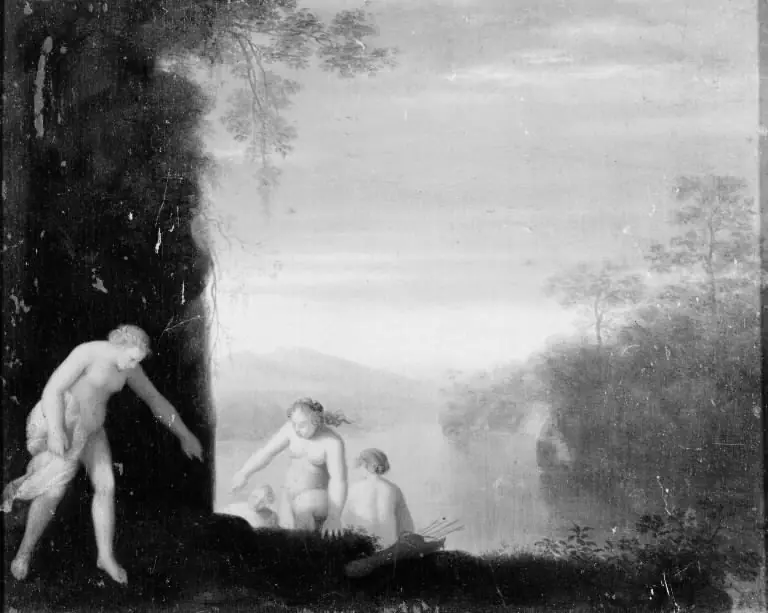 Diana and her Attendants
 Nymphs Bathing
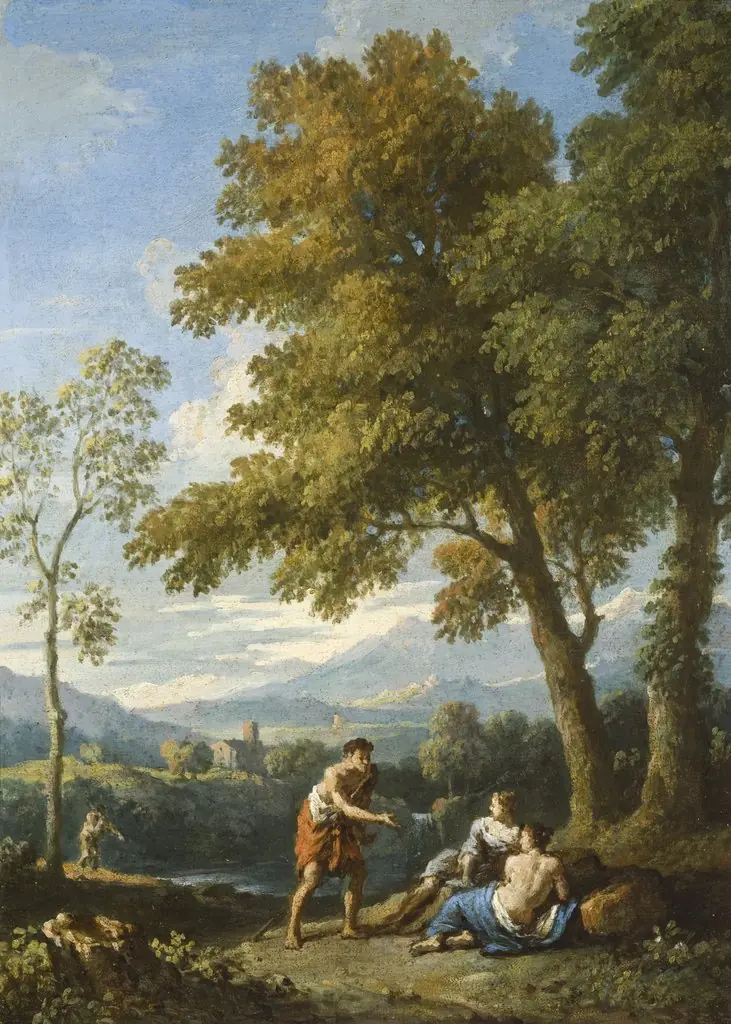 One of a Pair of Views of the Roman Campagna with Figures Conversing
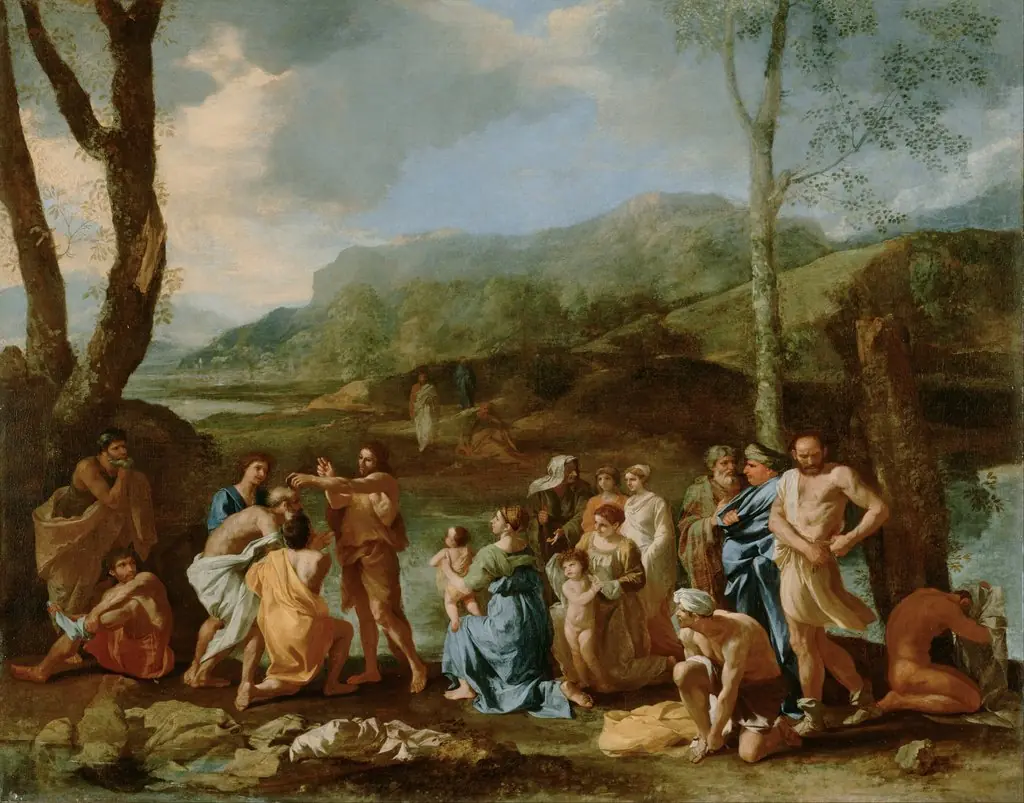 Saint John Baptizing in the River Jordan