Artwork
Maica Domnului cu Iisus
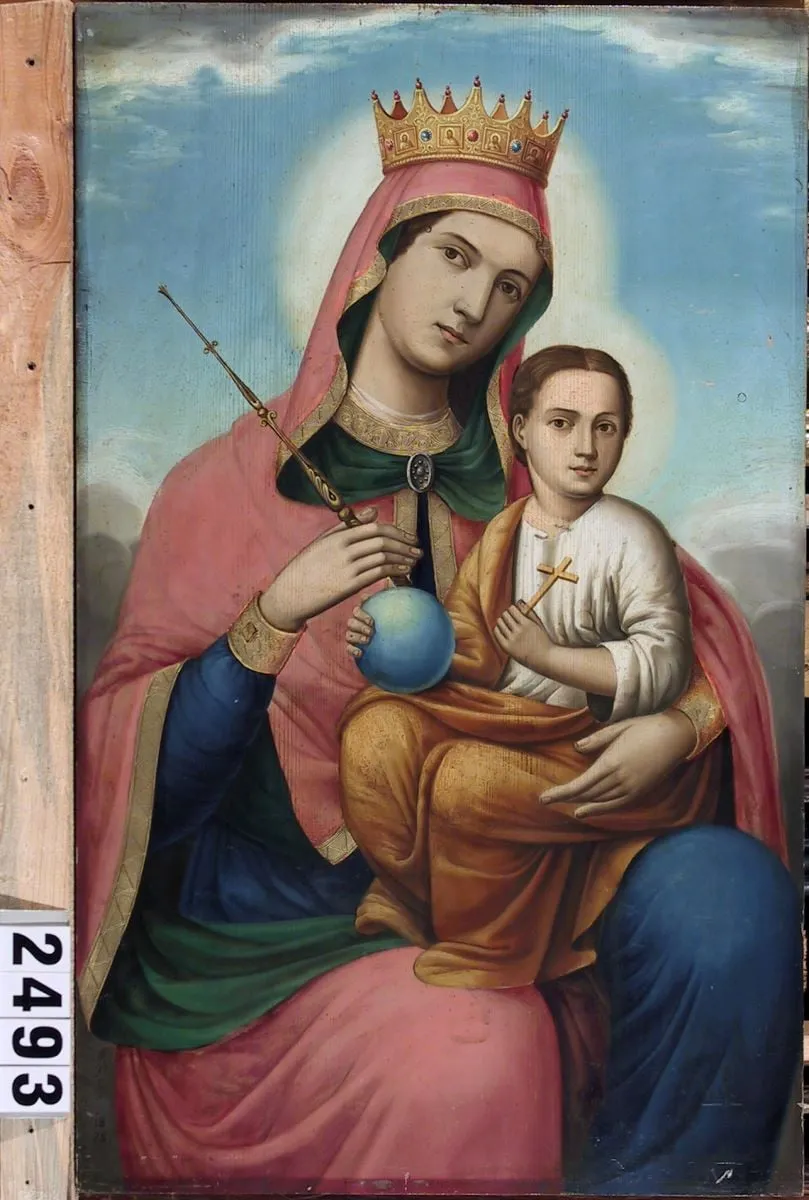
Maica Domnului cu Iisus is a print by the Academic Art artist Mișu Popp. It dates from 1869 and is held in the collection of the Brukenthal National Museum.
About this work
Overview
Executed in oil on canvas, the composition follows traditional religious iconography while incorporating subtle naturalistic elements.
Painted around 1869 by Mișu Popp, this devotional image depicts the Virgin Mary with the infant Jesus. Executed in oil on canvas, the composition follows traditional religious iconography while incorporating subtle naturalistic elements. The figures are centered against a luminous sky, suggesting divine presence through light rather than architectural detail. The work reflects 19th-century Romanian religious art practices, blending spiritual symbolism with emerging academic techniques.
Subject & Meaning
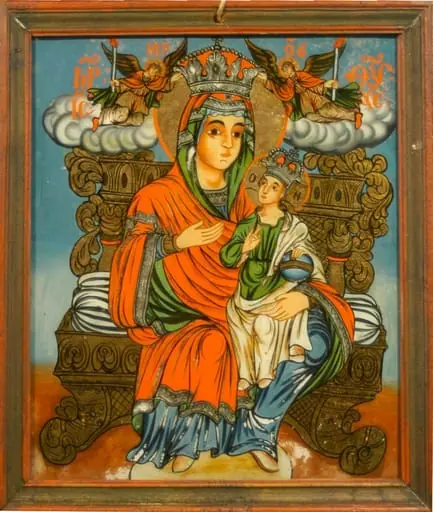
The Virgin Mary, crowned and robed in pink with gold edging, holds a blue globe symbolizing earthly dominion under divine authority. The Christ Child, dressed in modest white and brown, clutches a wooden cross, foreshadowing his sacrificial role. Their gaze and posture convey solemn tenderness, reinforcing themes of maternal care and divine purpose.
The celestial light above them signifies grace descending from heaven, a common motif in Orthodox Christian imagery of the period.
Technique & Style
Popp employs chiaroscuro to model the figures with gentle gradations of light and shadow, lending volume without dramatic contrast. The soft blue background enhances the ethereal quality of the scene, while the gold trim on Mary’s robe adds luminous detail without overt ornamentation. Brushwork is controlled and smooth, typical of academic training, yet retains a quiet intimacy. Surface wear along the edges suggests age and devotional use over time.
History & Provenance
Created in the late 1860s, the painting likely originated in a Romanian ecclesiastical or private devotional context. Its preservation with visible edge wear indicates it was displayed and venerated, possibly in a home chapel or small church. No documented early ownership records exist, but its style aligns with religious commissions from Moldavian or Wallachian workshops of the era, where Popp was active as a painter and iconographer.
Context
In mid-19th century Romania, religious imagery remained central to cultural identity amid national awakening. Artists like Popp bridged Byzantine traditions with Western academic styles, responding to both ecclesiastical demand and emerging national aesthetics. This work reflects a period when Orthodox iconography was being reinterpreted through European techniques, without abandoning symbolic language familiar to local congregations.
Legacy
Though not widely exhibited outside regional collections, the painting exemplifies a transitional phase in Romanian religious art. It preserves the continuity of Marian devotion while integrating naturalism influenced by European academies. Its quiet dignity and technical restraint distinguish it from later, more ornate ecclesiastical works, offering insight into how faith was visually sustained during a time of cultural transformation.
Artist & collection