Artwork
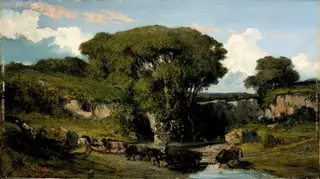
View of the Ruins of St. Radigund's Abbey, Nr Dover
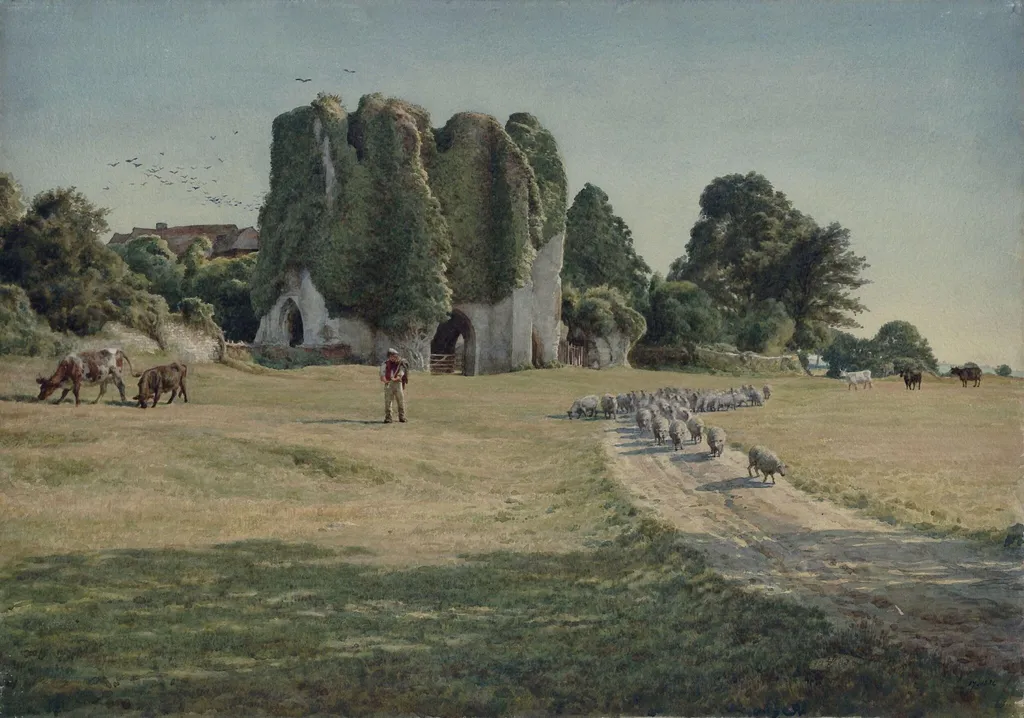
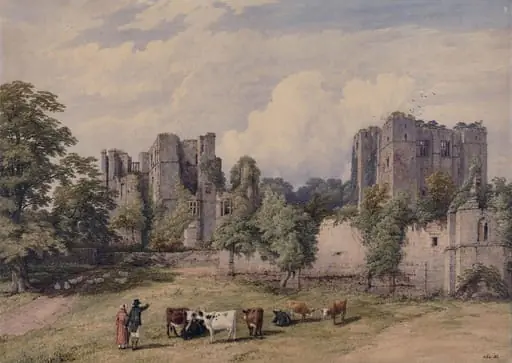
View of the Ruins of St. Radigund's Abbey, Nr Dover is a watercolor work on paper by the Impressionist artist Poynter. It dates from 1883 and is held in the collection of the Victoria and Albert Museum.
About this work
Overview
Light filters through a pale sky, casting delicate shadows across the landscape, reinforcing the sense of stillness and time passed.
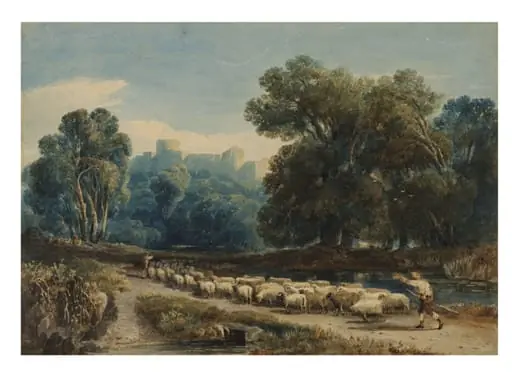
Painted in 1883 by Edward Poynter, this watercolour captures the quiet remains of St. Radigund's Abbey near Dover. The scene is composed with gentle precision, using translucent layers to evoke a hushed, contemplative mood. The ruin dominates the composition, framed by natural elements that soften its decay.
Light filters through a pale sky, casting delicate shadows across the landscape, reinforcing the sense of stillness and time passed.
Subject & Meaning
The abbey’s crumbling arches and overgrown stonework suggest religious retreat and abandonment. A solitary figure near the structure anchors the scene in human scale, while grazing sheep and distant livestock imply ongoing rural life around the ruins. The absence of human activity within the ruins themselves underscores a theme of quiet erosion, both architectural and temporal, where nature reclaims sacred space without drama or conflict.
Technique & Style
Poynter employed watercolour with restrained washes and controlled wet-on-dry techniques to achieve a luminous, atmospheric effect. Soft edges blur the boundaries between sky, earth, and stone, while subtle tonal shifts suggest depth without sharp definition. The medium’s inherent transparency allows underlying paper to contribute to the lightness of the composition, enhancing the ethereal quality of the scene.
History & Provenance
The work was created during a period when Poynter traveled extensively across southern England, sketching historic sites. St. Radigund’s Abbey, a real but largely forgotten monastic site near Dover, was one of several ruins he documented in watercolour. The painting likely originated as a personal study, later retained in the artist’s private collection before entering public hands.
Context
In the late 19th century, interest in medieval ruins surged among artists and antiquarians, often tied to Romantic ideals of nostalgia and the sublime. Poynter’s approach, however, avoids melodrama; his depiction is observational rather than heroic. This work aligns with a broader trend of topographical watercolours that valued accuracy and mood over narrative grandeur.
Legacy
Though not widely exhibited, the painting reflects Poynter’s skill in translating architectural decay into serene visual poetry. It stands as a quiet example of his lesser-known landscape work, distinct from his more famous historical paintings. The piece contributes to a corpus of Victorian watercolours that quietly preserved the fading traces of England’s ecclesiastical past.
Own this work as a print
Artist & collection
Artist
Poynter is an English occupational surname for the maker of cord that fastened doublet with hose (clothing).