Artwork
Madonna and Child
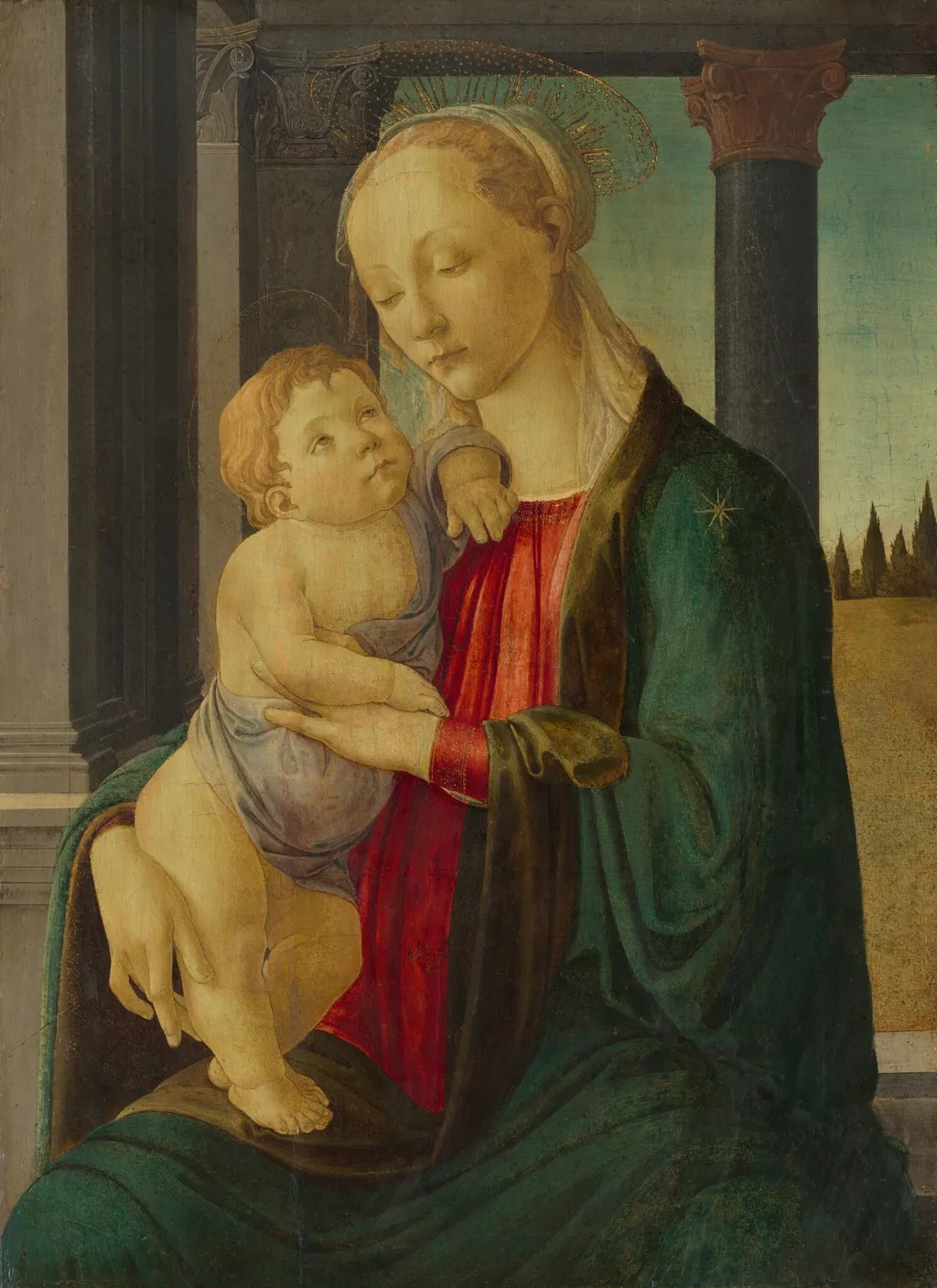
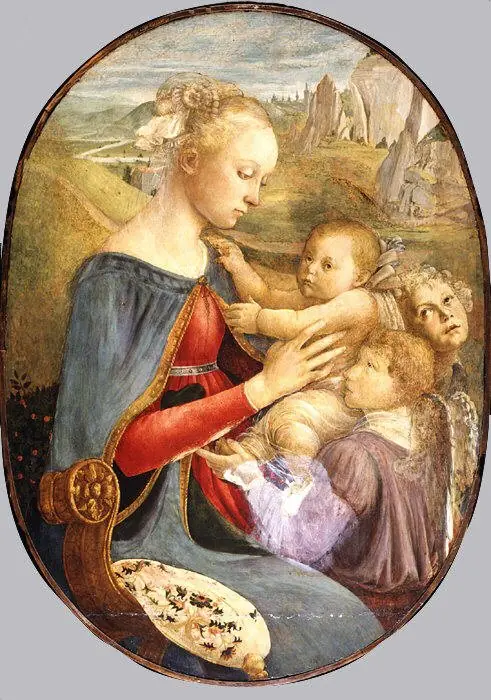
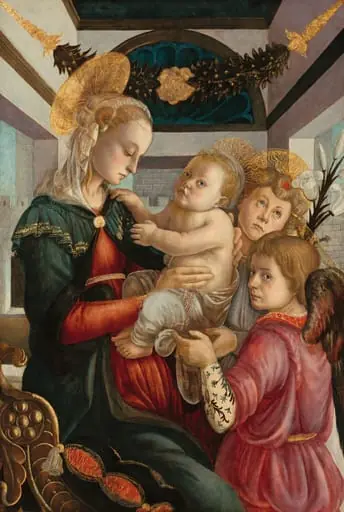
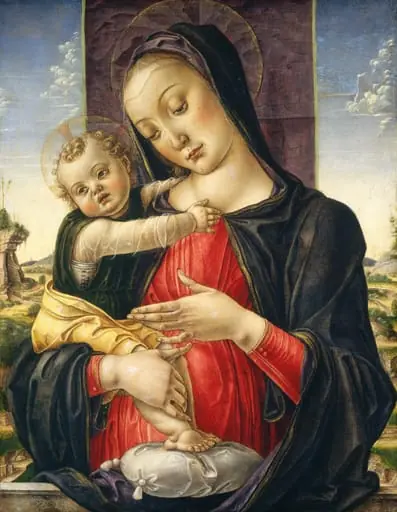
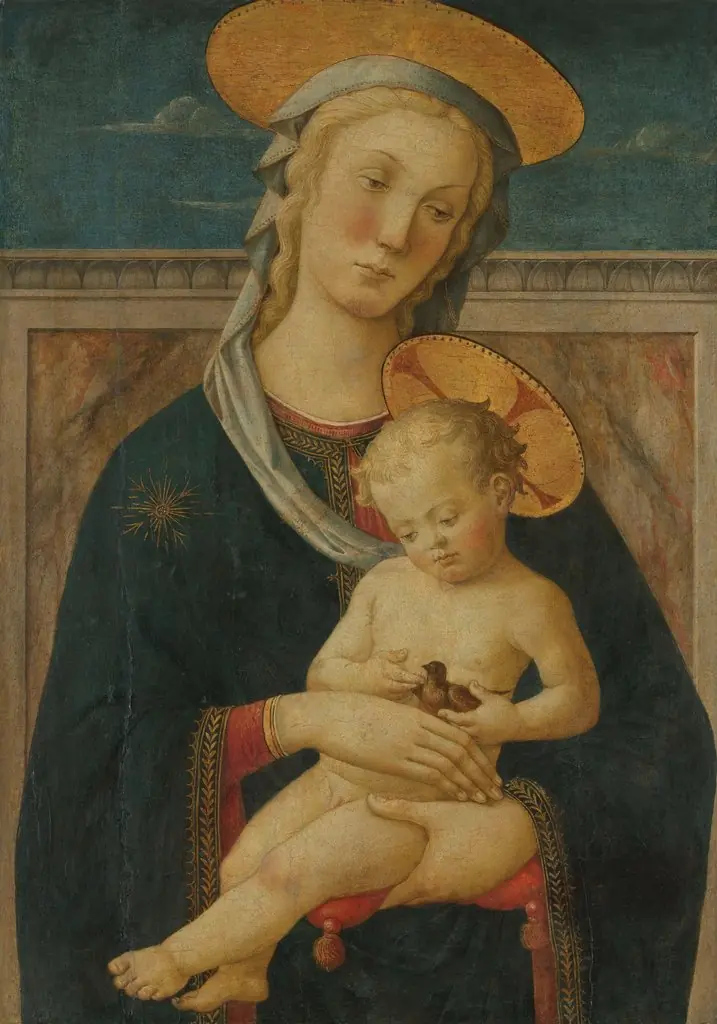
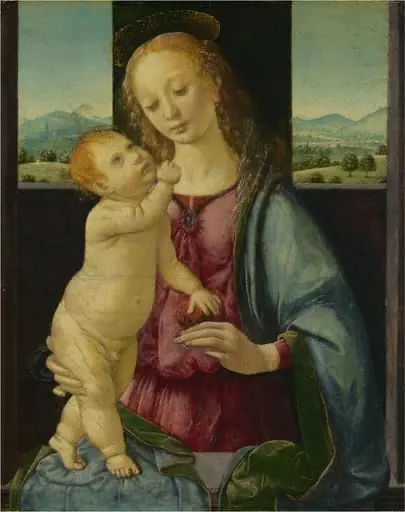
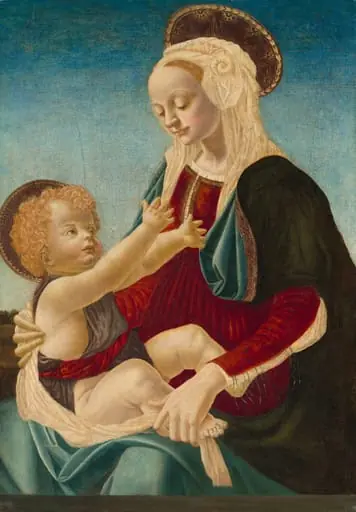
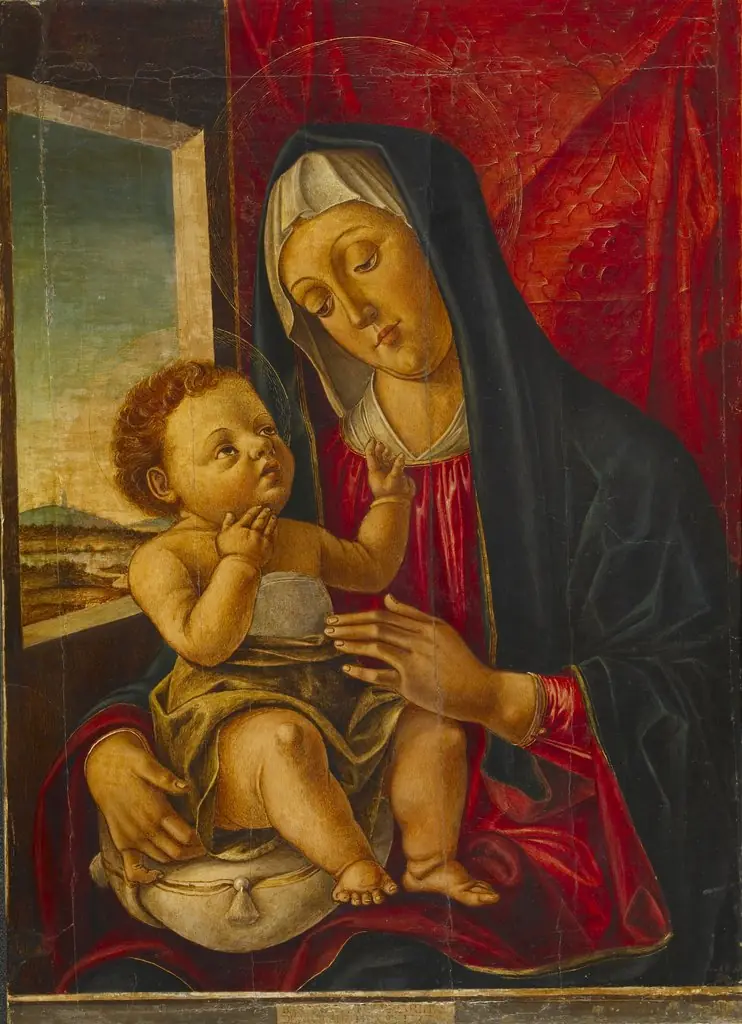
Madonna and Child is a tempera painting by the Early Renaissance artist Sandro Botticelli. It dates from 1470 and is held in the collection of the National Gallery of Art.
About this work
Subject & Meaning
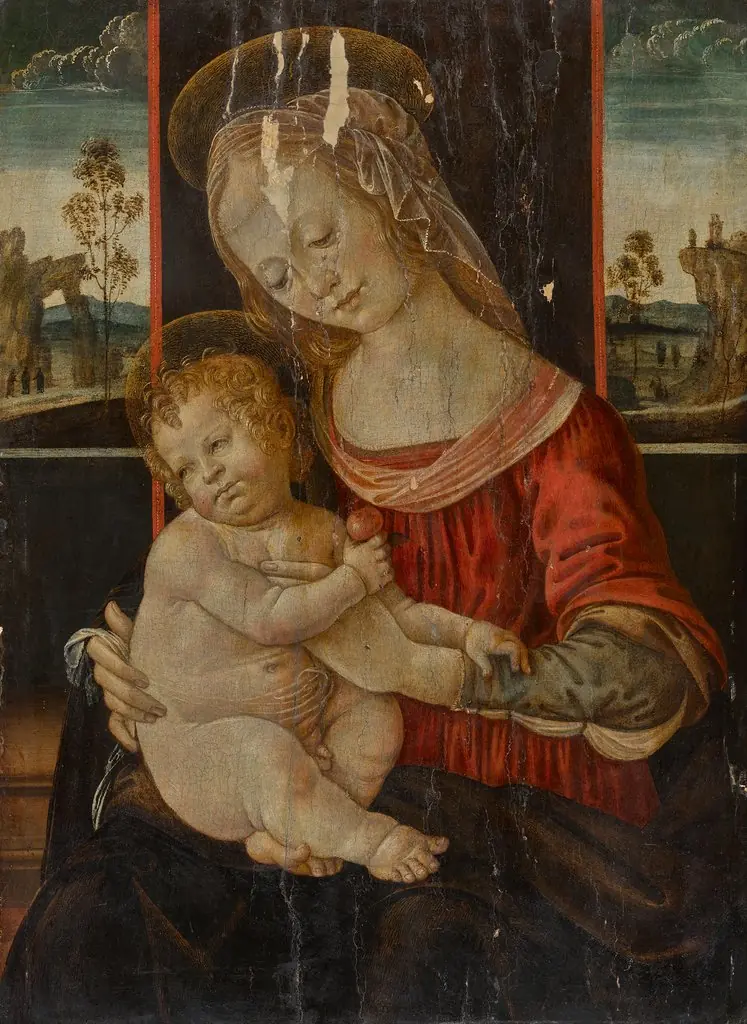
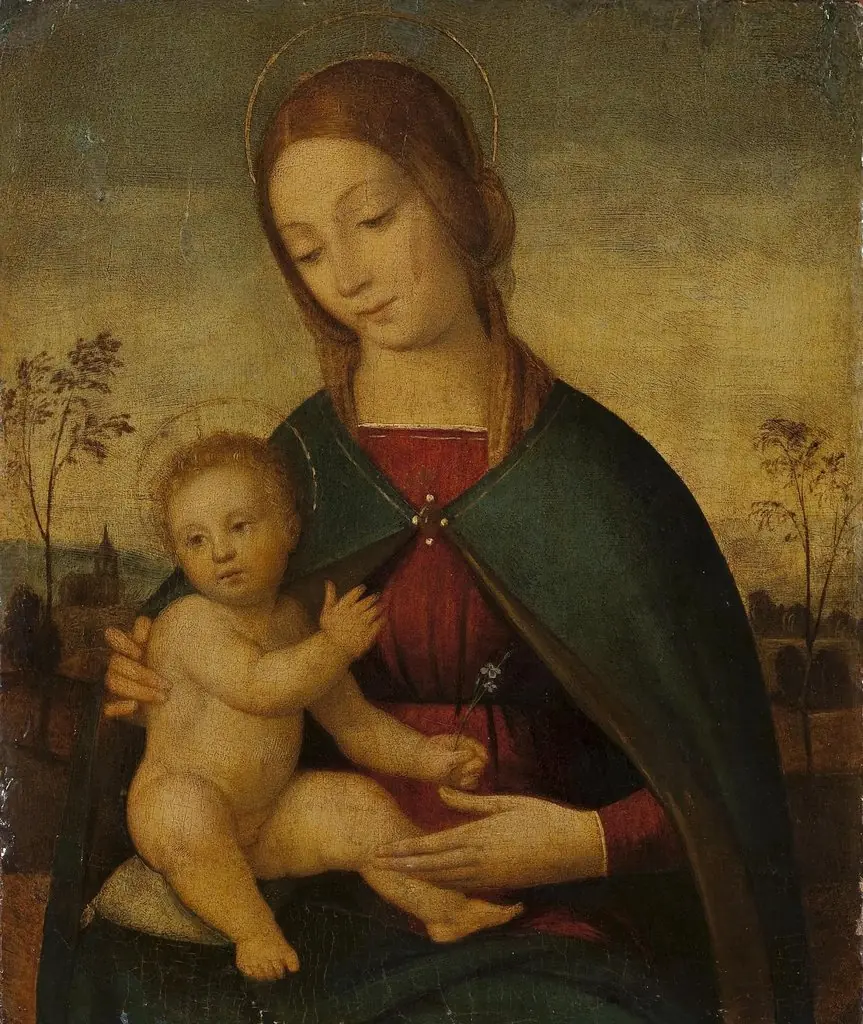
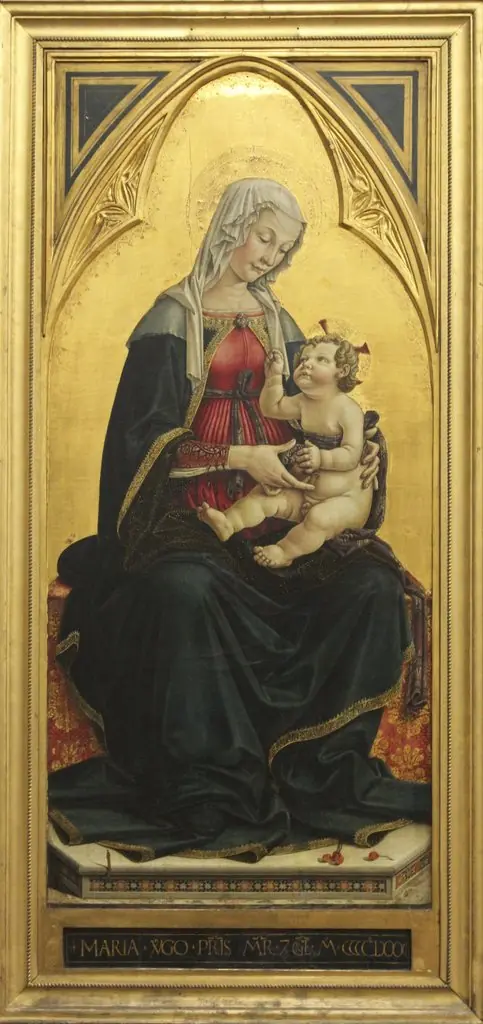
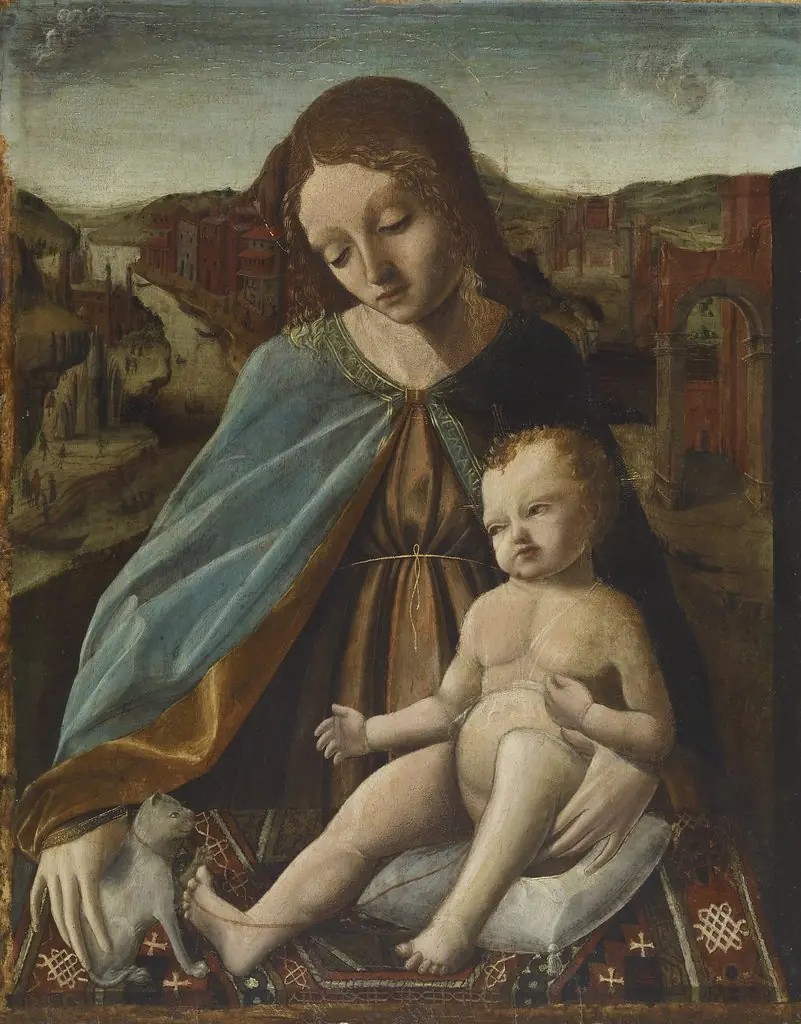
The painting depicts the Virgin Mary holding the infant Christ, a common pairing in devotional imagery of the period.
The painting depicts the Virgin Mary holding the infant Christ, a common pairing in devotional imagery of the period. Botticelli executed the work in tempera on panel circa 1470, employing the intimate format typical of such images. In the composition Mary cradles the Child on her lap before a loggia that opens onto a verdant landscape, a motif that links the earthly setting with a heavenly realm.
The image was later identified as the 'Madonna Corsini', a name derived from its long ownership by the Corsini family, and it functions as a visual meditation on maternal tenderness and the Incarnation.
Technique & Style
The work is executed in tempera on a wooden panel. Its dimensions measure approximately 74.5 cm in height by 54.5 cm in width, as recorded in the National Gallery of Art catalogue. The composition shows the Virgin seated, the infant Christ perched on her right thigh, framed by an open loggia that reveals an arbor-filled landscape, a motif that emphasizes a serene, intimate setting.
The delicate linear handling and soft modelling of figures reflect the stylistic traits of Florentine Renaissance art of the 1470s.
History & Provenance
The work, known as the Madonna and Child (NGA 1937.1.21), was created by Sandro Botticelli around 1470 as a tempera painting on panel. It originally belonged to the Corsini princely family, first recorded in the 1763 inventory of their villa at Mezzomonte and later housed in Palazzo Corsini in Florence. The painting passed by inheritance through Princes Bartolomeo, Tommaso, and Andrea Corsini and then to Tomasso Corsini (1835–1919), who transferred it to Palazzo Corsini on Via del Parione in the early 1870s.
It subsequently passed to his daughter, Beatrice Corsini Pandolfini (1868–1955). The painting was sold to Duveen Brothers in 1930 and acquired by the National Gallery of Art in 1937 as a gift from The A.W. Mellon Educational and Charitable Trust; accession number 1937.1.21, Andrew W. Mellon Collection.
Overview
Sandro Botticelli's Madonna and Child, painted around 1470, is a religious panel painting executed in tempera. This early work by the Florentine artist presents a serene portrayal of the Virgin Mary embracing the infant Christ. The composition emphasizes a tender, intimate connection between the two figures, characteristic of devotional imagery from the period.
Context
Created in the 1470s, this Madonna and Child predates Botticelli's more expansive mythological compositions, offering insight into his developing style. Its subdued palette and tender approach contrast with the more defined contours and robust forms seen in works by contemporaries such as Fra Filippo Lippi. This painting exemplifies a quiet devotional aesthetic that marked an important phase in Botticelli's early artistic output.
Own this work as a print
Artist & collection
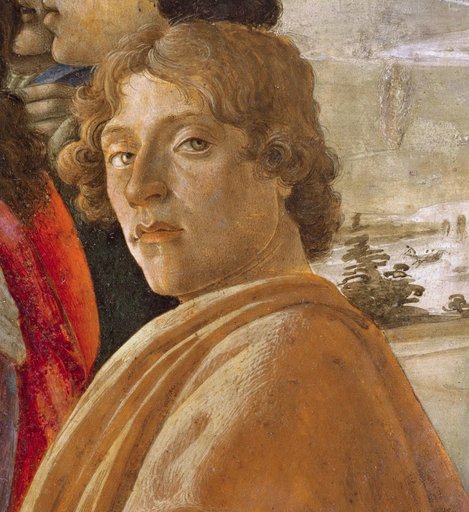
Artist
Alessandro di Mariano di Vanni Filipepi, better known as Sandro Botticelli or simply Botticelli, was an Italian painter of the Early Renaissance.