Artwork
The Virgin Adoring the Child
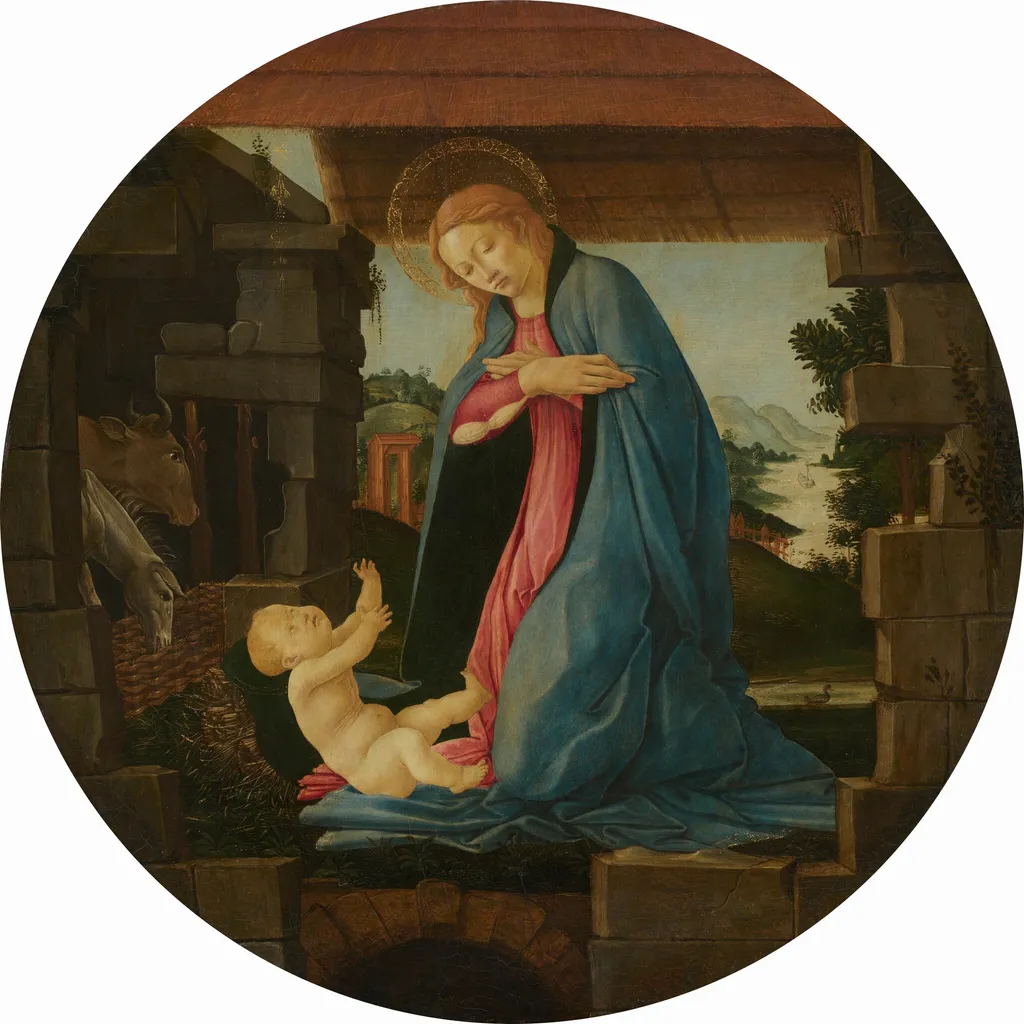
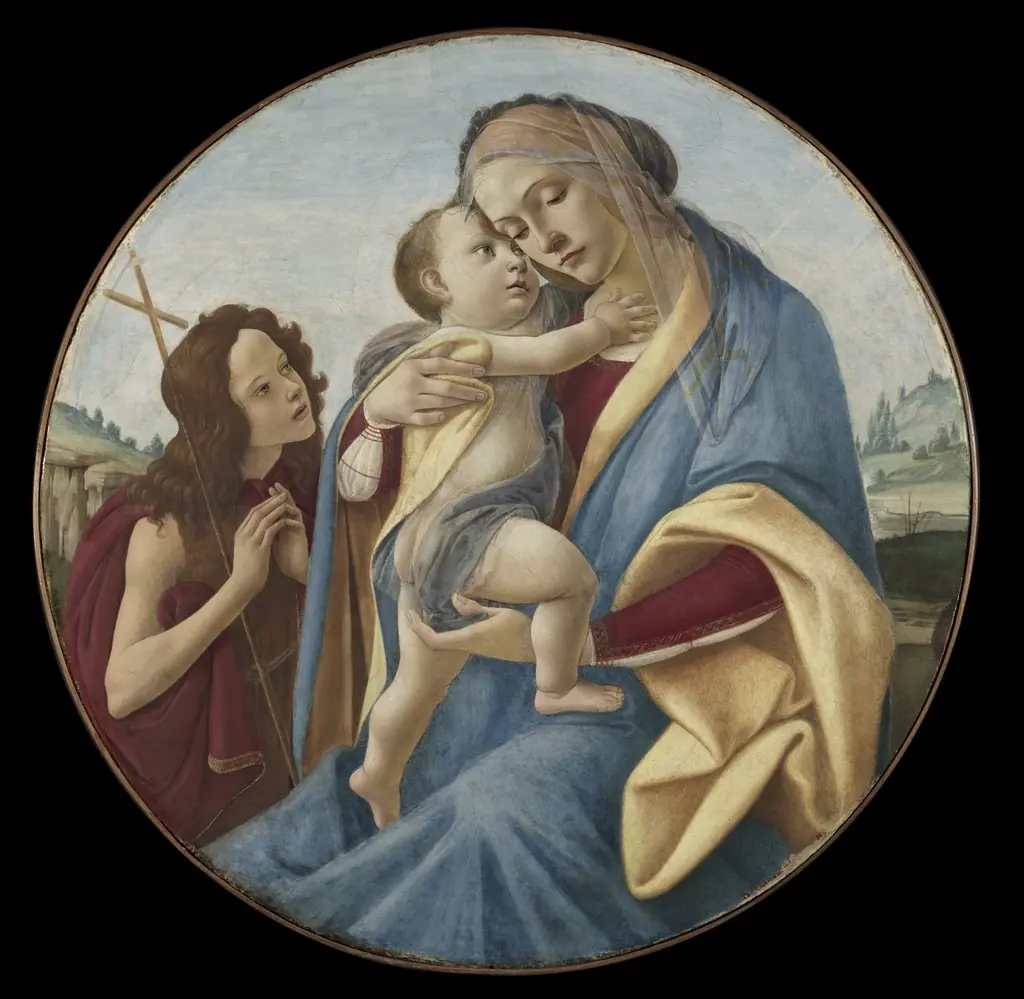
The Virgin Adoring the Child is a tempera painting by the Early Renaissance artist Sandro Botticelli. It dates from 1485 and is held in the collection of the National Gallery of Art.
About this work
Subject & Meaning
The circular format, or tondo, frames the sacred encounter, while the rustic architecture and lowly surroundings reinforce the Nativity’s earthly setting.
The painting depicts the Virgin Mary kneeling in adoration before the Christ Child, set within a humble stable. The composition follows a devotional tradition emphasizing maternal tenderness and divine humility, with the Virgin’s reverent posture and the Christ Child’s vulnerable nudity underscoring themes of incarnation and salvation. The circular format, or tondo, frames the sacred encounter, while the rustic architecture and lowly surroundings reinforce the Nativity’s earthly setting.
This iconography aligns with late fifteenth-century Florentine devotional practices, reflecting a focus on intimate, emotionally charged religious narratives that invite contemplation of Christ’s humanity and the Virgin’s role as intercessor.
Technique & Style
Executed circa 1490, this work is a circular composition (tondo) with a diameter of 58.9 centimeters. The artist employed tempera paint applied to a poplar wood panel, a standard support for Florentine religious paintings of the period. The image depicts the Virgin Mary adoring the Christ Child within a stable setting.
As a religious genre piece, the formal structure relies on the round format to frame the intimate interaction between the figures. The material composition of tempera on wood defines the work's surface quality and classification within the artist's corpus.
History & Provenance
The Virgin Adoring the Child is a tempera on poplar panel by Sandro Botticelli, dated 1490. Its documented ownership begins with the French collector Charles Paravey in Paris, who died by 1878; the panel was probably acquired by him and appeared at the Hôtel Drouot sale in Paris on 13 April 1878 (lot 97), then attributed to Filippo Lippi. It subsequently passed by inheritance to his daughter, Mme Raynaud, also in Paris, and resurfaced at another Hôtel Drouot sale on 16 December 1929 (lot 44), again under Lippi's name.
The painting was then handled by Wildenstein & Co., Inc. in New York, which sold it in October 1947 to the Samuel H. Kress Foundation. The Kress Foundation donated the work to the National Gallery of Art in Washington, D.C., in 1952, where it remains as part of the Samuel H. Kress Collection.
The painting The Virgin Adoring the Child (c. 1490) is housed at the National Gallery of Art in Washington, D.C., where it is part of the Samuel H. Kress Collection. It entered the museum as a gift in 1952 from the Samuel H. Kress Foundation, having been purchased from Wildenstein & Co. in October 1947. Its earlier provenance includes ownership by Charles Paravey, subsequent sales in 1878 and 1929, and attribution shifts from Botticelli to Filippo Lippi before its modern attribution to Botticelli.
The work is displayed in the gallery’s Renaissance rooms, though specific exhibition records are not detailed in the available documentation.
Context
The Virgin Adoring the Child, a tempera tondo painted around 1490, exemplifies Botticelli’s early devotional imagery within the Florentine Renaissance. Executed on poplar panel, the work portrays the Virgin Mary tenderly gazing at the infant Christ before a modest stable, a composition that aligns with contemporary religious art practices and the Nativity theme documented in scholarly sources. Provenance records trace the painting from Parisian owners through Wildenstein & Co. to the Samuel H. Kress Foundation, eventually gifting it to the National Gallery of Art in 1952, underscoring its integration into a major collection of Renaissance works.
Art historical analysis places the piece among Botticelli’s devotional tondi, reflecting both his mastery of linear grace and his engagement with contemporary theological aesthetics.
Overview
Sandro Botticelli's "The Virgin Adoring the Child," painted in 1485, is a tempera work on poplar panel. This intimate painting portrays the Virgin Mary in a moment of tender devotion, kneeling before the Christ Child. Its small scale suggests it was intended for personal contemplation, inviting viewers into a private spiritual experience rather than public display.
Own this work as a print
Artist & collection
Artist
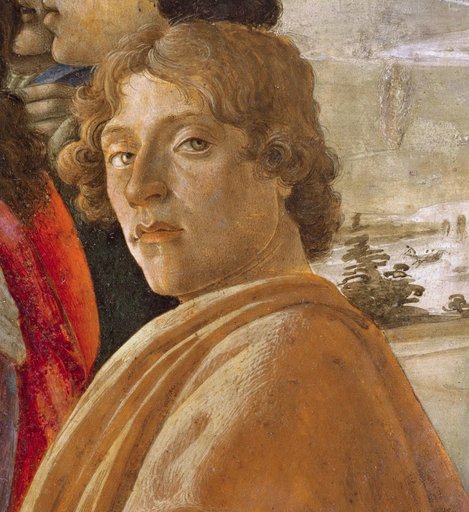
Alessandro di Mariano di Vanni Filipepi, better known as Sandro Botticelli or simply Botticelli, was an Italian painter of the Early Renaissance.


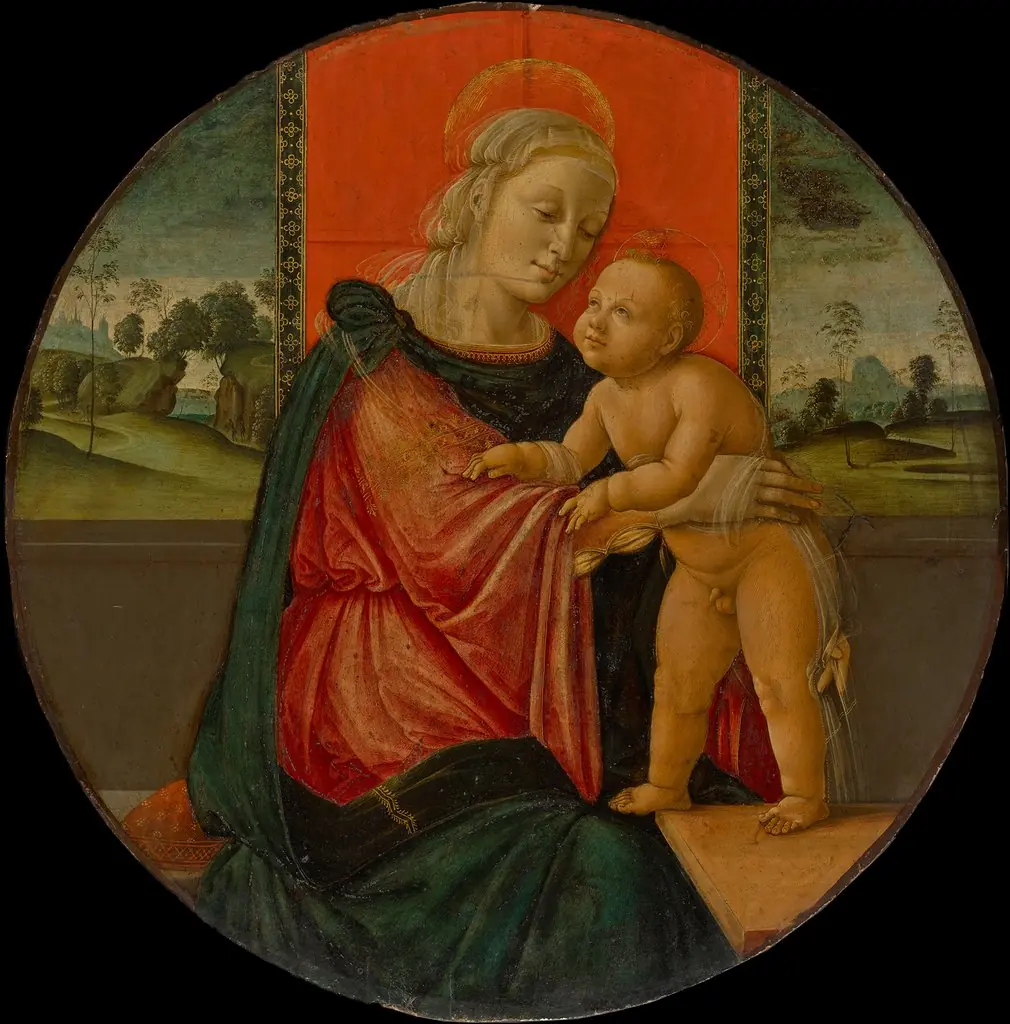 The Virgin and Child
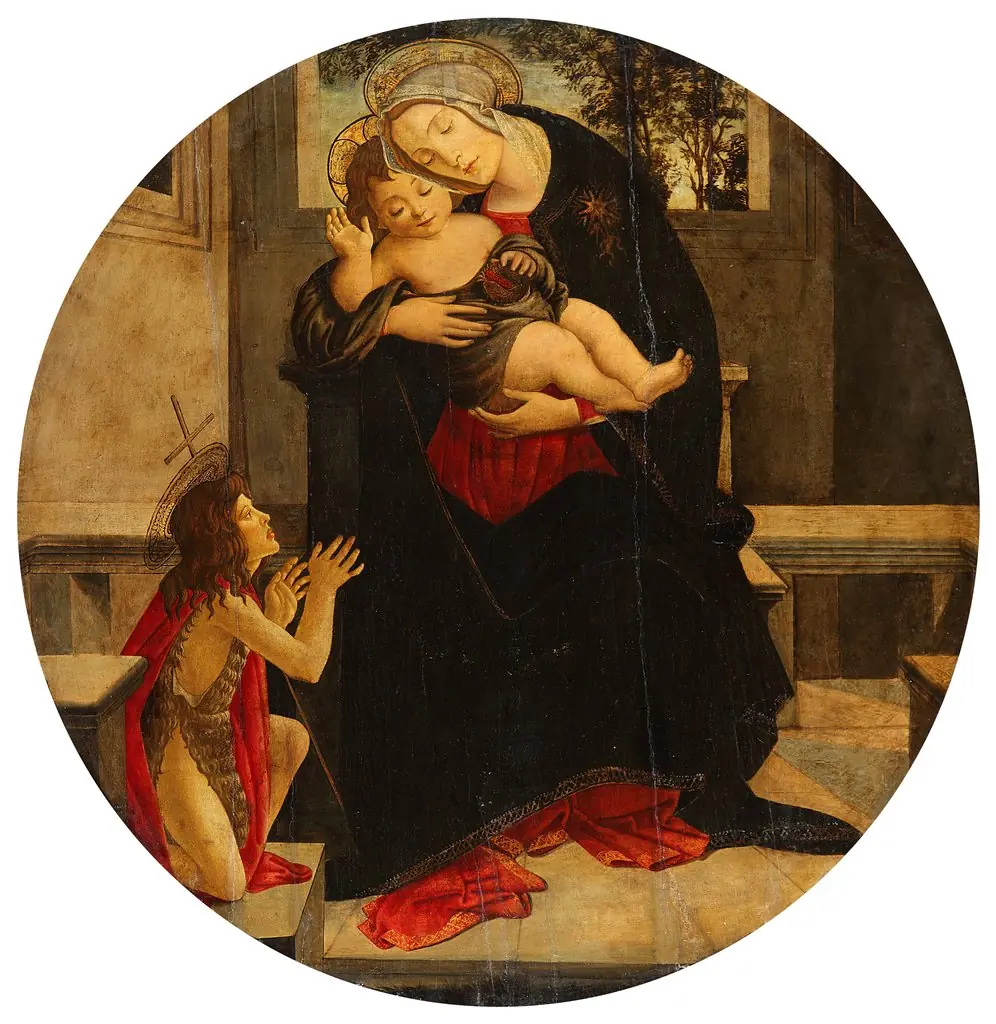 The Virgin and Child with the Young St. John (Tondo)
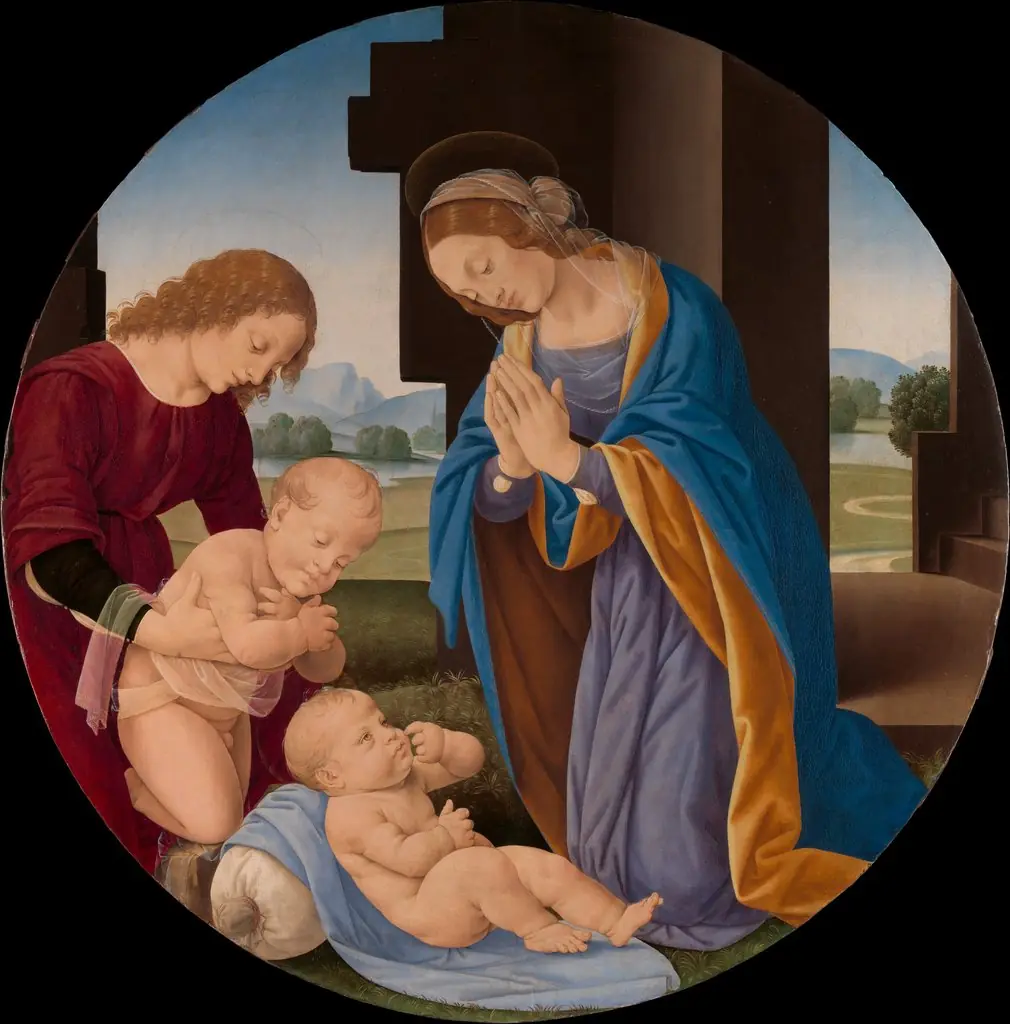 Madonna Adoring the Child with the Infant Saint John the Baptist and an Angel
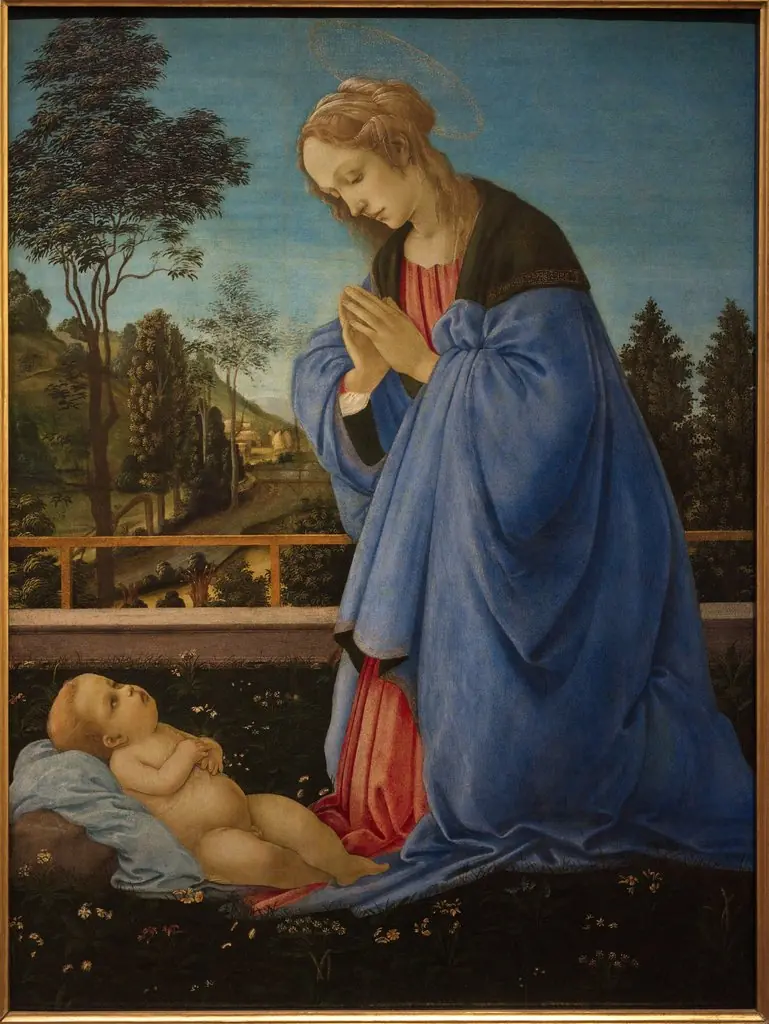 Adoration of the Child
 De aanbidding van het Christuskind
 Adoration of the Child with Young St John the Baptist – Tondo
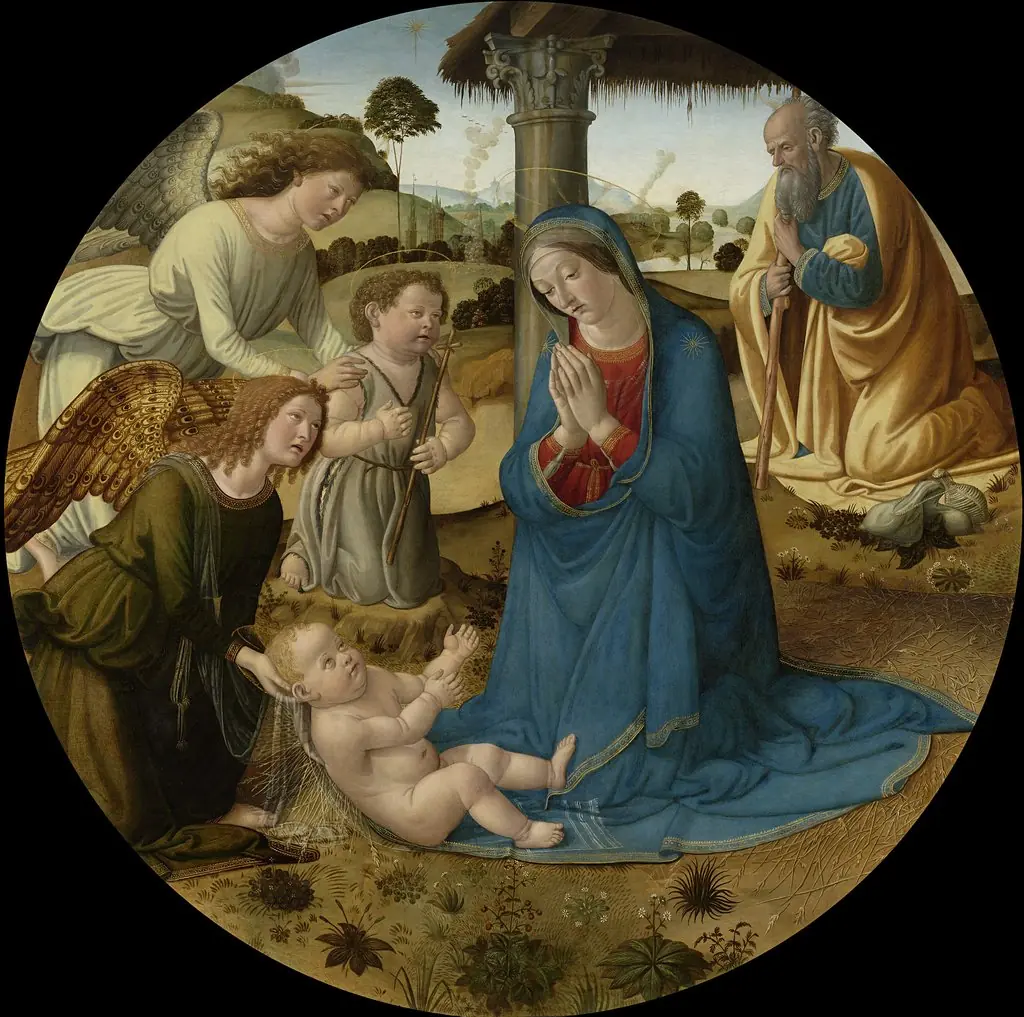 The Adoration of the Christ Child
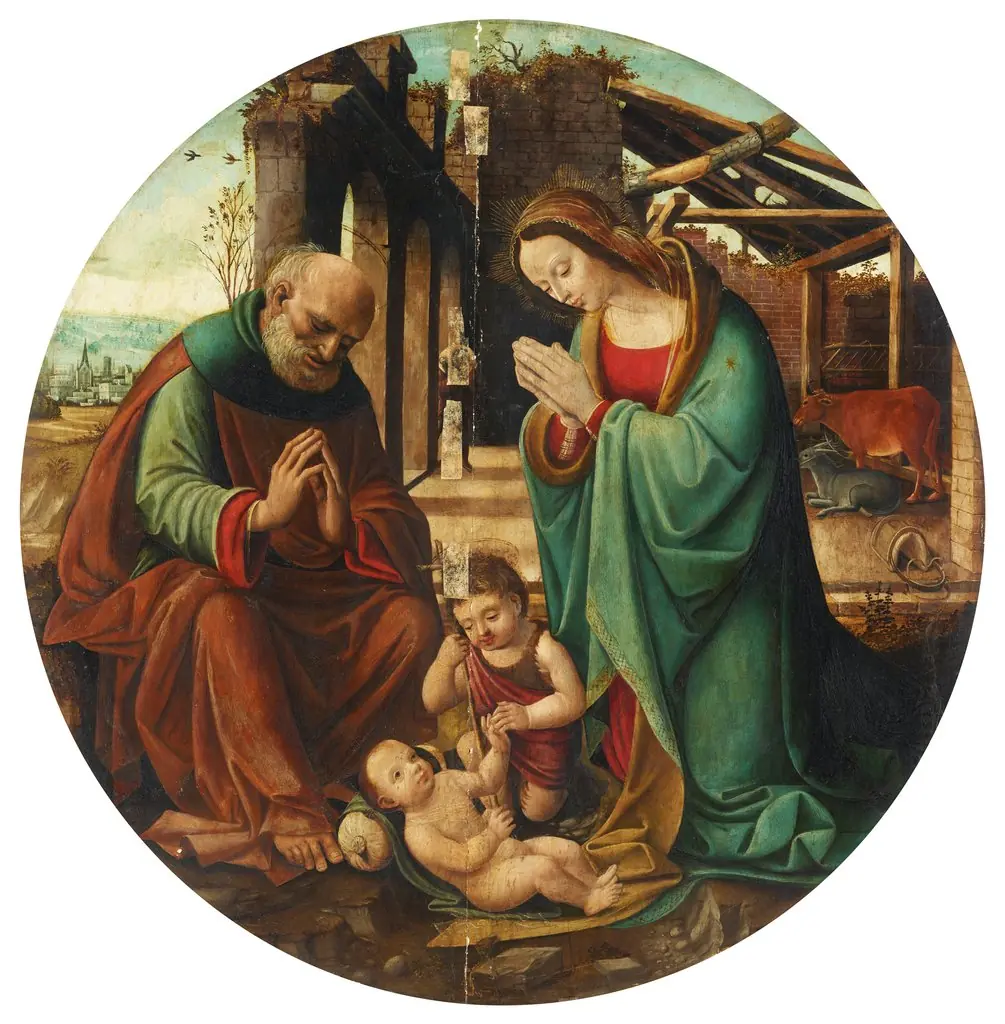 The Holy Family with Young St. John, Adoring the Child
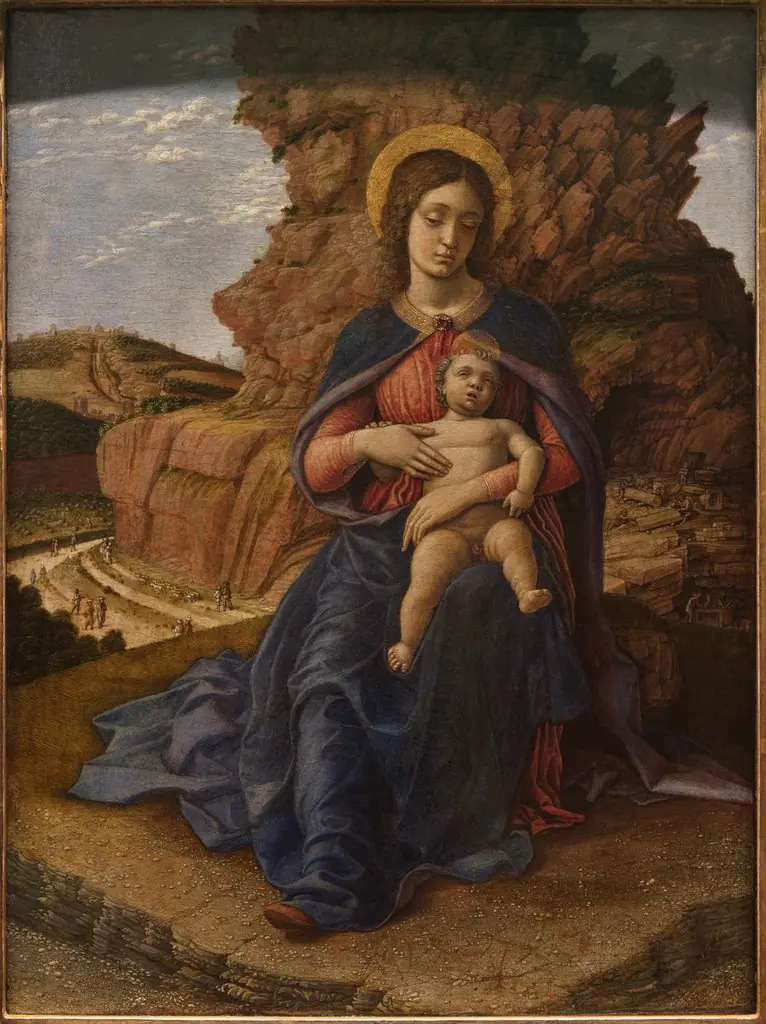 Madonna of the Caves