Artwork
Lady Ise by the Riverbank
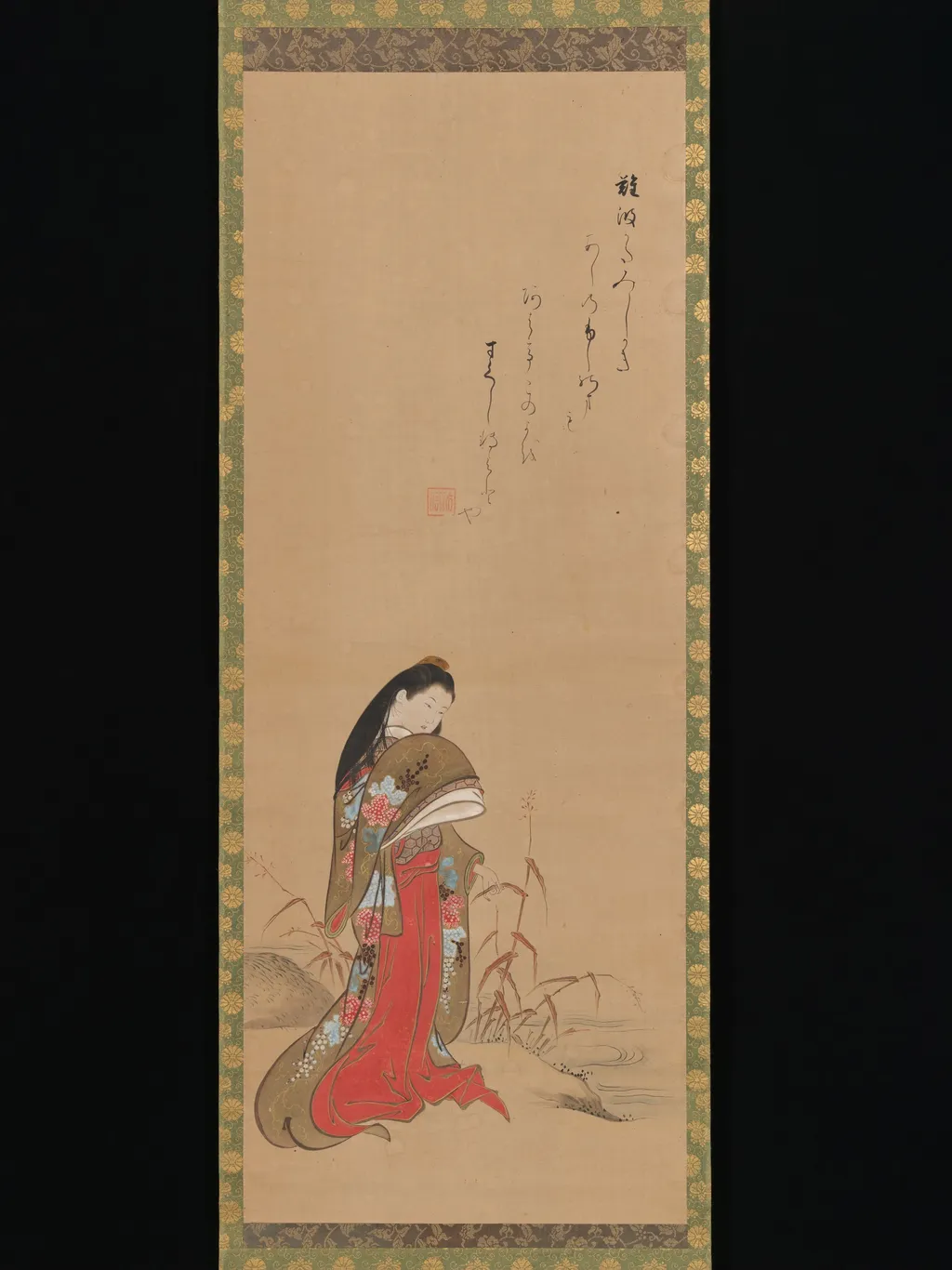
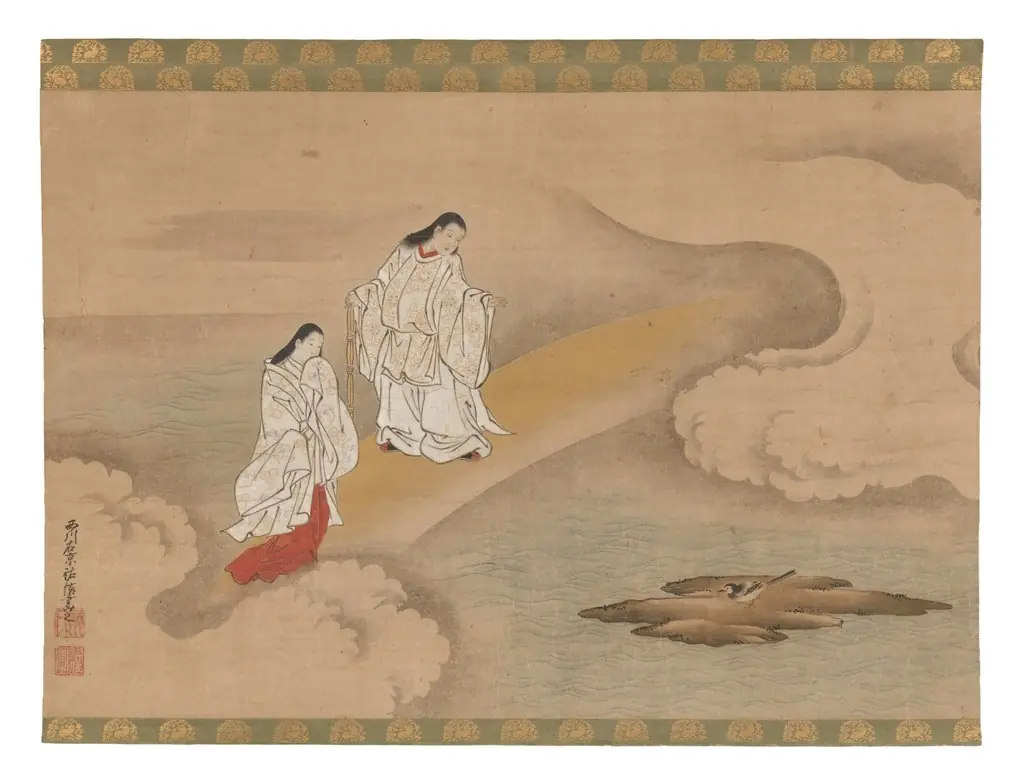
Lady Ise by the Riverbank is an unspecified painting by the Ukiyo-e artist Nishikawa Sukenobu. It is held in the collection of the Metropolitan Museum of Art.
About this work
Subject & Meaning
She is shown positioned by a riverbank, a setting that underscores themes of nature and transience often linked to courtly elegance in Heian-period aesthetics.
The painting depicts a woman identified as Lady Ise, a figure associated with classical Japanese literature and poetry. She is shown positioned by a riverbank, a setting that underscores themes of nature and transience often linked to courtly elegance in Heian-period aesthetics. The composition emphasizes refined attire and poised demeanor, aligning with the cultural ideal of feminine grace and poetic sensitivity.
In the context of ukiyo-e, such imagery evokes the interplay between literary tradition and visual representation, reflecting the period’s admiration for classical narratives and seasonal beauty.
History & Provenance
The painting Lady Ise by the Riverbank was created by the Japanese artist Nishikawa Sukenobu in 1783, as indicated by the artist’s signature and date on the work.
The painting entered the collection of the Metropolitan Museum of Art, where it is currently held. Its provenance prior to the museum’s acquisition is not documented in the available sources.
The painting Lady Ise by the Riverbank by Nishikawa Sukenobu, created in 1783, is held in the collection of the Metropolitan Museum of Art in New York. The work depicts a woman and was made in Japan. While the entity is cataloged within the museum's holdings, the provided sources do not specify a unique inventory or accession number for this piece. Furthermore, no specific exhibition history or past display dates are recorded in the available documentation.
Overview
Lady Ise by the Riverbank, painted by Nishikawa Sukenobu in 1792, is an ink and color work on paper now in the collection of the Metropolitan Museum of Art. The composition presents a solitary female figure kneeling beside a river, her posture suggesting a moment of pause or contemplation.
Technique & Style
Sukenobu employs delicate brushwork to render the folds of the garment and the surrounding reeds, combining subtle washes of color with fine ink lines. The palette of muted blues and reds creates a harmonious balance, characteristic of late‑eighteenth‑century ukiyo‑e portraiture.
Context
Nishikawa Sukenobu was known for his depictions of everyday life and literary subjects. This work reflects the period’s interest in portraying refined, introspective moments drawn from classical poetry, aligning with the broader cultural practice of integrating text and image in Japanese visual art.
Own this work as a print
Artist & collection

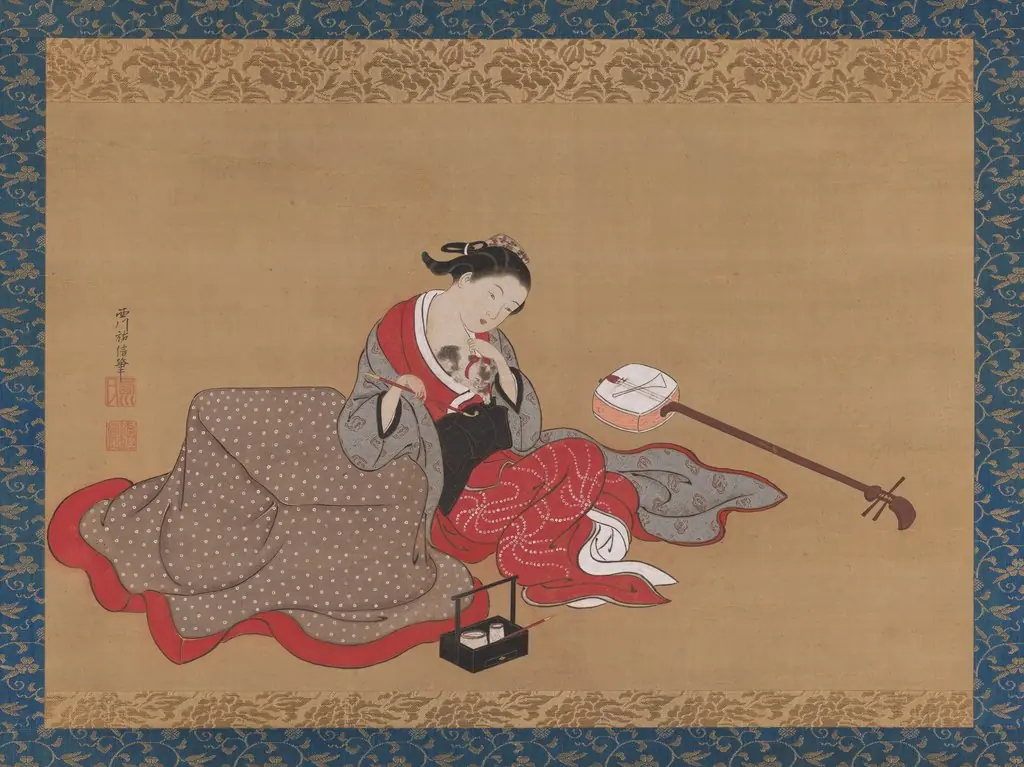
- Standing Woman
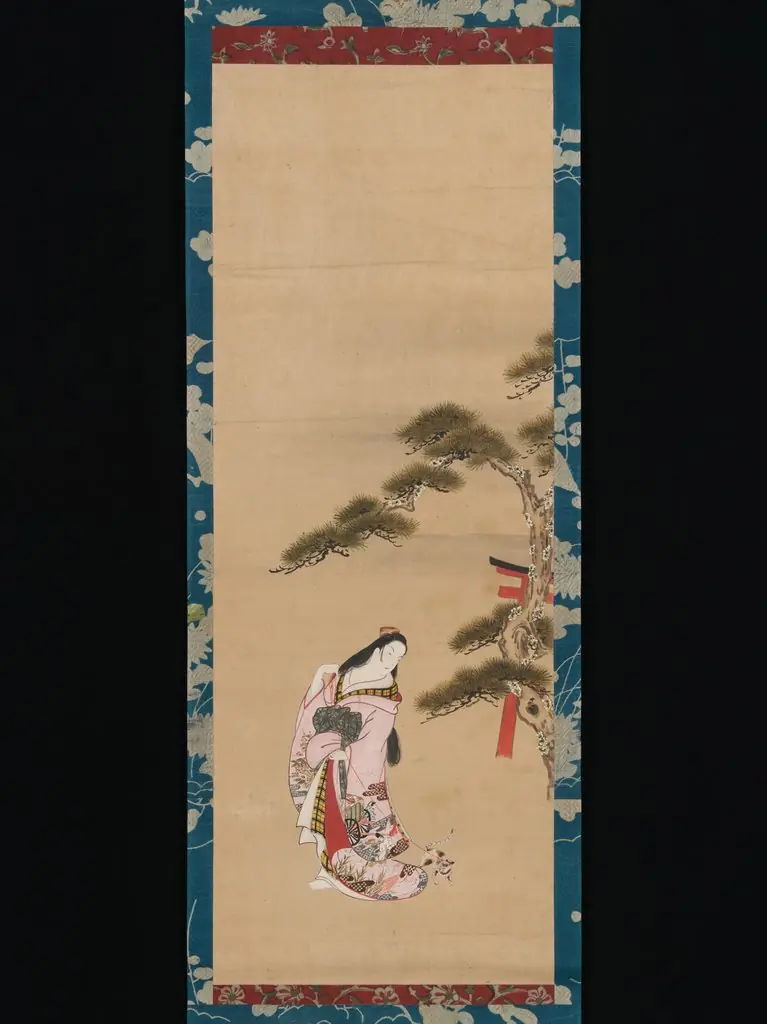 The Third Princess and a Cat, from the "New Herbs I" (Wakana I) chapter The Tale of Genji (Genji monogatari}
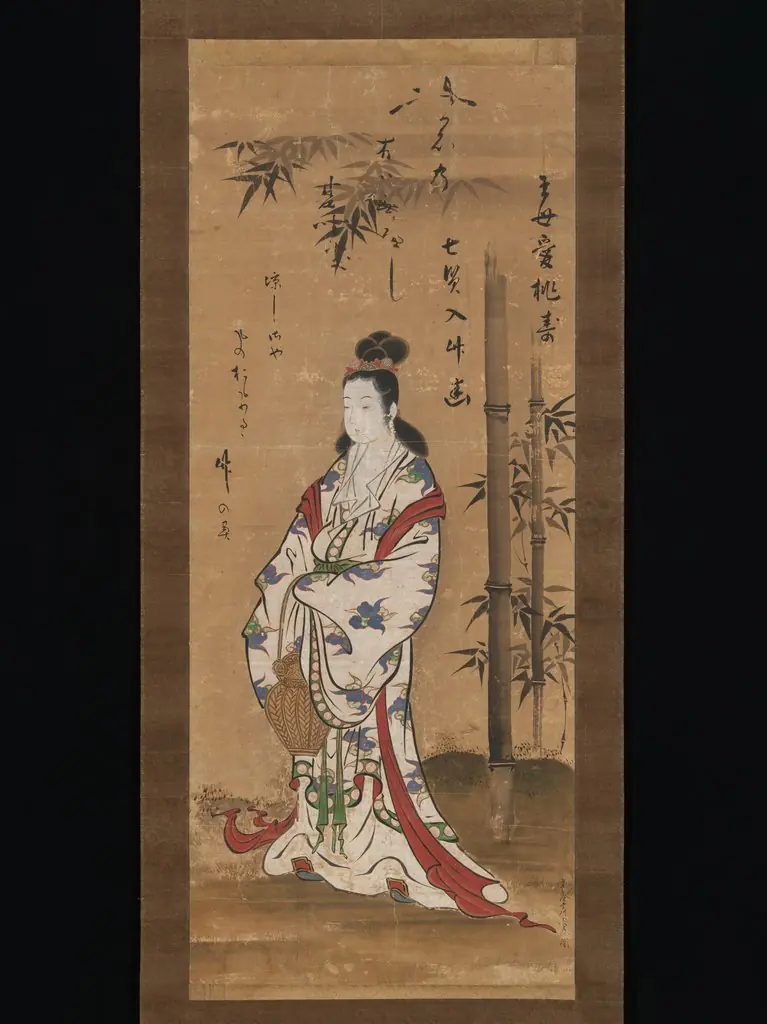 Gyoran Kannon
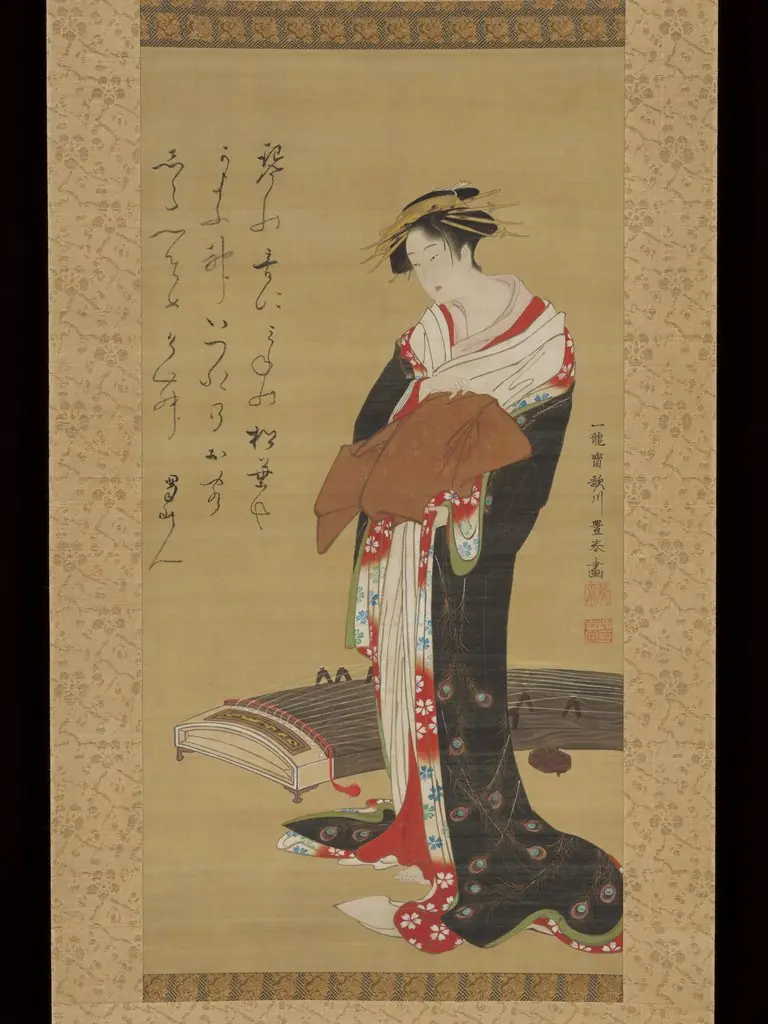 Female Entertainer with a Koto
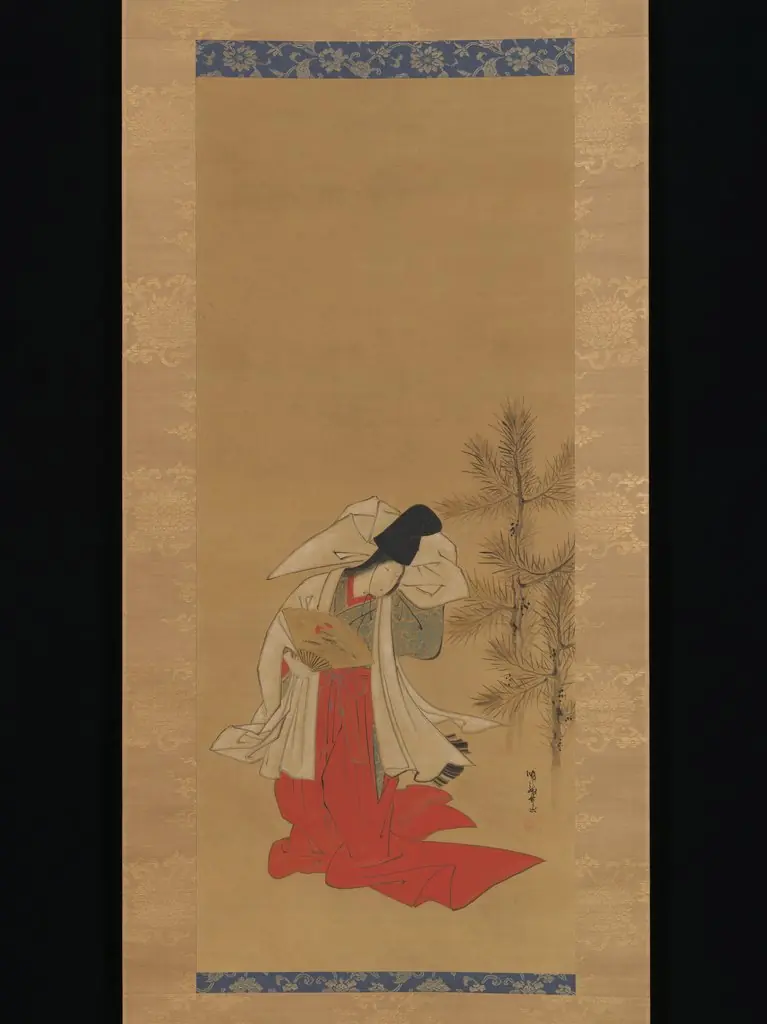 Courtesan-Dancer (Shirabyōshi) for the New Year
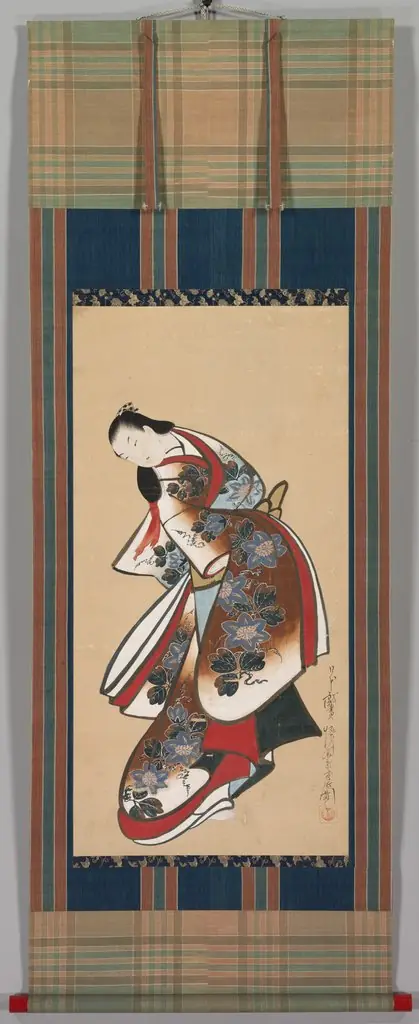 Courtesan
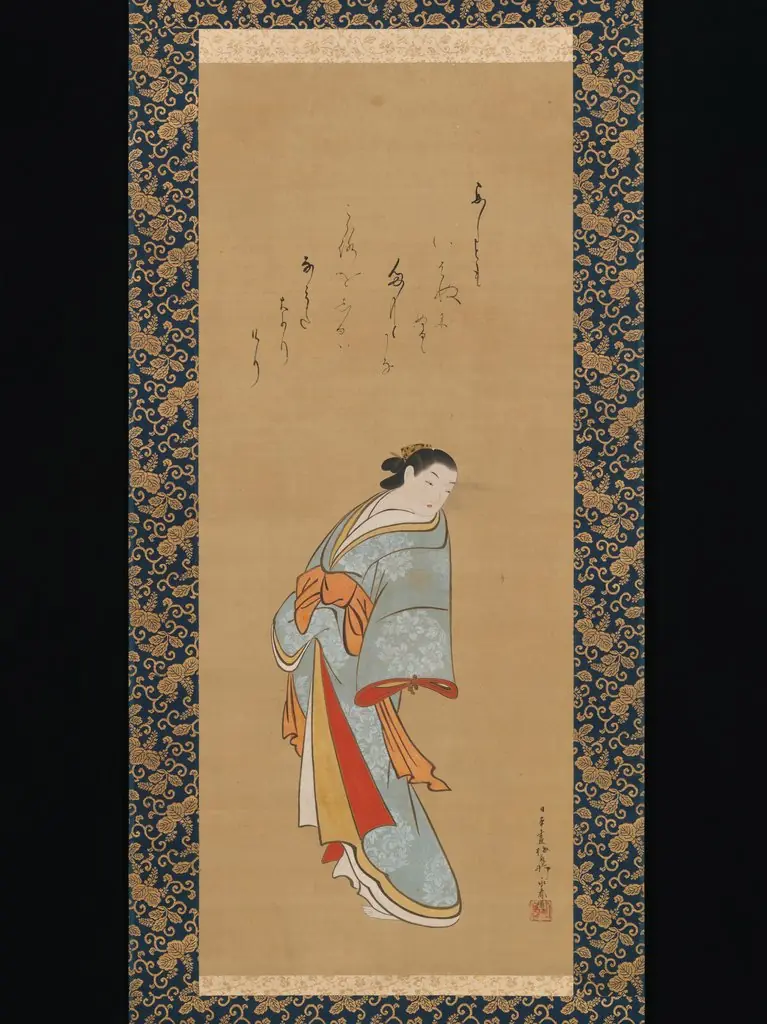 Standing Courtesan
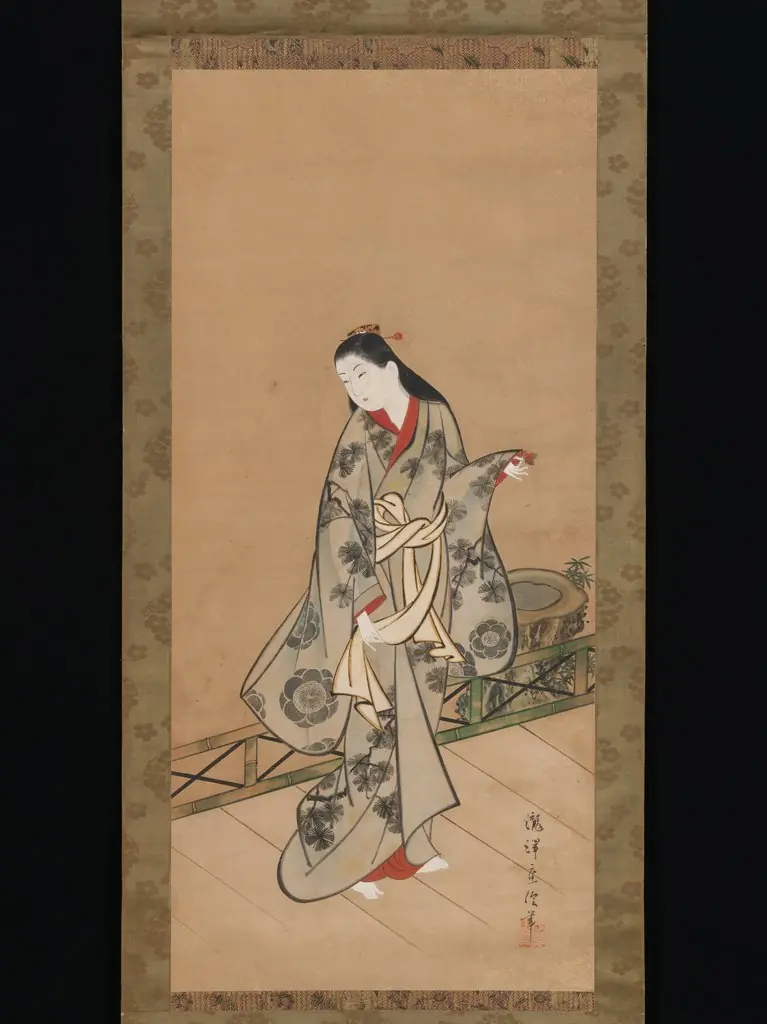 Woman on Veranda
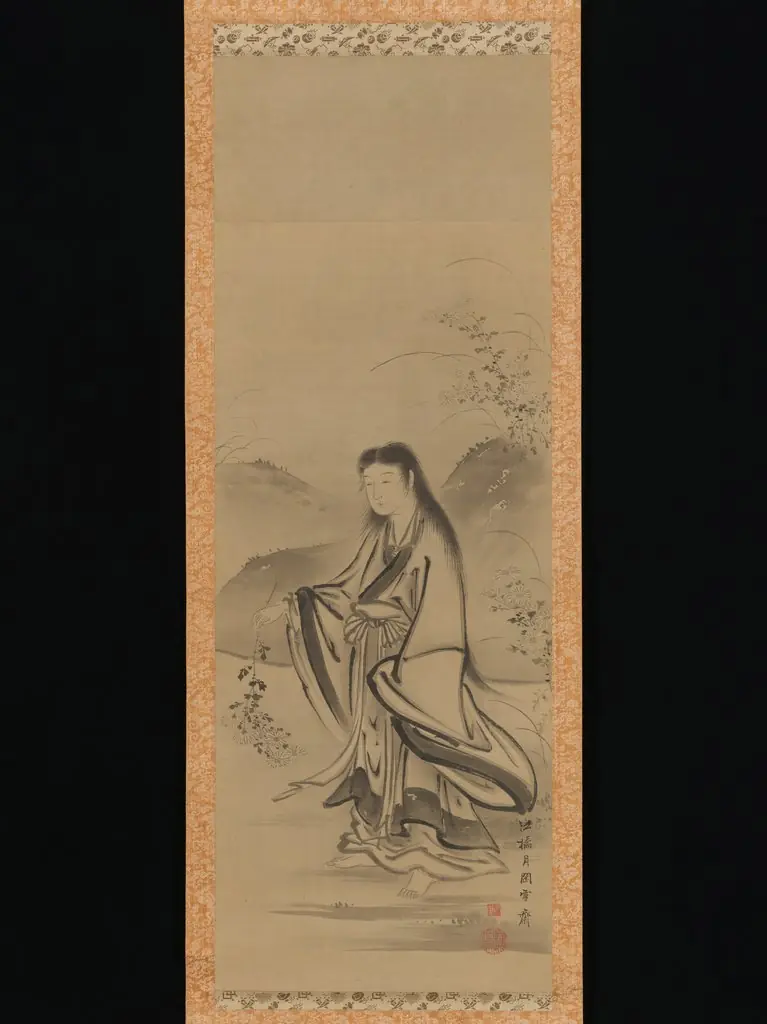 Kiku Jidō (Chrysanthemum Boy)
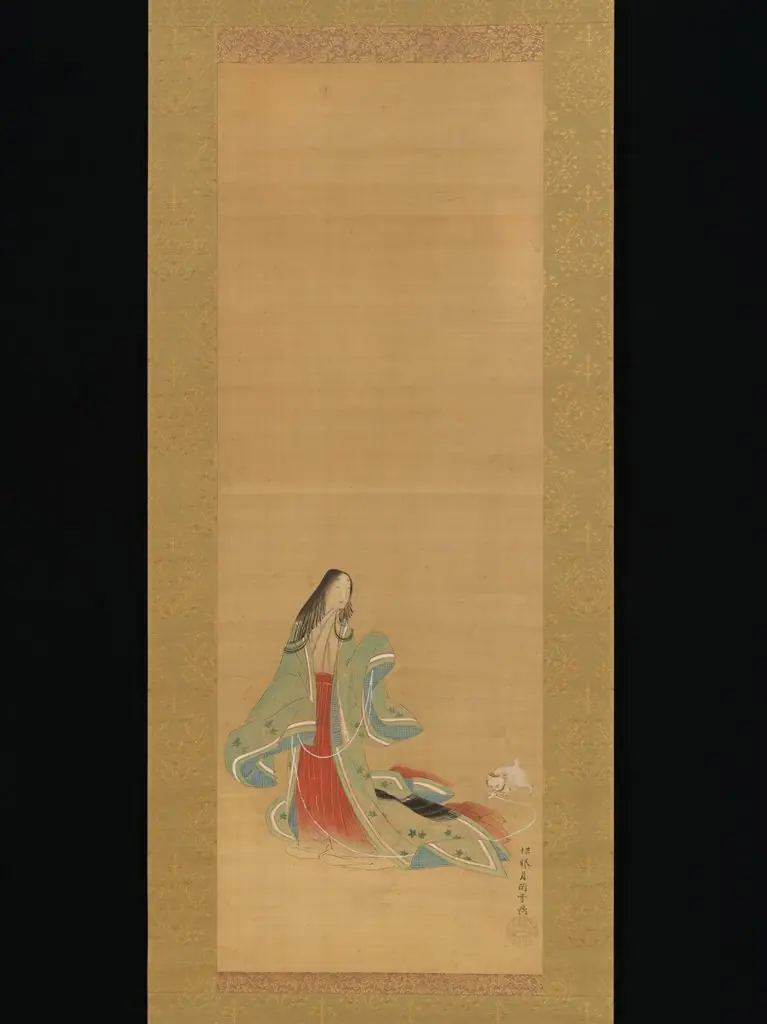 The Third Princess with her Cat, from the "New Herbs I" (Wakana I) chapter The Tale of Genji (Genji monogatari}
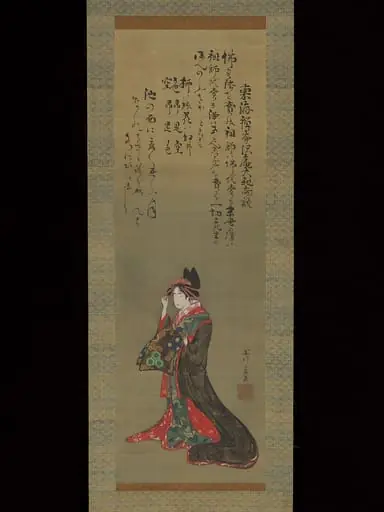 花魁図|Parading Courtesan
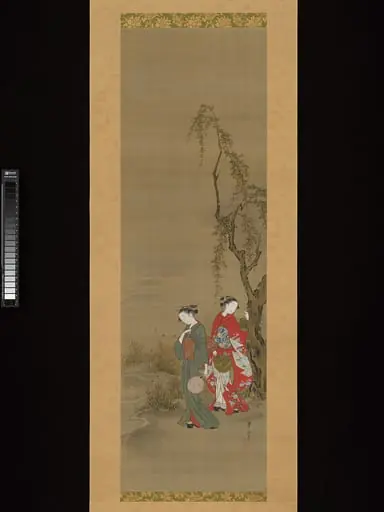 Untitled