Artwork
The painter in his studio
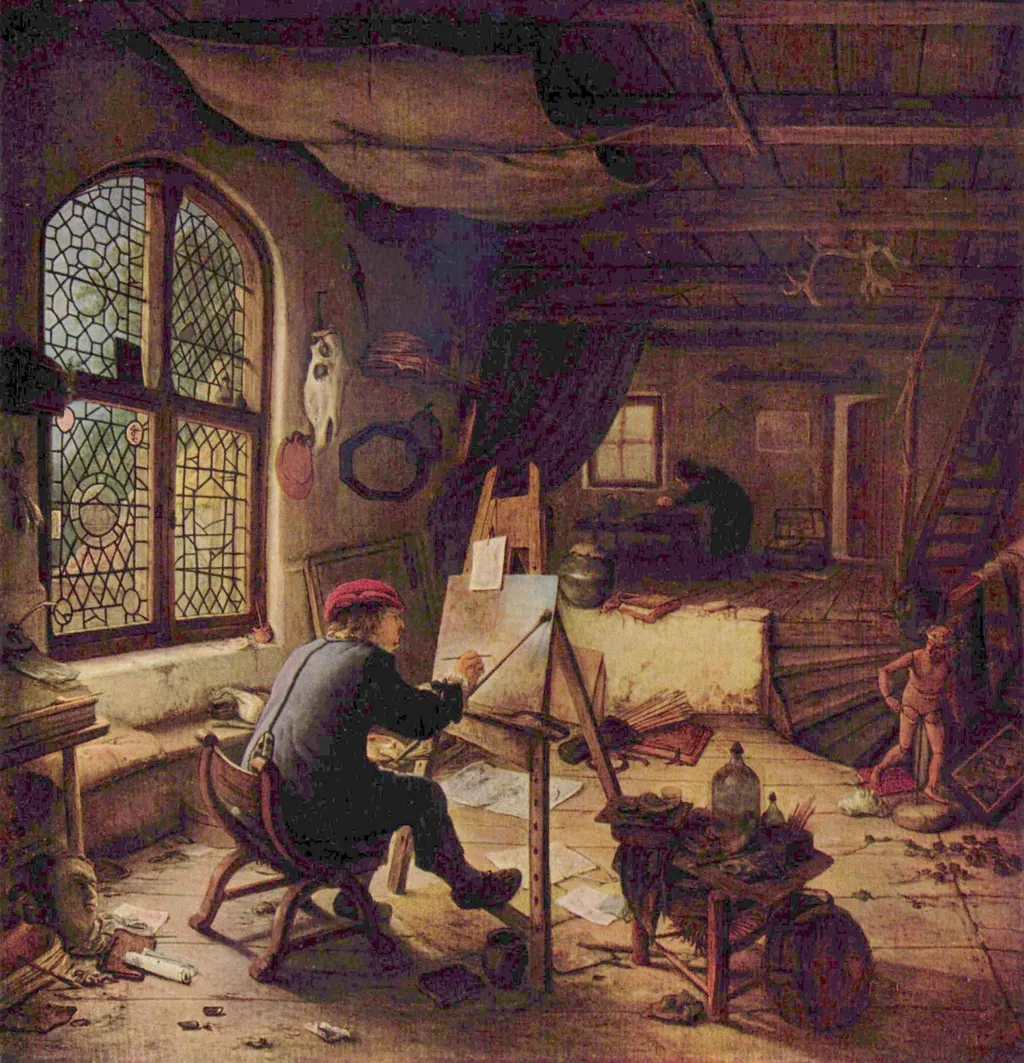
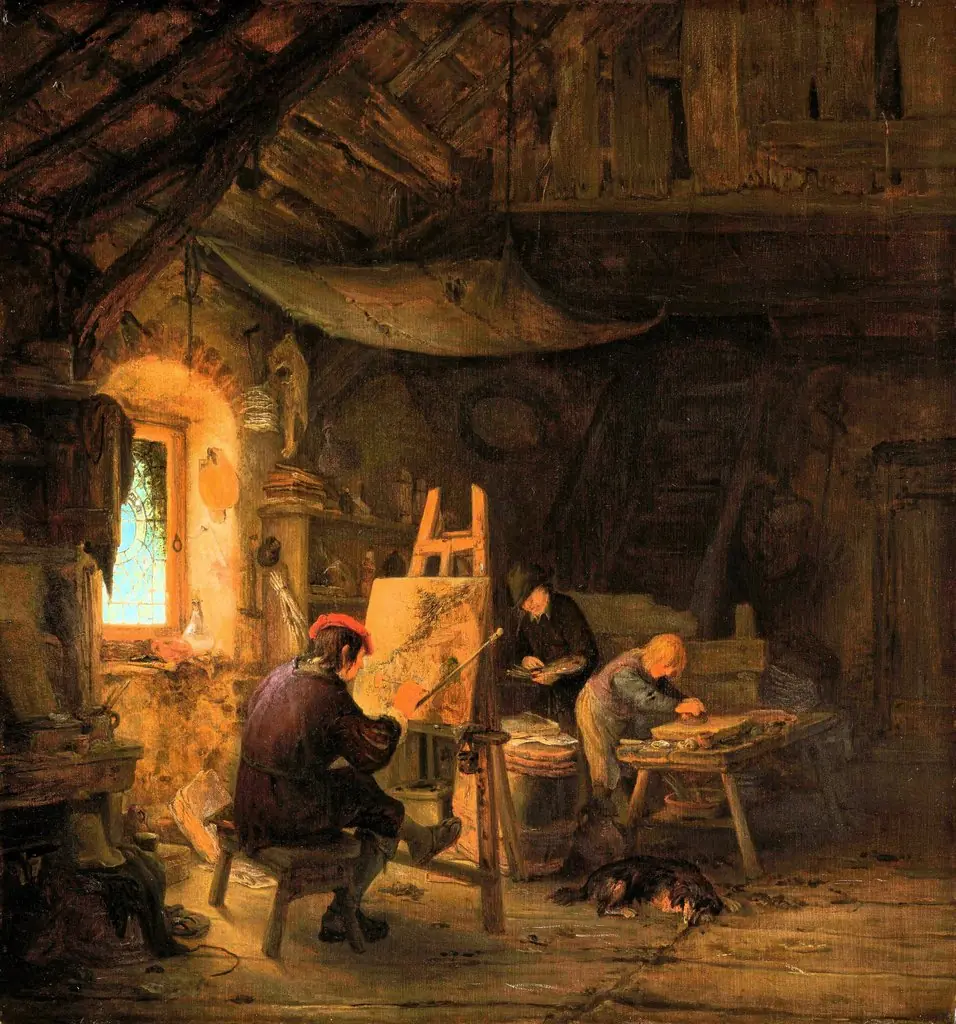
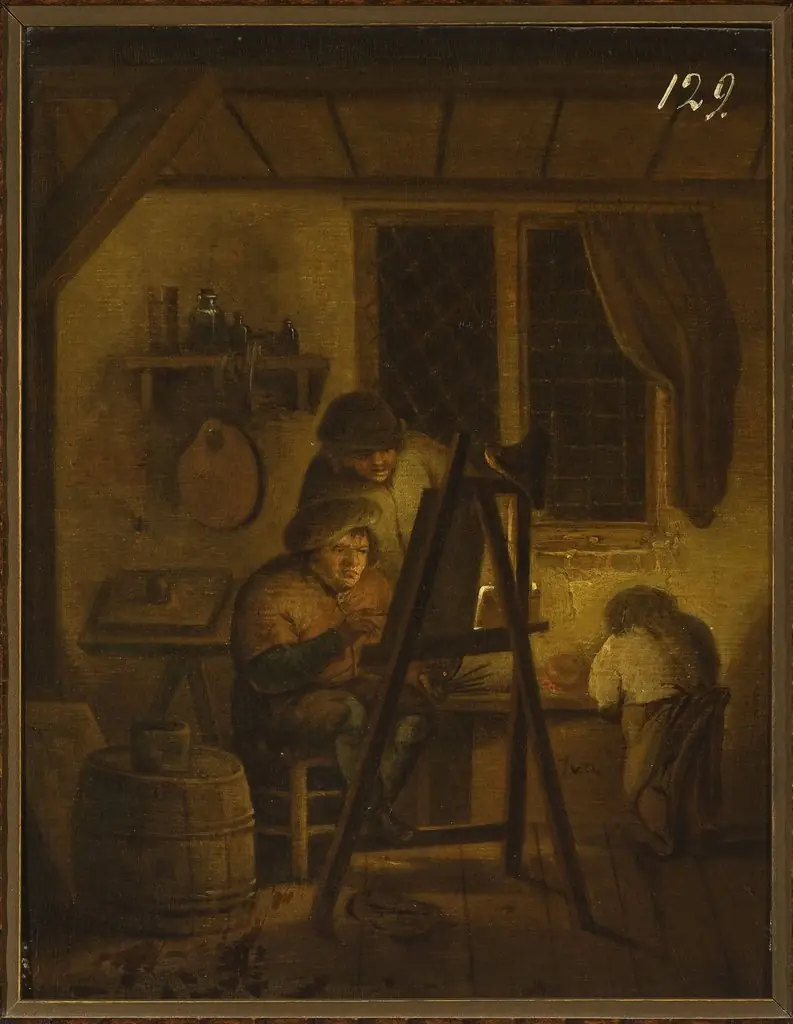
The painter in his studio is an oil painting by the Dutch Golden Age artist Adriaen van Ostade. It dates from 1663 and is held in the collection of the Staatliche Kunstsammlungen Dresden.
About this work
Overview
Adriaen van Ostade's 'The Painter in his Studio,' executed in 1663, is a quintessential genre scene depicting the interior of an artist's workshop.
Adriaen van Ostade's 'The Painter in his Studio,' executed in 1663, is a quintessential genre scene depicting the interior of an artist's workshop. The composition centers on a figure, likely the artist himself, seated on the floor wearing a red cap and actively drawing on a large sheet of paper supported by an easel. The room is characterized by a deliberate clutter of artistic paraphernalia, including brushes, jars, and a skull mounted on the wall, elements that serve as traditional vanitas symbols reminding viewers of mortality amidst the creative process.
Natural light enters through a tall, lattice-style window, illuminating the dust motes and the textured surfaces of the studio while casting deep shadows that define the spatial depth. Painted during the height of the Dutch Golden Age, this work reflects van Ostade's mature style, where he moved beyond simple peasant scenes to explore the intellectual and material conditions of artistic production. The painting stands as a significant example of 17th-century Dutch realism, offering an intimate, unidealized glimpse into the daily environment of a painter, balancing the mundane reality of the workspace with the symbolic weight of the objects surrounding the creator.
Subject & Meaning
The scene captures a moment of focused creation, emphasizing the painter’s concentration despite the disorder of his surroundings. Items such as brushes, jars, a skull, and scattered papers suggest the everyday realities of an 17th‑century workshop, while the presence of a small dog adds a touch of domestic intimacy. The contrast between the artist’s absorption and the chaotic environment underscores a theme of dedication to craft.
Technique & Style
Executed in oil, the painting employs a muted palette with strategic highlights that illuminate the studio’s interior. Light entering through a tall, lattice‑framed window creates a subtle chiaroscuro effect, modeling the figures and objects with depth. Van Ostave’s handling of texture, from the roughness of the floorboards to the softness of the dog’s fur, demonstrates his skill in rendering varied surfaces within a single genre scene.
History & Provenance
Created in the later period of van Ostade’s career, the work entered the holdings of the Gemäldegalerie Alte Meister, where it remains on display. Its provenance prior to acquisition by the museum is not extensively documented, but the painting has been recognized as a representative example of Dutch genre painting from the mid‑17th century.
Context
The painting reflects the Dutch Golden Age’s interest in everyday life and the artist’s workshop as a subject. Van Ostade, known for his genre scenes of peasants and interiors, here turns his attention to the creative process itself, aligning with contemporary depictions of the painter at work that explored the status and environment of the artist.
Own this work as a print
Artist & collection

Artist
Adriaen van Ostade (baptized as Adriaen Jansz Hendricx 10 December 1610 – buried 2 May 1685) was a Dutch Golden Age painter of genre works, showing the everyday life of ordinary men and women.