Artwork
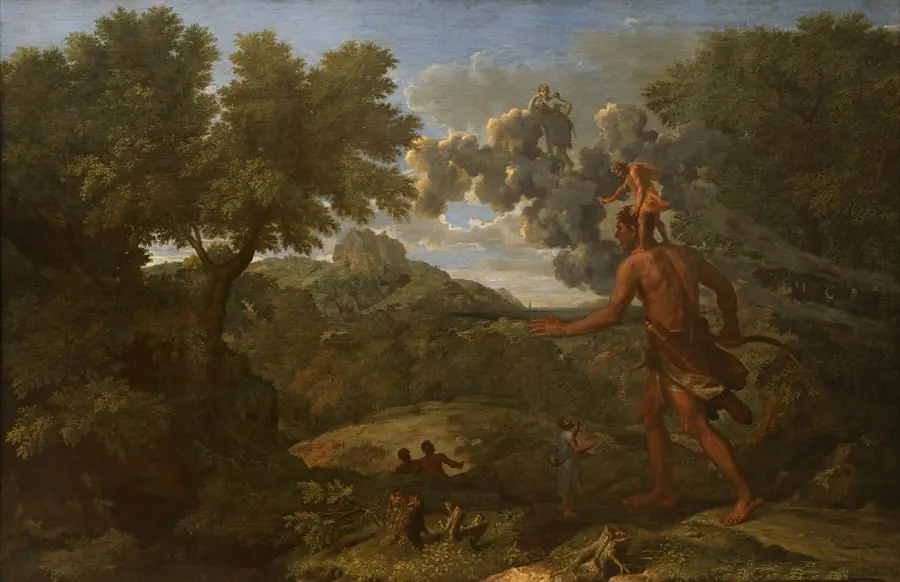
Landscape with Polyphemus
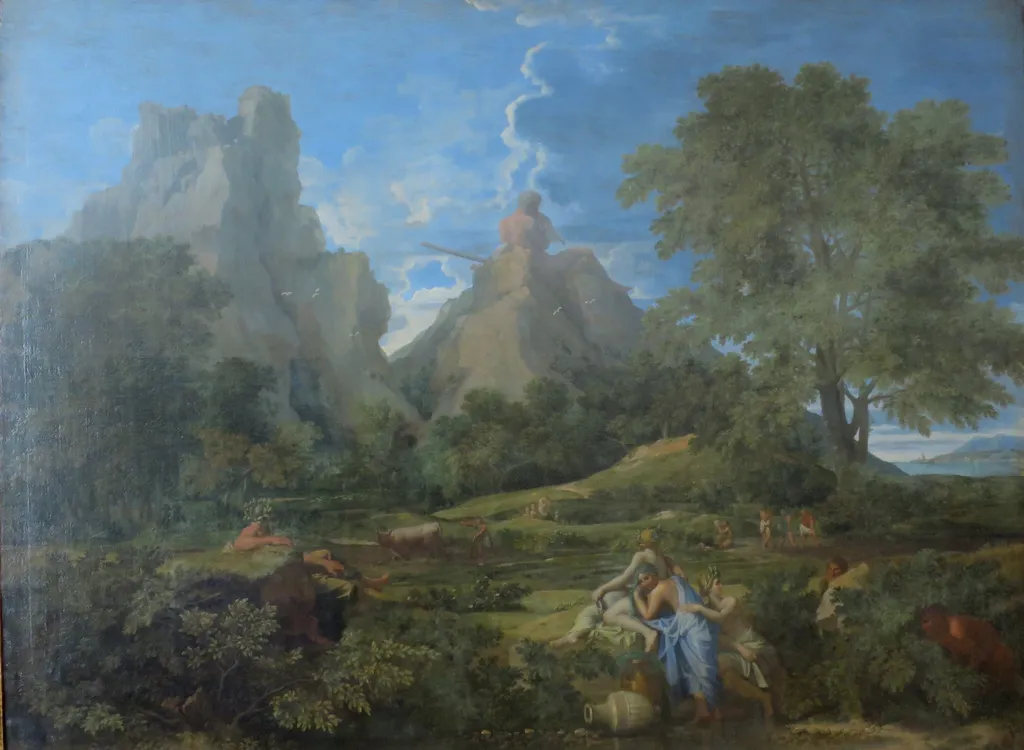
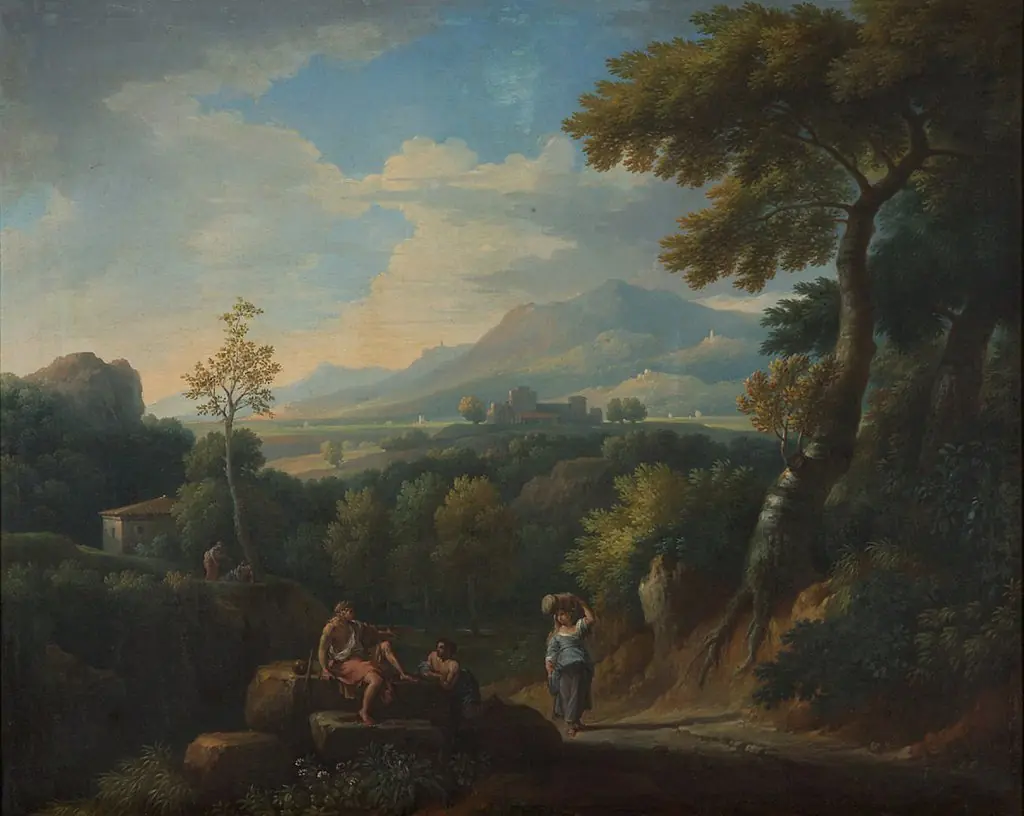
Landscape with Polyphemus is an oil painting by the Classicist painting artist Nicolas Poussin. It dates from 1649 and is held in the collection of the Hermitage Museum.
About this work
Subject & Meaning
The painting depicts a scene from Greek mythology, specifically drawing upon Ovid's Metamorphoses and the Spanish literary work La Fábula de Polifemo y Galatea.
The painting depicts a scene from Greek mythology, specifically drawing upon Ovid's Metamorphoses and the Spanish literary work La Fábula de Polifemo y Galatea. In the foreground, semi-nude nymphs are observed by satyrs concealed within nearby bushes. Behind them, on green fields, figures listen to music played on a flute by the Cyclops Polyphemus.
A distinctive iconographic feature is the giant's integration into the rocky mountains of the background, making him difficult to distinguish from the landscape itself.
Scholarly analysis interprets the work as illustrating a desired harmony between nature, music, and humanity. It represents the appeasement characterizing the artist's mature relationship with the natural world, showcasing an alliance where the mythological figure appears blended with the environment rather than dominating it.
Technique & Style
Landscape with Polyphemus is executed in oil paint on canvas, measuring approximately 155 cm high by 199 cm wide. The work exemplifies Poussin’s mature classicist style, characterized by a balanced, harmonious composition in which mythological figures are seamlessly integrated into a tranquil landscape. As noted by Jacques Thuillier, the painting illustrates the alliance of nature with music and of humanity with nature, conveying an appeasement that marks the artist’s later relation to the natural world.
History & Provenance
The painting was commissioned in 1649 by the French banker Jean Pointel and executed by Nicolas Poussin that same year. After remaining in Pointel’s possession, it was bought in 1722 by Andrea Procaccini on behalf of King Philip V of Spain, entering the Spanish royal collection. Later the work passed to a French noble, the Marquis de Conflans, who, assisted by Denis Diderot, sold it in 1772 to the Russian Prince Golytsine to settle a gambling debt.
The prince’s acquisition brought the canvas to Saint Petersburg, where it has resided ever since as part of the Hermitage Museum’s holdings.
Nicolas Poussin's Landscape with Polyphemus is held in the Hermitage Museum in Saint Petersburg, Russia. The work entered the museum's collection in 1772 after the Marquis de Conflans sold it to Prince Golytsine to settle a gambling debt, a transaction facilitated by Denis Diderot. Prior to this acquisition, the painting had a distinct European trajectory: it was originally commissioned by banker Jean Pointel in 1649, acquired in 1722 for King Philip V of Spain by Andrea Procaccini, and later passed into the hands of a French marquess. The Hermitage currently lists the painting as part of its permanent holdings, where it remains on display.
Overview
Landscape with Polyphemus is a 1649 oil painting by the French artist Nicolas Poussin, currently held in the Hermitage Museum in Saint Petersburg. The work illustrates the mythological episode from Ovid's Metamorphoses in which the cyclops Polyphemus plays his reed pipes to woo the nymph Galatea, who is depicted fleeing with her lover Acis. Poussin constructs the composition as a classical landscape, organizing the scene with rigorous geometric clarity and balanced proportions characteristic of his mature style.
The foreground features the dramatic interaction between the figures, while the background unfolds into an idealized, pastoral vista of rolling hills and distant architecture under a luminous sky. Painted during the artist's later period in Rome, this work exemplifies Poussin's synthesis of narrative drama and harmonious natural order. It stands as a significant example of his exploration of mythological themes within a structured landscape format, reflecting his commitment to intellectual rigor and the primacy of line over color.
The painting demonstrates the artist's ability to convey complex literary sources through a serene and composed visual language, solidifying his reputation as a master of French classical painting.
Context
The work belongs to Pousnin’s later phase, when he increasingly integrated mythological subjects into expansive, pastoral settings. This synthesis of narrative and landscape aligns with the 17th‑century French classicist tradition, which sought to harmonize human drama with the order of nature.
Own this work as a print
Artist & collection
Artist
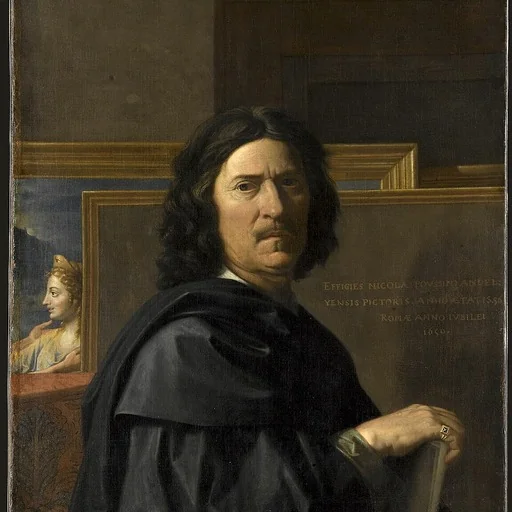
Nicolas Poussin (UK: US: French:; June 1594 – 19 November 1665) was a leading painter of the classical French Baroque style, although he spent most of his working life in Rome.