Artwork
Adam and Eve grieve over the Dead Body of Abel
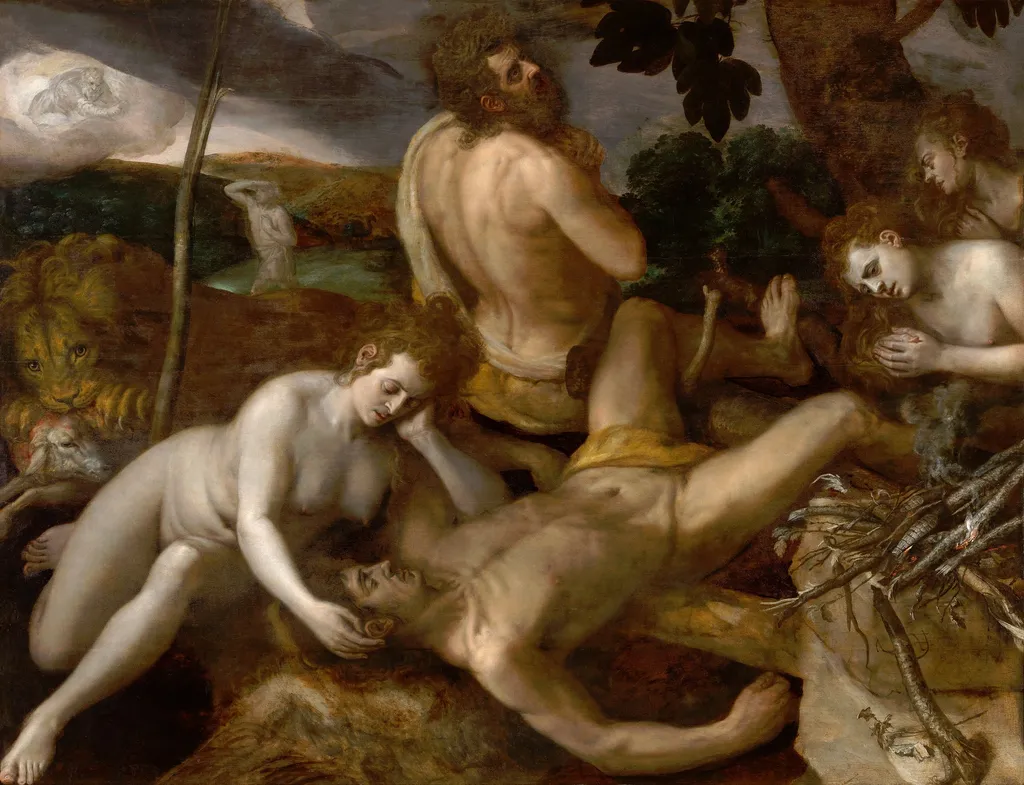
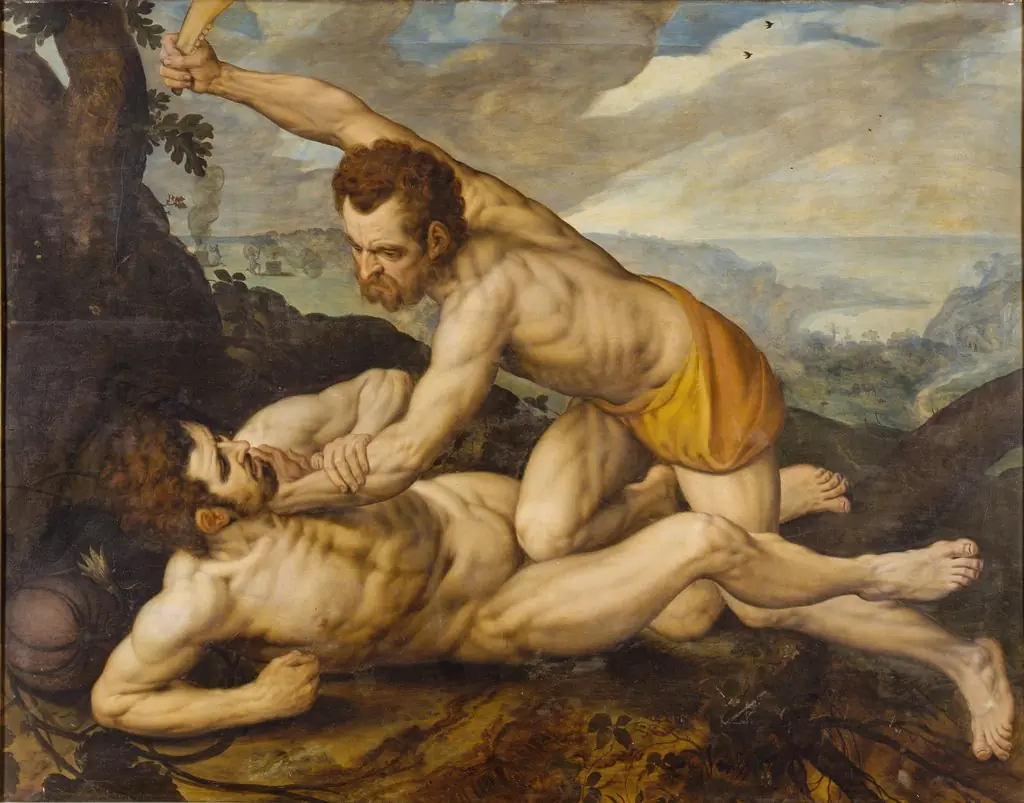
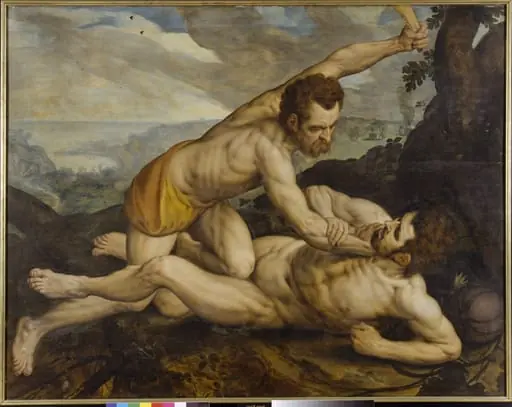
Adam and Eve grieve over the Dead Body of Abel is an oil painting by the Mannerist artist Frans Floris. It dates from 1550 and is held in the collection of the Royal Museum of Fine Arts Antwerp.
About this work
Subject & Meaning
Floris emphasizes the raw sorrow of the parents, using their bowed heads, clasped hands, and anguished expressions to convey deep grief and the weight of loss.
The painting shows Adam and Eve mourning the lifeless body of their son Abel, a scene drawn from the biblical story of Cain and Abel. Floris emphasizes the raw sorrow of the parents, using their bowed heads, clasped hands, and anguished expressions to convey deep grief and the weight of loss. The composition centers on the fallen Abel, highlighting the tragic consequences of fratricide within the early narratives of humanity.
This religious subject underscores themes of familial betrayal and divine tragedy, resonating with Counter-Reformation concerns about human suffering and moral consequence.
Technique & Style
The work is an oil painting executed on wooden panel, measuring 206 cm in width and 160 cm in height. Frans Floris employed layered oil pigments to render the figures with pronounced chiaroscuro, emphasizing the emotional gravity of the scene. The composition demonstrates a restrained use of space and a focus on the tactile rendering of drapery and flesh, reflecting the stylistic hallmarks of Netherlandish Renaissance painting. The surface condition appears stable, with no noted losses or previous restorations documented in the source material.
History & Provenance
Painted in 1550, the work is documented under its present title and attributed to Frans Floris.
It entered the Royal Museum of Fine Arts Antwerp (KMSKA) as part of the Flemish Art Collection, where it remains held. Technical records and museum files identify the oak panel support and the oil medium, consistent with mid-sixteenth-century Antwerp practice.
Context
Scholarship on this religious painting emphasizes its significance within Frans Floris's oeuvre as an early Northern Renaissance work that reinterprets biblical narratives with psychological depth. The composition depicting Eve and Adam mourning Abel's death reflects evolving 16th-century approaches to sacred storytelling, moving beyond mere illustration toward emotional engagement with theological themes. Its creation in Antwerp circa 1550 places it at the intersection of Flemish artistic innovation and Counter-Reformation sensibilities, where visual representations of martyrdom and grief carried heightened spiritual resonance.
The work's formal qualities, particularly its use of oil on panel to render intricate drapery and expressive gestures, demonstrate Floris's technical mastery while contributing to broader discussions about narrative complexity in Protestant-influenced European art.
Overview
Painted in 1550, 'Adam and Eve Grieve over the Dead Body of Abel' by Frans Floris illustrates the immediate aftermath of the first fratricide in biblical history. The composition centers on the lifeless body of Abel, laid upon the ground, surrounded by his grieving parents. Adam, depicted as an elderly bearded man, sits slumped against a tree trunk, his posture conveying profound exhaustion and sorrow.
Eve kneels beside him, leaning her head against his shoulder in a gesture of shared despair, while a third figure, likely a personification of grief or a secondary biblical reference, stands to the right with hands clasped. Executed in oil on panel, the work reflects Floris's mastery of the Italianate style he introduced to the Northern Renaissance during his time in Rome. The artist employs dynamic musculature and dramatic chiaroscuro to heighten the emotional intensity of the scene, moving away from the static conventions of earlier Netherlandish art.
This painting exemplifies Floris's role as a pivotal figure in the Antwerp Mannerist movement, bridging the gap between Northern detail and Italianate grandeur. Created during the height of his career, the work demonstrates his ability to synthesize classical anatomy with the spiritual gravity required for religious narratives, establishing a new standard for historical painting in the Low Countries.
Own this work as a print
Artist & collection
Artist
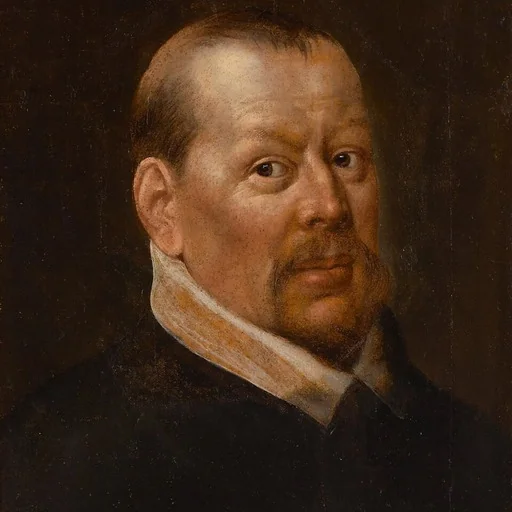
Frans Floris, Frans Floris the Elder or Frans Floris de Vriendt (17 April 1519 – 1 October 1570) was a Flemish painter, draughtsman, print artist and tapestry designer.