Artwork
Indian Camp
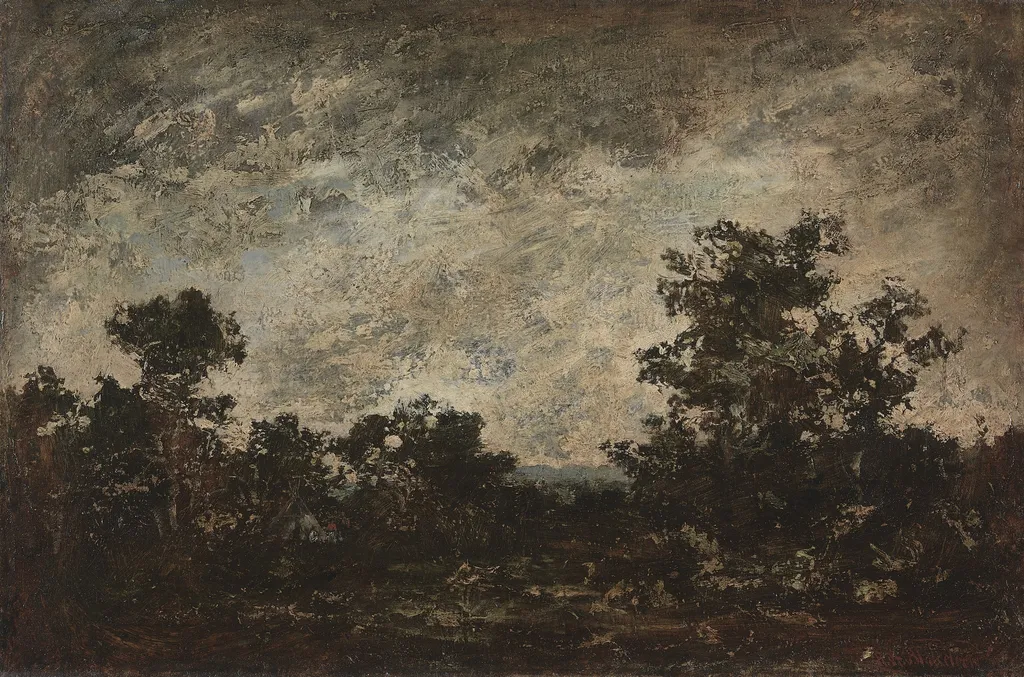
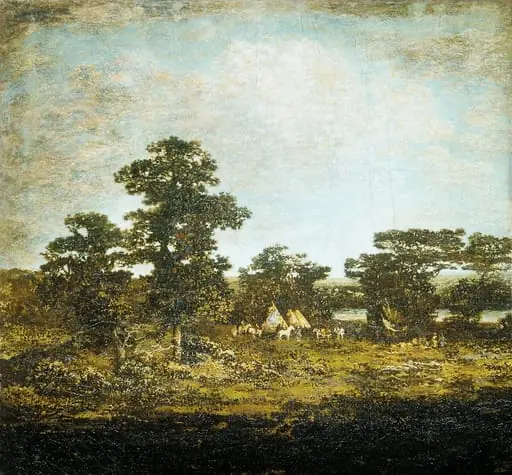
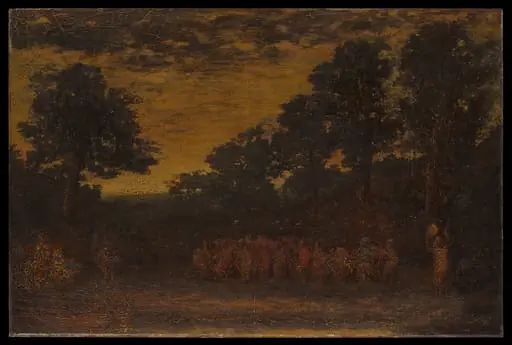
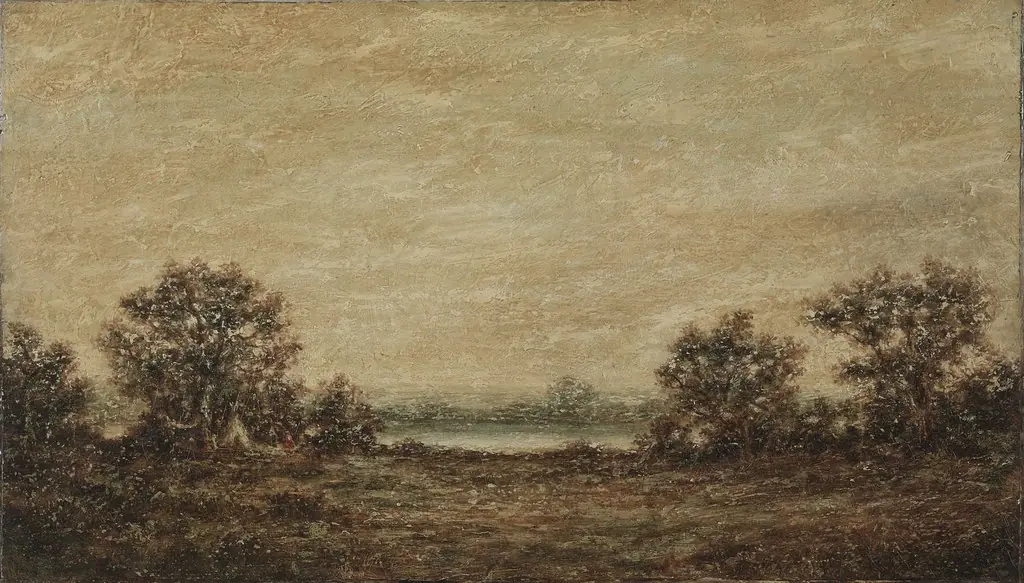
Indian Camp is an oil painting by the American Impressionist artist Ralph Albert Blakelock. It dates from 1896 and is held in the collection of the Cleveland Museum of Art.
About this work
Subject & Meaning
The work reflects Blakelock's recurring engagement with Native American encampments as a thematic focus, a subject he explored repeatedly throughout his career.
Indian Camp depicts an Indian encampment as its principal subject, situating Native American life within a nocturnal American landscape. The painting, executed in oil on canvas in 1890, presents the encampment scene across a horizontal format measuring 41.3 by 61.0 cm, a proportion that supports a panoramic view of the camp and its surroundings.
The work reflects Blakelock's recurring engagement with Native American encampments as a thematic focus, a subject he explored repeatedly throughout his career. By centering the encampment rather than individual figures or narrative action, the painting emphasizes the communal and environmental character of Native life, aligning with the artist's broader interest in the American wilderness and its Indigenous inhabitants.
Technique & Style
Indian Camp is an oil painting on canvas executed in 1890 by Ralph Albert Blakelock.
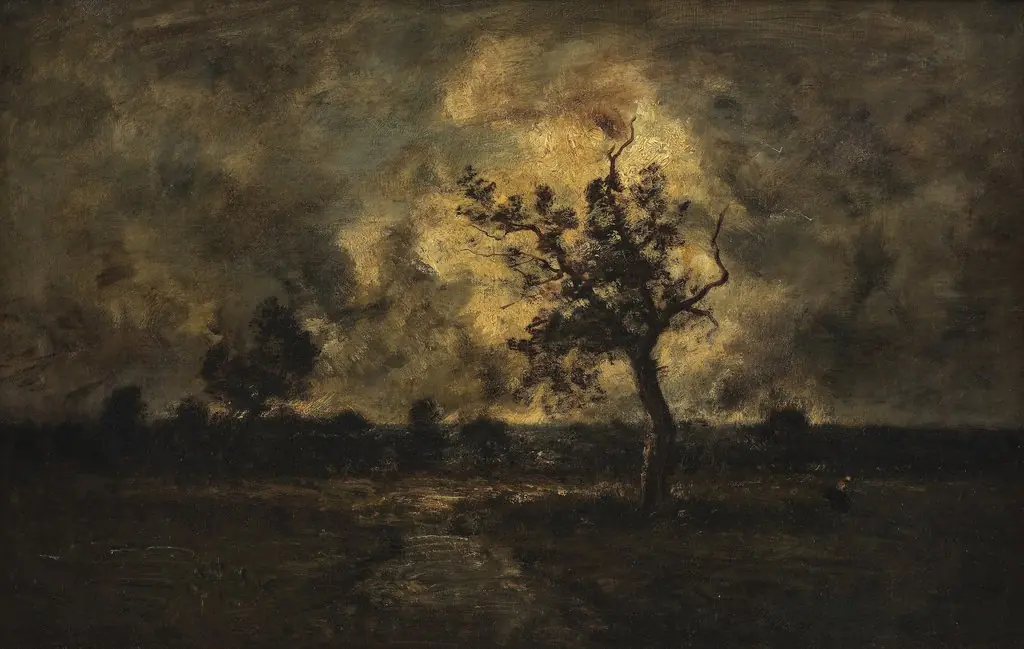
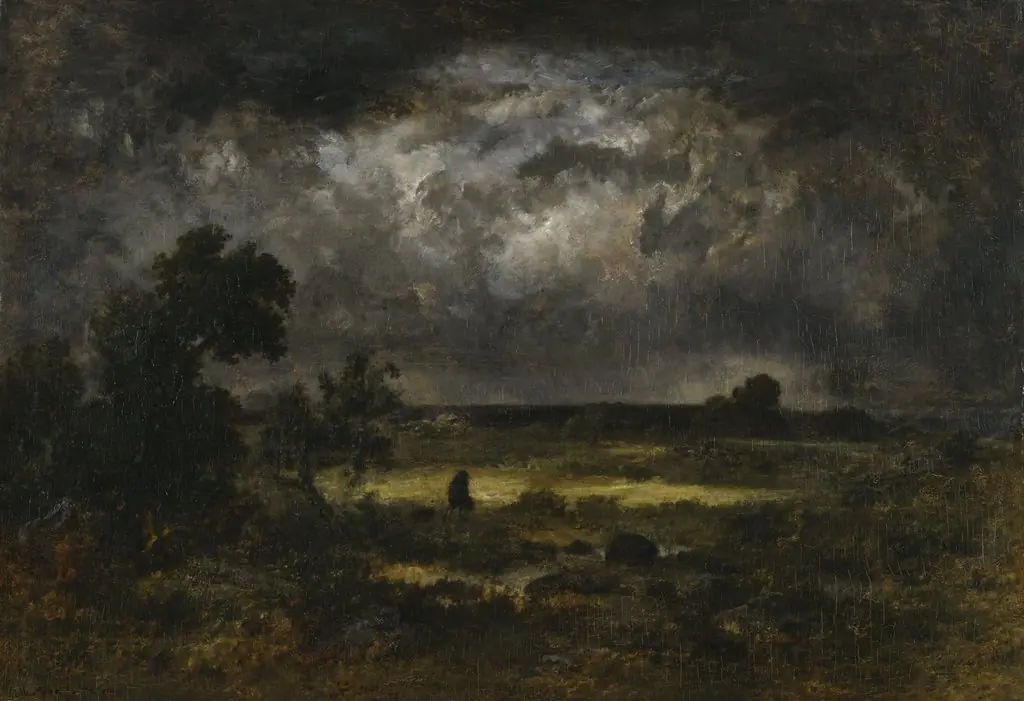
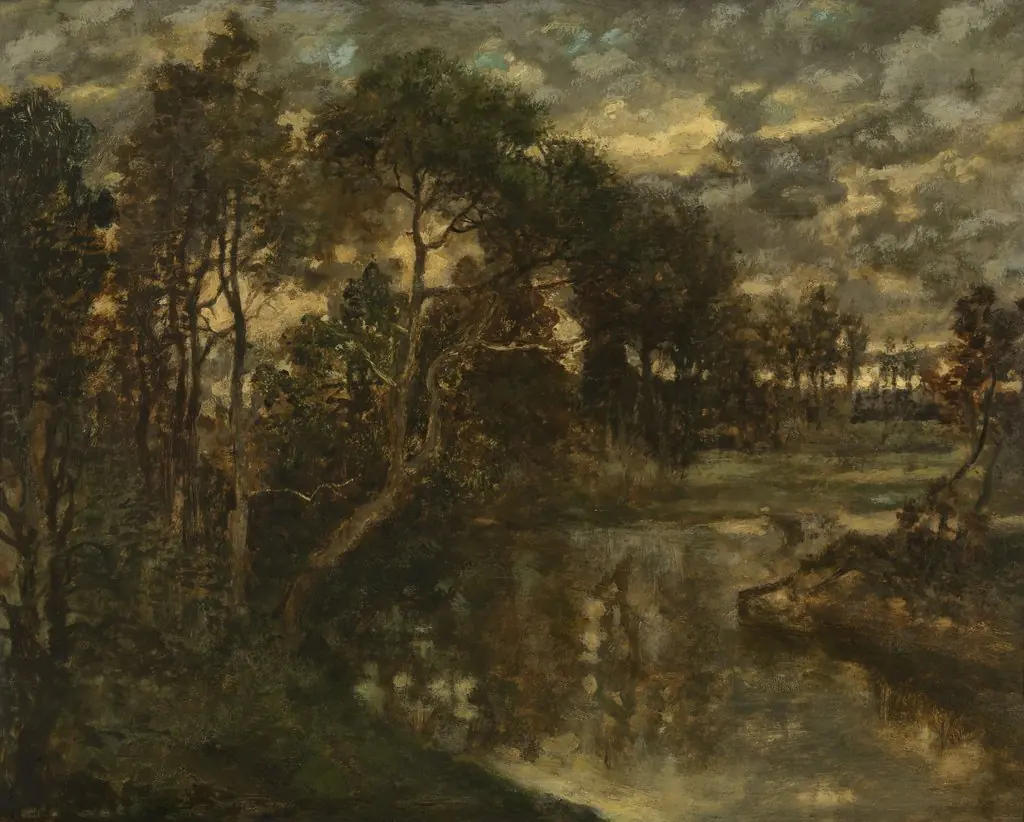
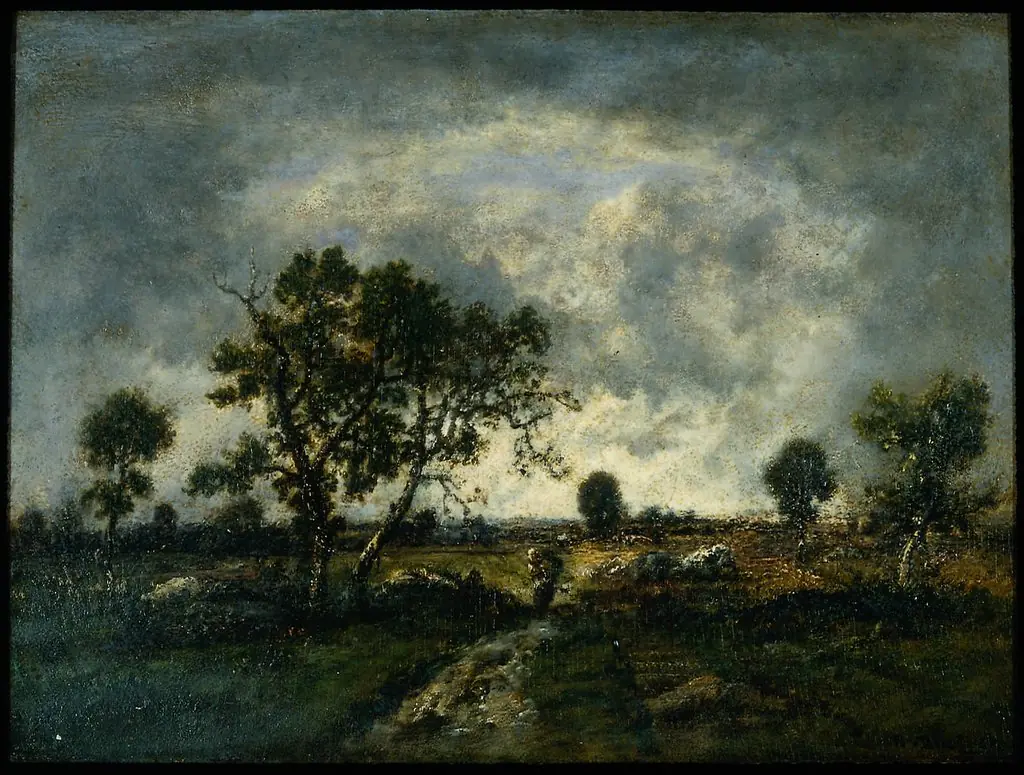
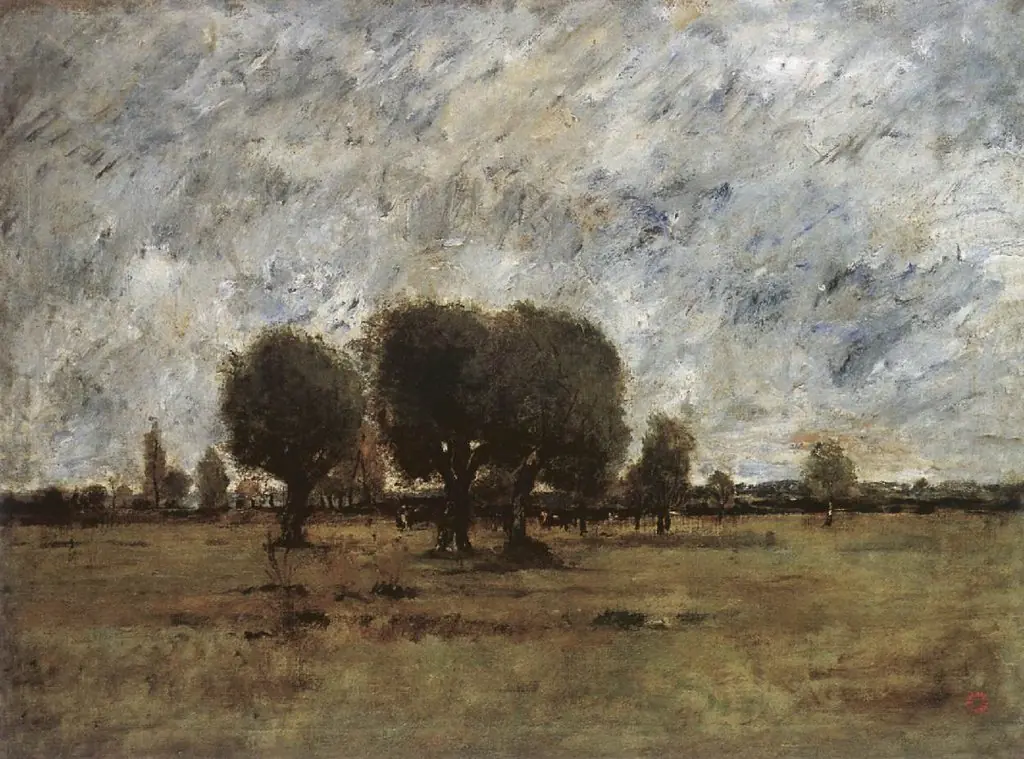
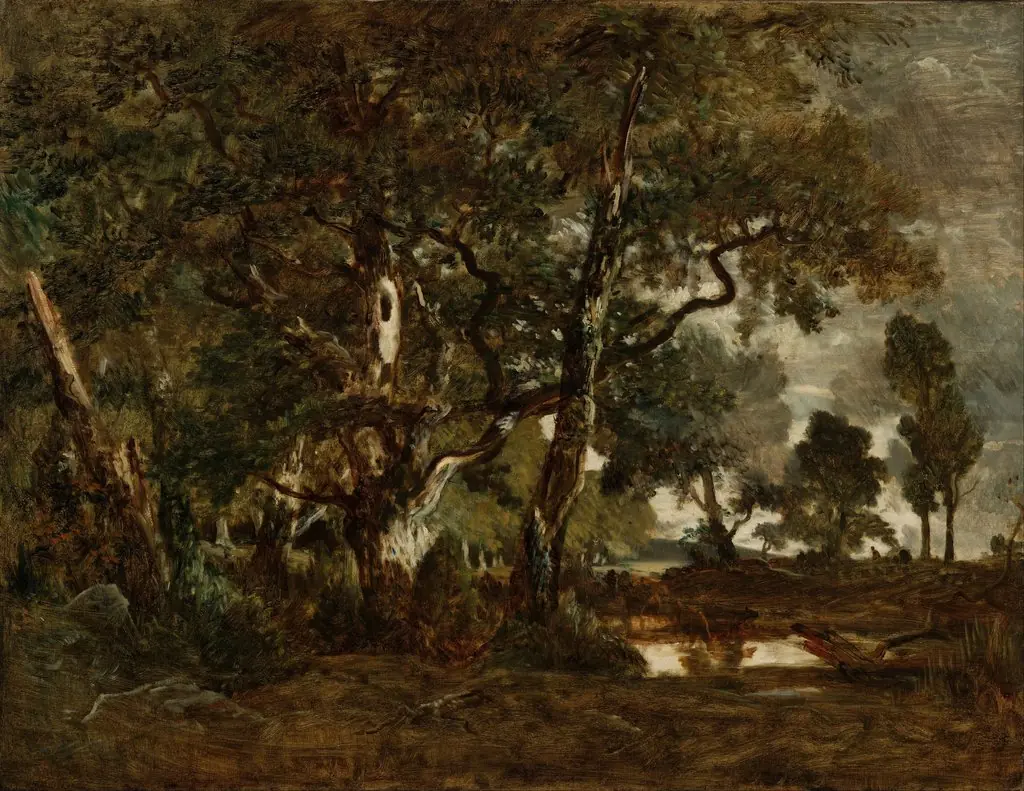
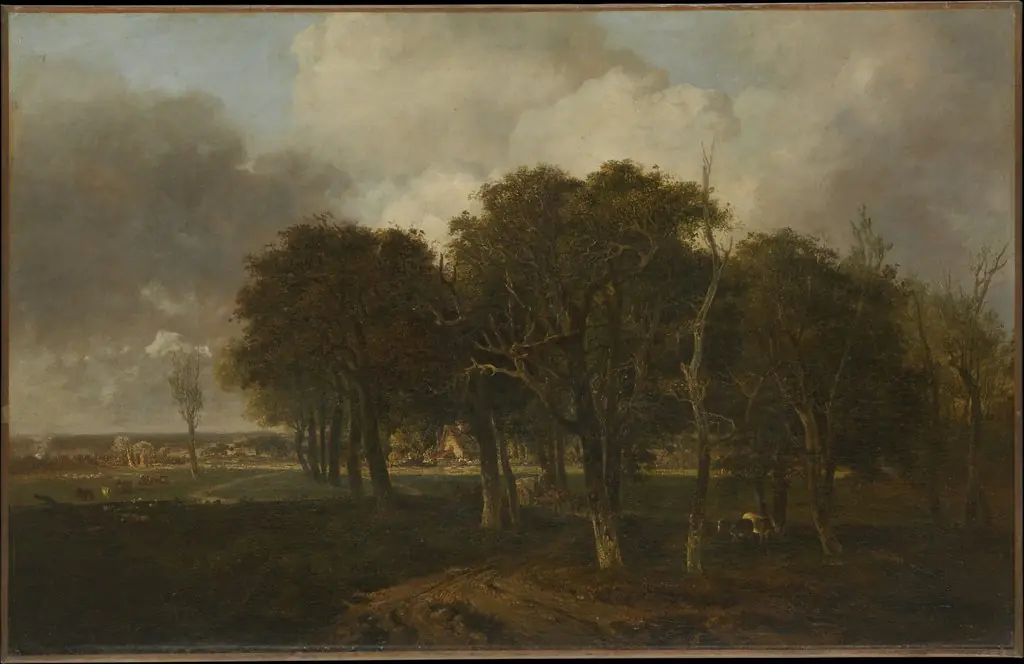
The handling is characterized by softly blended, atmospheric passages that evoke the quiet of an encampment at dusk, with subdued lighting and gentle transitions between shadow and light. Stylistically, Blakelock employs an Impressionist-inflected realism, using loose, rhythmic brushwork to suggest foliage and distant forms rather than define them with sharp contours. The palette remains earthy and restrained, relying on muted greens, ochres, and grays to convey the evening setting.
The composition centers on a cluster of tents and figures silhouetted against a fading sky, organized through gentle diagonals that guide the eye across the scene without rigid geometry.
History & Provenance
Indian Camp was created by Ralph Albert Blakelock in 1890, as indicated by both the artist’s record and the Cleveland Museum of Art’s accession file.
The painting entered the collection of the Cleveland Museum of Art as accession number 1972.280. Its dimensions are recorded as 41.3 cm in height and 61.0 cm in width, and it depicts an Indian encampment scene. The work is dated to 1890 and is associated with the United States in terms of its origin.
Legacy
Indian Camp (1890) influenced American Symbolist and early 20th-century landscape painters through its evocative portrayal of Native American subjects and atmospheric treatment of space. The work's symbolic depth contributed to discussions of transcendentalism in art, reinforcing Blakelock's reputation as a visionary despite contemporary critical neglect. Its inclusion in major collections, notably the Cleveland Museum of Art, cemented its status as a significant example of 19th-century American art.
Overview
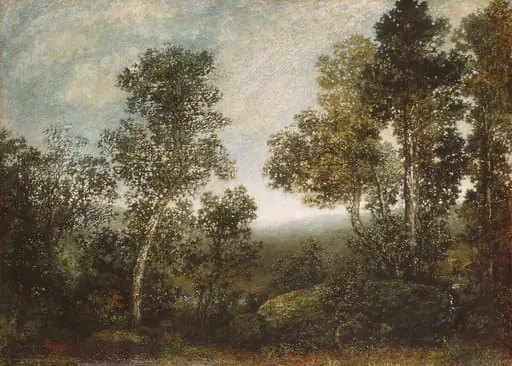
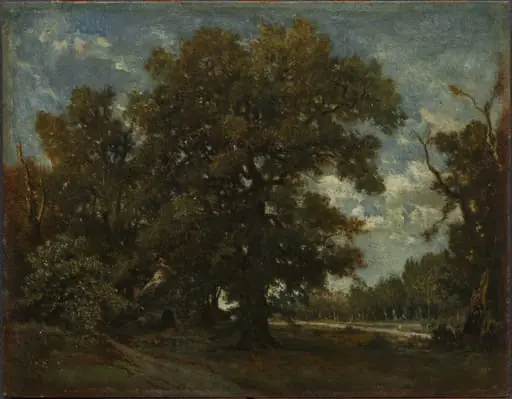
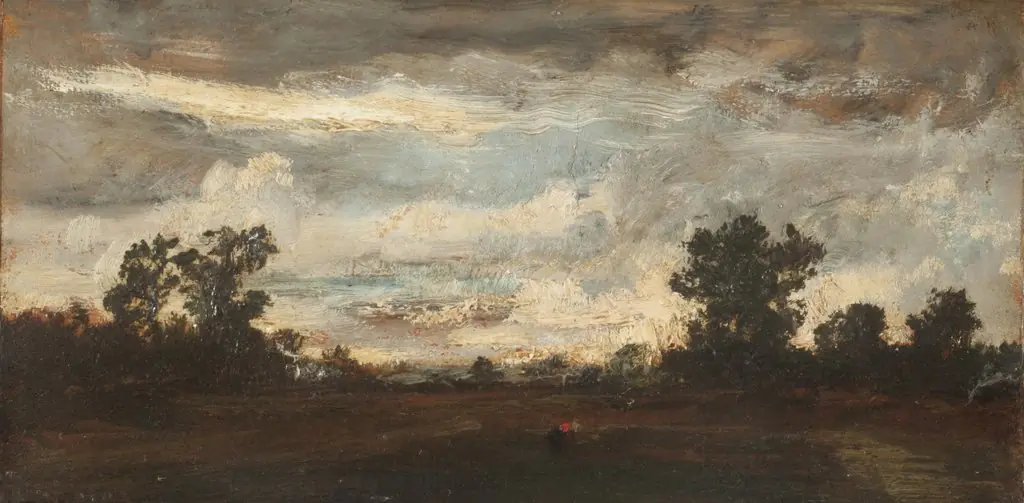
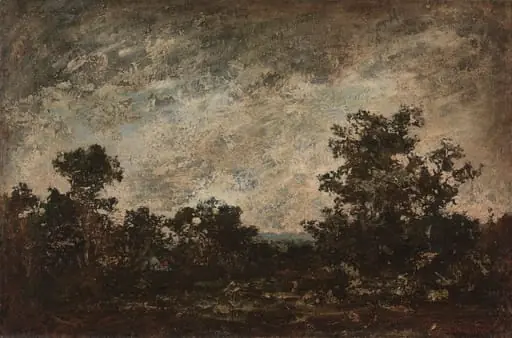
Indian Camp, executed in oil in 1896 by Ralph Albert Blakelock, is part of the collection at the Cleveland Museum of Art. The composition presents a dense forest floor dominated by dark, massive trunks, beneath a sky rendered in turbulent, swirling brushwork of white, gray and blue. The overall palette is restrained, with the cloud formations providing the most vivid contrast.
Own this work as a print
Artist & collection
Artist
Ralph Albert Blakelock was a romanticist American painter known primarily for his landscape paintings related to the Tonalism movement.