Artwork
The Boulder and the Flume
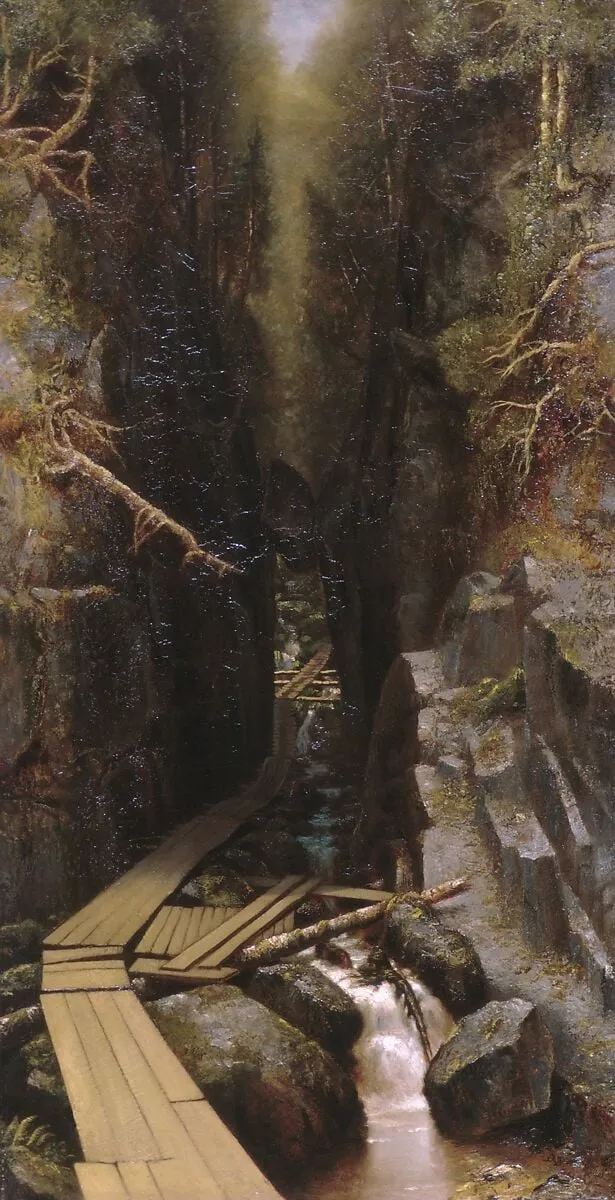
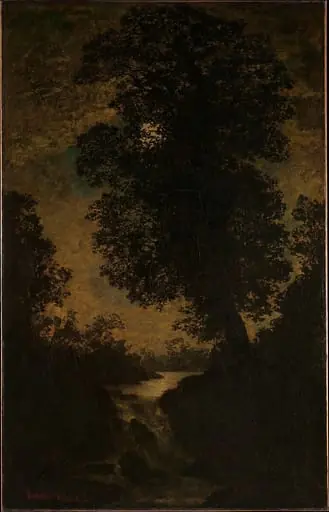
The Boulder and the Flume is an oil painting by the Hudson River School artist Ralph Albert Blakelock. It dates from 1878 and is held in the collection of the Metropolitan Museum of Art.
About this work
Technique & Style
The painting is held in the Metropolitan Museum of Art's American Wing collection, where its condition is maintained under standard institutional care.
The Boulder and the Flume is executed in oil paint on canvas, a medium consistent with Ralph Albert Blakelock's broader landscape practice. The work adopts a tall, vertical format, measuring 137.2 cm in height by 71.1 cm in width, an aspect ratio that emphasizes the upward thrust of the trees and the vertical descent of the flume. The composition is organized around a wooded landscape with a stream, aligning with the conventions of nineteenth-century American landscape painting.
The painting is held in the Metropolitan Museum of Art's American Wing collection, where its condition is maintained under standard institutional care.
History & Provenance
Ralph Albert Blakelock's 1878 oil-on-canvas painting, The Boulder and the Flume, is held in the collection of the Metropolitan Museum of Art in New York. The work is classified within the museum's American Wing and is identified by inventory details confirming its creation in 1878. The canvas measures 137.2 cm in height and 71.1 cm in width.
While the provided sources establish the artwork's current location and physical dimensions, they do not contain specific information regarding its accession number or a detailed history of its public exhibitions.
Overview
Ralph Albert Blakelock's The Boulder and the Flume, painted in 1878, is an oil on canvas landscape. The work presents a dense, shadowed forest scene, characterized by a narrow waterfall cascading through a rocky gorge. Blakelock's approach emphasizes the natural world's mysterious and untamed aspects, with subtle light effects illuminating the dark woodland.
Subject & Meaning
The painting portrays a secluded corner of nature, where a stream tumbles over rocks, framed by a thicket of tangled trees. A faint moonlight penetrates the dense canopy, casting a subtle glow upon the water and highlighting the rugged terrain. This nocturnal setting evokes a sense of solitude and introspection, departing from the more common bright, expansive landscapes of the era to explore nature's deeper, more enigmatic qualities.
Context
In the 1870s, Blakelock's moody and introspective depictions of American forests stood apart from the prevailing landscape traditions. While many contemporaries favored grand, panoramic views or detailed realism, Blakelock explored a more subjective and atmospheric interpretation of nature. His focus on shadowed, often nocturnal scenes, imbued with a sense of mystery, marked a distinctive contribution to American art of the period.
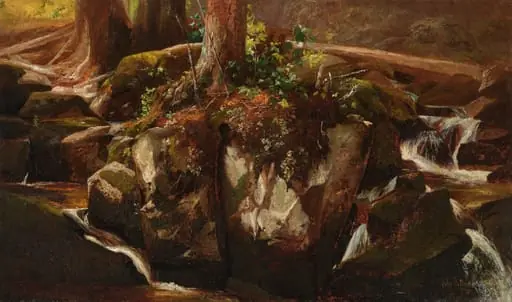
Artist & collection
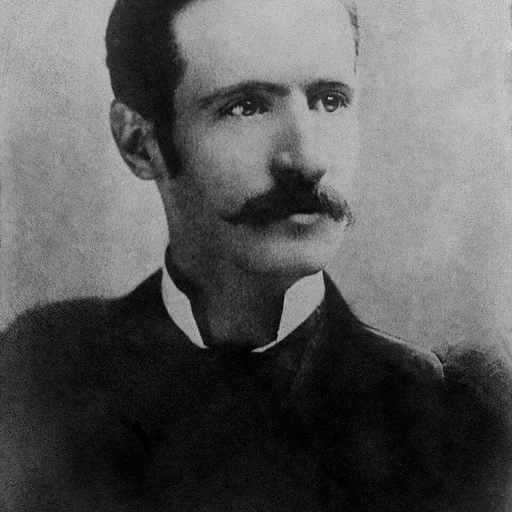
Artist
Ralph Albert Blakelock was a romanticist American painter known primarily for his landscape paintings related to the Tonalism movement.

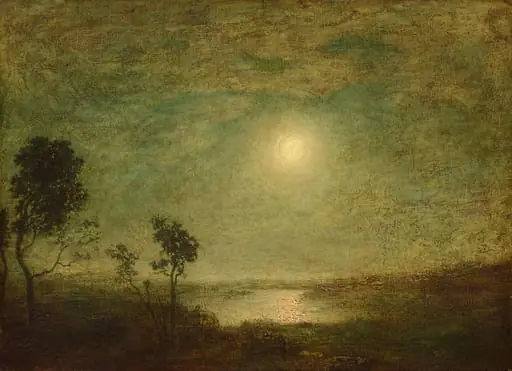
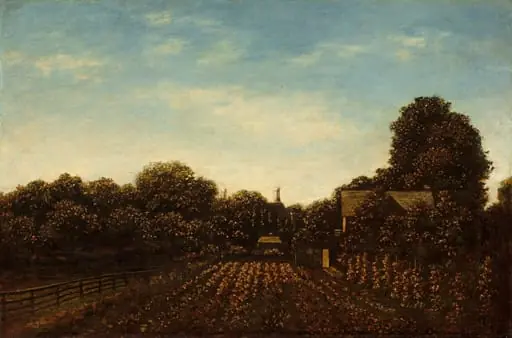
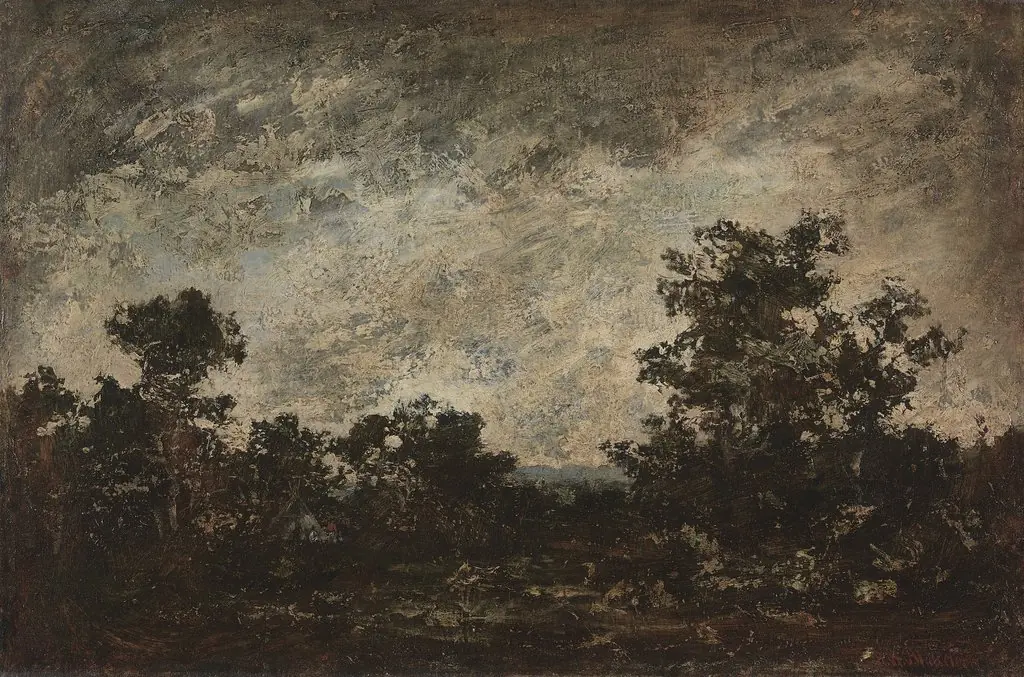
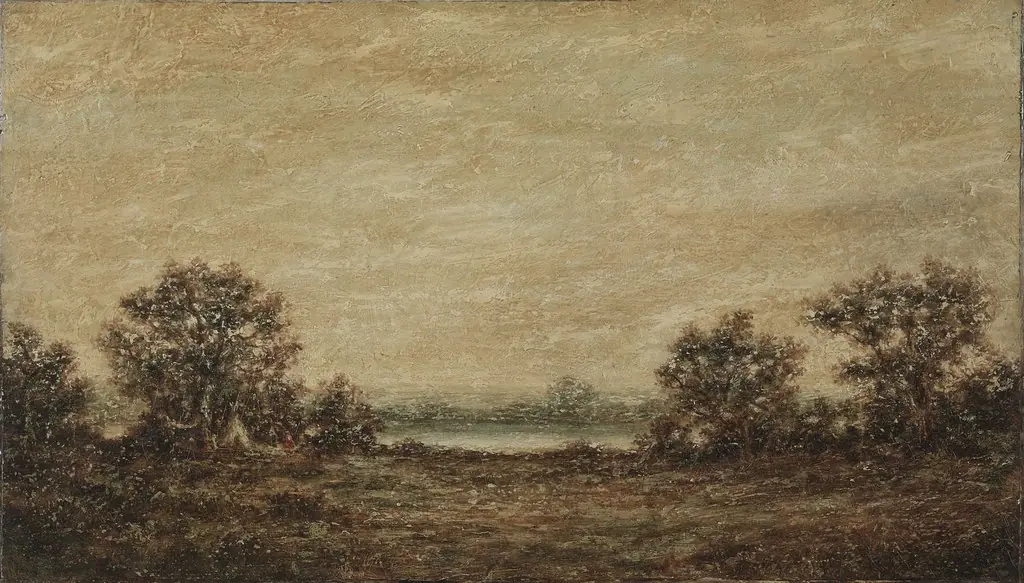
- A Mountain Stream
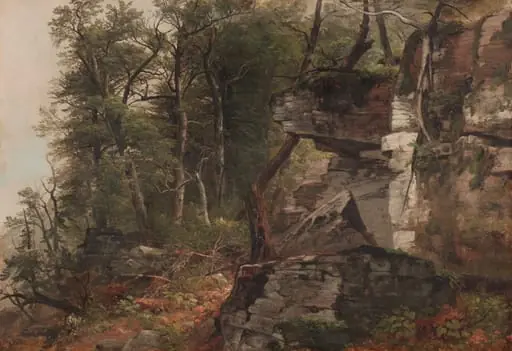 Trees on a Rocky Hillside
 The Grotto of Posillipo, Naples
 Tombs of the Fallen in the Fight for Independence
 Sammaleinen kallio metsässä
 View of the Devil's Glen
 Et skyggefuldt sted i Hestehave ved Frederiksborg
 Devil's Coach-house, Fish River Caves
 A Scottish waterfall
 Woodland Interior
 Suomalainen metsämaisema
 Mountain Landscape with Rocks