Artwork
The Artist's Garden
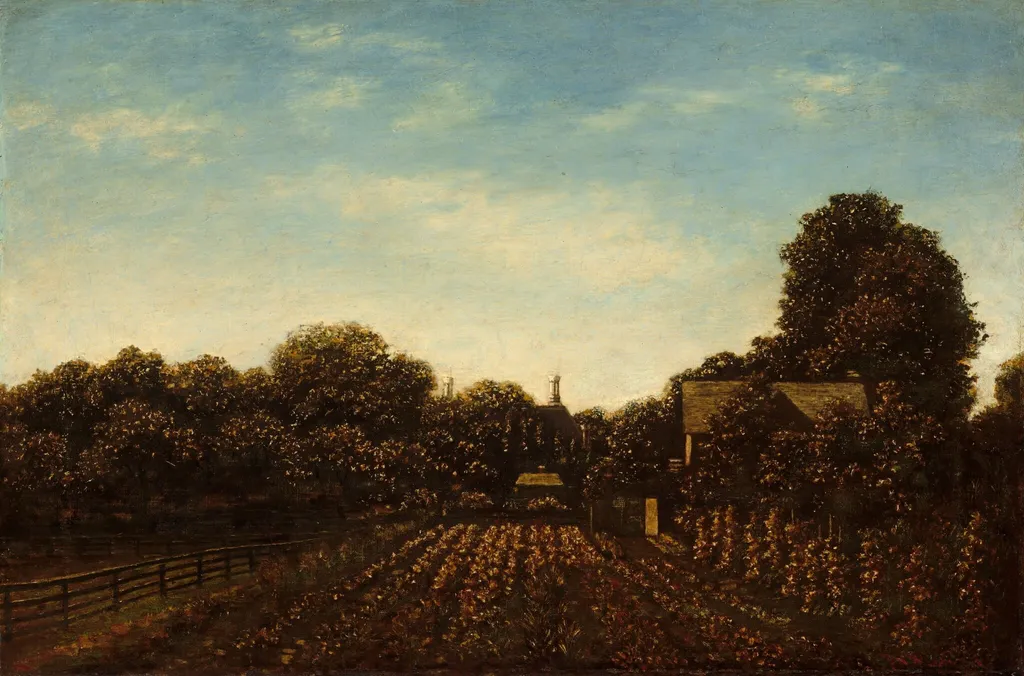
The Artist's Garden is an oil painting by the American Impressionist artist Ralph Albert Blakelock. It dates from 1884 and is held in the collection of the National Gallery of Art.
- Inscription
- Inscribed:lower right, incomplete, within broken arrowhead shape: R.A. Blakelock
About this work
Technique & Style
The Artist's Garden is executed in oil on canvas, with the paint applied in a manner consistent with Blakelock’s late nineteenth-century handling of the medium.
The Artist's Garden is executed in oil on canvas, with the paint applied in a manner consistent with Blakelock’s late nineteenth-century handling of the medium. The work measures 40.6 cm in height and 61 cm in width. Stylistically, the composition emphasizes a quiet, atmospheric mood, with loose, expressive brushwork that conveys the garden’s foliage and light rather than precise botanical detail.
The palette relies on subdued earth tones and muted greens, punctuated by subtle tonal shifts to suggest dappled sunlight and shadow. The overall effect aligns with Tonalist tendencies of the period, emphasizing mood and atmosphere over descriptive clarity.
History & Provenance
The painting was created in 1884, as recorded in the National Gallery of Art’s holdings.
Its earliest documented owner was Lewis Bloomington Slocum (also known as Lew Bloom), a vaudeville actor and friend of the artist who occasionally accompanied him musically. Slocum acquired the work directly from Blakelock during a period of financial difficulty. After Slocum’s death, the painting passed to his niece in The Oranges, New Jersey.
It was sold in 1931 at the American Art Association–Anderson Galleries in New York, then again in 1937 at a second Anderson Galleries sale. By 1937 it had entered the collection of Abner S. Werblin, who consigned it for sale the same year. The painting was later acquired by Chester Dale, who donated it to the National Gallery of Art in 1954.
The painting is held in the collection of the National Gallery of Art in Washington, D.C., having entered the institution as a gift from Chester Dale in 1954. Prior to this acquisition, the work passed through the estates of vaudeville actor Lewis Bloomington Slocum and collector Abner S. Werblin, appearing at auction in New York in 1931 and 1937 under the title The Artist's Garden: East Orange, N.J.
Regarding its exhibition history, the work was notably included in the Ralph Albert Blakelock Centenary Exhibition organized by the Whitney Museum of American Art in 1947. Curatorial records at the National Gallery of Art maintain correspondence from 1991 that further documents the provenance linking the artist to the initial owner.
Overview
Ralph Albert Blakelock’s oil on canvas, The Artist’s Garden, dates to around 1884. The work presents a tranquil garden setting, framed by a low wooden fence that leads the eye toward a cluster of trees and modest structures beneath a pale blue sky.
Subject & Meaning
The composition captures a quiet, rural landscape, emphasizing the interplay of foliage and architecture. The muted palette of dark greens, browns and yellows suggests a late‑season atmosphere, perhaps evoking contemplation of nature’s cycles.
Own this work as a print
Artist & collection
Artist
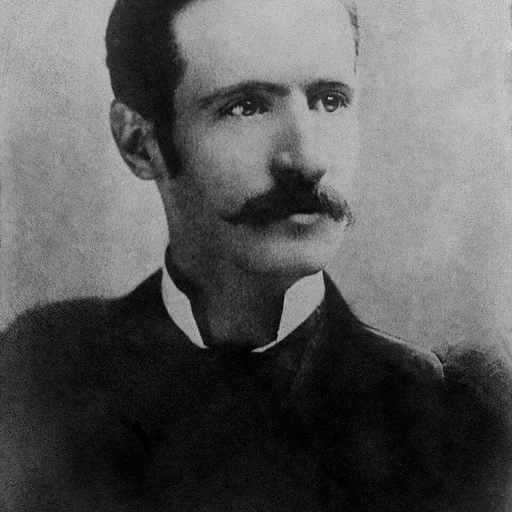
Ralph Albert Blakelock was a romanticist American painter known primarily for his landscape paintings related to the Tonalism movement.

- Willy Lott's House
 Landscape with a Cottage beside a Pond
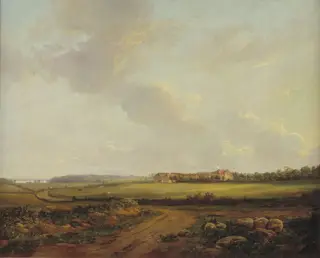 View of Engelholm at Præstø in Zealand
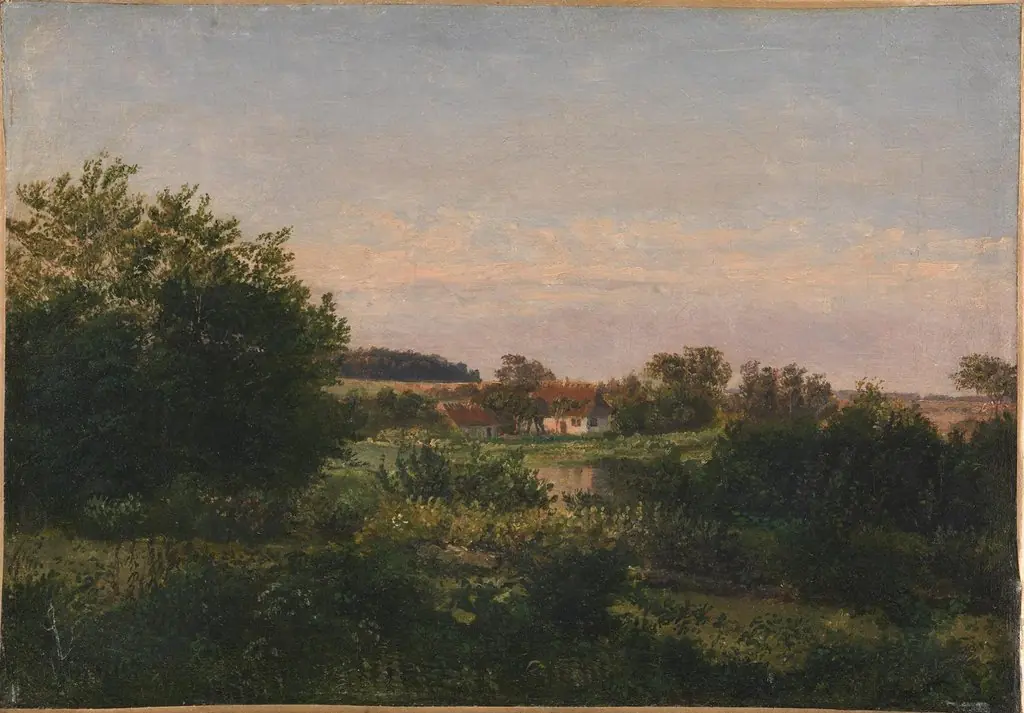 Landscape with a Cottage beside a Pond
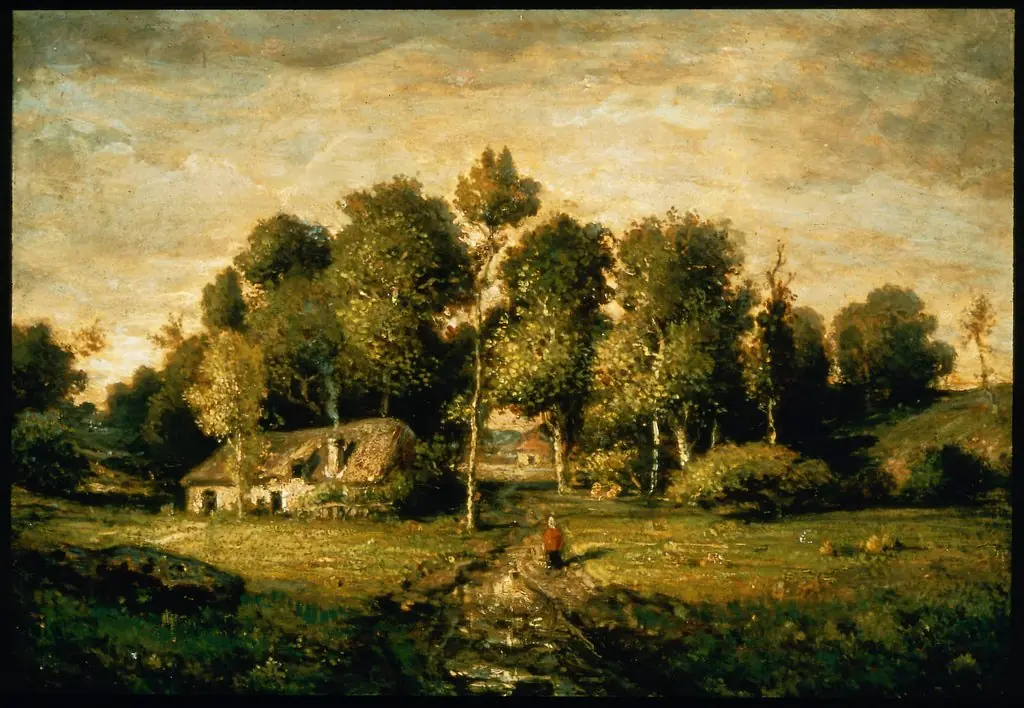 Cottage in a Clump of Trees
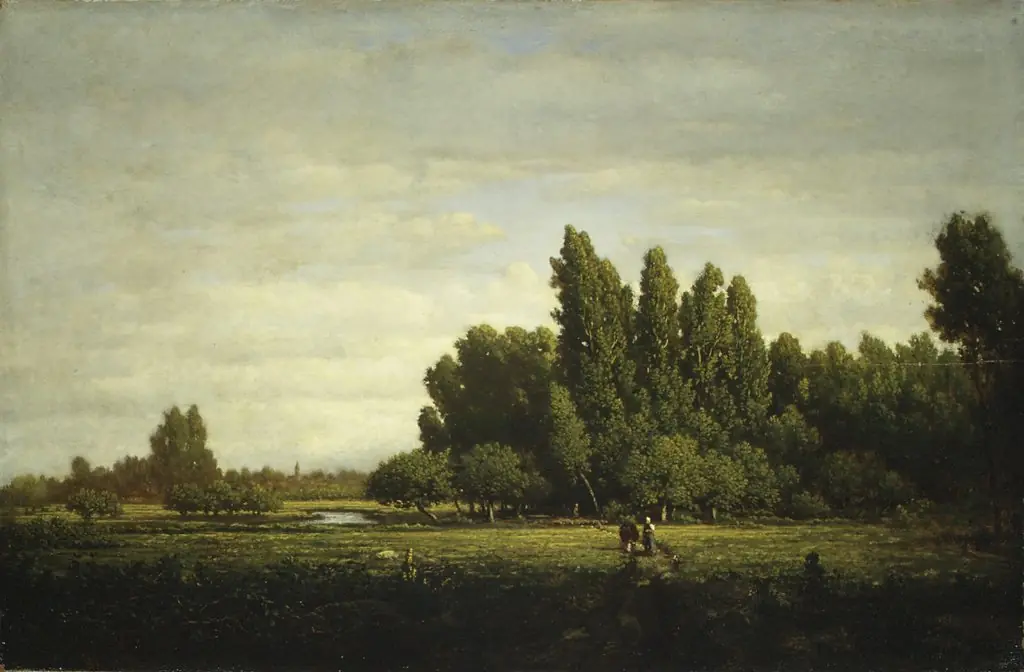 A Meadow Bordered by Trees
 A Barn on the Bank of a Stream in Gelderland
 A River Scene
 Ulvedalen i Dyrehaven
 An Old Chapel in a Valley
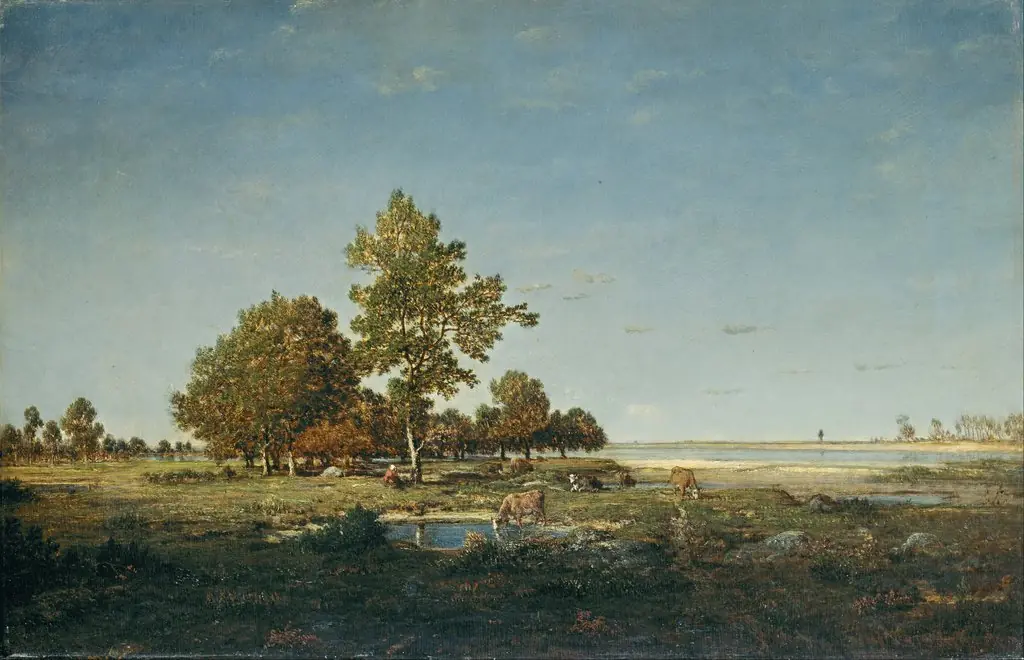 Landscape with a clump of trees
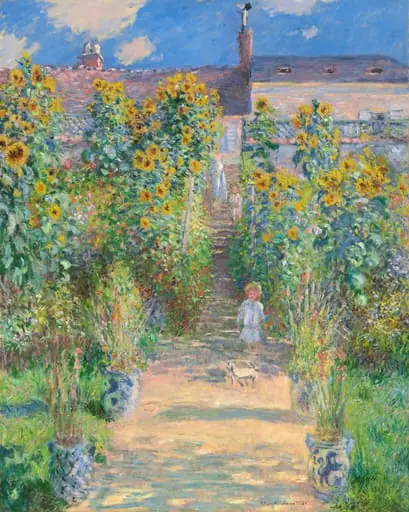 The Artist's Garden at Vétheuil