Artwork
The blind Musician
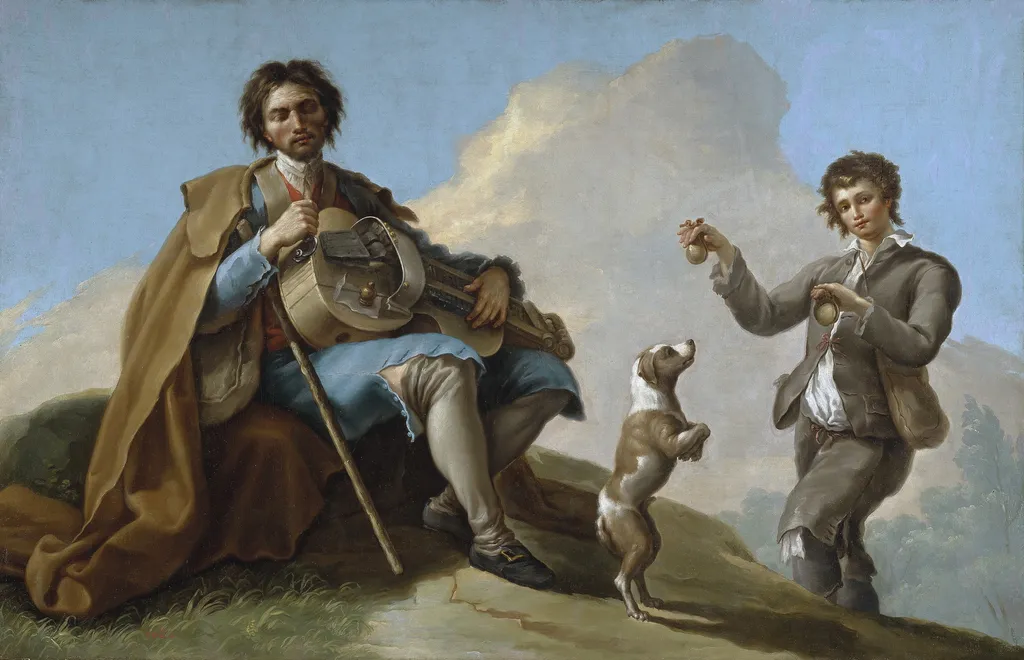
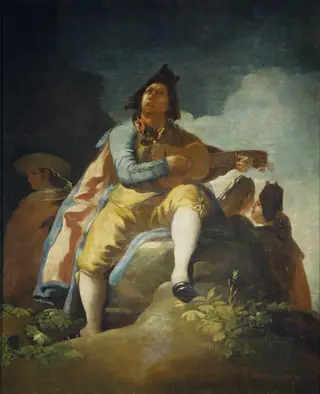
The blind Musician is an oil painting by the Rococo painting artist Ramón Bayeu. It is held in the collection of the Museo del Prado.
About this work
Subject & Meaning
The everyday subject of a wandering blind performer is elevated into a meditation on perception, resilience, and the consoling bond between human and animal.
The painting depicts a blind musician, shown as a person with visual disabilities accompanied by a dog. The pairing of the sightless performer with a loyal canine companion draws on a long-standing iconographic tradition in which the dog functions as a guide and companion to the blind, evoking themes of fidelity, dependence, and the heightened cultivation of other senses, particularly hearing, in the absence of sight. By centering a musician who cannot see, the work celebrates music as an art of sound accessible to those denied vision, lending the figure a contemplative, almost allegorical resonance.
The everyday subject of a wandering blind performer is elevated into a meditation on perception, resilience, and the consoling bond between human and animal.
The depiction of a person with visual disabilities, a musician, and a dog grounds the image in recognizable symbolic vocabulary rather than portraiture of a specific individual.
Technique & Style
Executed in 1786, this work is an oil painting on canvas. The composition measures 93 cm in height and 145 cm in width. Stylistically, the piece functions as a genre scene depicting a musician with visual disabilities accompanied by a dog.
The application of oil paint on a woven support allows for the detailed rendering of the figures and their interaction within the pictorial space.
History & Provenance
The Blind Musician is an oil painting on canvas created by Ramón Bayeu in 1786. The work measures 93 cm in height and 145 cm in width. It currently resides in the collection of the Museo del Prado. The painting depicts a person with visual disabilities who is also a musician, accompanied by a dog.
The painting The blind Musician is held in the collection of the Museo del Prado in Madrid. Created in 1786 by Ramón Bayeu, the work is executed in oil on canvas and measures 93 cm in height by 145 cm in width. The available sources confirm its location within the museum but do not provide a specific inventory or accession number. Furthermore, no details regarding the exhibition history of this specific work are included in the provided records.
Overview
The Blind Musician is an oil painting created by Spanish Neoclassicist artist Ramón Bayeu in 1794. Although associated with the Rococo movement, the work's themes and style reflect Bayeu's Neoclassical inclinations.
Context
While linked to the Rococo due to its pastoral theme, the painting's execution and emotional restraint align more closely with the emerging Neoclassical values of Bayeu's time, emphasizing simplicity and moral themes.
Legacy
The Blind Musician remains a notable work in Bayeu's oeuvre, illustrating his ability to craft poignant, everyday scenes. Its presence in the Prado underscores its significance within Spanish art history of the late 18th century.
Own this work as a print
Artist & collection
Artist
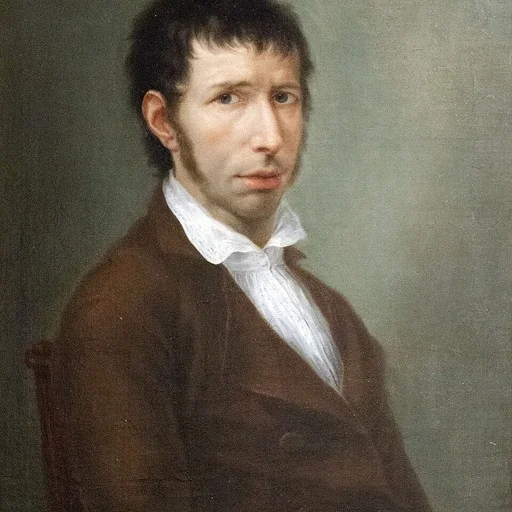
Ramón Bayeu y Subías (2 December 1744, Zaragoza – 1 March 1793, Aranjuez) was a Spanish Neoclassicist painter; known primarily for his work in tapestry design.