Artwork
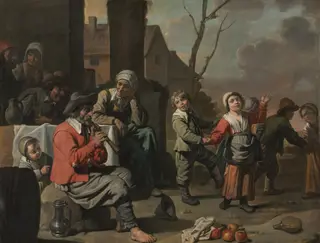
Peasant Children Dancing
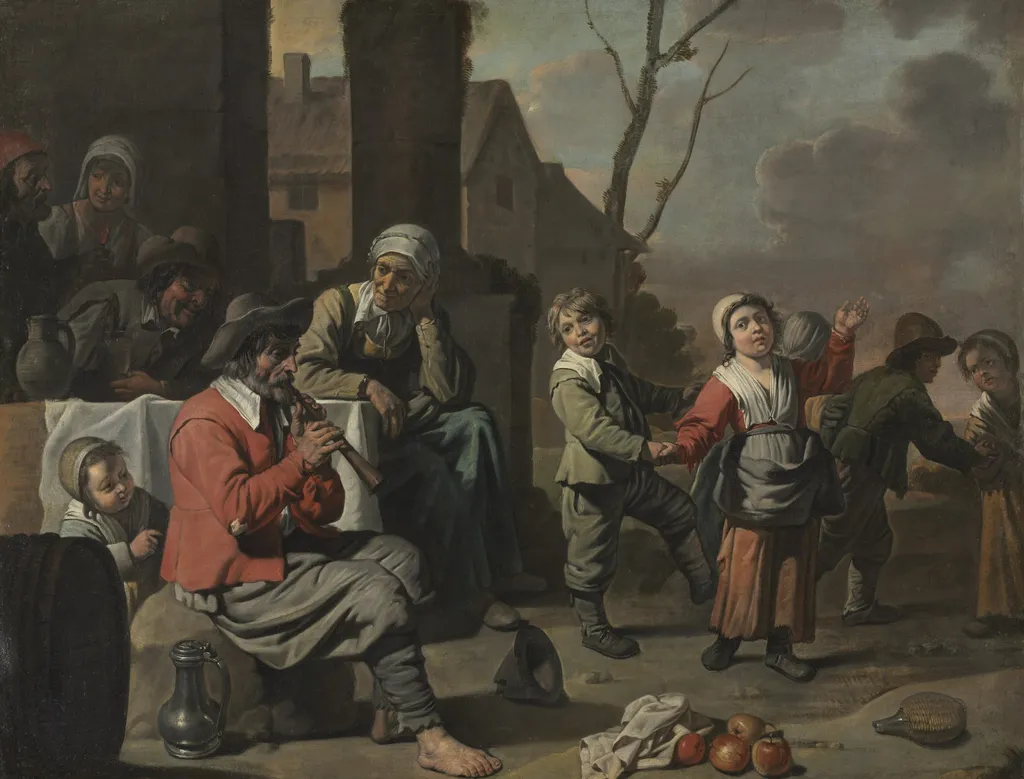
Peasant Children Dancing is an oil painting. It dates from 1654 and is held in the collection of the Cleveland Museum of Art.
About this work
Technique & Style
The painting is held in the collection of the Cleveland Museum of Art, where its condition has been maintained for study and display.
Peasant Children Dancing is executed in oil paint on canvas, a standard support for mid-17th-century French easel painting. The canvas measures 91.8 cm in height by 120.3 cm in width, an orientation and scale consistent with a domestic interior scene intended for close viewing. The work was produced in France in 1654, a period when the Le Nain brothers favored muted tonal palettes, smooth handling, and carefully arranged figural groupings to lend dignity to humble rural subjects.
The painting is held in the collection of the Cleveland Museum of Art, where its condition has been maintained for study and display.
History & Provenance
Created in 1654 in France, Peasant Children Dancing is an oil painting on canvas attributed to the Le Nain brothers. The work measures 91.8 cm in height and 120.3 cm in width. It eventually entered the collection of the Cleveland Museum of Art, where it is cataloged under the accession number 1958.175.2.
No further details regarding its specific commission, intermediate ownership history, or the circumstances of its creation prior to its museum acquisition are provided in the available records.
The painting is held in the collection of the Cleveland Museum of Art, where it is cataloged under inventory number 1958.175.2. It was acquired as part of the museum's permanent collection and has been displayed in exhibitions focusing on French Baroque art, including a 1976 exhibition of works by the Le Nain brothers.
The work measures 91.8 cm in height and 120.3 cm in width, reflecting its original dimensions as recorded in the museum's documentation.
Legacy
Peasant Children Dancing exerted subtle influence on later genre scenes through its naturalistic portrayal of childhood, though specific lineage remains undocumented. The work is held in the Cleveland Museum of Art collection, where it is cataloged as accession 1958.175.2. Its formal qualities, including dimensions of 91.8 cm by 120.3 cm, reflect the characteristic oil-on-canvas technique of mid-17th-century French painting.
Overview
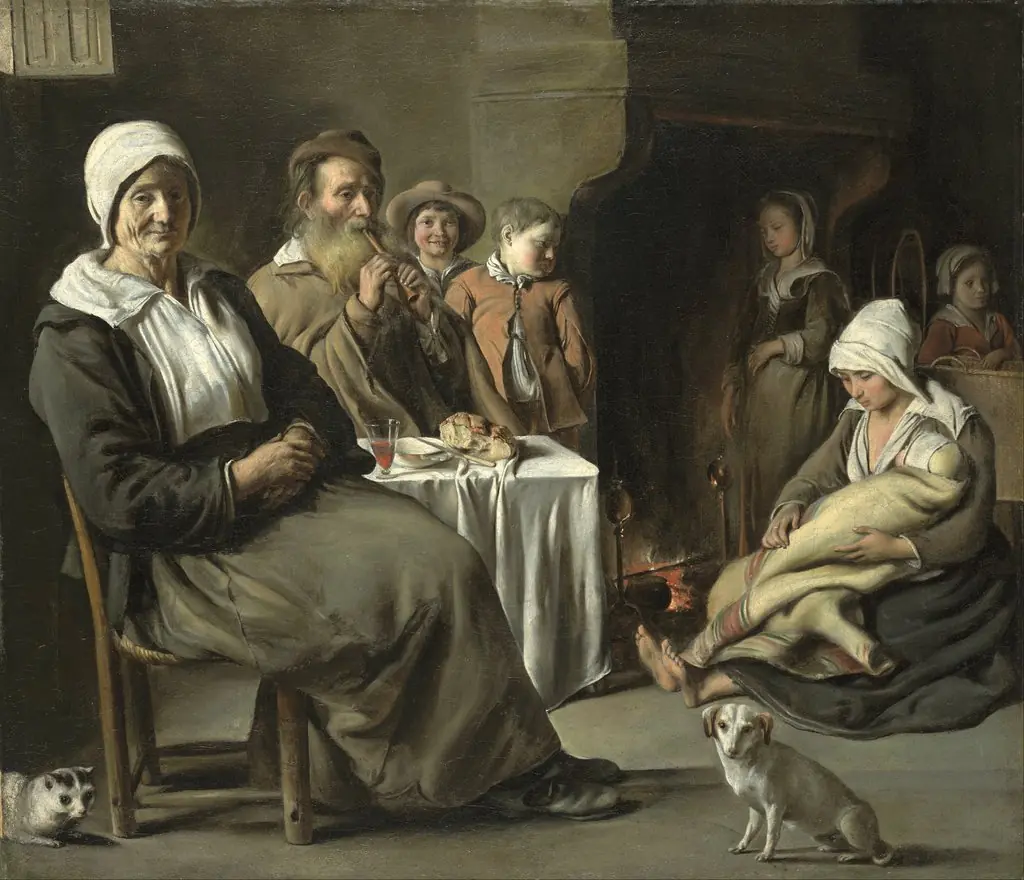
The oil painting depicts a bustling street tableau where an elderly woman perched on a low wall gestures toward a book held by a kneeling man. Around them, children engage in playful activity: one boy dances, another raises his arms, and a toddler clings to the man's leg. Adults converse nearby, while a child in the background holds a scroll, and assorted objects such as apples, a jug, and a small barrel lie on the ground.
Subject & Meaning
The central interaction suggests a moment of instruction or admonition, as the woman’s pointing hand directs the man's attention to the book. The surrounding youthful figures, captured in lively, carefree poses, contrast with the more static adults, highlighting a dynamic between learning, play, and daily routine within a communal setting.
Context
The scene reflects a genre painting tradition that records everyday life, emphasizing social interaction among different ages. The inclusion of a book, scroll, and everyday items such as apples and a jug situates the work within a domestic or market environment typical of rural or small‑town settings.
Artist & collection