Artwork
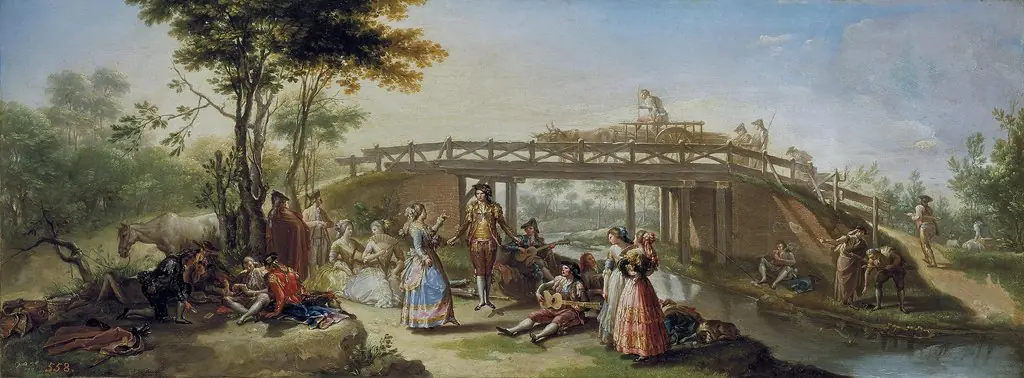
Un baile junto a un puente del canal del Manzanares
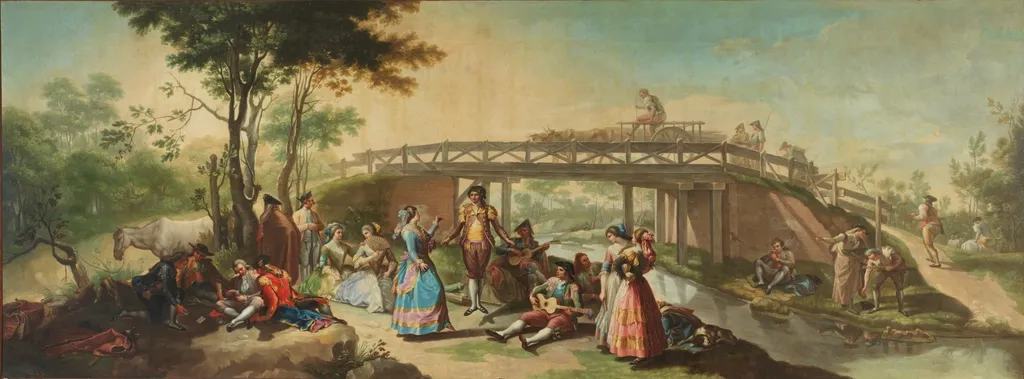
Un baile junto a un puente del canal del Manzanares is an oil painting by the Rococo painting artist Ramón Bayeu. It dates from 1792 and is held in the collection of the Museo del Prado.
About this work
Subject & Meaning
The composition reflects Enlightenment-era celebrations and the cultural significance of public amusements in late‑18th‑century Madrid.
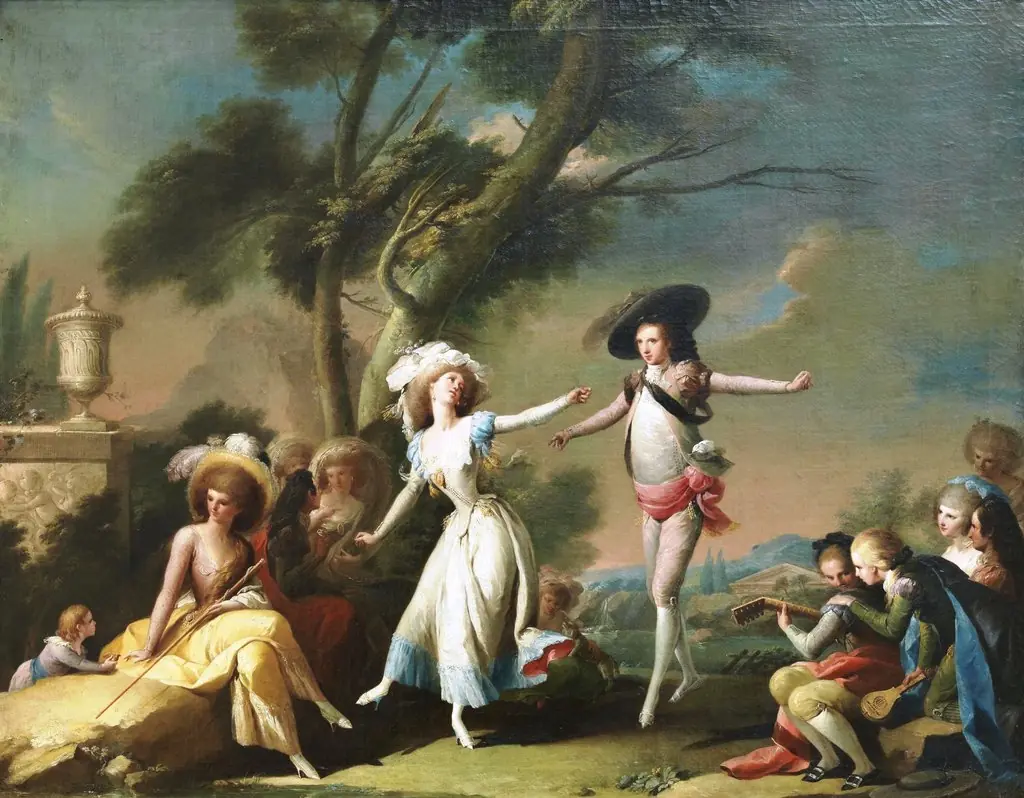
The painting shows a festive gathering beside a bridge over the Manzanares canal, incorporating symbols such as a playing card and a hand fan that allude to contemporary Spanish leisure and social ritual. The composition reflects Enlightenment-era celebrations and the cultural significance of public amusements in late‑18th‑century Madrid. It was created by Ramón Bayeu y Subías in 1784 and is housed in the Museo del Prado.
Technique & Style
Executed in 1784, this work is an oil painting applied to a canvas support. The composition is characterized by an exceptionally wide panoramic format, measuring 257 cm in height and 690 cm in width. This expansive scale accommodates a detailed depiction of figures engaging in leisure activities near a bridge over the Manzanares canal.
The scene includes specific narrative elements such as playing cards and hand fans, rendered within the oil medium to capture the social gathering.
History & Provenance
The painting Un baile junto a un puente del canal del Manzanares was created by Ramón Bayeu in 1784, as indicated by its documented date of execution and the artist’s signature on the work. The work entered the collection of the Museo del Prado in Madrid, where it has been held since at least the late 19th century. Its dimensions, 257 cm in height and 690 cm in width, are consistent with the scale recorded in the museum’s holdings.
The painting depicts a festive scene along the Manzanares Canal, featuring a bridge and figures engaged in leisure activities, aligning with the subject matter described in the Prado’s inventory.
The painting Un baile junto a un puente del canal del Manzanares by Ramón Bayeu is held in the collection of the Museo del Prado. Created in 1784, the work is executed in oil on canvas and measures 257 cm in height by 690 cm in width. The provided sources confirm the museum as the current location but do not list a specific inventory or accession number for the piece. Furthermore, the available documentation contains no record of the artwork's exhibition history or past loan details.
Context
Critical reception of Ramón Bayeu's 1784 painting Un baile junto a un puente del canal del Manzanares has been limited, with no major contemporary commentary documented in the provided sources. Scholarship situates the work within Bayeu's role as a court painter under Charles III, reflecting Enlightenment-era interests in genre scenes and Spanish cultural identity. The painting's placement in the Museo del Prado collection underscores its significance as an example of 18th-century Spanish decorative art, though its specific influence on later movements remains marginal in art historical narratives.
Its composition, featuring a bridge, playing card, and hand fan, aligns with contemporary themes of leisure and social ritual in pre-revolutionary Spain.
Overview
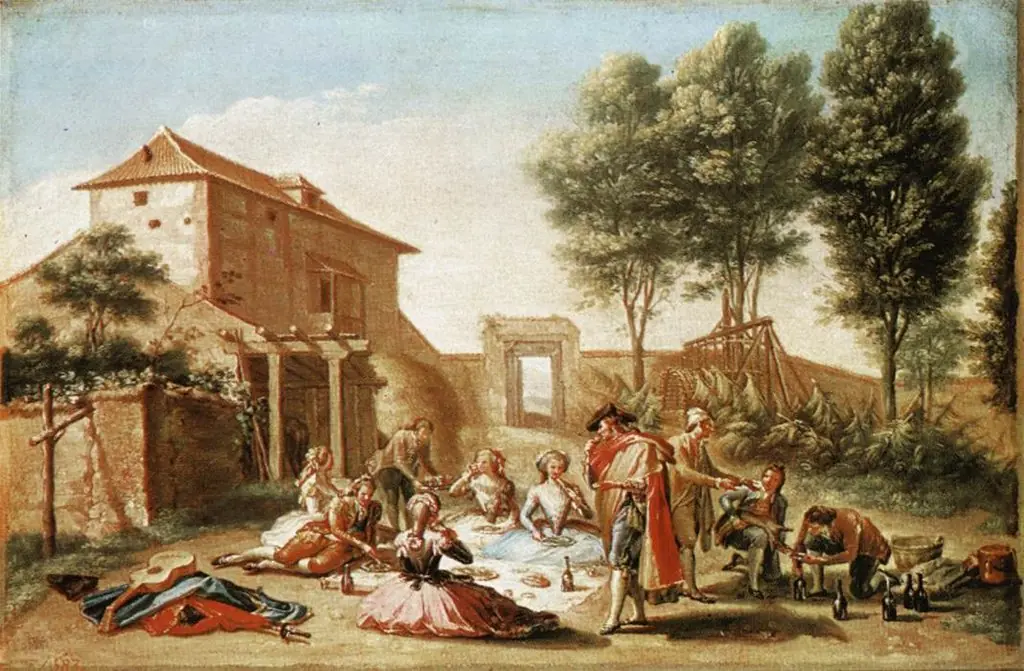
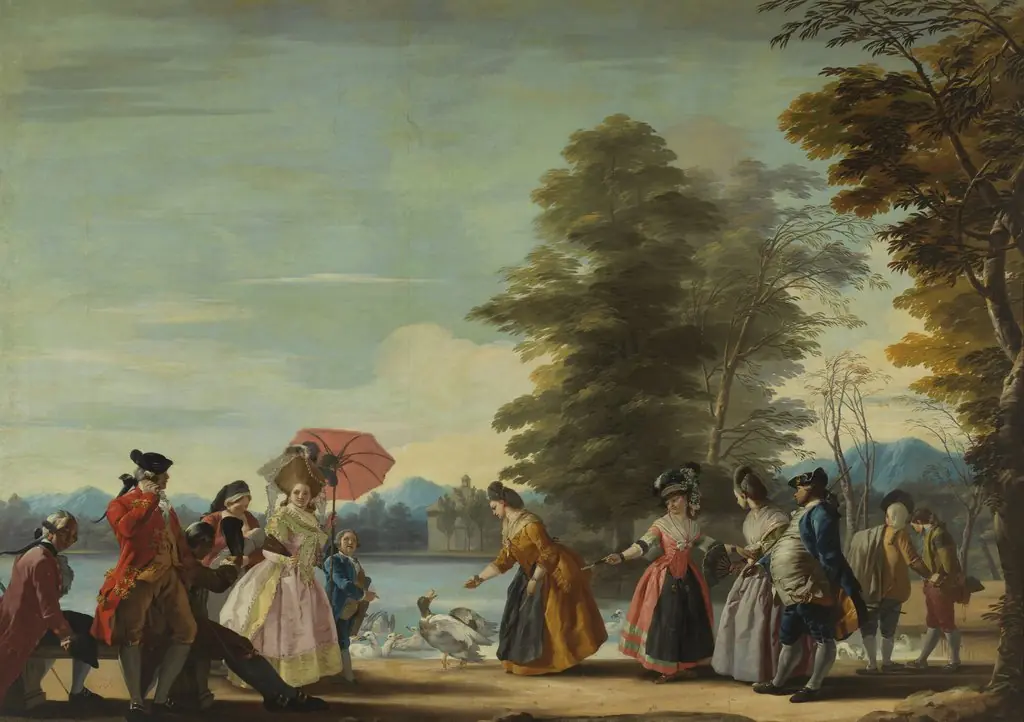
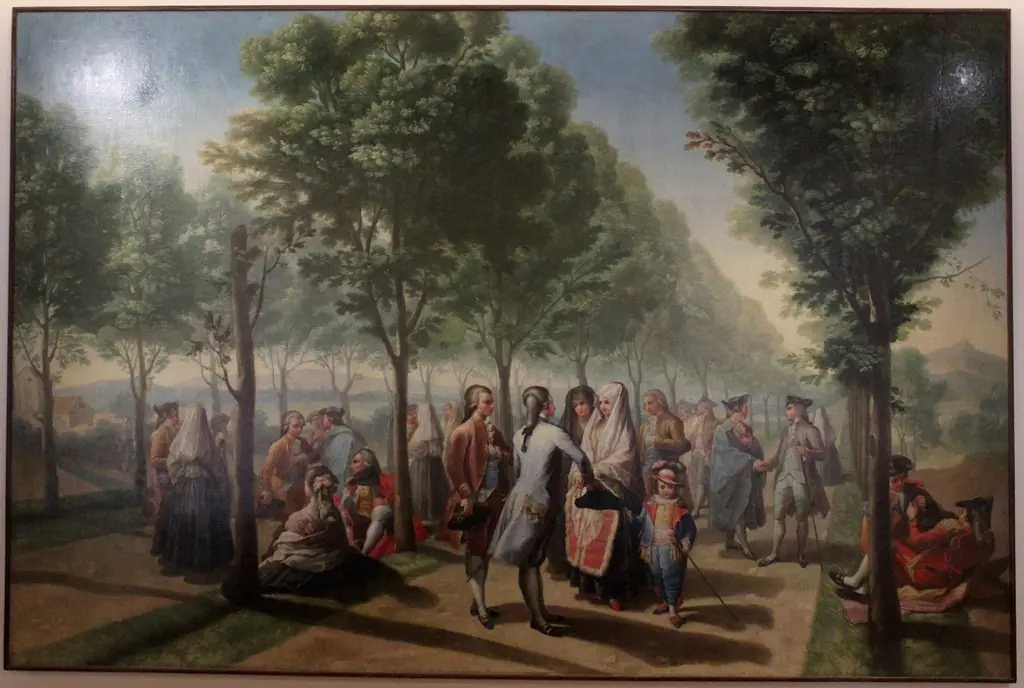
Ramón Bayeu’s 1792 oil painting Un baile junto a un puente del canal del Manzanares captures a convivial outdoor gathering beside a stone bridge spanning a canal. The composition is populated by elegantly dressed figures, men in coats and hats, women in bright gowns, who converse, make music, and recline on the grass, creating a lively yet tranquil atmosphere.
Artist & collection
Artist
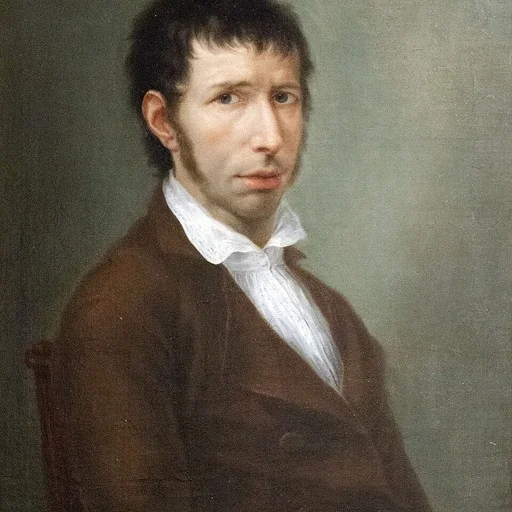
Ramón Bayeu y Subías (2 December 1744, Zaragoza – 1 March 1793, Aranjuez) was a Spanish Neoclassicist painter; known primarily for his work in tapestry design.