Artwork
Merry Company
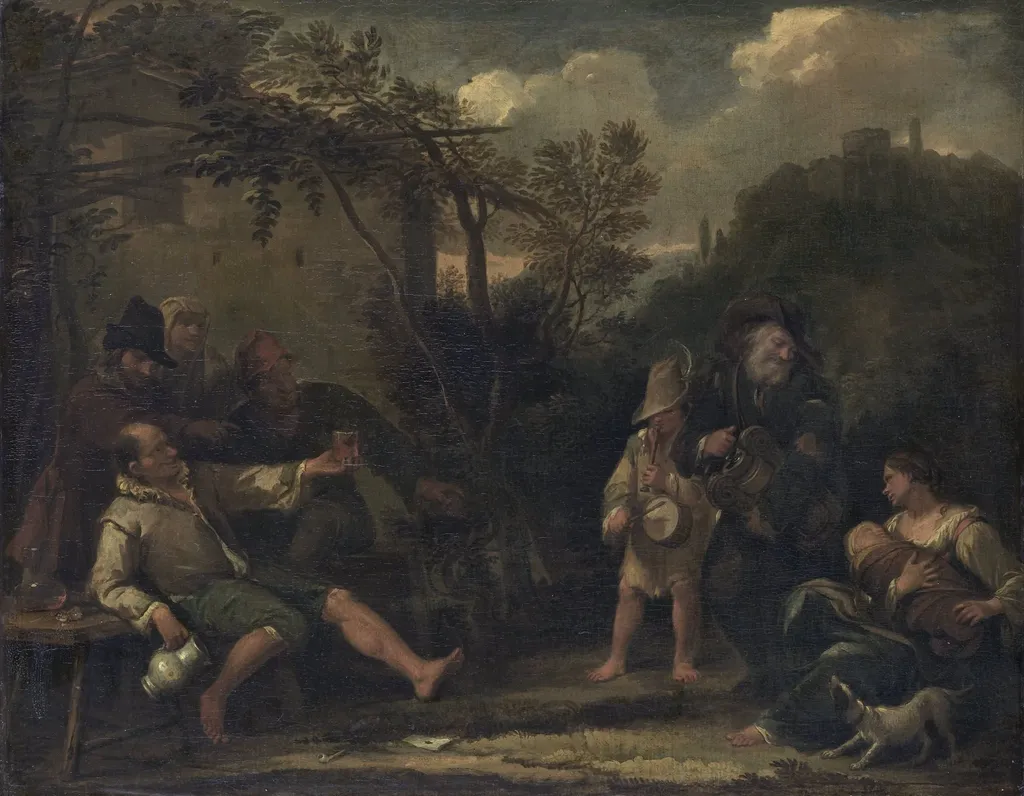
Merry Company is an unspecified painting by the Baroque artist Dirck Helmbreker. It dates from 1688 and is held in the collection of the Rijksmuseum.
About this work
Technique & Style
His works tended to be more classical in inspiration than many earlier low-life scenes, reflecting the late phase of the Bamboccianti tradition.
As a member of the Bamboccianti, Helmbreker specialized in small-scale genre scenes executed in the manner of Pieter van Laer. His works tended to be more classical in inspiration than many earlier low-life scenes, reflecting the late phase of the Bamboccianti tradition. The artist was particularly noted for producing paintings of small dimension, a quality appreciated by collectors such as Prince Ferdinand de Médicis, who favored his modest-scale bambochades.
Stylistically, his genre scenes are associated with the Baroque movement and with Italianate landscape and genre painting. The work is classified as a painting within the genre scene tradition.
No source provides specific information on the support, medium, pigments, handling, or present condition of Merry Company.
Context
Dirck Helmbreeker (c. 1633–1696) was a Dutch Golden Age painter active in Rome, known for small-scale genre scenes in the Bamboccianti tradition. He joined the Congregazione dei Virtuosi al Pantheon in Rome by the 1670s and received major commissions, including the 1695 altar piece for St. Julian of the Flemings Church. His works, influenced by Sébastien Bourdon and characterized by classical Italianate landscapes, were highly valued by Roman and Florentine collectors, including the Prince of Medici, who owned multiple paintings such as La danse des paysans.
Houbraken noted his charitable donations to Rome’s poor, reflecting his religious devotion. Scholarship situates him as part of the last generation of Bamboccianti, distinct for his more classical inspiration compared to earlier low-life depictions.
Overview
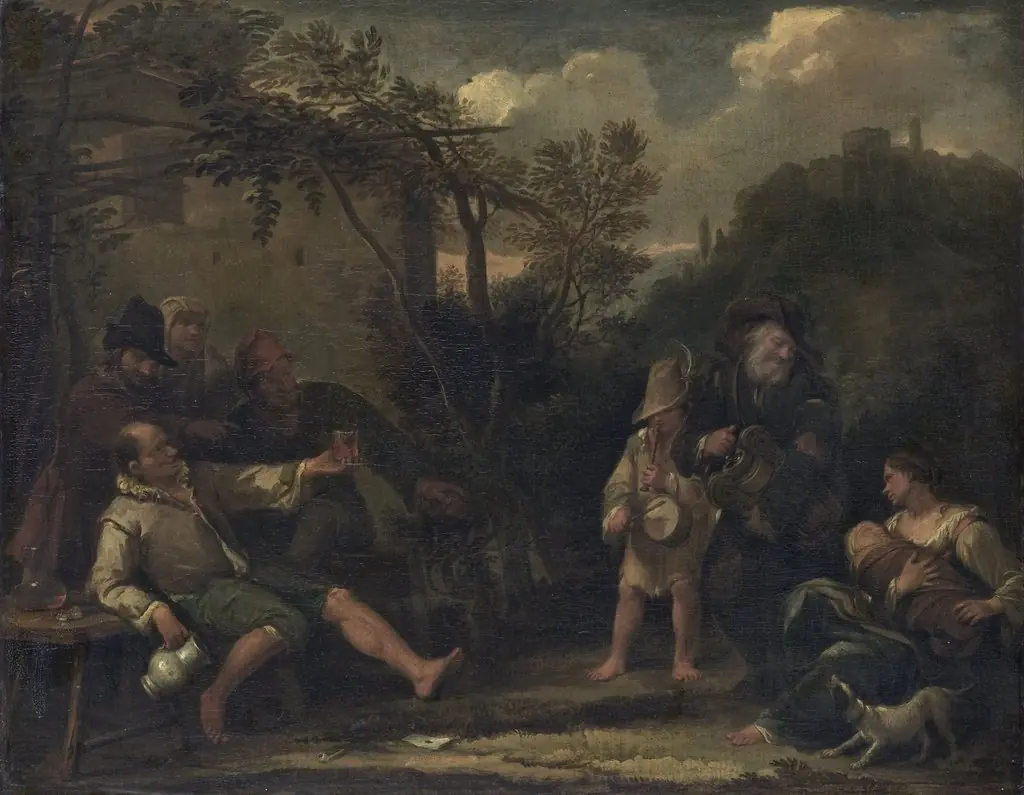
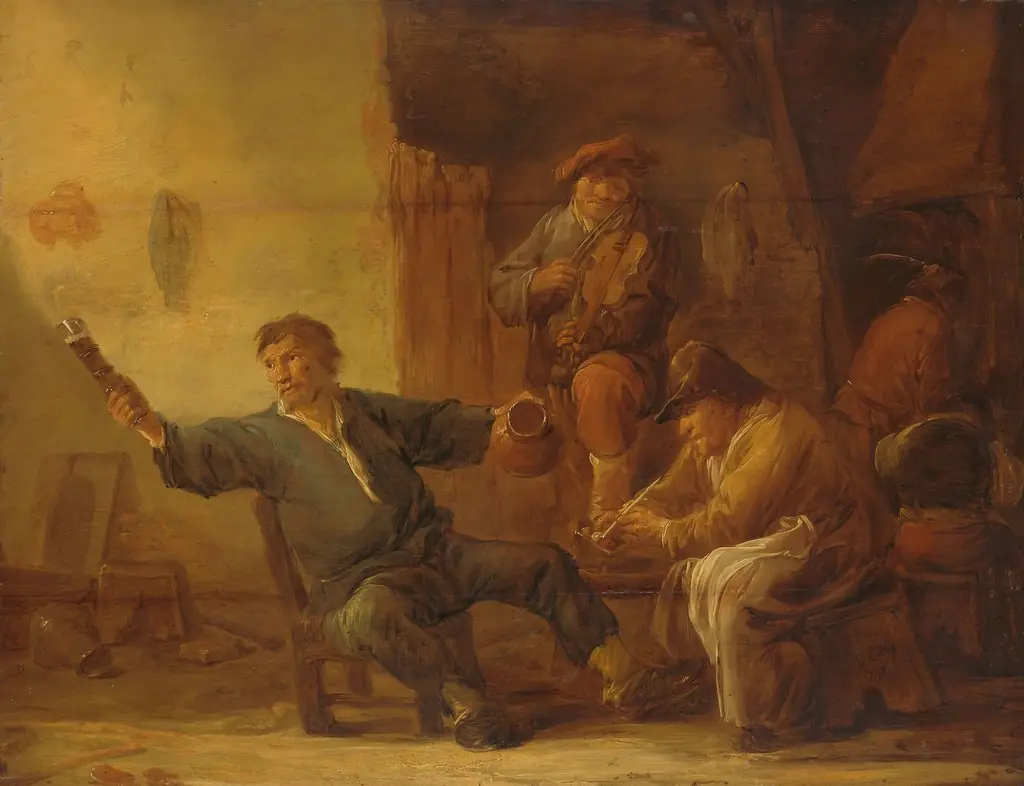
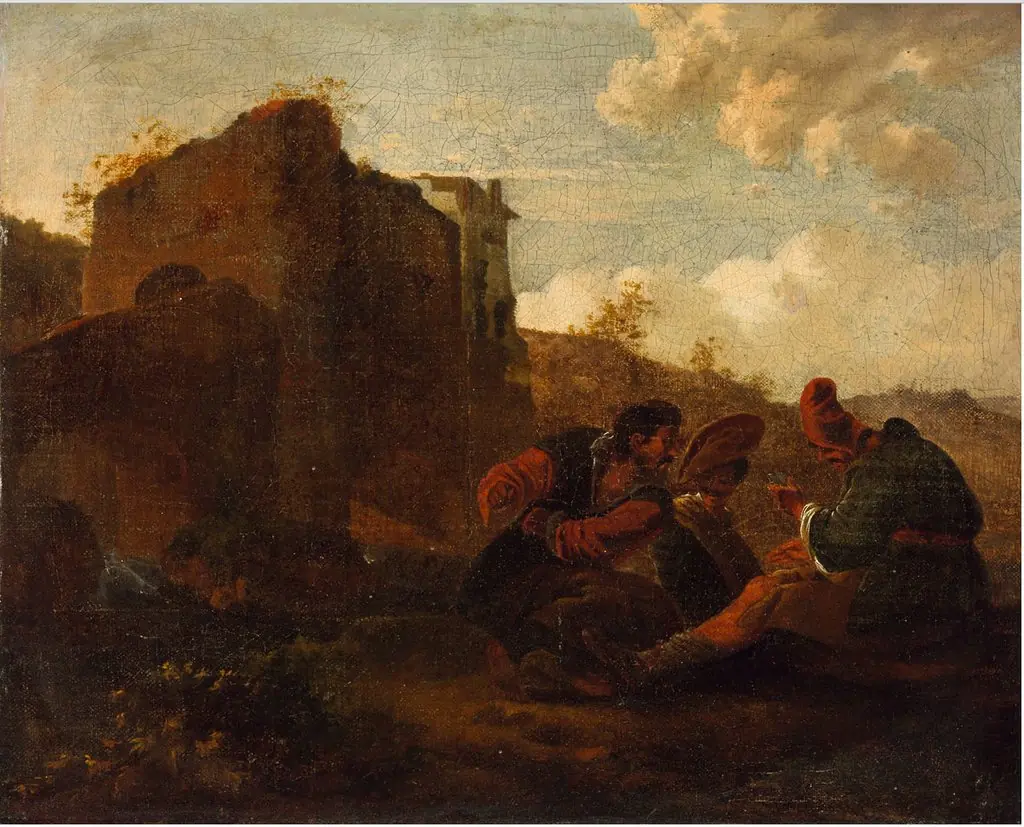
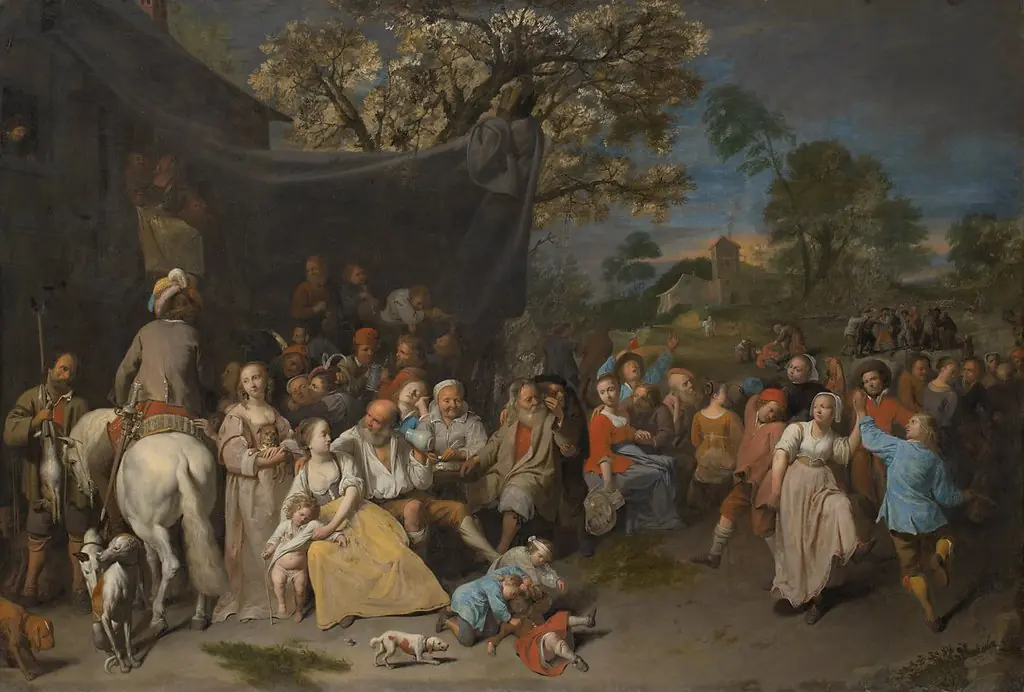
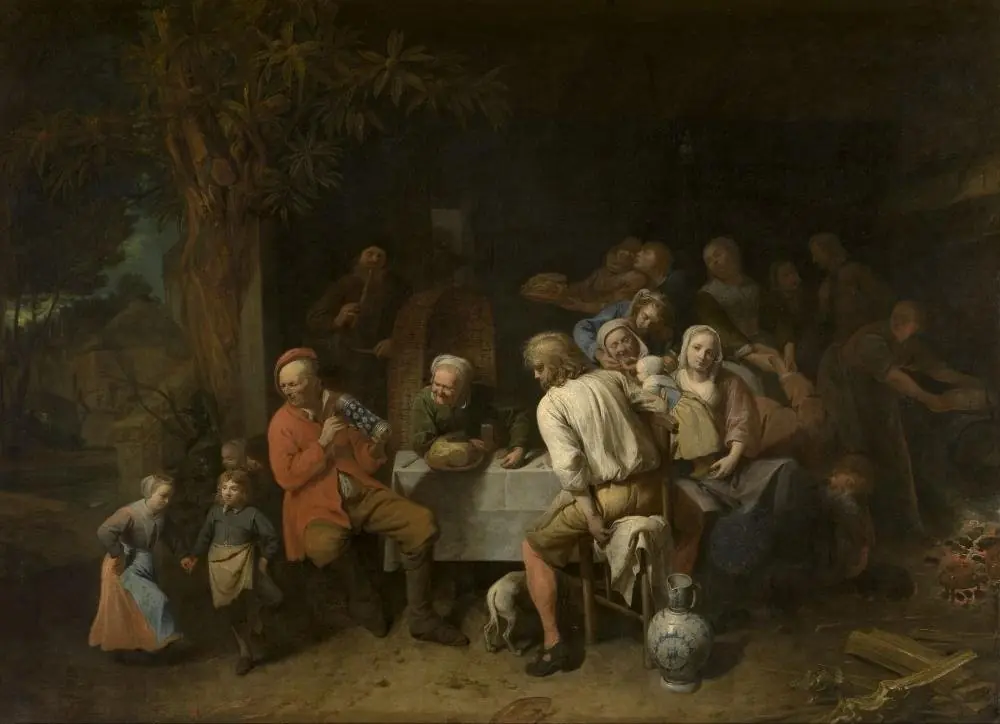
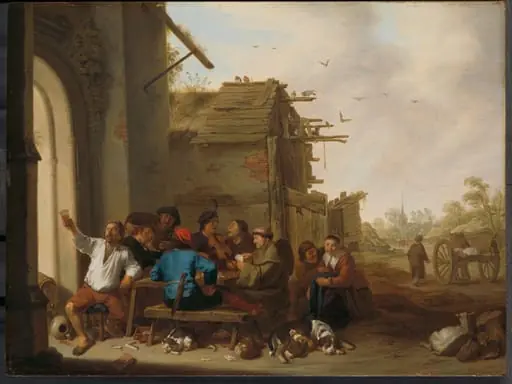
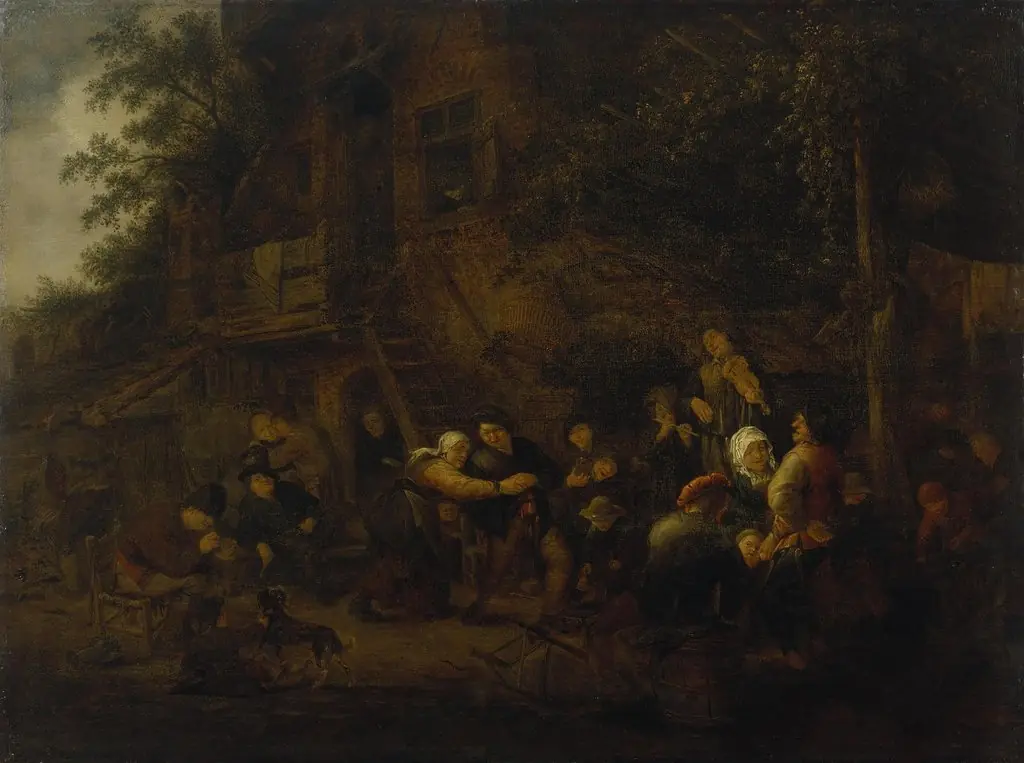
The work, titled Merry Company, presents a casual gathering on the terrace of an inn at dusk. A group of figures occupies the foreground: men seated at a table, one raising a glass; an elderly musician plucking a lyre; a young boy blowing a flute; a woman cradling a child; and a dog barking nearby. The composition captures a moment of ordinary leisure rather than a staged narrative.
Subject & Meaning
The painting foregrounds everyday social interaction, emphasizing conviviality and familial care. The raised glass suggests toast or celebration, while the music performed by the older man and the child hints at shared cultural practices. The presence of the mother with her infant and the attentive dog adds a domestic dimension, underscoring the blend of public tavern life with private familial bonds.
Own this work as a print
Artist & collection
Artist
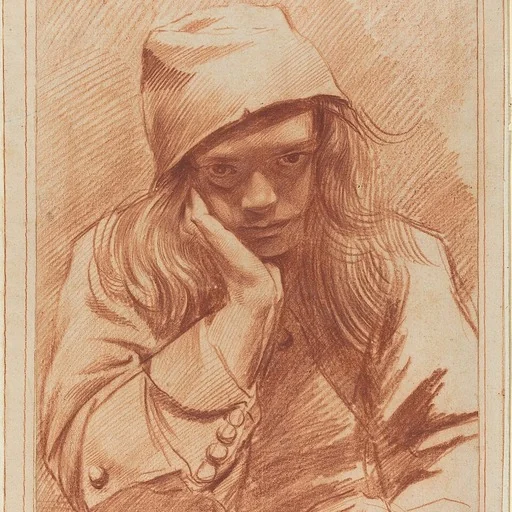
Dirck Helmbreker, Theodor Helmbreeker, or Teodoro Elembrech (1633–1696) was a Dutch Golden Age painter of Italianate landscapes.