Artwork
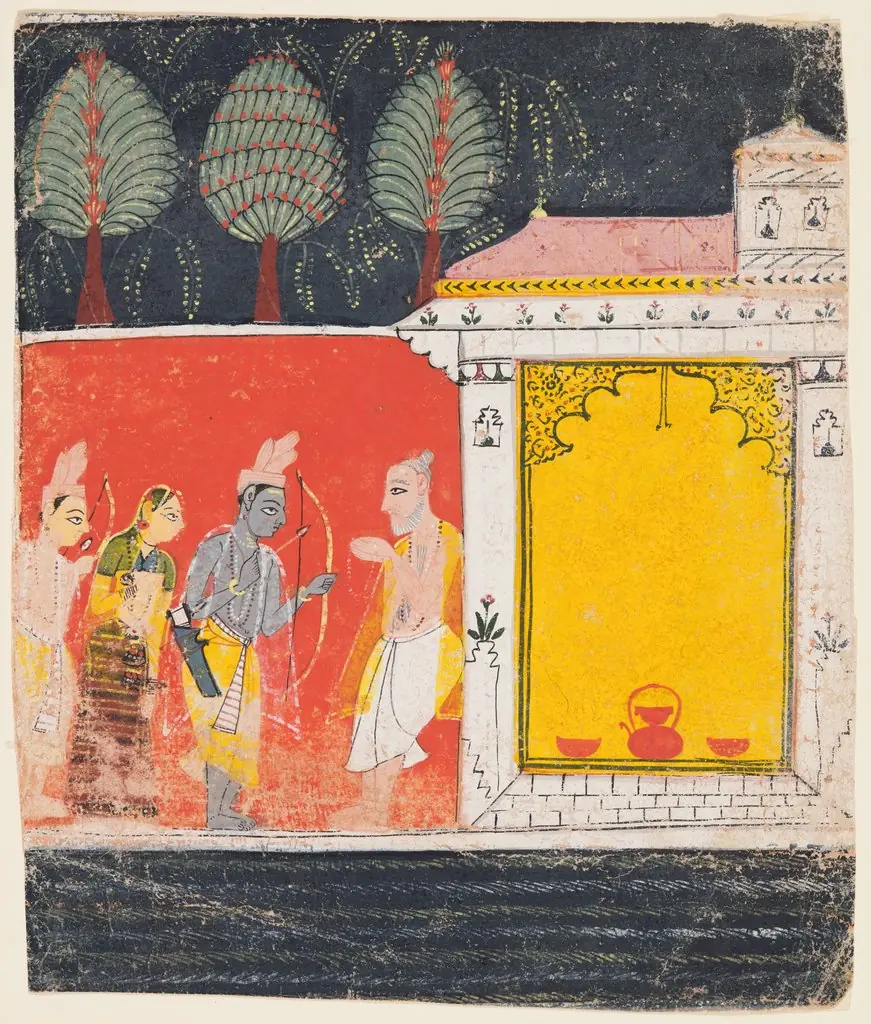
Rama, Sita, and Lakshmana visit the hermitage of the sage Bharadvaja at Prayaga, from Chapter 48 of the Ayodhya Kanda (Book of Ayodhya) of a Ramayana (Rama’s Journey)
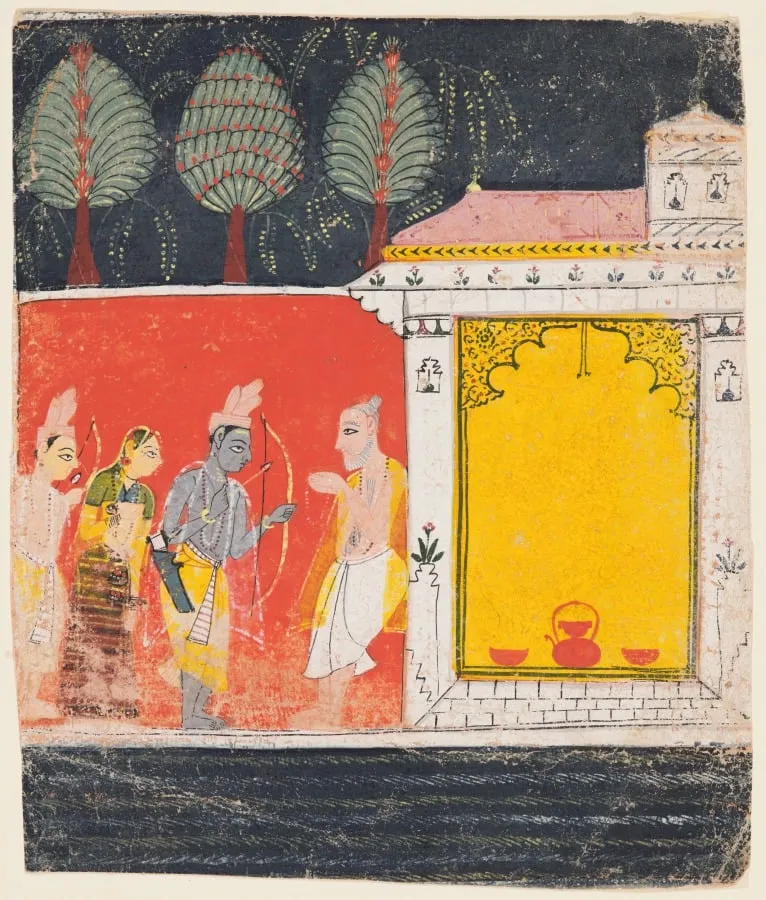
Rama, Sita, and Lakshmana visit the hermitage of the sage Bharadvaja at Prayaga, from Chapter 48 of the Ayodhya Kanda (Book of Ayodhya) of a Ramayana (Rama’s Journey) is an unspecified painting by the Baroque artist Unknown. It dates from 1650 and is held in the collection of the Cleveland Museum of Art. This 17th-century Indian painting depicts a scene from the Ramayana, specifically Chapter 48 of the Ayodhya Kanda.
- Accession no.
- 2018.129
- Credit line
- Purchase and partial gift from the Catherine and Ralph Benkaim Collection; Severance and Greta Millikin Purchase Fund
About this work
Overview
This 17th-century Indian painting depicts a scene from the Ramayana, specifically Chapter 48 of the Ayodhya Kanda. It shows Rama, Sita, and Lakshmana visiting the hermitage of the sage Bharadvaja at Prayaga during their forest exile.
Subject & Meaning
The scene conveys respect and humility as the royal trio, with the blue-skinned Rama, slightly bows to the sage, who greets them with folded hands. This interaction highlights the cultural and religious significance of paying homage to spiritual leaders in Hindu tradition.
Technique & Style
The painting blends Hindu and Mughal artistic influences. Notable features include marble walls with inlaid floral ornaments, bottles displayed in niches, and an entrance resembling Mughal-style viewing windows (jharokhas), indicating a fusion of styles.
History & Provenance
Originating from 17th-century India, specifically attributed to the Malwa region (Madhya Pradesh), this work is part of a larger illustrated Ramayana manuscript. Exact provenance details are not provided in the available information.
Context
Created during a period of cultural exchange, the painting reflects the artistic synthesis of the time. The Mughal Empire's influence on Indian regional art is evident in the architectural details, while the subject matter remains rooted in Hindu mythology.
Legacy
This painting, along with others from its series, contributes to the visual narrative tradition of the Ramayana. It remains significant for understanding the evolution of Indian art, particularly the blending of Mughal and regional Hindu styles in the 17th century.
Artist & collection









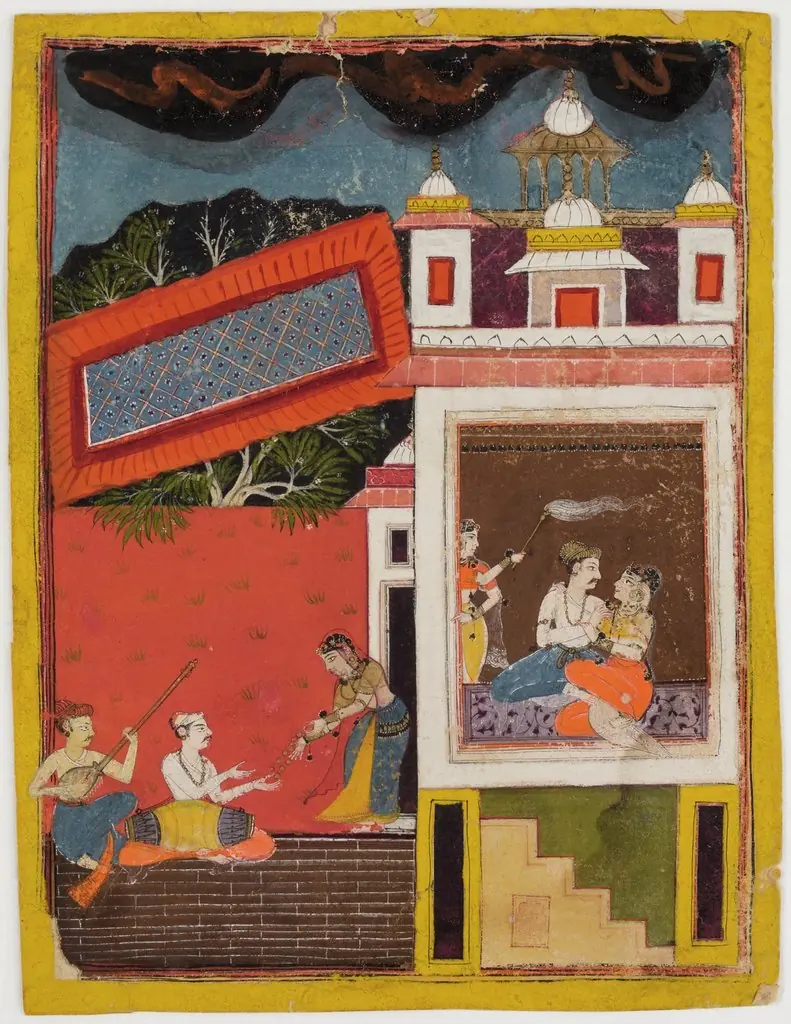 Prince and Lady in Palace Scene with Musicians
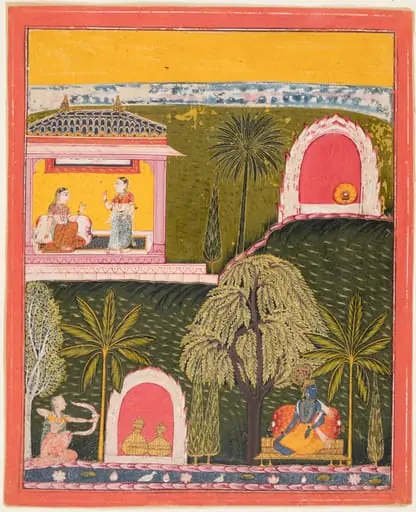 Rati, the Goddess of Erotic Love, Takes Aim at Krishna, from a Rasikapriya
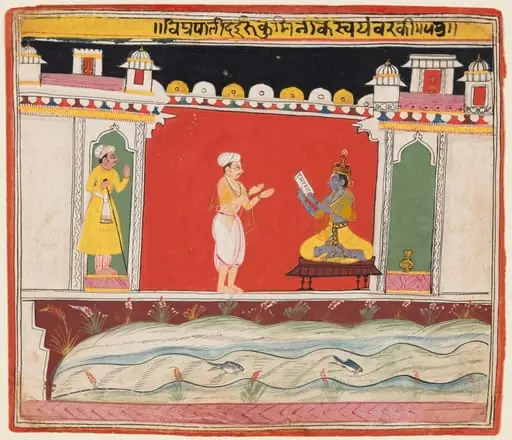 A Brahmin gives Krishna the Message or Invitation for the Competition to Rukmini’s Svayamvara, from a Bhagavata Purana
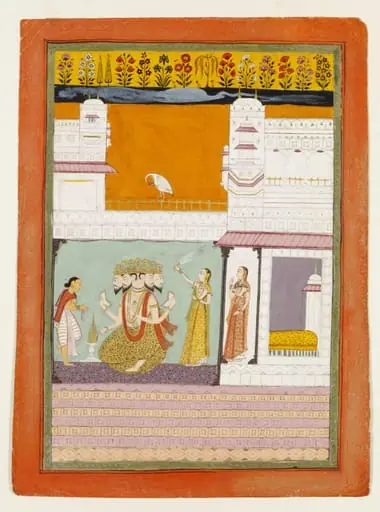 Brahma
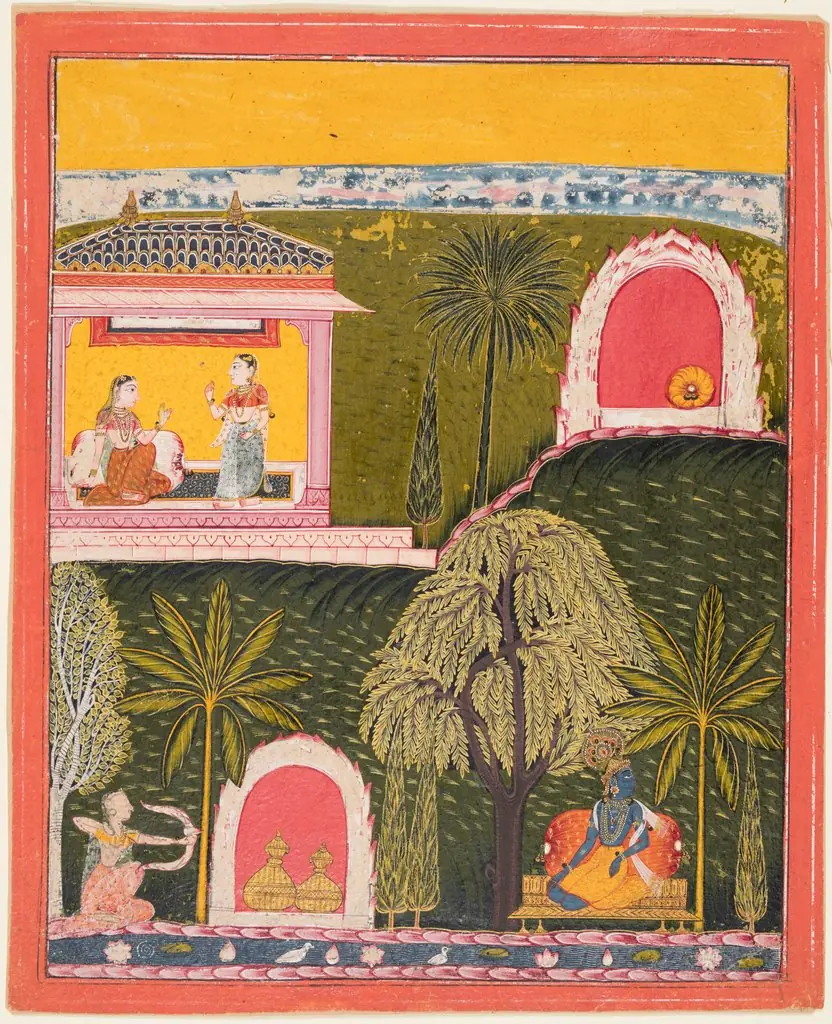 Rati, the Goddess of Erotic Love, Takes Aim at Krishna, from a Rasikapriya
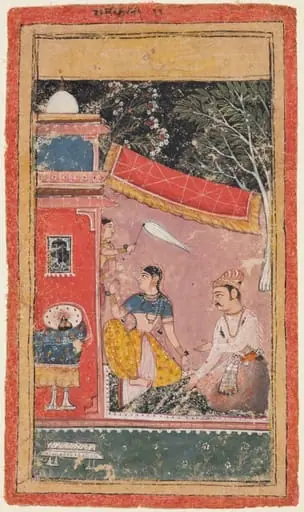 Lovers on a Terrace: Ramakali Ragini of Hindol, from a Bundi Ragamala
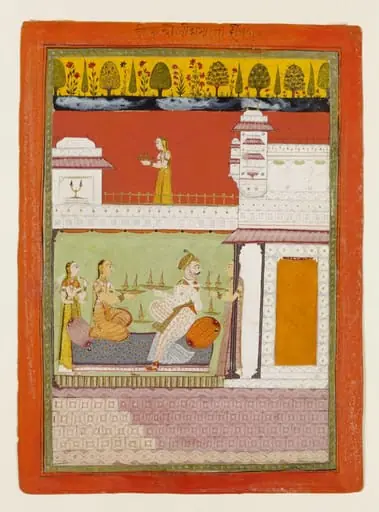 Dipak ragini
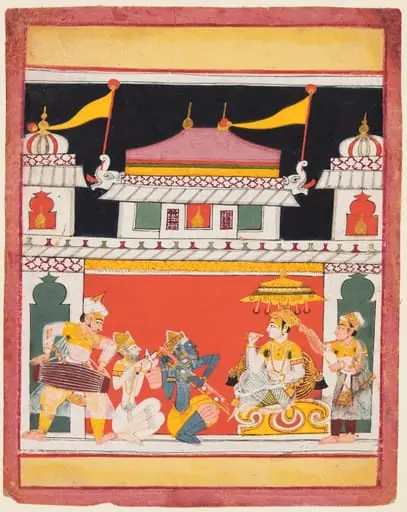 Three Musicians Perform Before a King: Shri Raga, from a Ragamala
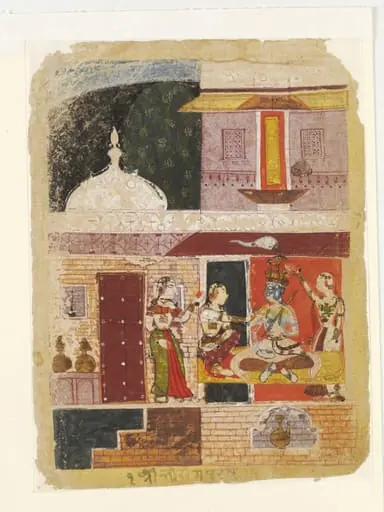 Bhairava Raga
- Rama, Sita, and Lakshmana visit the hermitage of the sage Bharadvaja at Prayaga, from Chapter 48 of the Ayodhya Kanda (Book of Ayodhya) of a Ramayana (Rama’s Journey)