Artwork
Various Ships and Views of Amsterdam (Verscheÿde Schepen en Gesichten van Amstelredam), Part III: De Block-huÿsen
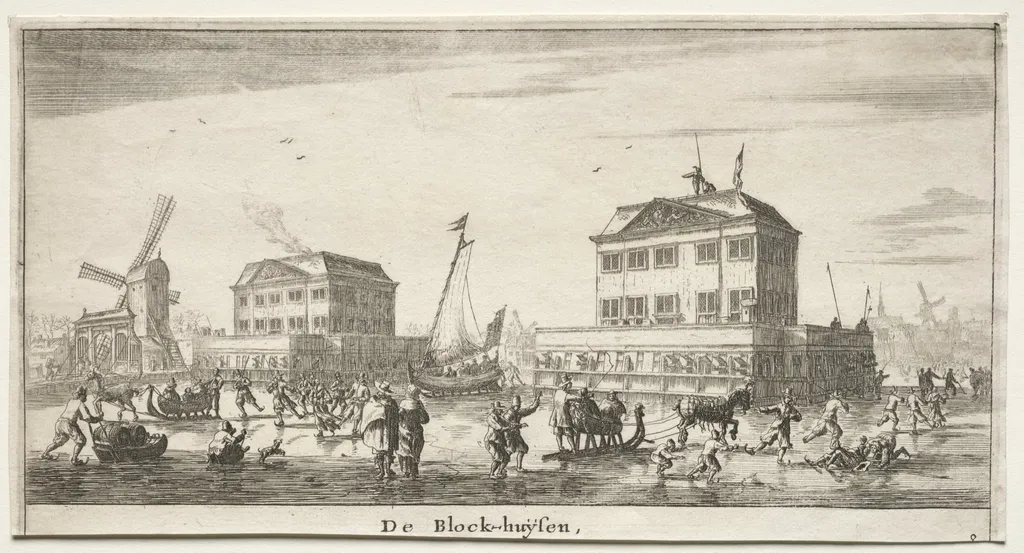
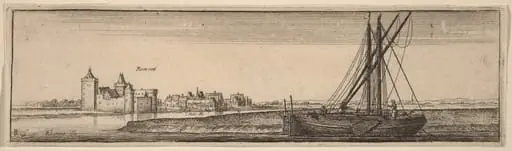
Various Ships and Views of Amsterdam (Verscheÿde Schepen en Gesichten van Amstelredam), Part III: De Block-huÿsen is a print by Reinier Nooms, called Zeeman. It dates from 1653 and is held in the collection of the Cleveland Museum of Art. This print, part of a series by Reinier Nooms, depicts a bustling Amsterdam harbor scene from around 1653.
- Accession no.
- 1960.205
- Credit line
- Gift of The Print Club of Cleveland
About this work
Overview
This print, part of a series by Reinier Nooms, depicts a bustling Amsterdam harbor scene from around 1653. Known as Zeeman, the artist captured the daily rhythms of the city’s waterfront with precision. The work belongs to a larger collection documenting maritime life, and it is currently held in the collection of The Cleveland Museum of Art.
Subject & Meaning
The scene centers on the Block-huÿsen, a pair of large structures near the docks, one featuring a windmill. Figures are engaged in routine harbor activities: hauling a vessel ashore with ropes and horses, rowing boats, or wading in shallow water. The composition emphasizes labor and movement, reflecting Amsterdam’s identity as a commercial hub sustained by maritime trade and manual effort.
Technique & Style
Executed as a detailed etching, the print uses fine lines to render architecture, water, and figures with clarity. Nooms employs atmospheric perspective to suggest depth, balancing architectural solidity with the fluidity of human activity. The absence of overt drama or idealization reinforces a documentary approach, characteristic of Dutch genre printmaking of the period.
History & Provenance
Created circa 1653, the print is one of three parts in Nooms’s series on Amsterdam’s harbor. It was likely produced for a local audience interested in civic identity and maritime commerce. The work entered The Cleveland Museum of Art’s collection through documented acquisition, preserving its place in the study of 17th-century Dutch urban life.
Context
During the mid-17th century, Amsterdam was at the height of its economic power, with its harbor serving as a nexus of global trade. Artists like Nooms, who had seafaring experience, turned to detailed harbor views to meet public interest in the city’s prosperity. These prints functioned as both records and celebrations of urban activity, distinct from grand historical or religious themes.
Legacy
Nooms’s series contributed to the tradition of topographical printmaking in the Dutch Republic. His focus on unembellished, everyday harbor scenes influenced later artists documenting urban and maritime environments. The work remains a valuable resource for historians studying port infrastructure, labor practices, and the visual culture of Amsterdam’s Golden Age.
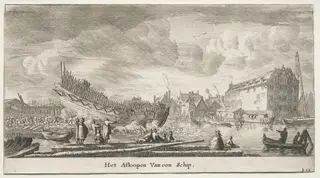
Artist & collection

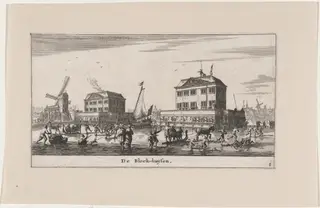 Winter Scene in the Blockhouses in Amsterdam
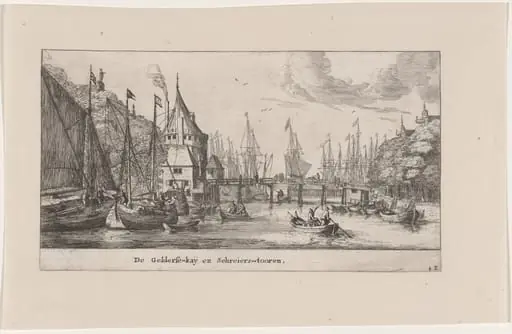 The Gelderse Quay and the Schreiers Tower, Amsterdam
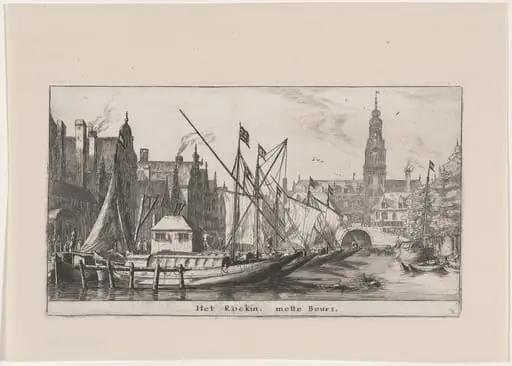 The Rokin and the Bourse in Amsterdam
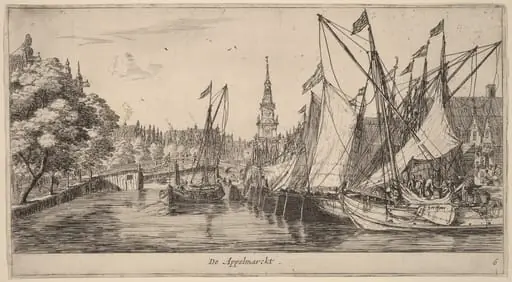 Appelmarkt (De Appelmarckt)
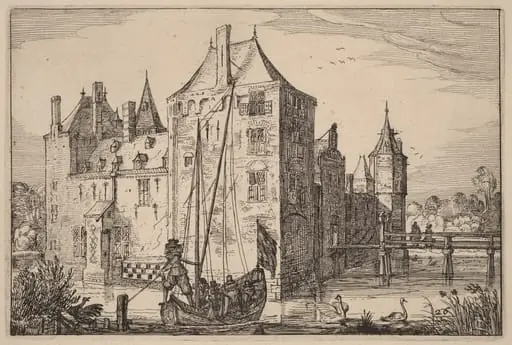 Castle (Warmond?)
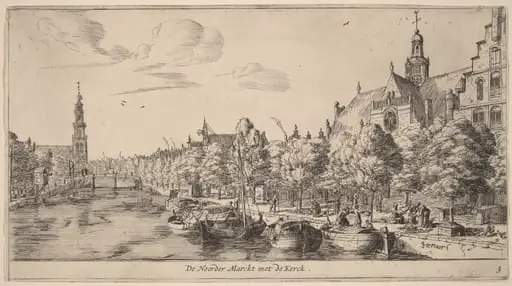 Noordenmarkt with the Noorden Kerk (De Noorder Marckt met de Kerck)
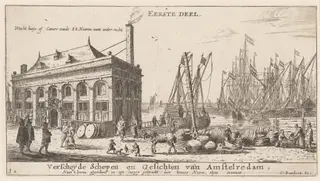 View of the Port of Amsterdam with the Office of the Water Authority (Title Page)
 Roerort