Artwork
View of the Port of Amsterdam with the Office of the Water Authority (Title Page)
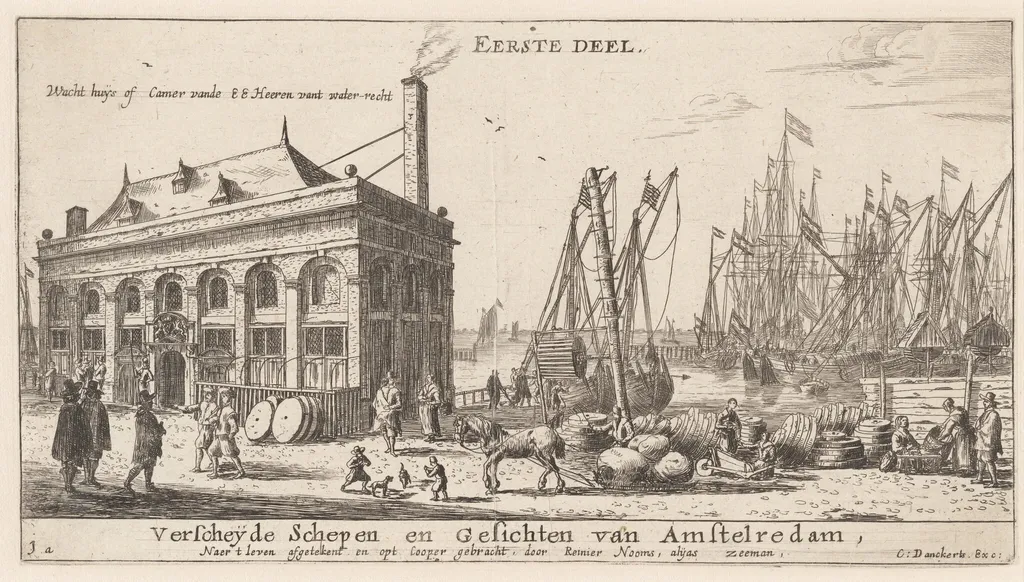
View of the Port of Amsterdam with the Office of the Water Authority (Title Page) is an ink print by the Baroque artist Nooms, called Zeeman, Reinier. It dates from 1653 and is held in the collection of the National Gallery of Art. Reinier Nooms, known as Zeeman, created this etching with drypoint around 1653 as a detailed depiction of Amsterdam’s port.
- Inscription
- Inscribed:center top of plate: EERSTE DEEL.; top left of plate: Wachthuÿs of Camer vande E.E. Heeren vant water-recht; across bottom of plate: Verscheÿde Schepen en Gesichten van Amstelredam. / Naer t leven ofgetenkent en opt Cooper gebracht, door Reinier Nooms, alÿas Zeeman; lower left in plate: 1a; lower right in plate: D: Dankerts Ex.
About this work
Overview
Reinier Nooms, known as Zeeman, created this etching with drypoint around 1653 as a detailed depiction of Amsterdam’s port.
Reinier Nooms, known as Zeeman, created this etching with drypoint around 1653 as a detailed depiction of Amsterdam’s port. Executed on laid paper, the print serves as a title page, likely intended for a published collection. Nooms, a Dutch artist active in the mid-17th century, focused on maritime subjects and urban waterfronts, using precise engraving techniques to capture the texture and movement of port life.
Subject & Meaning
The scene centers on the Office of the Water Authority, a civic building overseeing navigation, flood control, and trade regulation. Figures move among barrels and ropes on the dock, while ships with raised sails wait nearby. The composition reflects Amsterdam’s commercial vitality and the institutional infrastructure that sustained it.
The building’s classical architecture signals authority, while the activity around it underscores the port’s role as an economic hub.
Technique & Style
Nooms employed etching and drypoint to achieve fine, intricate lines that render textures with exceptional clarity. The folds of clothing, ripple of water, and grain of wooden decks are rendered with meticulous attention. Drypoint’s burr adds subtle tonal richness, especially in shadowed areas, while the etched lines define architectural details and distant vessels. The precision suggests a methodical approach, valued by contemporaries for its documentary and artistic rigor.
History & Provenance
Created in the early 1650s, this print was likely part of a series documenting Amsterdam’s maritime infrastructure. Nooms’s works were collected by fellow artists and patrons for their accuracy and technical skill. Though specific early ownership records are sparse, the print’s survival in institutional collections attests to its enduring reputation among printmakers and maritime historians of the period.
Context
In 17th-century Amsterdam, the Water Authority managed canals, locks, and harbor access, critical to a city built on water and trade. Nooms’s depiction aligns with a broader trend of topographical prints that celebrated civic institutions and economic activity. His work emerged alongside a flourishing print culture, where detailed urban and maritime scenes catered to both local pride and international interest in Dutch commerce.
Legacy
Nooms’s etchings were studied by later artists for their technical precision and compositional clarity. His ability to merge topographical accuracy with atmospheric detail influenced the development of Dutch maritime printmaking. Though less widely known today than some contemporaries, his works remain important references for understanding the visual documentation of early modern port cities and their administrative frameworks.
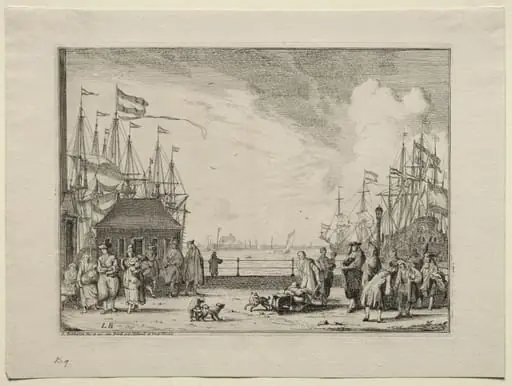
Artist & collection

Artist
Reinier Nooms (c. 1623 – 1664), also known as Zeeman or Seeman (Dutch for "sailor"), was a Dutch maritime painter known for his highly detailed paintings and etchings of ships. From the 1650s, Nooms started producing…

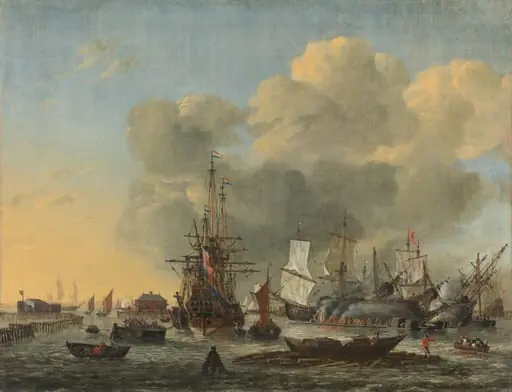
- Port at Amsterdam
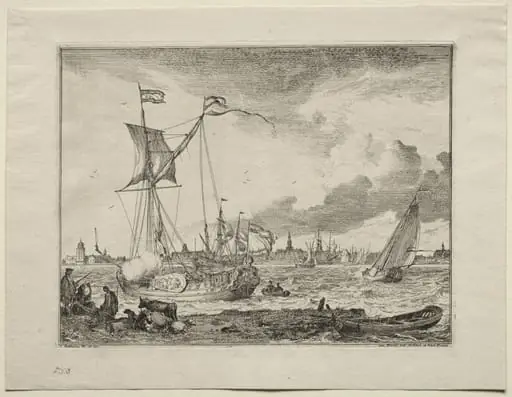 View of Amsterdam with Ships in Foreground
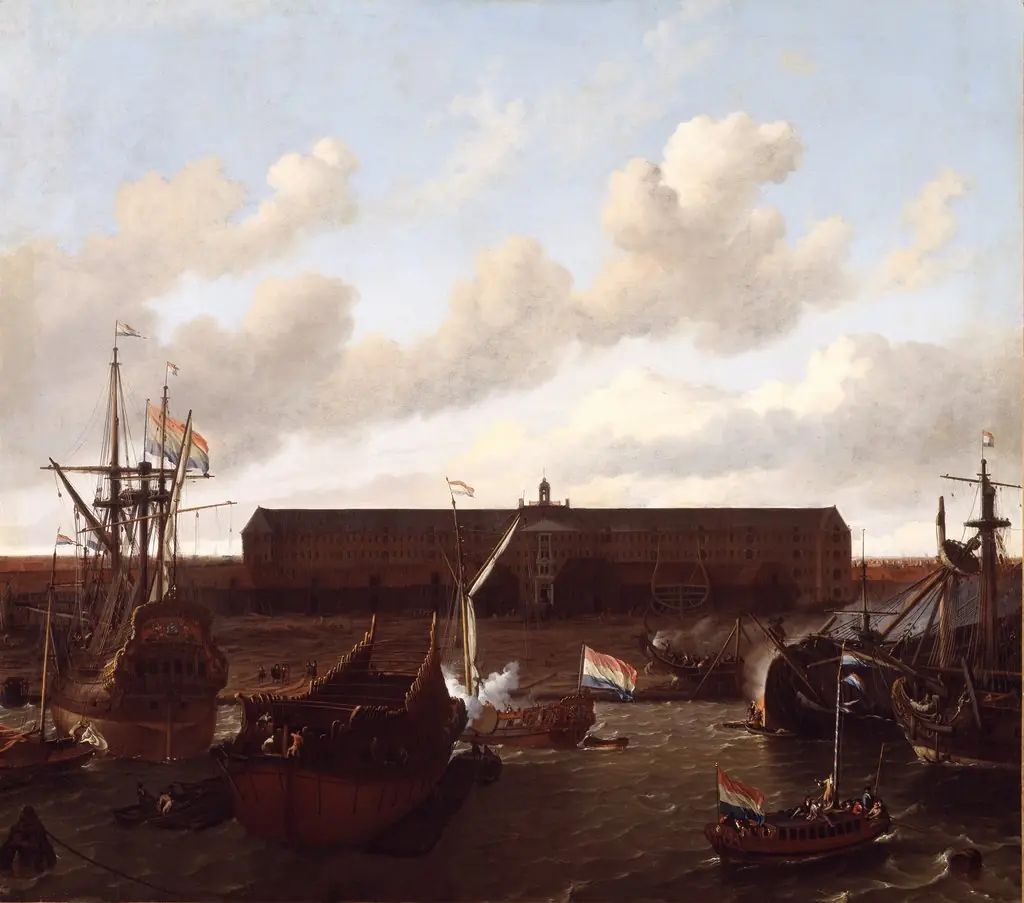 The dock of the Dutch East India Company at Amsterdam
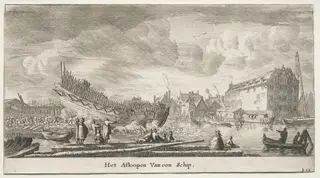 Various Ships and Views of Amsterdam (Verscheÿde Schepen en Gesichten van Amstelredam), Part II: Launching a Ship
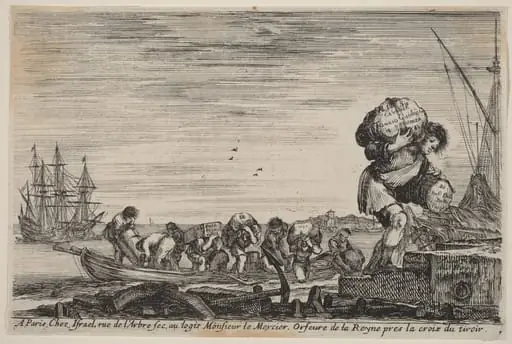 Title Page for "Views of the Ports of the Sea"
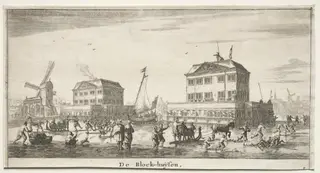 Various Ships and Views of Amsterdam (Verscheÿde Schepen en Gesichten van Amstelredam), Part III: De Block-huÿsen