Artwork
Studies for Saint Michael Defeating the Rebel Angels
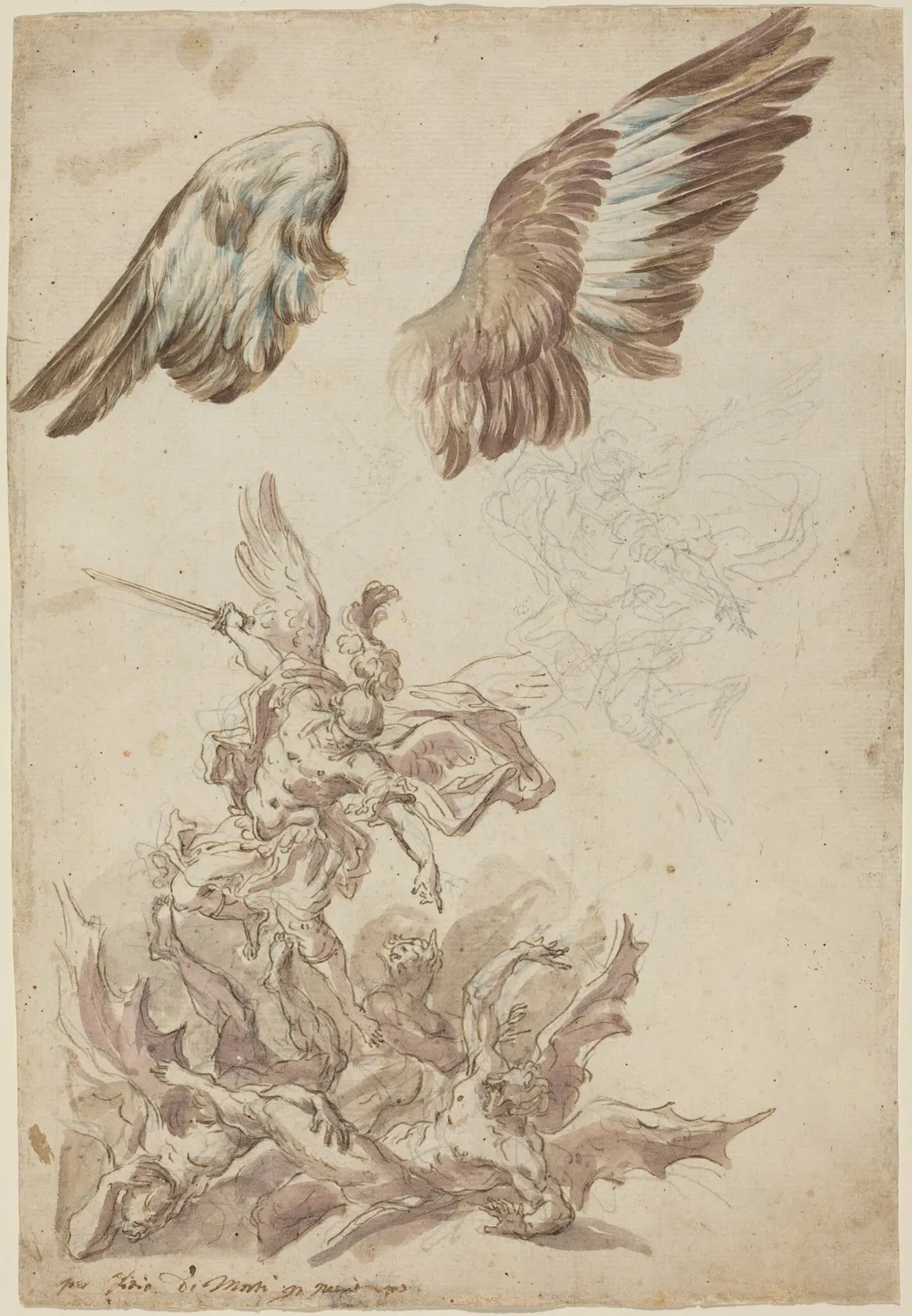
Studies for Saint Michael Defeating the Rebel Angels is a chalk drawing by the Baroque artist Nicolò Ricciolini. It dates from 1730 and is held in the collection of the National Gallery of Art.
- Inscription
- Inscribed:lower left in brown ink: per olivio dimonti; by later hand, lower left verso in graphite: 102 / 47 (circled) / 31 / S-5372/5; lower right in brown ink: Ricciolini baiochi. 45
About this work
Overview
The piece offers insight into the artist's technical process, highlighting the transition from initial conceptual sketches to a cohesive visual narrative.
Created in 1730 by Nicolò Ricciolini, Studies for Saint Michael Defeating the Rebel Angels is a preparatory drawing executed in pen and brown ink over black chalk, enhanced with brown, blue, and purple wash on laid paper. The work functions as a compositional study for a larger religious narrative, exploring the dramatic confrontation between the Archangel Michael and the fallen angels. The sheet is organized into three distinct zones: the upper section features a detailed rendering of a pair of wings, the middle contains a sketch of a solitary angelic figure, and the lower portion depicts the chaotic melee of the battle.
Ricciolini employs a dynamic arrangement of figures to convey movement and spiritual conflict, utilizing the wash to model volume and establish atmospheric depth. As a mid-career work by the Italian artist, who was active in Rome during the early 18th century, this drawing demonstrates his engagement with Baroque dynamism and his methodical approach to resolving complex group compositions before final execution. The piece offers insight into the artist's technical process, highlighting the transition from initial conceptual sketches to a cohesive visual narrative.
Subject & Meaning
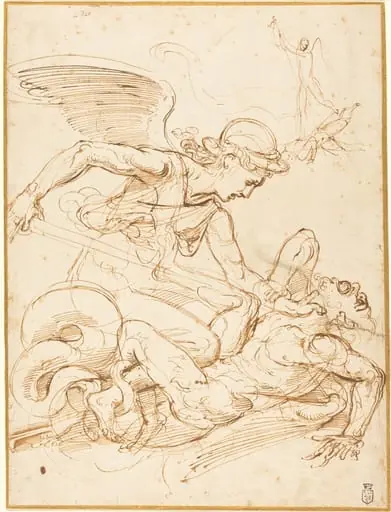
The drawing captures the archangel Michael in the act of subduing rebellious celestial beings. Central to the scene is Michael, sword raised, standing over defeated foes, embodying triumph of order over chaos within a theological narrative of good versus evil.
Technique & Style
Ricciolini employed a base of black chalk, over which he traced figures with pen and brown ink. Subsequent washes of brown, blue and purple add tonal depth, while the varied line weight conveys movement and tension. The layered approach highlights both structural planning and expressive gesture.
History & Provenance
The piece originates from the early 18th‑century Italian workshop of Ricciolini, intended as a preparatory study for a larger altarpiece. Its survival on paper suggests it was retained as a reference by the artist or his studio, later entering a private collection before being catalogued by the museum.
Context
During the Baroque period, dramatic celestial battles were a common motif, reflecting Counter‑Reformation emphasis on divine authority. Ricciolini’s study aligns with contemporary practices of using detailed sketches to resolve complex compositions before committing to oil on canvas.
Own this work as a print
Artist & collection


 The Spies Returning from Canaan
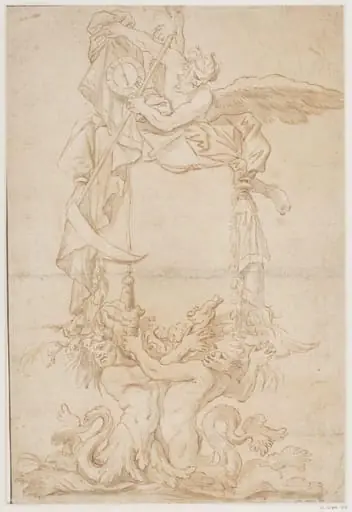 Ornamental design, probably for a title page: a figure of Time resting on a cartouche held up by a pair of tritons and holding a clock
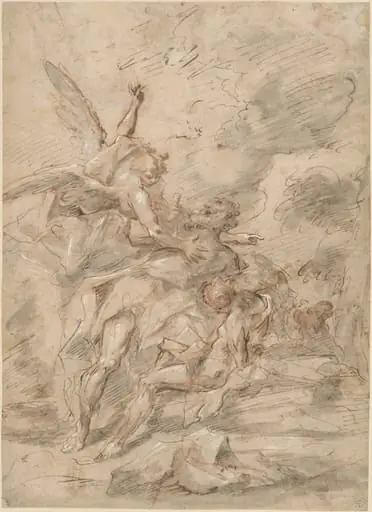 The Sacrifice of Isaac
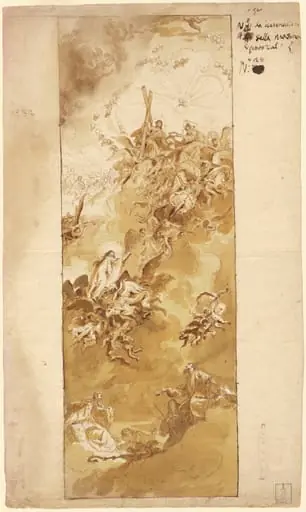 The Assumption of the Virgin
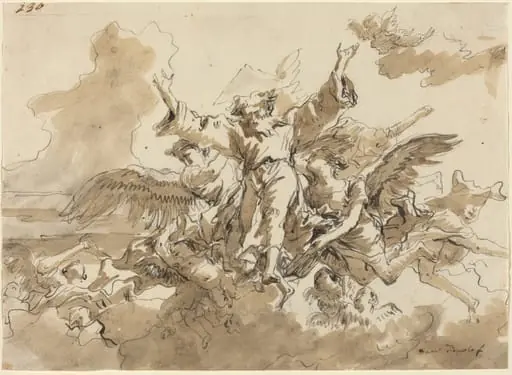 Creation of the Universe
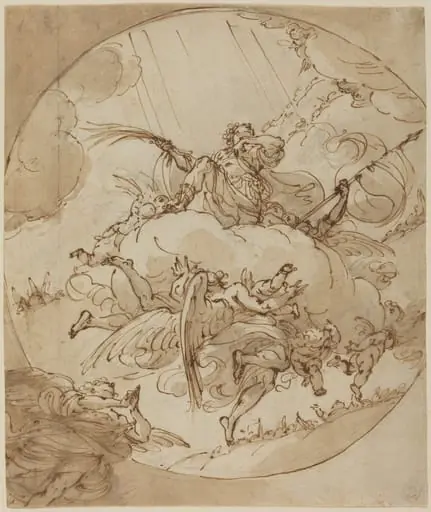 The Apotheosis of San Vitale
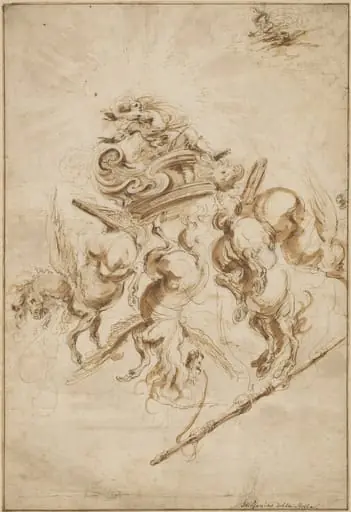 The Fall of Phaeton
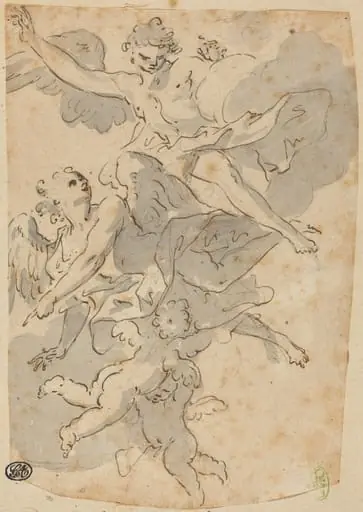 Angels and Putti
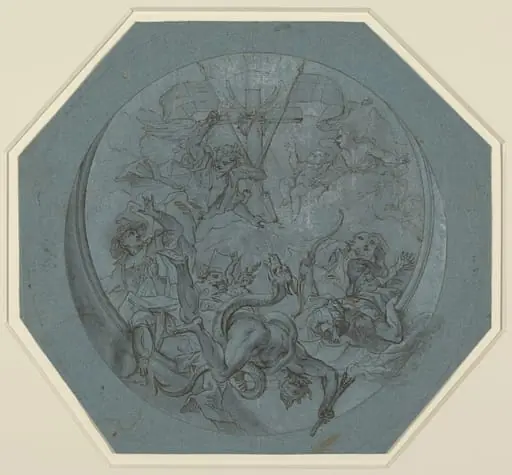
![The Fall of the Rebel Angels [recto], by Parmigianino](https://artifactworldgallery.com/img/parmigianino--the-fall-of-the-rebel-angels-recto--e9b082b33c001c66-w320.webp)