Artwork
Saint Michael Defeating Heresy and Satan
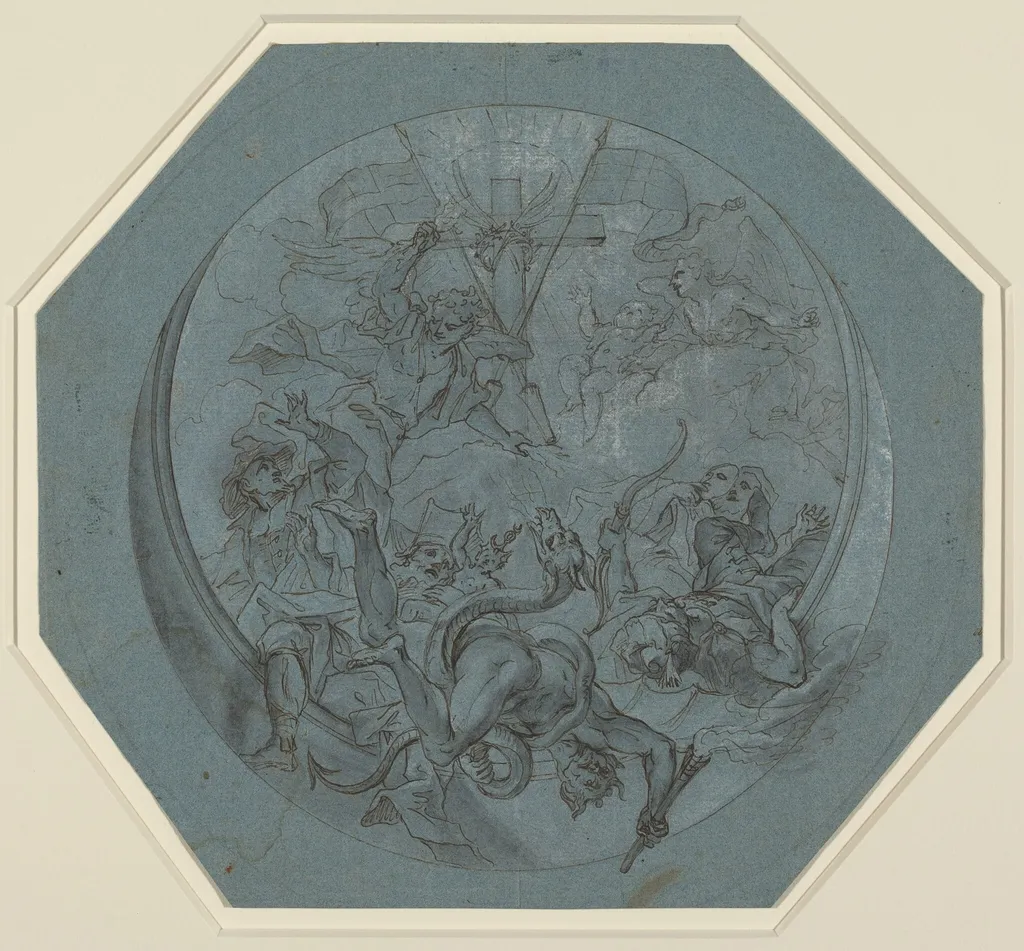
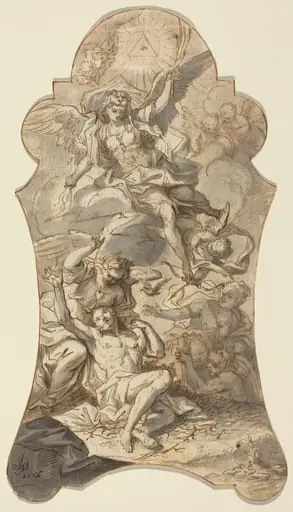
Saint Michael Defeating Heresy and Satan is an ink drawing by the Baroque artist Johann Georg Bergmüller. It dates from 1730 and is held in the collection of the National Gallery of Art.
- Inscription
- Inscribed:by later hand, upper left verso in ink: I v 40; by later hand, upper left verso in graphite: Lugt 2343?; by later hand, center verso in graphite: J. G. Bergmüller; by later hand, lower left verso in graphite: GGBC / Lugt 414 b; by later hand, lower center verso: 4002; by later hand, lower right verso in graphite: G.L. Bernini / 1599 - 1652
About this work
The painting is titled Saint Michael Defeating Heresy and Satan. It was created in 1730 by Johann Georg Bergmüller. The artist used a range of mediums, including pen and brown ink, to create the work.
The painting is part of the Baroque movement, which was known for its dramatic and detailed style. You can learn more about this style by exploring the movement: Baroque.
Overview
Created in 1730, this drawing by Johann Georg Bergmüller depicts Saint Michael in the act of overcoming both heresy and the devil. Executed on blue laid paper, the work combines pen work, brown ink, a brown wash, and white heightening to articulate the dramatic confrontation.
Subject & Meaning
The composition centers on the archangel Michael, traditionally the celestial champion of orthodoxy, shown triumphing over the personified forces of heretical belief and Satan. The imagery underscores the Counter‑Reformation emphasis on doctrinal purity and the triumph of the Catholic Church over dissent.
Technique & Style
Bergmüller employed a layered approach: fine pen lines define the figures, while brown ink and a subtle brown wash build atmospheric depth. White heightening accentuates highlights, and the verso bears red chalk sketches and incised lines used for transferring the design, reflecting the meticulous planning typical of late Baroque drawing.
History & Provenance
The drawing originates from the early eighteenth‑century workshop of Bergmüller, a prominent Bavarian painter of the Baroque period. Its provenance traces through private collections before entering a museum context, where it serves as a study for larger altar pieces on similar themes.
Context
Produced during the height of the Baroque era, the work aligns with the period’s penchant for dynamic movement, stark contrasts, and theological narrative. Saint Michael was a favored subject for illustrating the Church’s spiritual authority, especially in regions confronting Protestant reform movements.
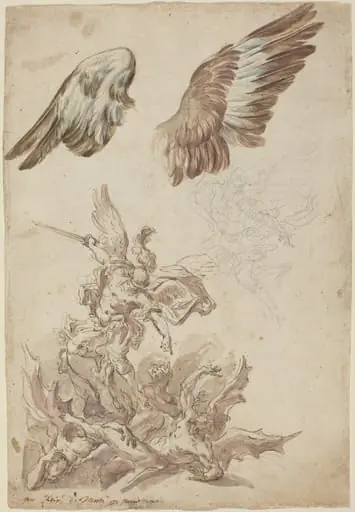
Own this work as a print
Artist & collection

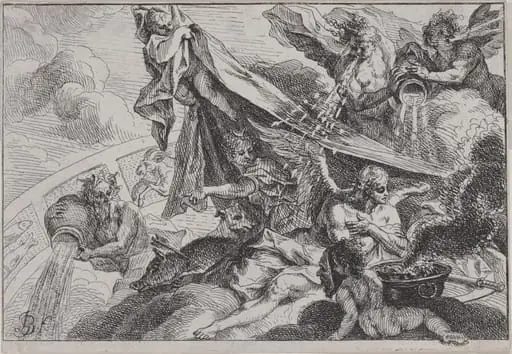
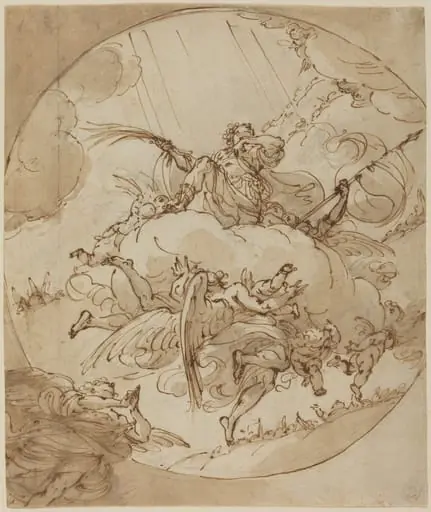 The Apotheosis of San Vitale
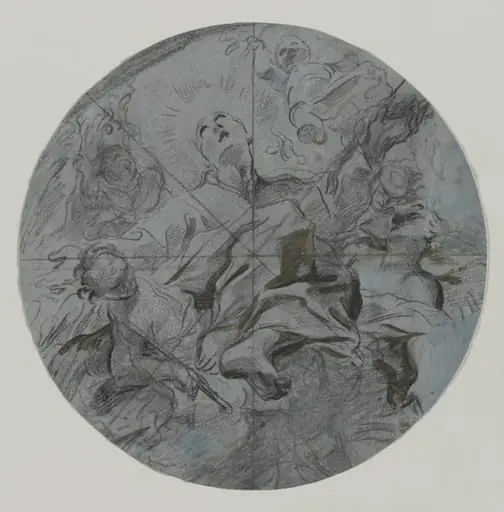 Apotheosis of a Saint (recto)
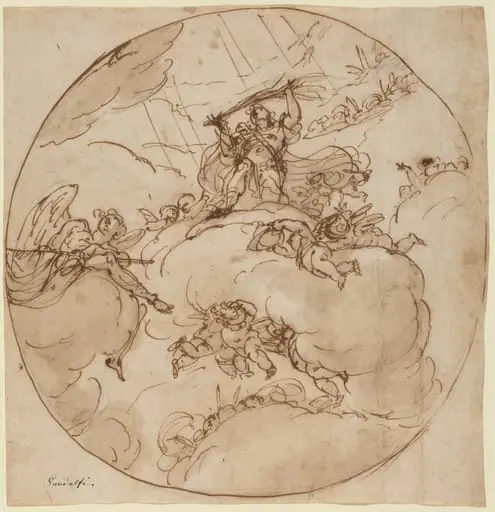 The Apotheosis of San Vitale
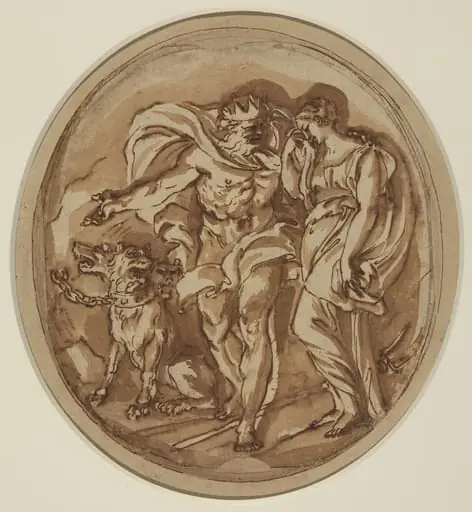 Pluto Bringing Proserpine to the Gates of Hell
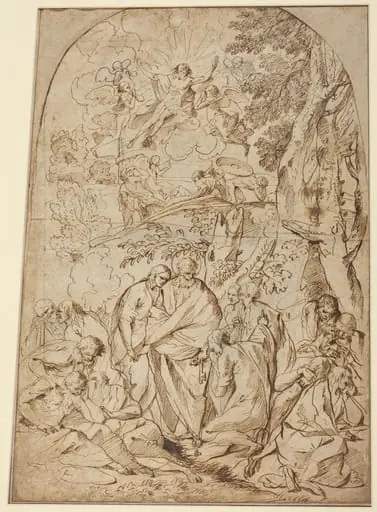 The Resurrection
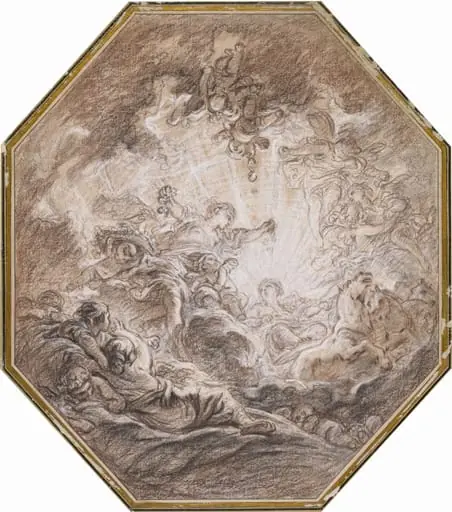 Aurora Heralding the Arrival of the Morning Sun
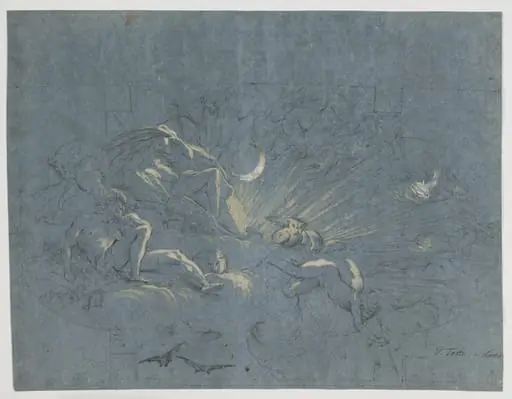 Selene and Endymion, design for a ceiling painting
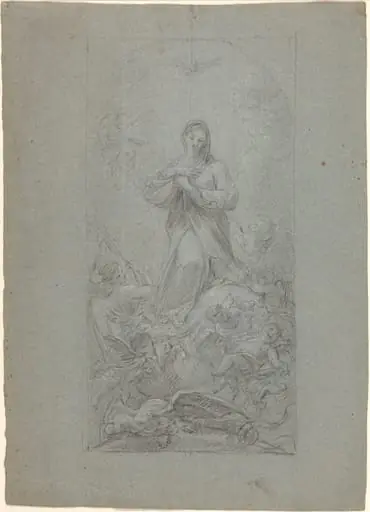 The Virgin Immaculate
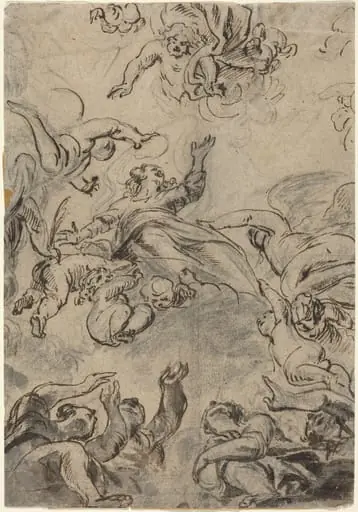 The Assumption of the Virgin
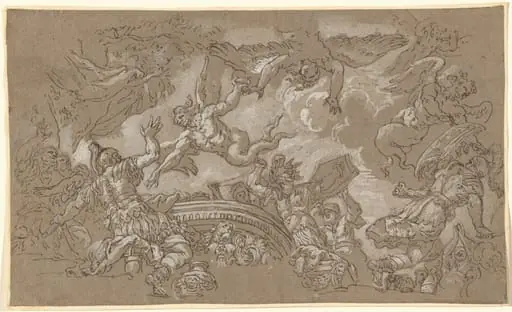 The Harpies Attacking Aeneas and His Companions
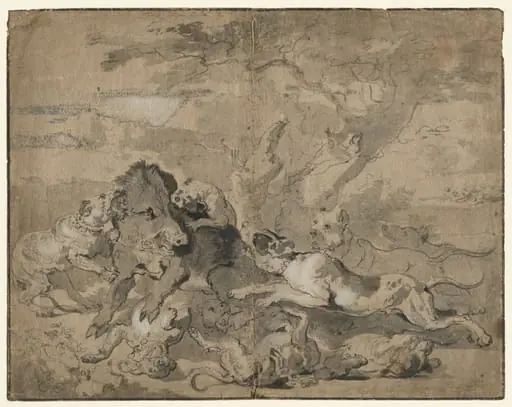 Boar Hunt
- Studies for Saint Michael Defeating the Rebel Angels