Artwork
Christ on the Cross
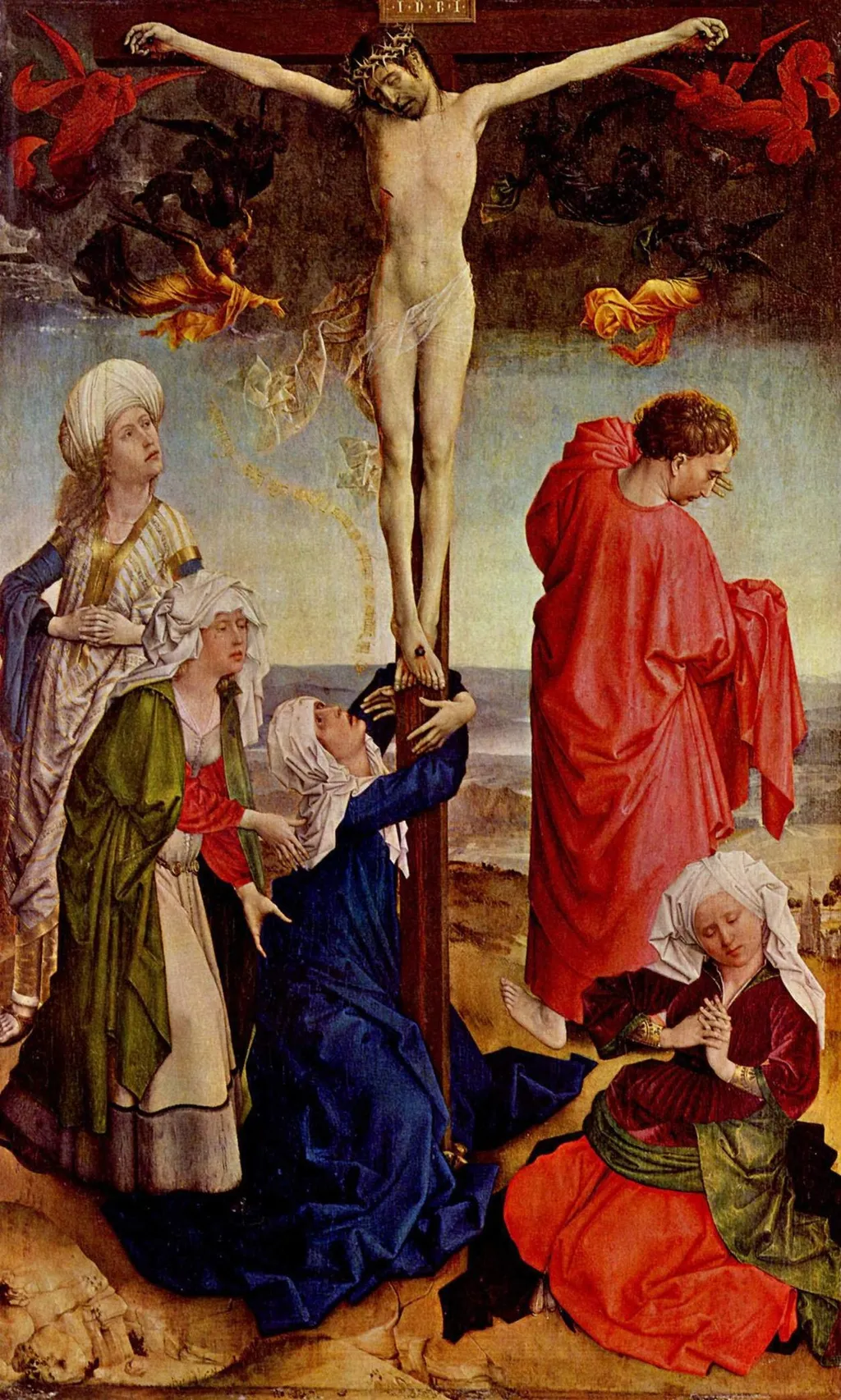
Christ on the Cross is an oil painting by the Northern Renaissance artist Robert Campin. It is held in the collection of the Gemäldegalerie Berlin. Created circa 1450, this oil painting portrays the crucifixion of Jesus Christ.
About this work
Subject & Meaning
The work depicts the crucified Christ as its main subject, presenting the moment of his death on the cross as an object of meditation and veneration.
Christ on the Cross is a devotional panel devoted to the Crucifixion of Jesus, the central salvific event of Christian iconography. The work depicts the crucified Christ as its main subject, presenting the moment of his death on the cross as an object of meditation and veneration.
Within Early Netherlandish religious painting, the isolated crucifixion image functioned as a focus for private devotion, inviting the viewer to contemplate Christ's sacrifice and the promise of redemption. By concentrating solely on the figure of Christ on the cross, the panel strips the narrative down to its most essential symbol, emphasizing suffering, atonement, and divine love rather than the broader Passion narrative.
Technique & Style
Created around 1450, this Early Netherlandish work is executed in oil paint on an oak panel support. The painting measures 79.3 cm in height and 49.9 cm in width. Stylistically, the piece depicts the Crucifixion of Jesus, focusing on the figure of Christ on the cross within a religious context. The application of oil media on wood was characteristic of the period's technical approach to devotional imagery.
History & Provenance
Christ on the Cross, an oil painting on oak panel by Robert Campin, is dated to 1450. The work was created in the context of Early Netherlandish painting and depicts the crucifixion of Jesus. It is held in the collection of the Gemäldegalerie Berlin, where it remains located.
The painting measures 79.3 cm in height by 49.9 cm in width. Beyond its attribution to Campin, its 1450 inception, and its current placement in the Berlin gallery, the available records do not document an earlier ownership chain, a commissioning patron, or subsequent transfers of possession.
Robert Campin painted Christ on the Cross in 1450, an oil on oak panel measuring 79.3 cm by 49.9 cm. The work is part of the permanent collection of the Gemäldegalerie Berlin and has been exhibited there as part of its early Netherlandish painting displays. It was created during the early Netherlandish period and depicts the crucifixion of Jesus.
Overview
Created circa 1450, this oil painting portrays the crucifixion of Jesus Christ. The central figure hangs on a wooden cross, his torso wrapped in a white cloth and a crown of thorns rests upon his head. Surrounding mourners, some weeping, others gazing upward, populate the foreground, while a muted blue sky with scattered clouds forms the backdrop, establishing a somber atmosphere.
Context
The painting belongs to a period when artists like Campin and Jan van Eyck were redefining religious imagery, shifting from symbolic abstraction to intimate, humanized scenes. By rendering the crucifixion with observable detail and emotional depth, the work reflects contemporary theological trends that emphasized personal devotion and the tangible presence of Christ’s humanity.
Artist & collection
Artist
Robert Campin (Valenciennes (France) c. 1375 - Tournai (Belgium) 26 April 1444) now usually identified with the Master of Flémalle (earlier the Master of the Merode Triptych, before the discovery of three other similar…

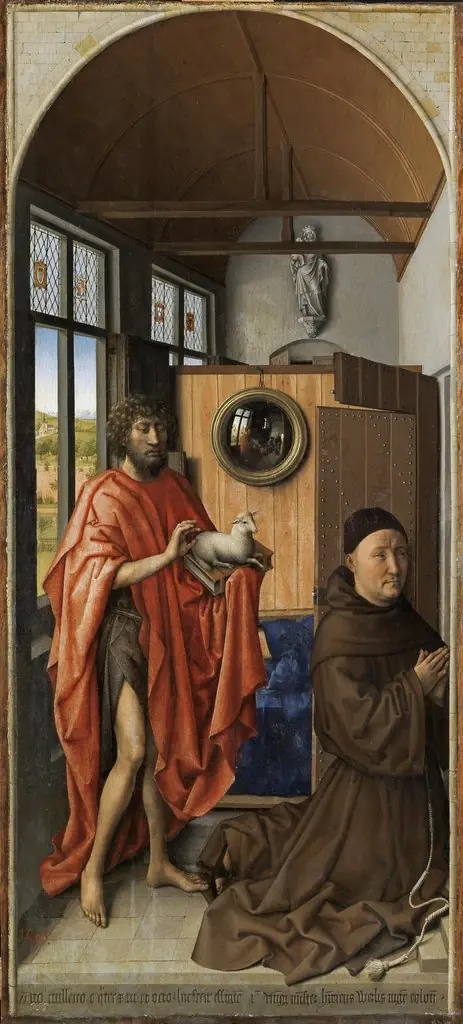
- Crucifixion of Christ
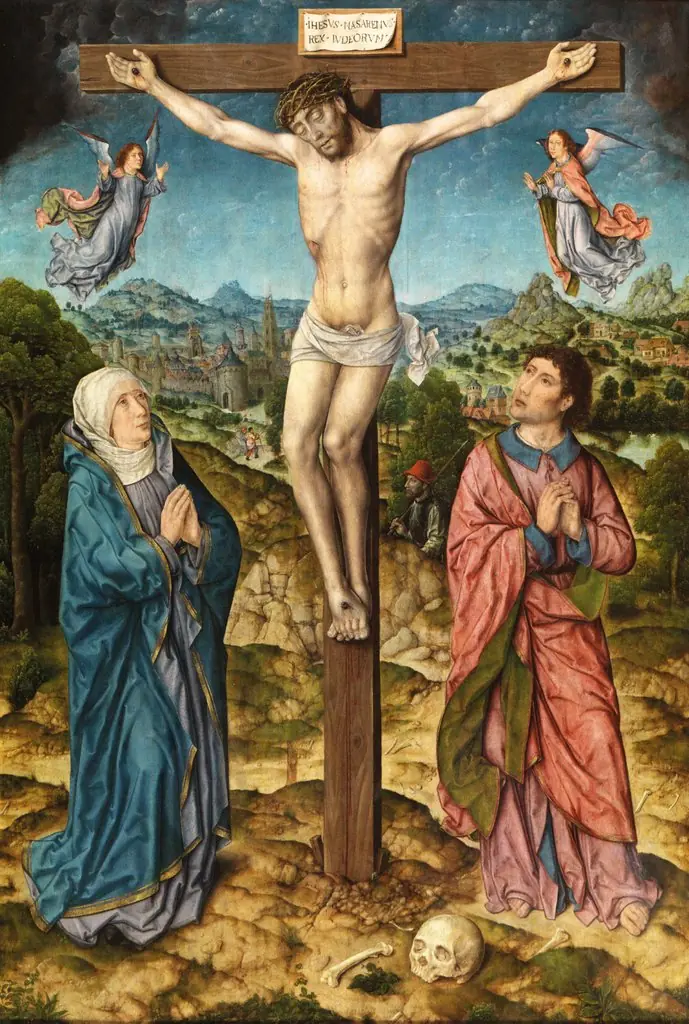 The Crucifixion
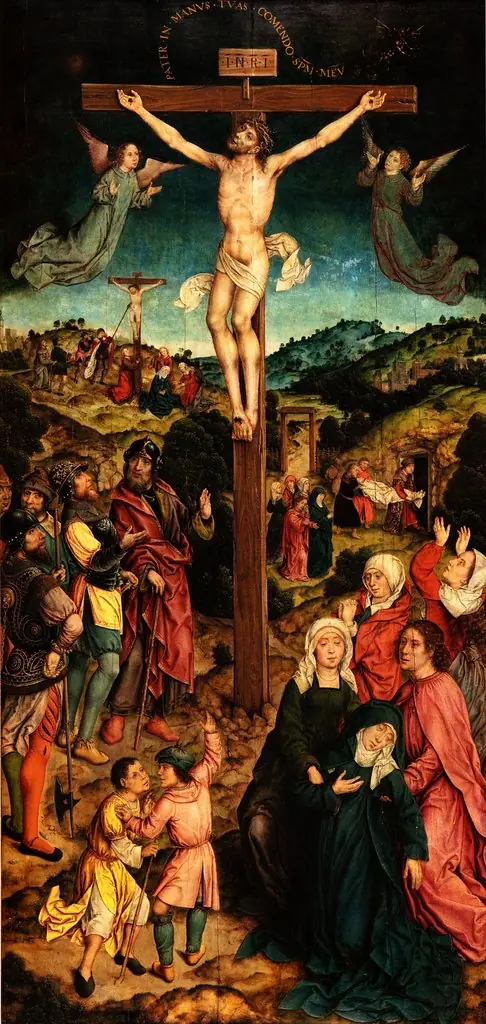 Crucifixion
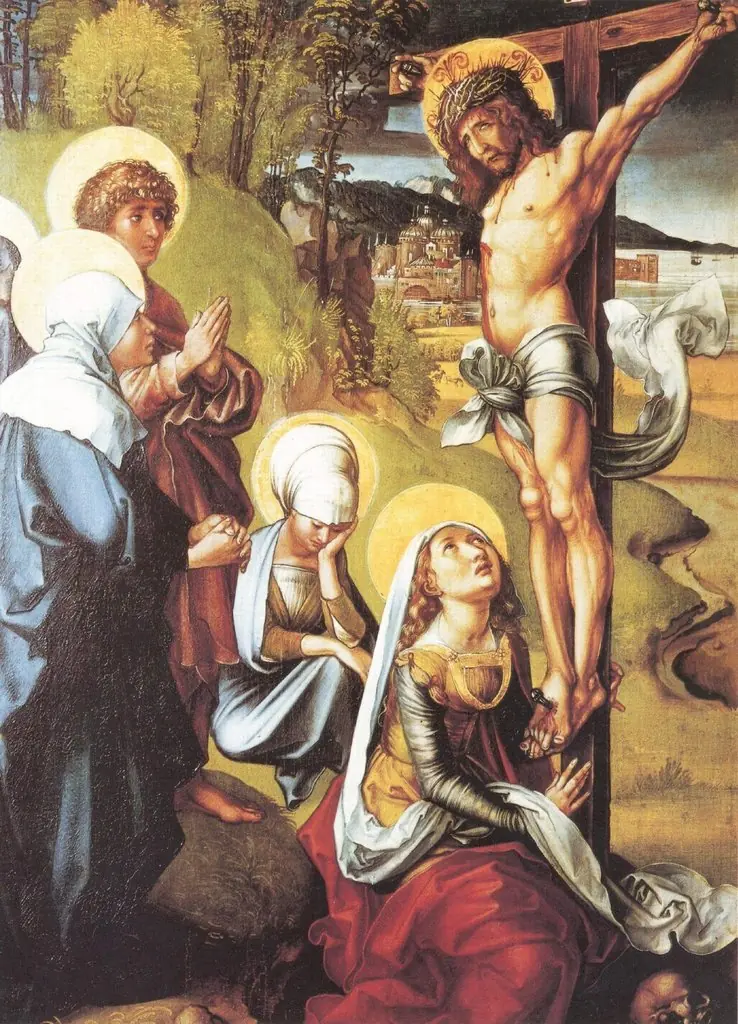 Crucifixion
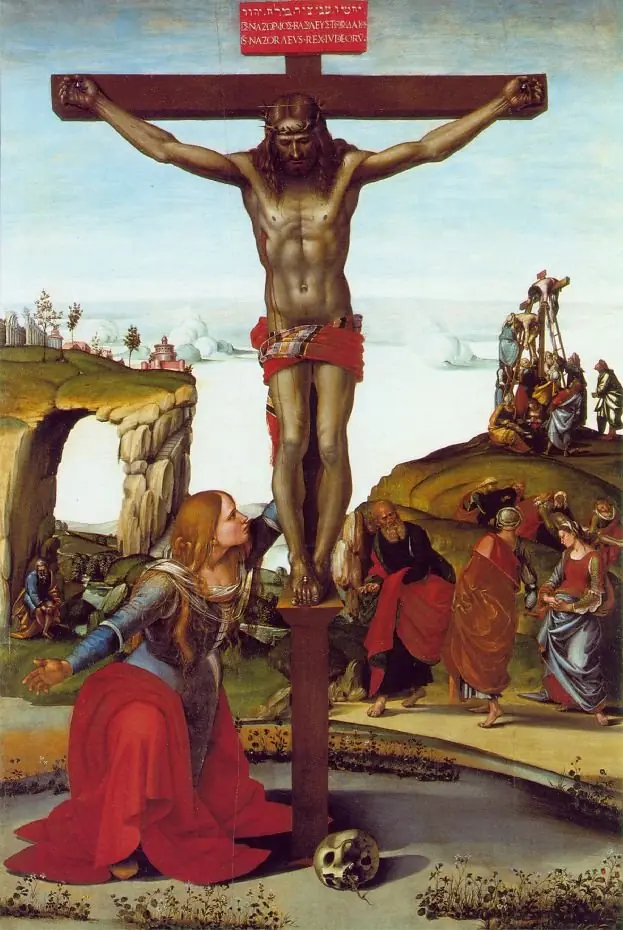 Crucifixion with Saint Mary Magdalene
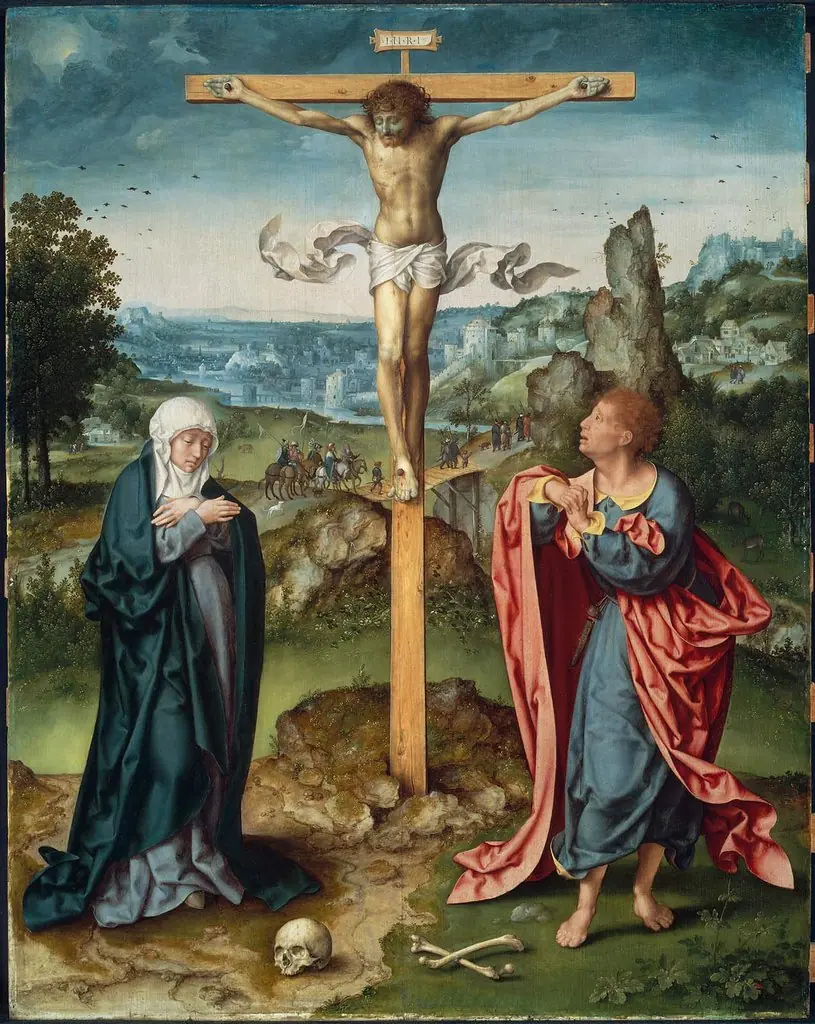 The Crucifixion
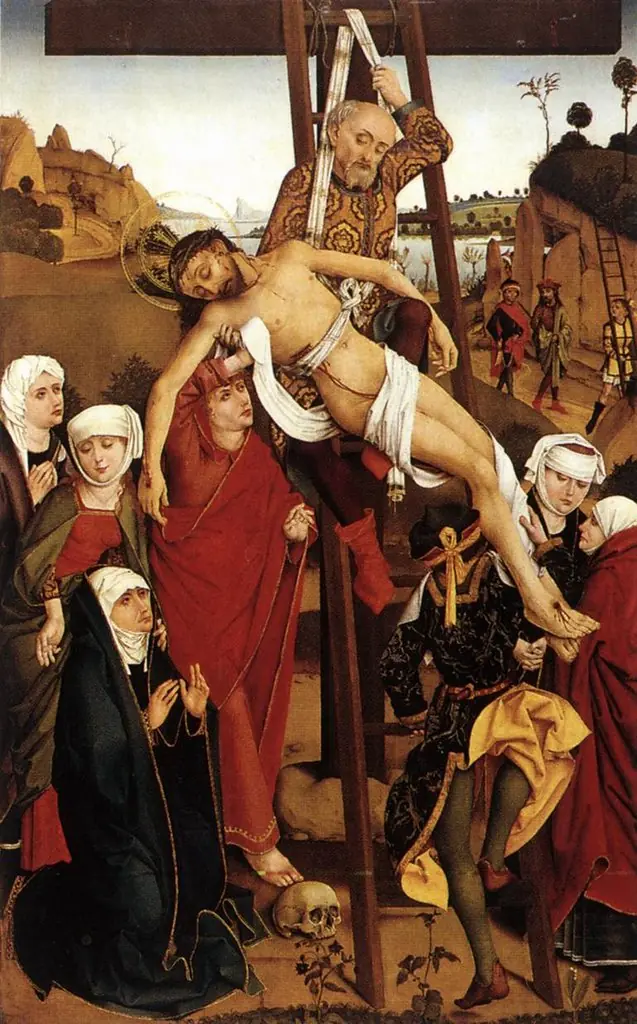 Hofer Altar: Kreuzigung Christi
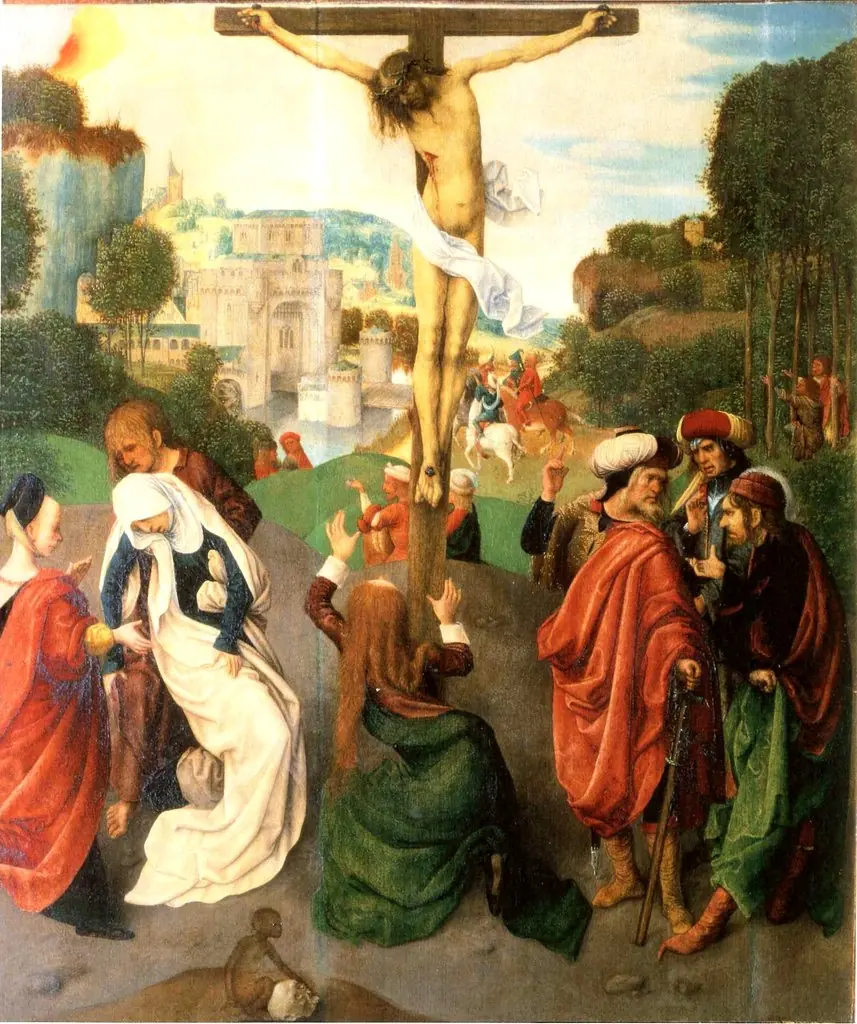 Crucifixion
![The Crucifixion with the Virgin, Saint John, Saint Jerome, and Saint Mary Magdalene [middle panel], by Pietro Perugino](https://artifactworldgallery.com/img/pietro-perugino--the-crucifixion-with-the-virgin-saint-john-saint-jerome-and--a9b4c312771e3f71-w320.webp) The Crucifixion with the Virgin, Saint John, Saint Jerome, and Saint Mary Magdalene [middle panel]
The Crucifixion with the Virgin, Saint John, Saint Jerome, and Saint Mary Magdalene [middle panel] Crucifixion, with the Virgin and Saint John
 Crucifixion
 Kreuzabnahme