Artwork
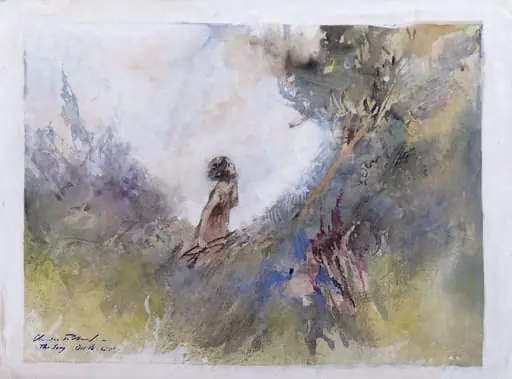
A man and a dog on a country road
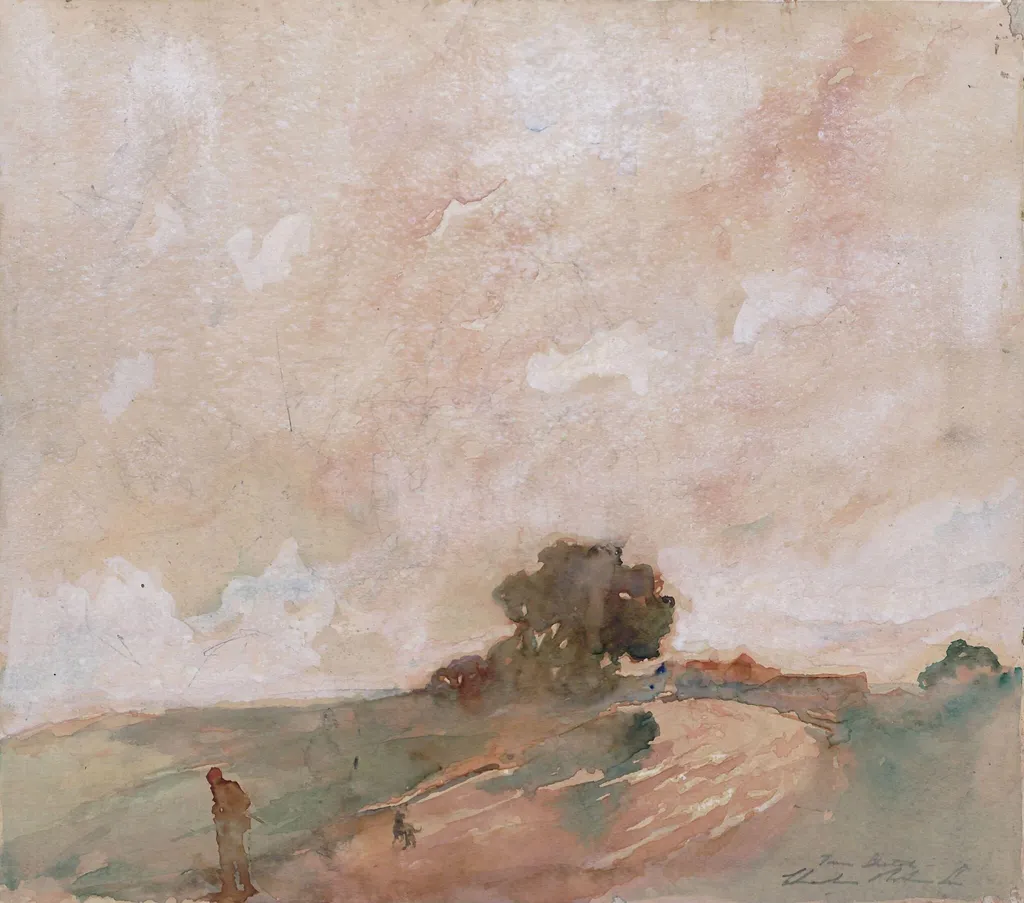
A man and a dog on a country road is a watercolor work on paper by the Regionalist artist Charles Robinson. It dates from 1930 and is held in the collection of the Victoria and Albert Museum.
About this work
Overview
Executed in delicate washes, the piece reflects Robinson’s mastery of the medium and his preference for understated, atmospheric scenes.
This 1930 watercolour by Charles Robinson portrays a solitary figure walking a dog along a quiet rural path. Executed in delicate washes, the piece reflects Robinson’s mastery of the medium and his preference for understated, atmospheric scenes. Signed and annotated with the name of a drawing group, it was donated to the Victoria and Albert Museum in 1982 by the artist’s daughter, Edith Mary Robinson, as part of a bequest.
Subject & Meaning
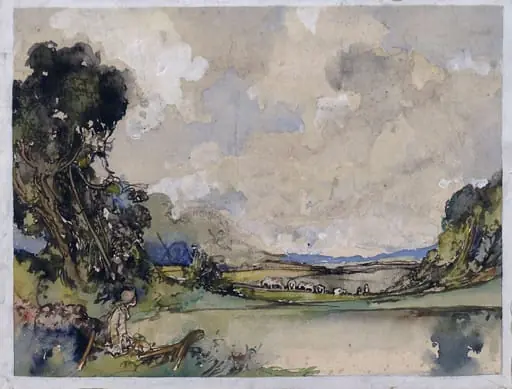
The composition centers on a lone pedestrian and a small dog, their figures scaled to emphasize the vastness of the landscape. No narrative or action is implied; the scene evokes stillness and solitude. The absence of buildings or other figures reinforces a sense of isolation, suggesting contemplation rather than movement, and inviting quiet observation of everyday rural life.
Technique & Style
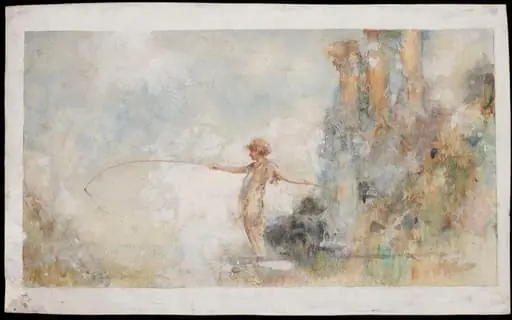
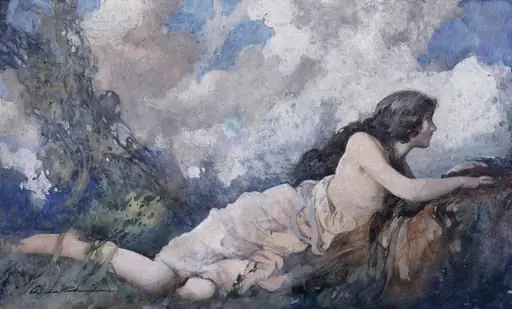
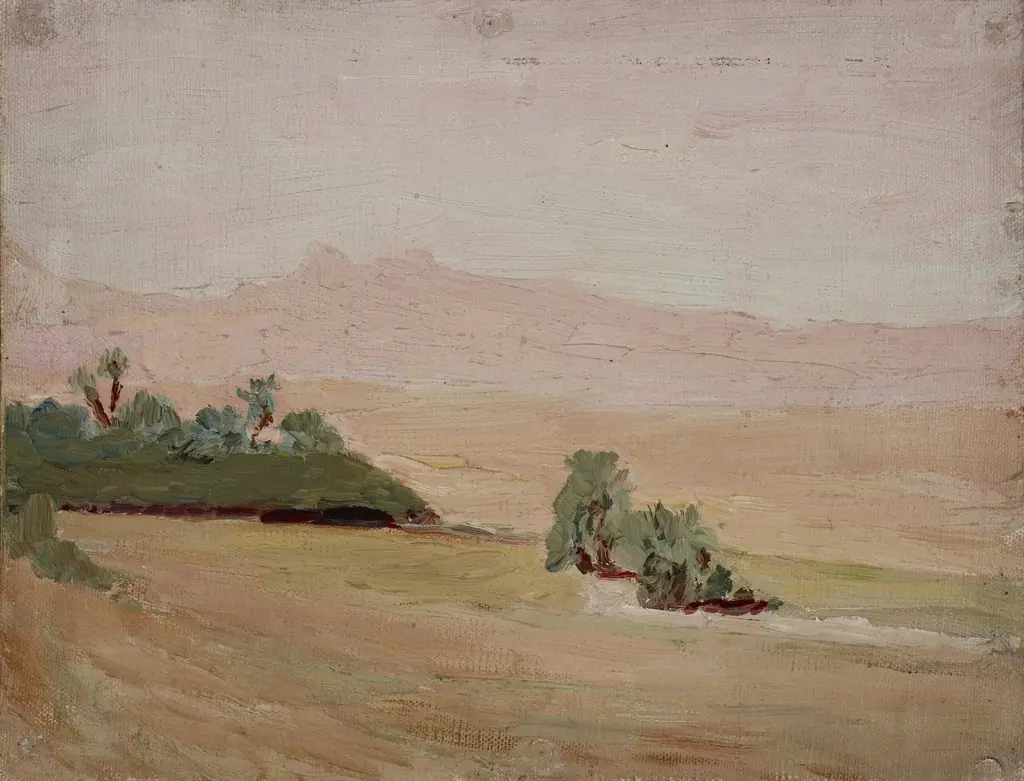
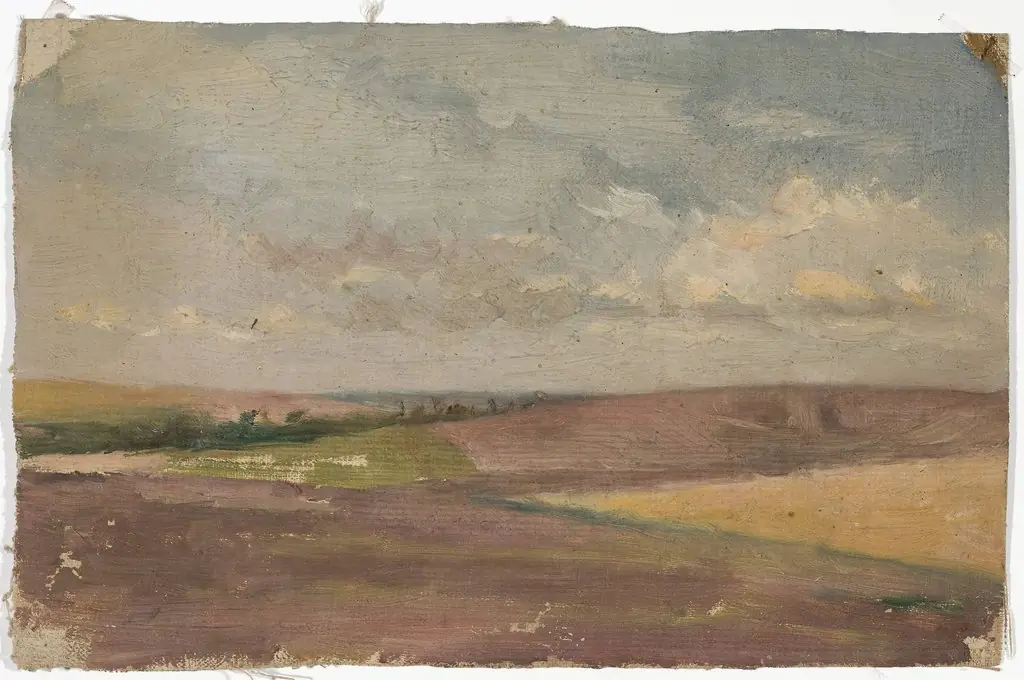
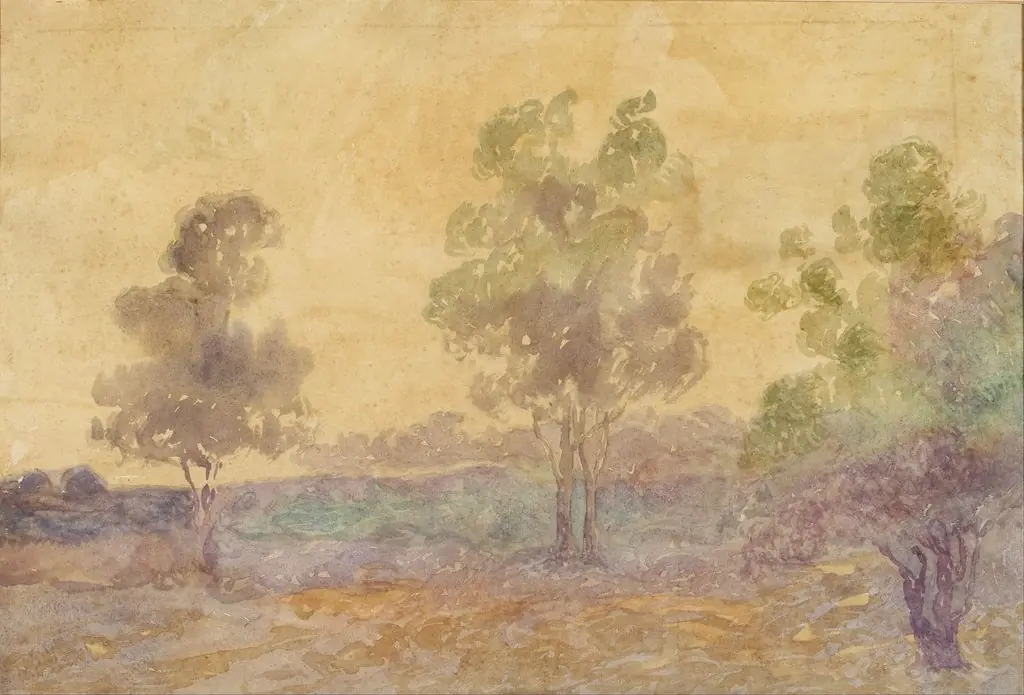
Robinson employed loose, fluid brushwork and translucent watercolour layers to suggest form through tone rather than detail. Muted hues of pale green, warm ochre, and soft grey dominate, with areas of the paper left exposed to imply light. The fading edges and delicate washes convey a sense of age and weather, aligning with his interest in subtle, evocative rendering over precision.
History & Provenance
Created in 1930, the work remained in the artist’s possession until his death. It was later bequeathed to the Victoria and Albert Museum by his daughter, Edith Mary Robinson, in 1982. The piece carries the mark of a drawing group, indicating its origin in a collaborative or instructional setting, though its exact context within that group remains undocumented.
Context
Charles Robinson came from a family of illustrators and engravers, including his brothers William and Thomas Heath Robinson. Influenced by Albrecht Dürer’s line work, Pre-Raphaelite attention to nature, and Japanese woodblock aesthetics, his style blended precision with poetic restraint. This watercolour reflects a broader early 20th-century interest in quiet, intimate landscapes as counterpoints to industrial modernity.
Legacy
Robinson’s watercolours, though not widely exhibited during his lifetime, are held in public collections for their quiet craftsmanship. This piece exemplifies his commitment to understated observation and the expressive potential of watercolour. It contributes to a lesser-known but persistent tradition of British landscape drawing that values mood over spectacle.
Artist & collection
Artist
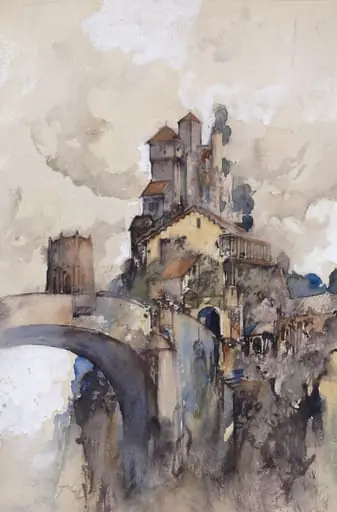
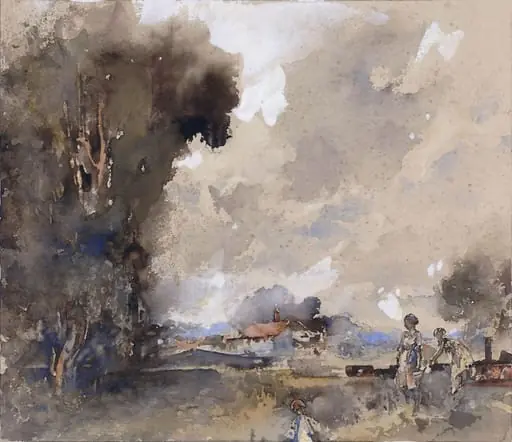
Charles Robinson painted dreamy watercolors in the 1930s, soft hills, medieval villages, and gentle nudes all in delicate washes.