Artwork
The Dead Christ supported by an Angel
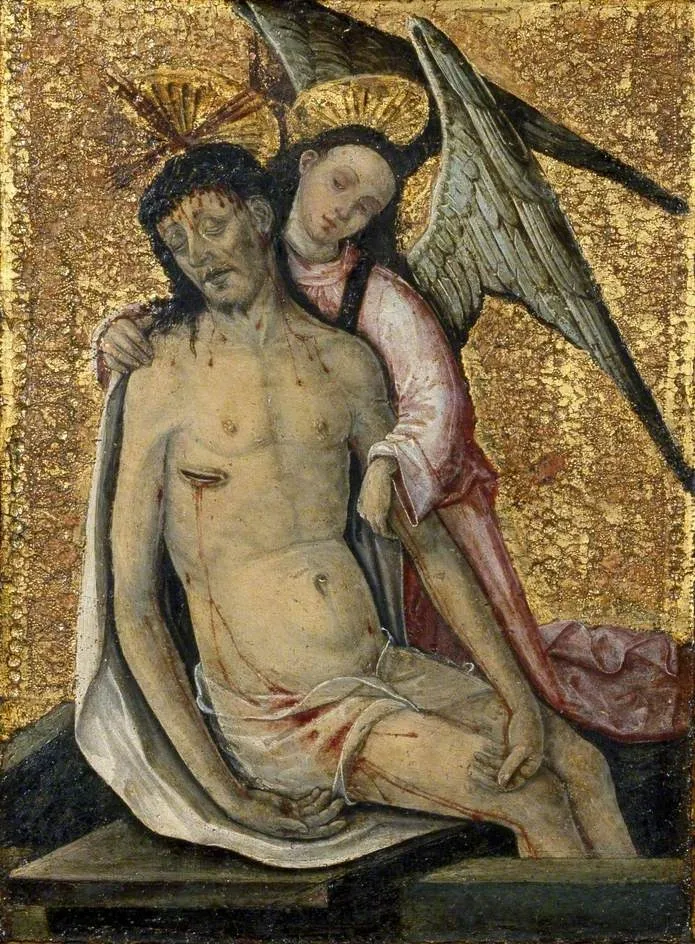
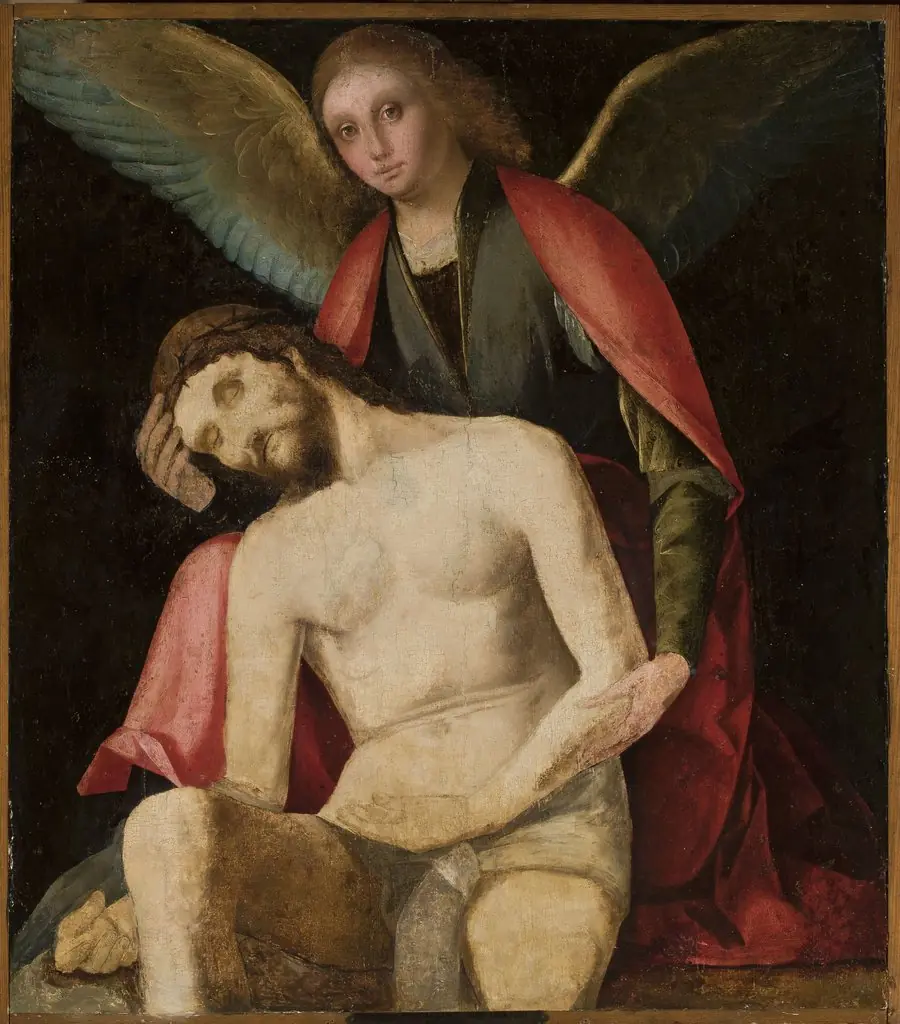
The Dead Christ supported by an Angel is an unspecified painting by the Early Renaissance artist Rodrigo de Osona. It dates from 1494 and is held in the collection of the Ashmolean Museum.
About this work
Overview
The Dead Christ supported by an Angel, painted by Rodrigo de Osona in 1494, is a significant example of Valencian Renaissance religious art.
The Dead Christ supported by an Angel, painted by Rodrigo de Osona in 1494, is a significant example of Valencian Renaissance religious art. The composition focuses intimately on the lifeless body of Christ, whose pale form is draped in a white cloth and tilted to the left, emphasizing the physical weight of death. An angel stands directly behind the figure, providing structural and emotional support; the angel's right arm wraps around Christ's shoulders while the left hand rests gently on his knee.
This arrangement creates a vertical, pyramidal grouping that draws the viewer's eye to the contrast between the divine stillness of the corpse and the tender vigilance of the celestial attendant. Created during the height of Osona's career, the work reflects the influence of Italian Renaissance naturalism and the Flemish attention to detail that characterized the artist's style. The painting serves as a devotional object intended to evoke compassion and meditation on the Passion, adhering to the Counter-Reformation's emphasis on emotional engagement with sacred narratives even before that period officially began. It stands as a testament to Osona's role in introducing humanist aesthetics to the Spanish Levant.
Subject & Meaning
The image presents the moment after the crucifixion, emphasizing Christ’s physical vulnerability and the compassionate assistance of a celestial messenger. The angel’s right arm embraces Christ’s shoulders while the left hand steadies his knee, suggesting both reverence and the promise of resurrection that follows the Passion.
Technique & Style
De Osona employs a restrained palette of whites, pinks, and gold, allowing the blood stains on Christ’s forehead and torso to stand out starkly. The soft modeling of flesh and the delicate rendering of the angel’s wings convey a gentle intimacy, while the flat golden background focuses attention on the figures without distracting detail.
History & Provenance
Created in the late fifteenth century, the work likely served a private devotional context before entering public collections. It was acquired by the Ashmolean Museum, where it remains on display as part of the museum’s holdings of Iberian Renaissance art, offering insight into the devotional practices of the period.
Artist & collection

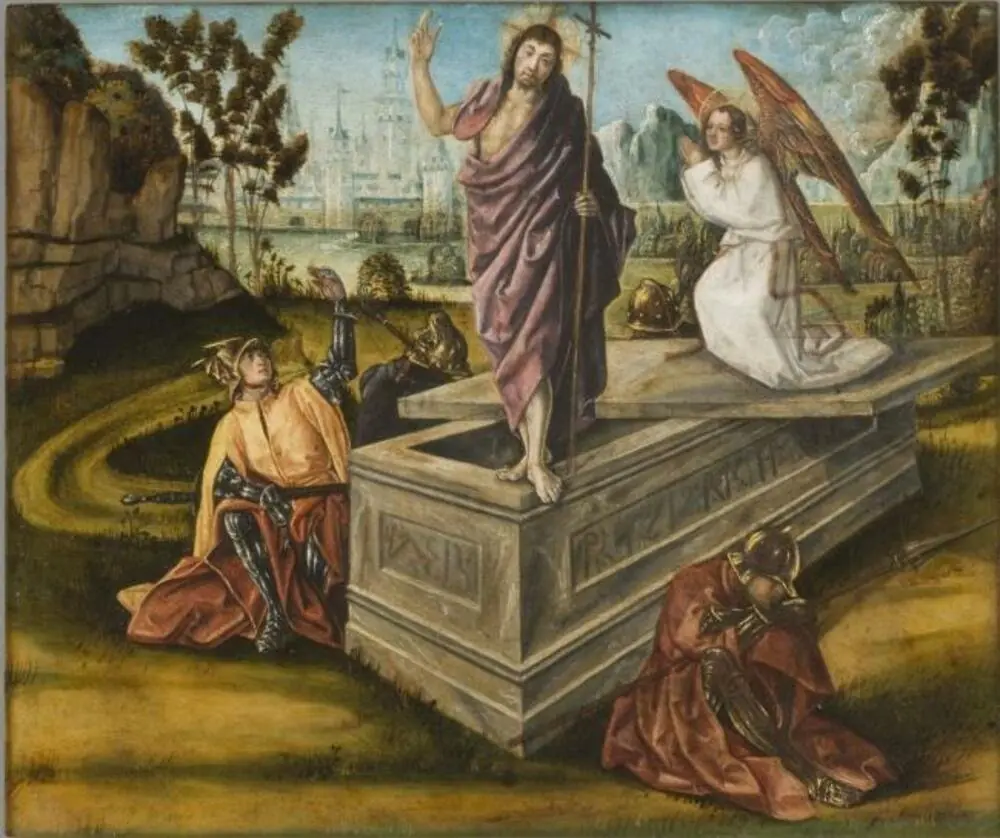
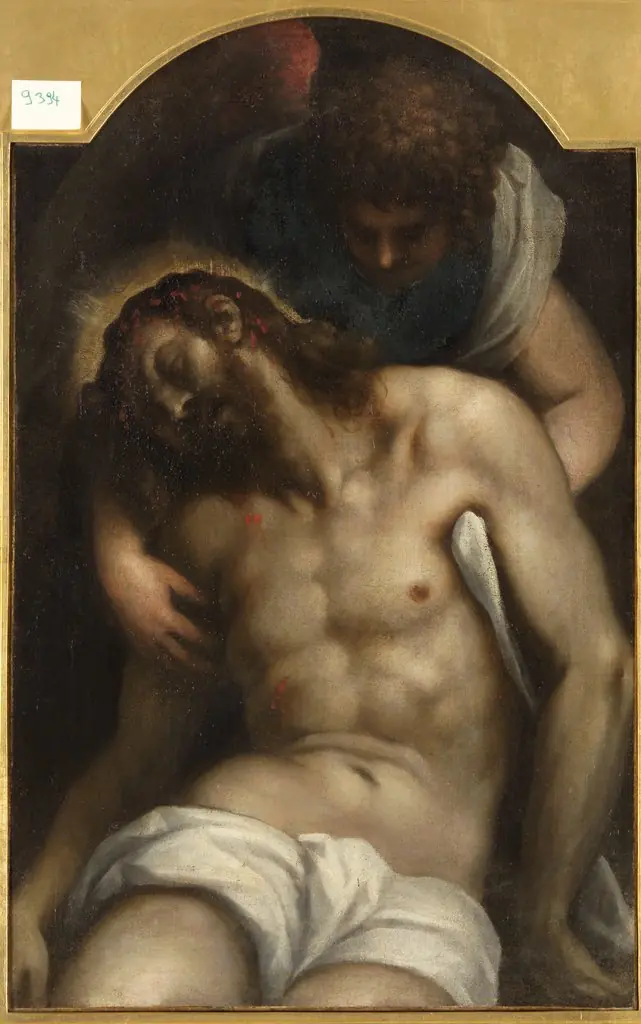
 Angel Pieta
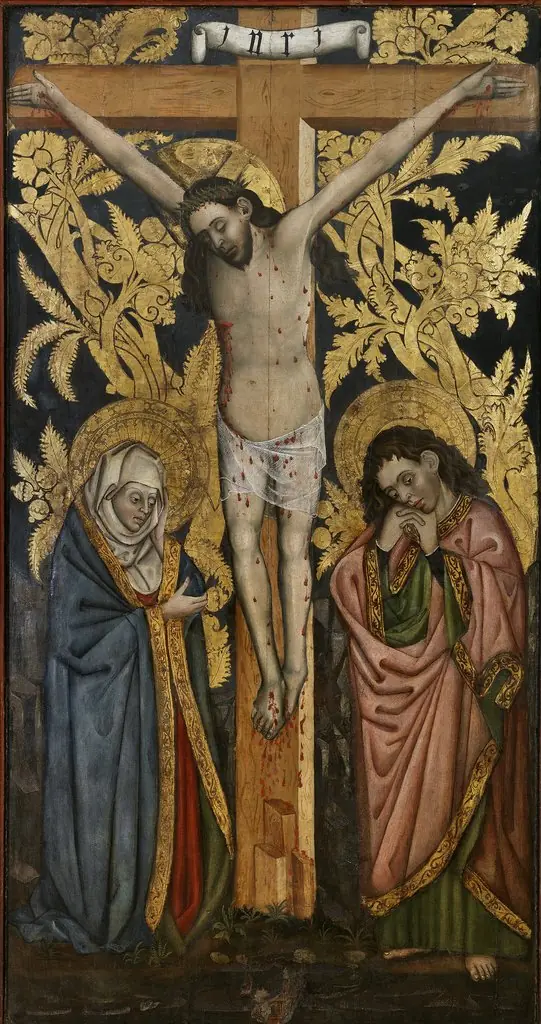 The Crucifixion
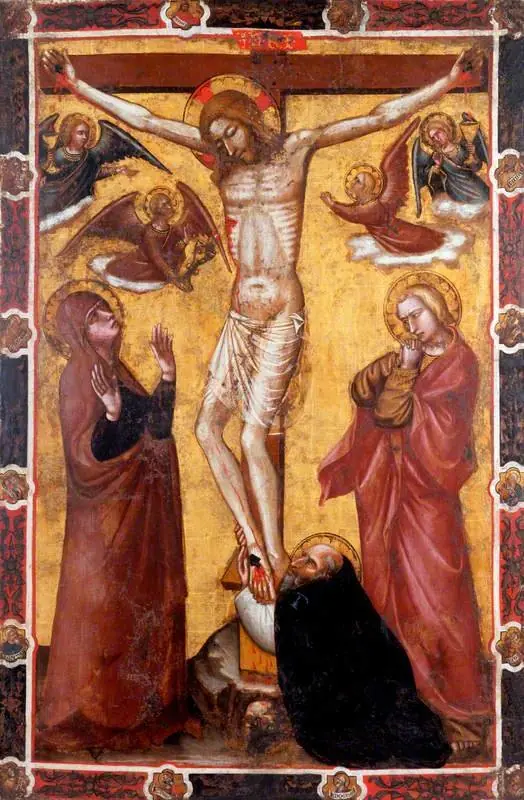 The Crucifixion with the Virgin and Saint John; Saint Anthony Abbot at the Foot of the Cross (one side of a processional banner) (formerly attributed to Barnaba da Modena)
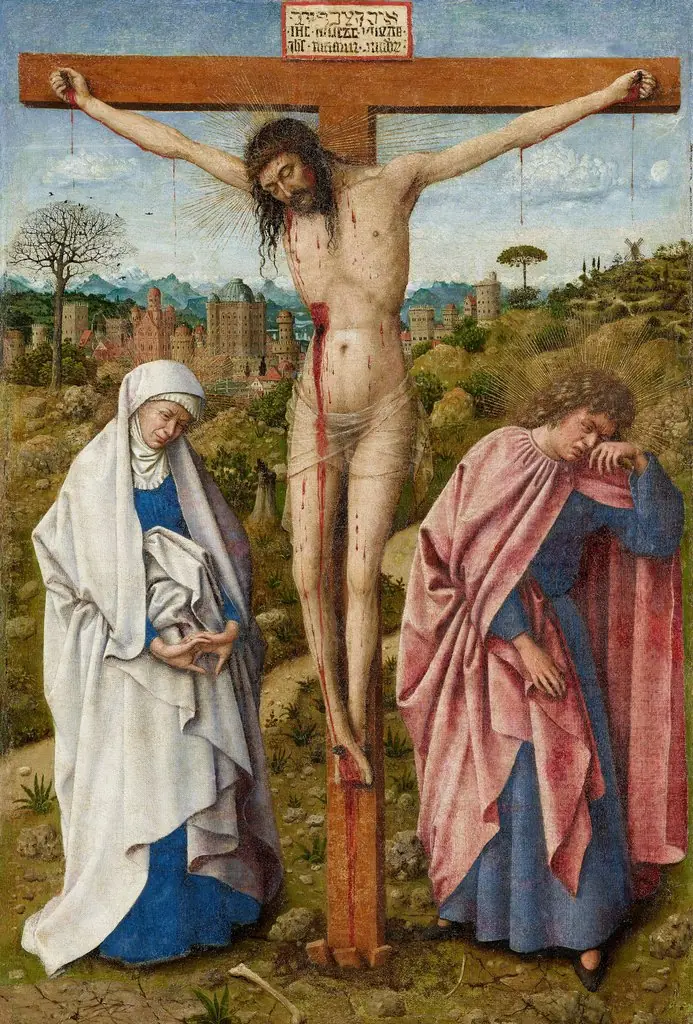 Christ on the Cross with the Virgin and Saint John
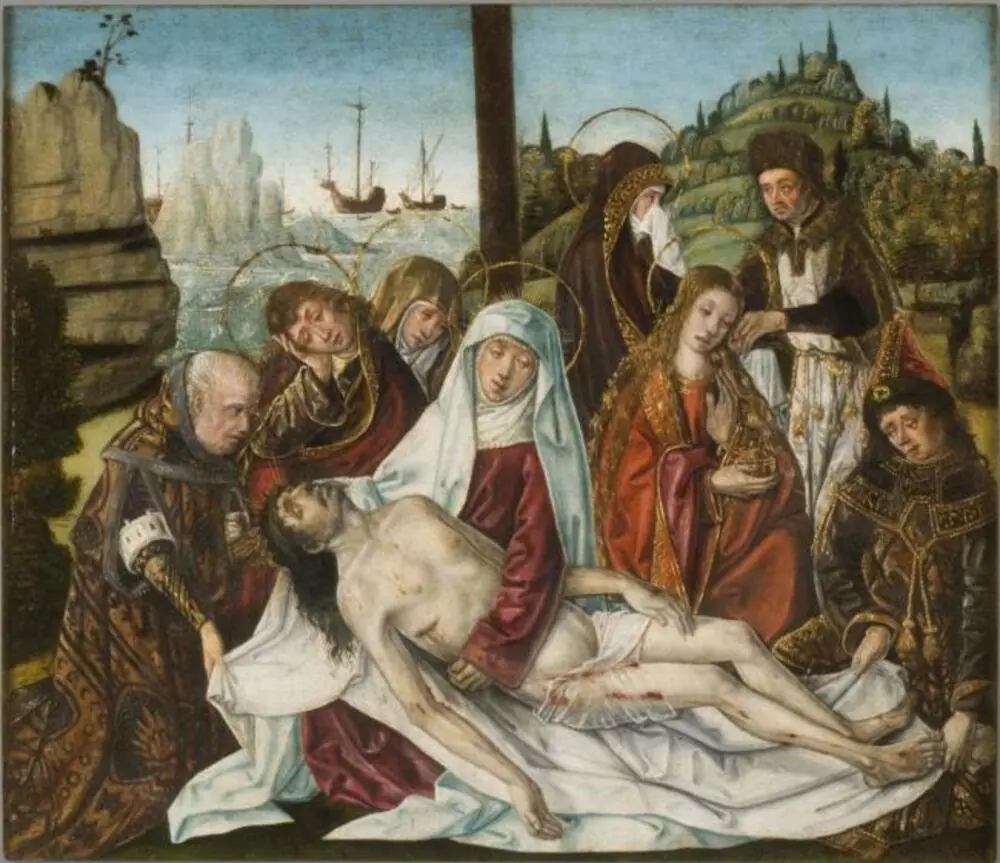
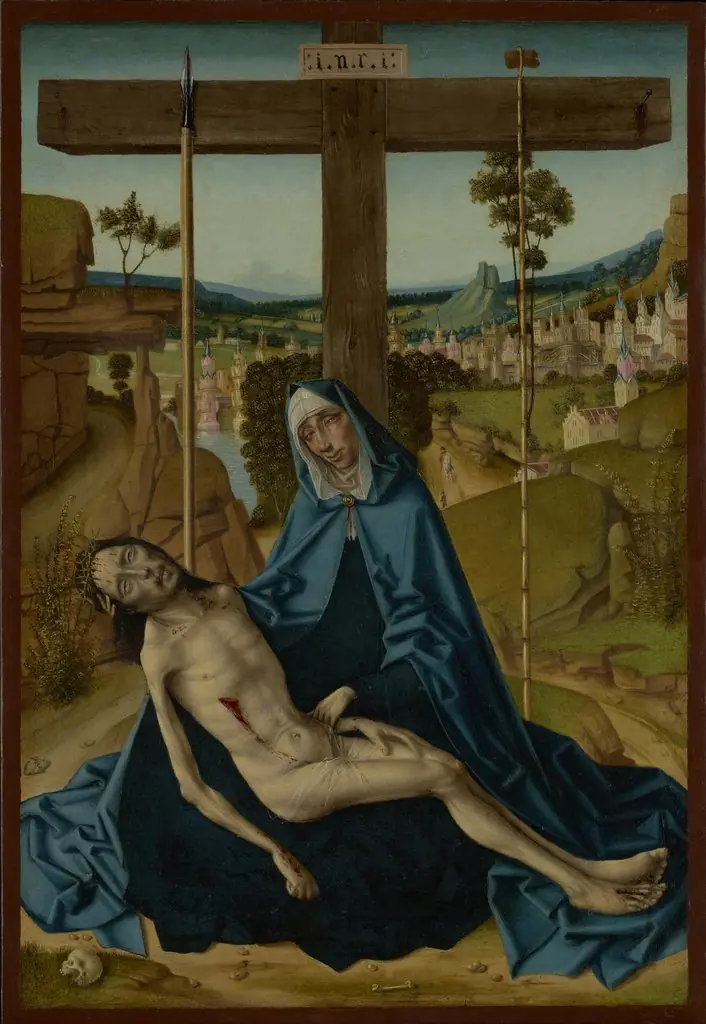 Pietà
Pietà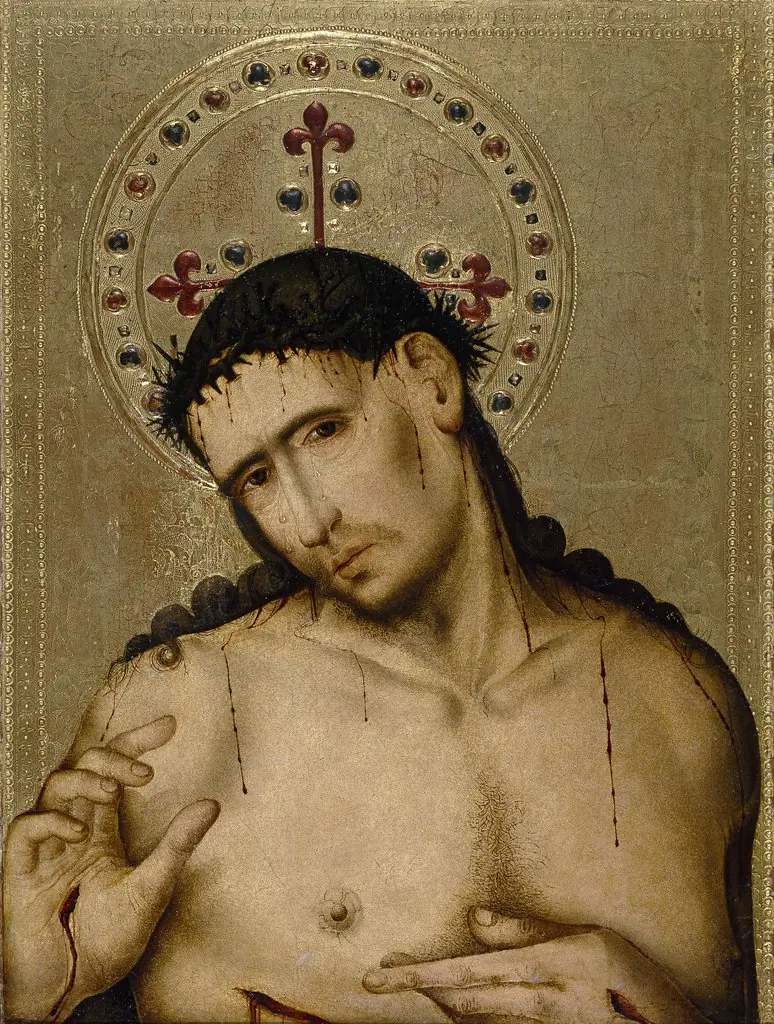 The Man of Sorrows
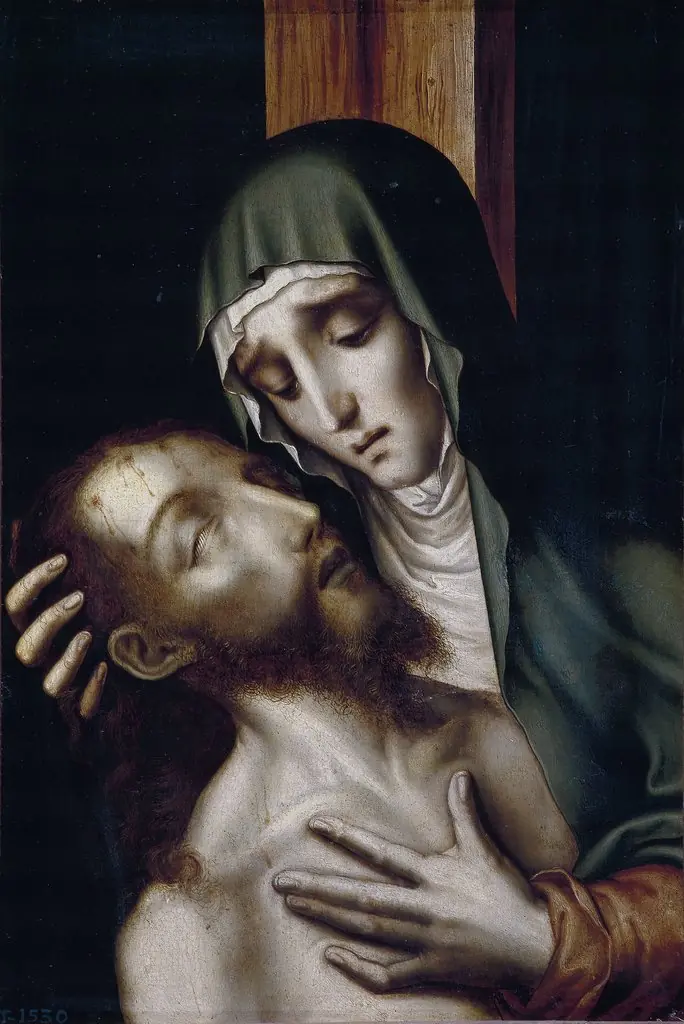 Pietà
Pietà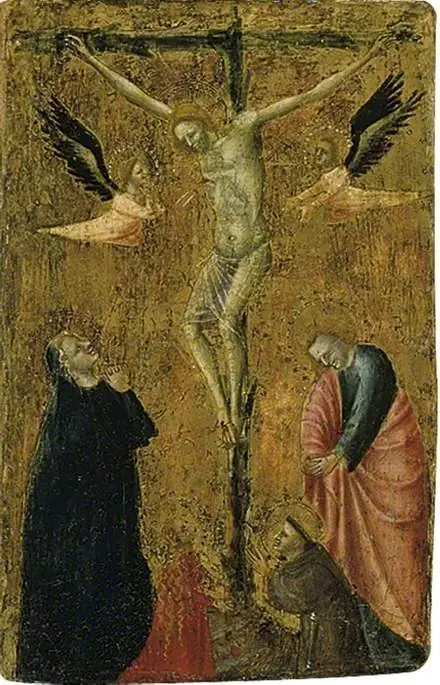 Crucifixion
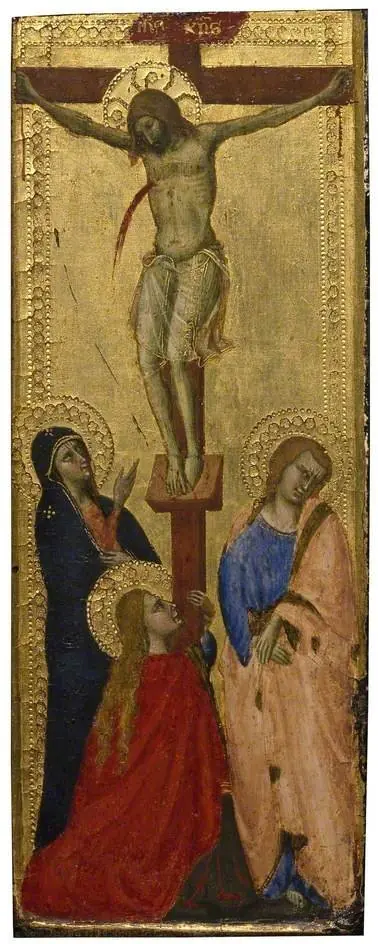 The Crucifixion
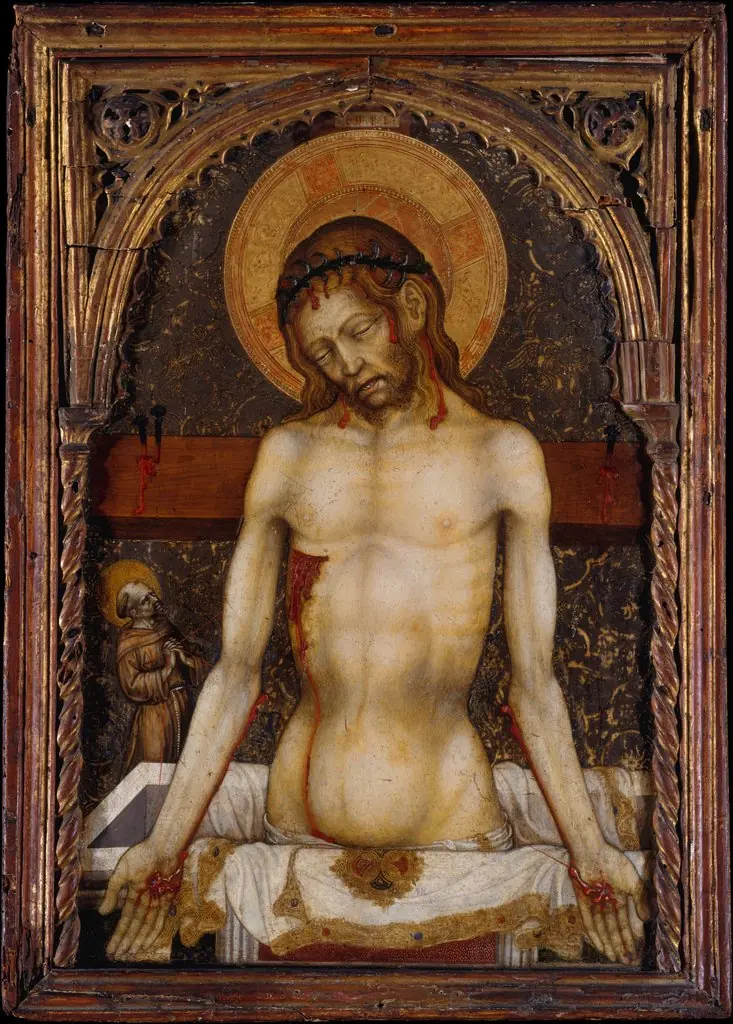 The Man of Sorrows