Artwork
Portrait of a Young Man
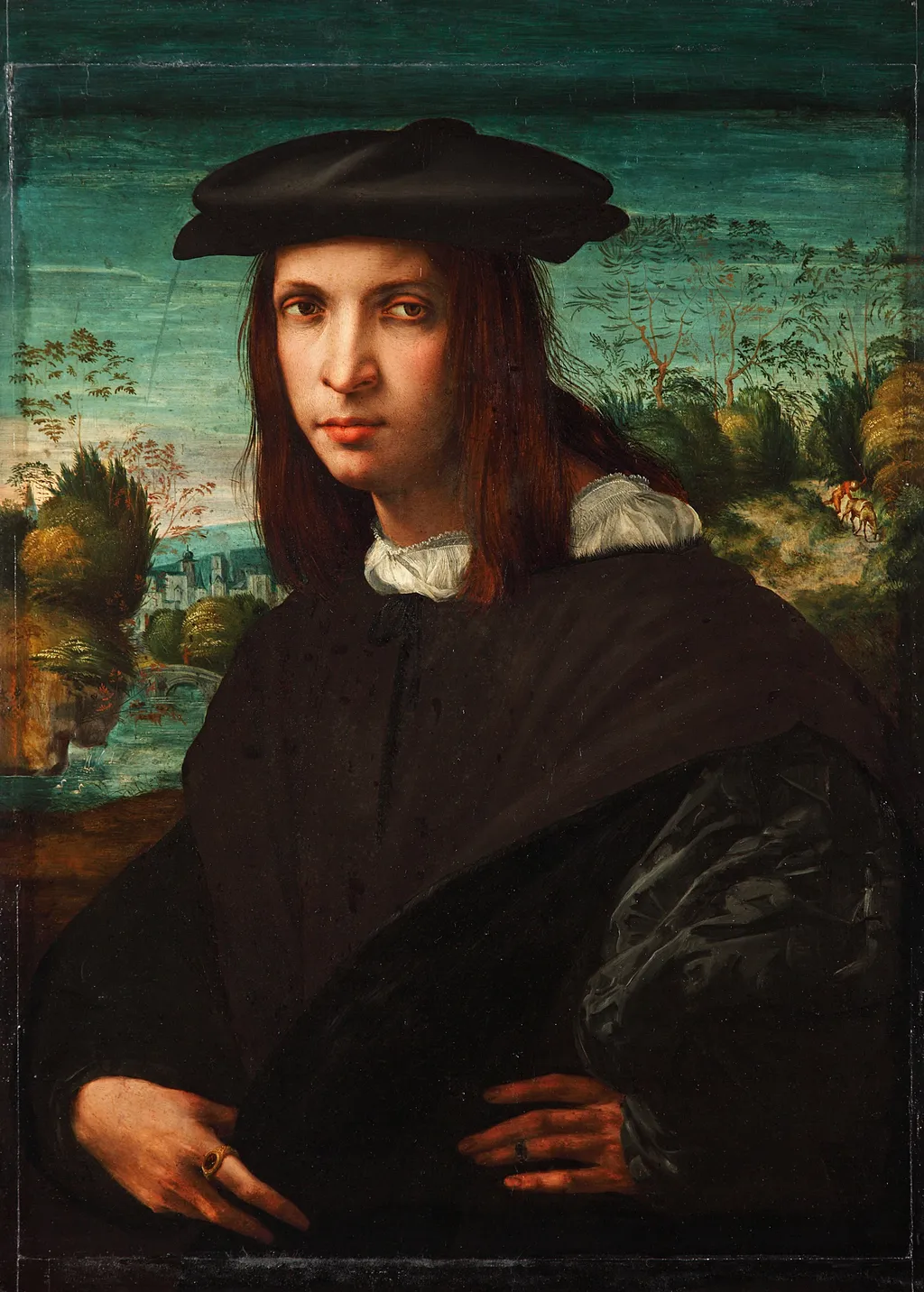
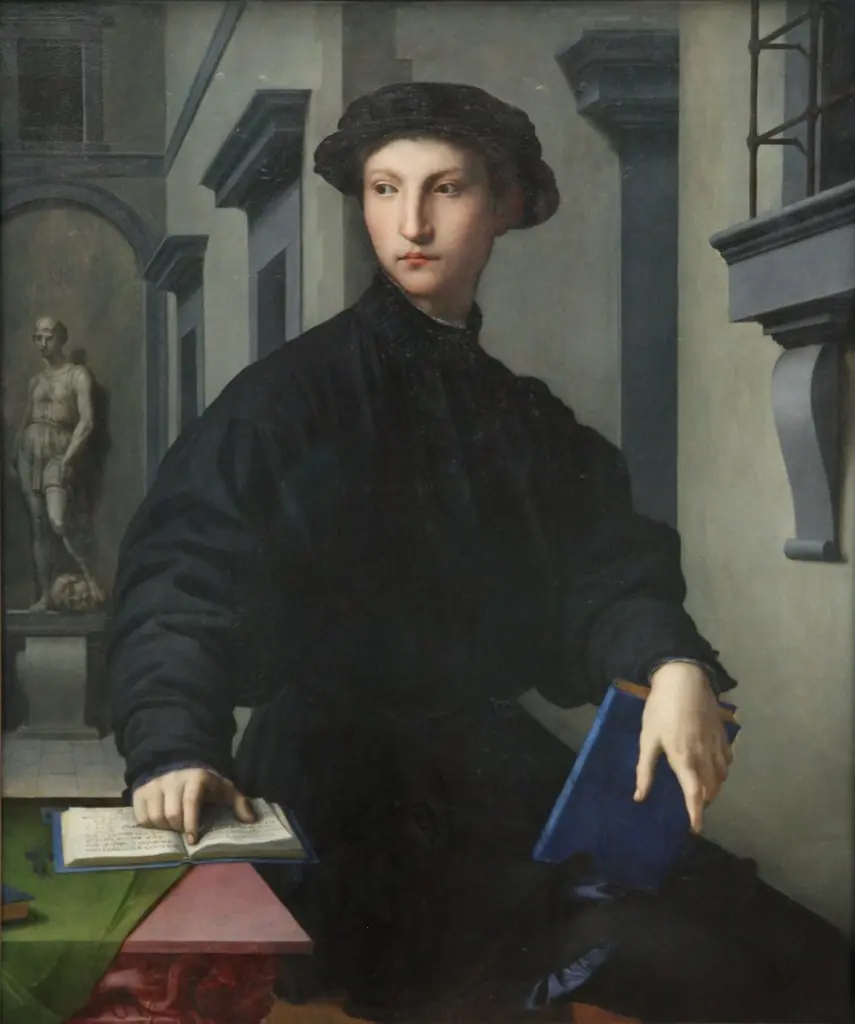
Portrait of a Young Man is an oil painting by the Mannerist artist Rosso Fiorentino. It dates from 1517 and is held in the collection of the Gemäldegalerie Berlin.
About this work
Subject & Meaning
The Portrait of a Young Man depicts a half-length figure turned three-quarters left, wearing a black floppy-brimmed hat, long hair, and a black garment with a vaporous damask-sleeve in the foreground. The sitter’s youthful features include a straight nose, large shadowed eyes, and a full mouth, set against a windswept open-air landscape with a distant city visible through sparse trees. The subject’s identity remains uncertain. Early twentieth-century scholarship proposed it as a self-portrait by Rosso Fiorentino, but later studies suggest Iacopo V Appiani, sovereign of Piombino, based on Rosso’s documented stay in Piombino (1516-1520) and his production of a Dead Christ for that court. The pose and psychological rapport with the viewer reflect contemporary Florentine models by Andrea del Sarto and Franciabigio, while the damask sleeve is read as a homage to Raphael’s La velata.
Technique & Style
The sitter possesses long hair, youthful features, and a straight nose, with large eyes deeply shaded to create a mysterious, feminine detachment.
The work is an oil painting executed on a poplar panel support, measuring approximately 82.4 cm in height by 59.9 cm in width. Dated to circa 1517-1518, it depicts a half-length figure set against a windswept landscape with distant trees and a city. The composition features a young man in black attire, turned three-quarters to the left with his head facing the viewer. His attire includes a wide-brimmed, floppy black hat and a vaporous damask velvet sleeve in the foreground, the latter interpreted as a tribute to Raphael's *La velata*. The sitter possesses long hair, youthful features, and a straight nose, with large eyes deeply shaded to create a mysterious, feminine detachment. The artist's handling is evidenced by the specific anatomical rendering of the hand pressing against the side, which displays a hooked and frayed quality, while the overall psychological balance reflects influences from Andrea del Sarto and Franciabigio.
History & Provenance
The work titled Portrait of a Young Man was created by Rosso Fiorentino in 1517. It is an oil painting on poplar panel, measuring 82 cm by 60 cm, and currently resides in the Gemäldegalerie Berlin. The painting was first documented in the early 20th century as possibly depicting Iacopo V Appiani, sovereign of Piombino, based on stylistic and historical links to the artist’s stay in Piombino between 1516 and 1520. Its attribution was contested until 2006, when Antonio Natali reaffirmed it as an early autograph work by Rosso Fiorentino, dating it to his youth. Prior to this, it had been considered a self-portrait in the early 1900s. The work was likely produced before Rosso left for Volterra in 1521, as noted by Vasari in his Lives of the Artists, who mentioned numerous portraits by the artist in Florentine homes.
The Portrait of a Young Man is held in the Gemäldegalerie Berlin, where it is listed under inventory number 2023-001 (source 2). It was accessioned into the collection in 1909 (source 2). The work has been exhibited in the Gemäldegalerie’s permanent display of Renaissance portraiture and was included in the 2008 exhibition "Rosso Fiorentino: First Retrospective" at the same institution (source 4).
Context
Portrait of a Young Man is an oil painting on wood by the Italian Mannerist painter Rosso Fiorentino, created around 1517-1518 and now housed in the Gemäldegalerie Berlin. The work entered scholarly discussion through Vasari’s brief reference to portraits visible in Florentine homes before Rosso’s 1521 departure for Volterra, with attribution solidified in 2006 by Antonio Natali as an autograph piece. Early 20th-century speculation of a self-portrait gave way to later identification of the sitter as Iacopo V Appiani, sovereign of Piombino, based on stylistic and historical connections to Rosso’s Piombino period. The composition reflects influences from Andrea del Sarto and Franciabigio, particularly in psychological engagement between sitter and viewer, while the rendering of the hand and damask sleeve demonstrates homage to Raphael’s La velata. These elements contribute to its significance within Rosso’s early output and the broader context of Mannerist portraiture in Renaissance Italy.
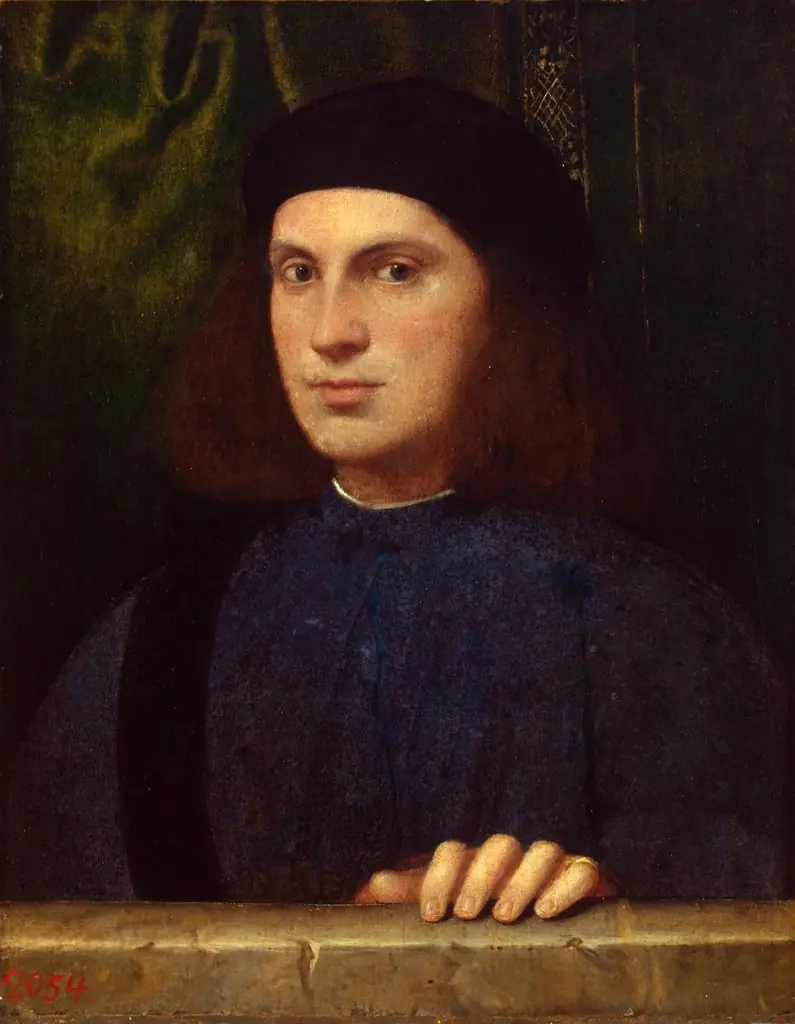
Own this work as a print
Artist & collection

Artist
Rosso Fiorentino stood out in the Italian Renaissance for one reason, he was always bent on doing things his own way.

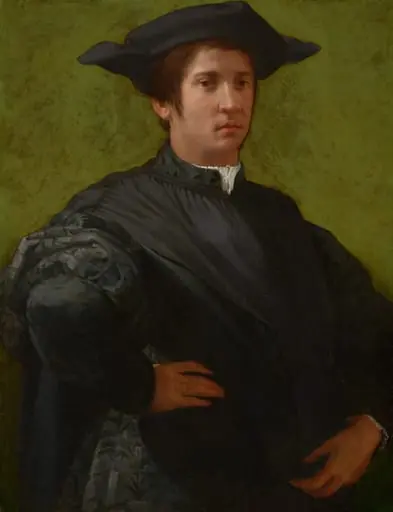 Portrait of a Man
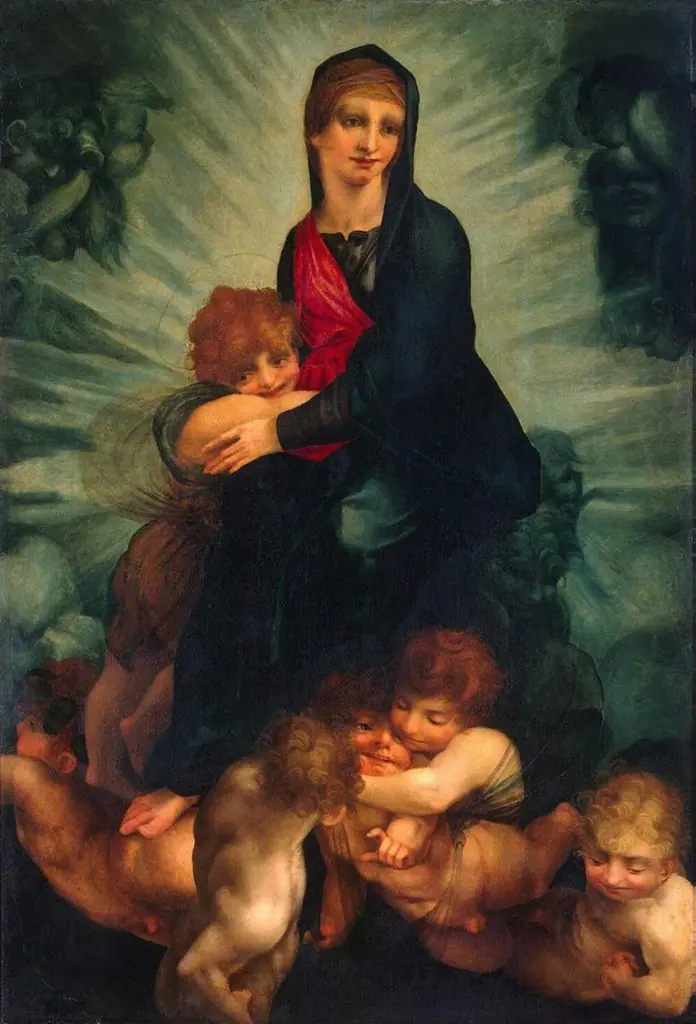 Madonna and Child with Cherubs
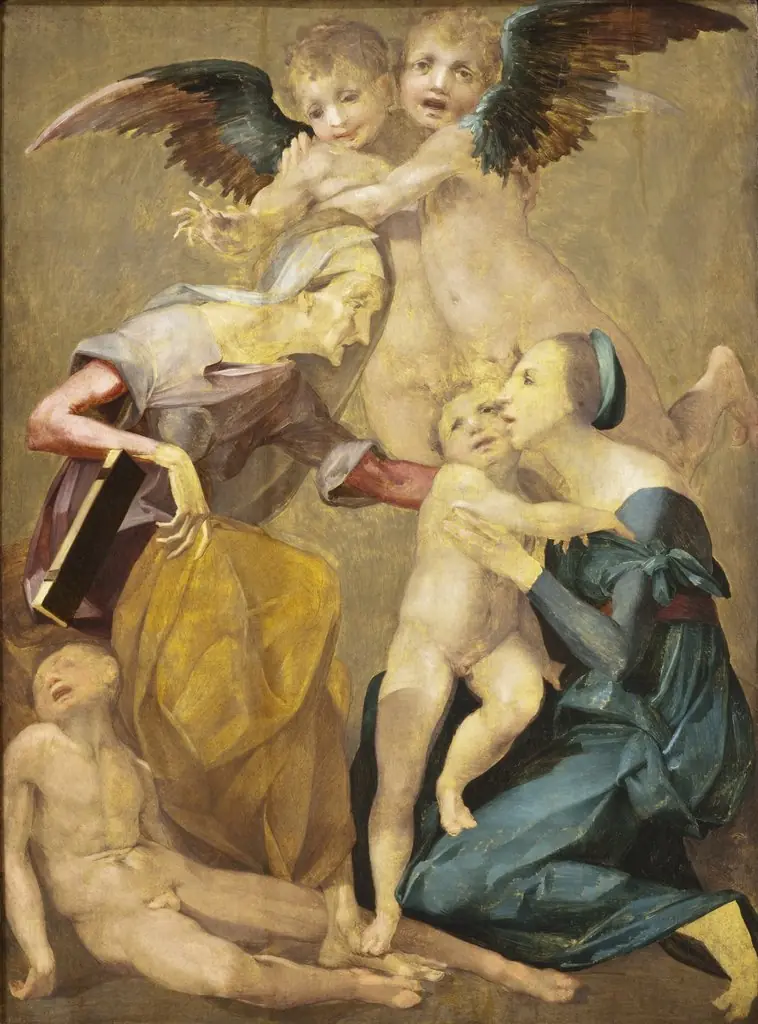 Allegory of Salvation with the Virgin and Christ Child, St. Elizabeth, the Young St. John the Baptist and Two Angels
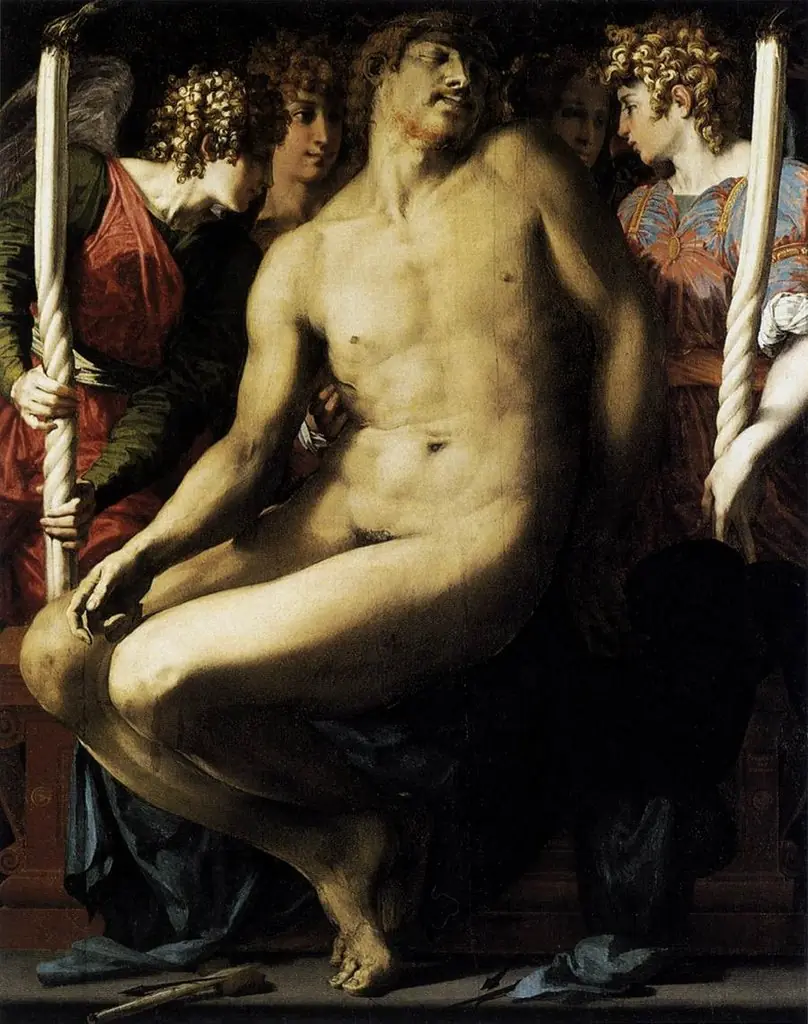 The Dead Christ with Angels
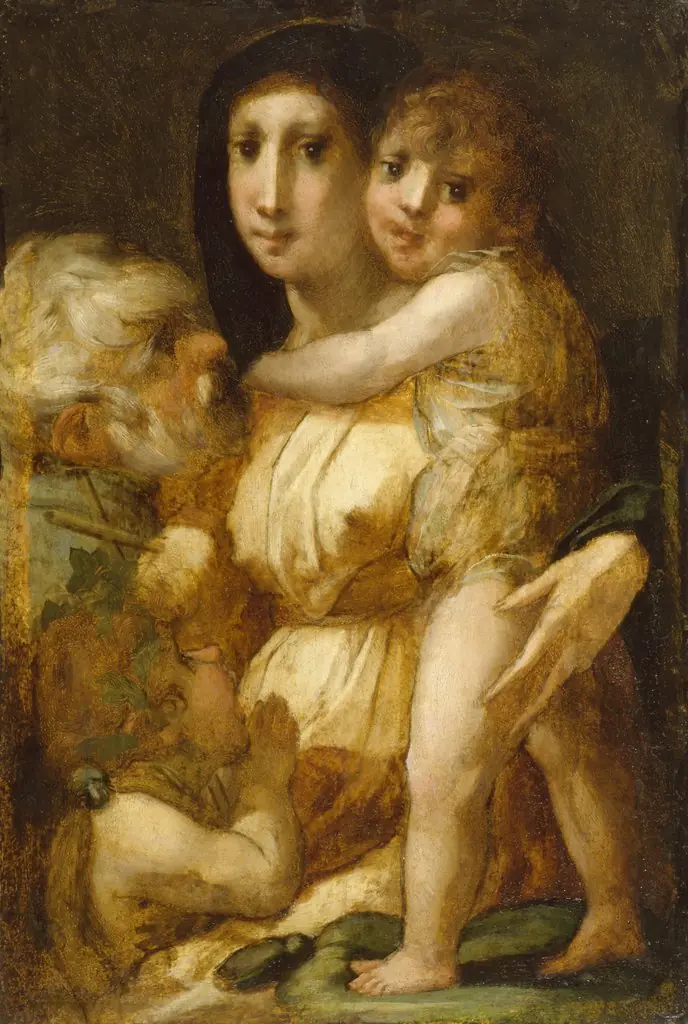 The Holy Family with the Infant Saint John the Baptist
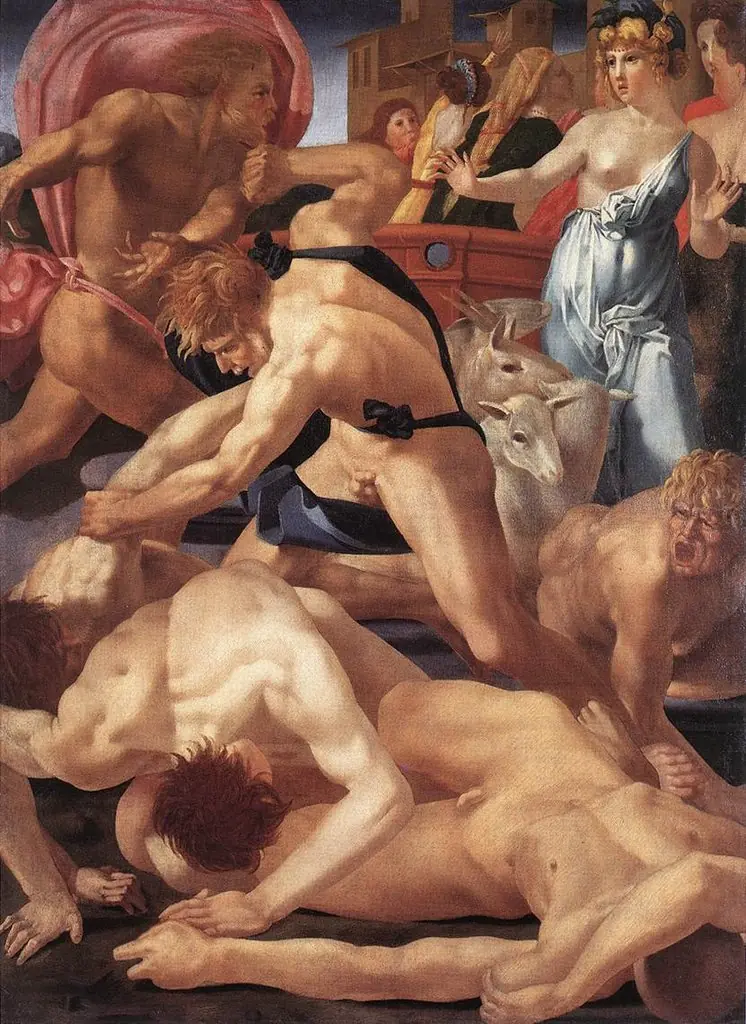 Moses Defending the Daughters of Jethro
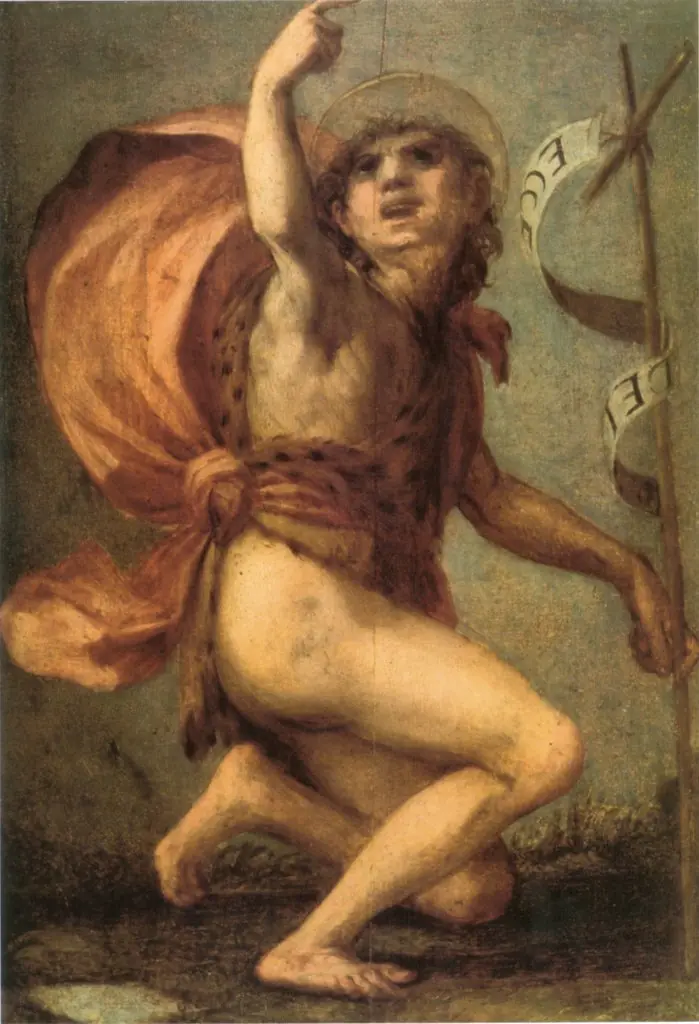 Saint John the Baptist as a Boy
 Cleopatra