Artwork
Madonna and Child with Cherubs
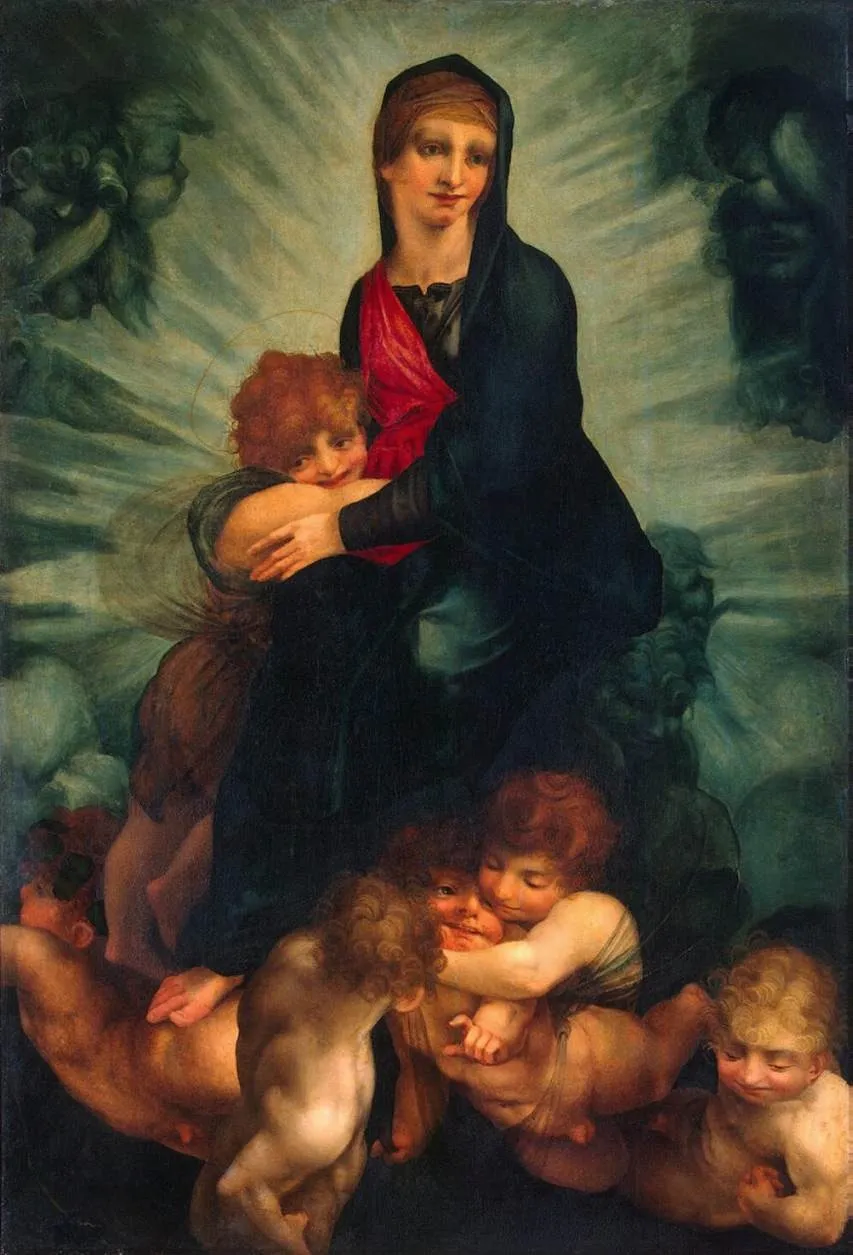
Madonna and Child with Cherubs is an oil painting by the Mannerist artist Rosso Fiorentino. It dates from 1517 and is held in the collection of the Hermitage Museum.
About this work
Subject & Meaning
Surrounding them are five floating putti, including a singular figure in the foreground whose pose mimics a high-angle view of Michelangelo's David.
The painting depicts the Virgin Mary seated on a cloud formed by cherubs, embracing the Christ Child, who is portrayed as an older boy of five or six years rather than an infant. Surrounding them are five floating putti, including a singular figure in the foreground whose pose mimics a high-angle view of Michelangelo's David. The work represents a decisive break from High Renaissance canons, serving as an early manifesto of Mannerism through its emotional disconnection; Mary's gaze is averted from her son, and the figures' axes point in conflicting directions.
Iconographically, the composition synthesizes influences from Fra Bartolomeo and Michelangelo, evident in the pyramidal structure and the plastic vigor of the forms. The artist employs a personal non-conformism by exaggerating somatic features, such as elongated grinning mouths and marked noses. Symbolically, the piece utilizes a stark color contrast between the cold ice-blue and midnight tones of the background and Mary's cloak against the warm, luminous orange light illuminating the angels below.
History & Provenance
The painting is held in the collection of the Hermitage Museum in Saint Petersburg. It was acquired for the museum in Paris in 1810 through the mediation of Baron Dominique Vivant Denon. Originally executed on a wood panel, the work suffered significant insect damage and was transferred to canvas during a restoration in 1862.
Following further conservation efforts to remove contaminated varnish, the artwork was exhibited in the Apollo Hall of the Winter Palace on February 14, 2018. During this presentation, the piece was temporarily referred to as Madonna in Glory, revealing clearer details such as a laurel crown on one of the putti.
Context
Rosso Fiorentino's Madonna and Child with Cherubs is widely regarded as a landmark of early Florentine Mannerism. According to the expert T. K. Kustodieva, the painting amounts to a "manifesto of a new tendency in Florentine art, Mannerism," decisively breaking with the established High Renaissance canon at a moment when Mannerism proper would only officially begin in 1520 with the death of Raphael. The composition draws on models by Fra Bartolomeo and on Rosso's own earlier Assumption of the Virgin in the Chiostrino dei Voti, while its pyramidal scheme, the torsion of Mary, and the plastic vigor of the figures openly absorb Michelangelo's influence, echoing the Madonna of Bruges, the Taddei Tondo, and the Tondo Pitti.
The work's exaggerated facial features, bold foreshortening of the cherubs, and stark cool-warm color contrasts are read as signs of Rosso's personal nonconformism. Scholarship on the picture includes Elisabetta Marchetti Letta's Pontormo, Rosso Fiorentino (Scala, Florence, 1994).
Overview
Rosso Fiorentino's oil painting, Madonna and Child with Cherubs, created between 1512 and 1517, depicts the Virgin Mary tenderly holding the infant Jesus, surrounded by playful cherubs. Originally painted on a wooden panel, the work was later transferred to canvas. It is currently housed in the Hermitage Museum in Saint Petersburg, having been acquired in 1810 for its collection.
Technique & Style
Rosso Fiorentino's distinctive Mannerist style is evident in the painting's expressive figures and dramatic composition. The artist imbues the faces with a unique non-conformism, characterized by elongated mouths, prominent noses, and large eyes that convey heightened emotion. Figures exhibit a plastic vigor and twisting forms, contributing to a sense of dynamic movement.
The use of chiaroscuro further enhances the depth and volume, while strong color contrasts contribute to the overall visual impact of the oil medium.
Legacy
Rosso Fiorentino drew upon significant artistic precedents in developing this composition. Models by Fra Bartolomeo informed the overall structure, while the pyramidal grouping and the Virgin's contorted pose reflect the profound influence of Michelangelo. Echoes of Michelangelo's Madonna of Bruges are discernible in the embrace, and the cherubs' 'unfinished' quality recalls works like the Taddei Tondo.
One cherub in particular, viewed from above, strikingly references Michelangelo's David, demonstrating a sophisticated engagement with contemporary sculpture.
Artist & collection

Artist
Rosso Fiorentino stood out in the Italian Renaissance for one reason, he was always bent on doing things his own way.

- Madonna and Child
 The Virgin and the Souls of Purgatory
 The Immaculate Conception
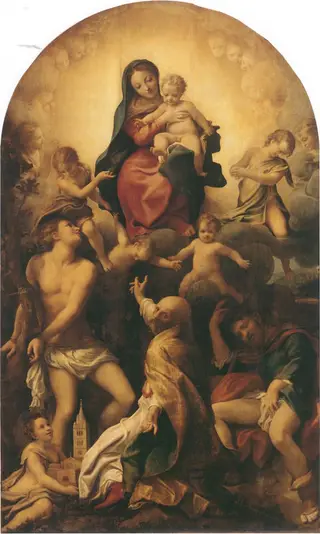 Madonna of Saint Sebastian
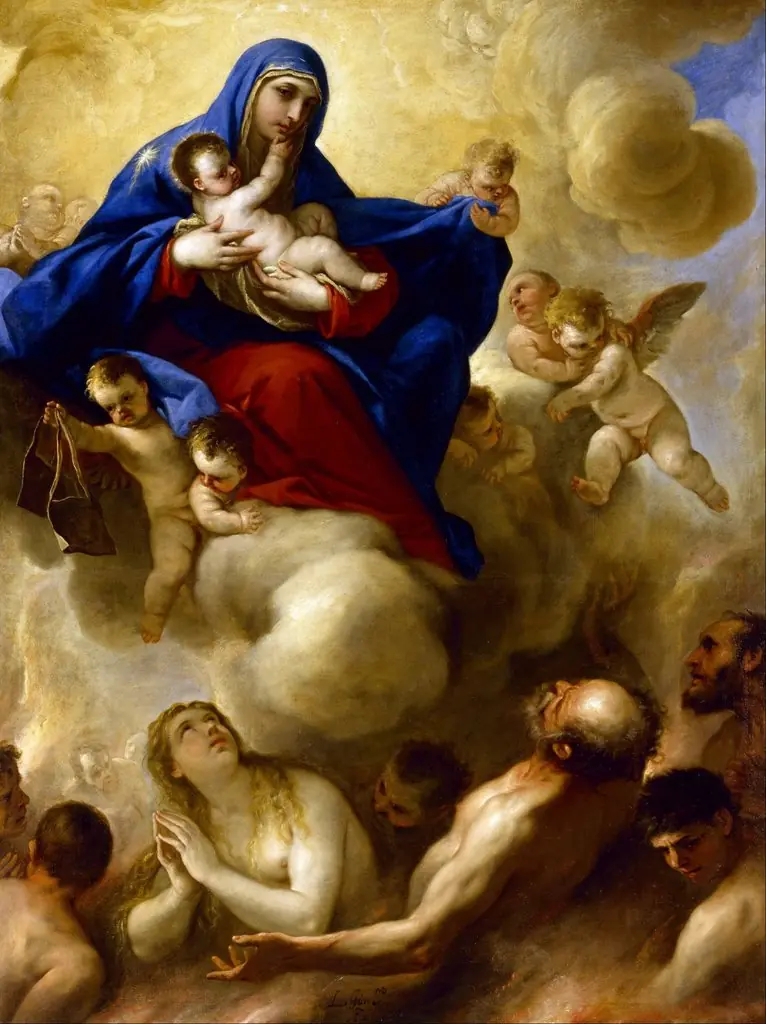 Madonna and Child with Souls in Purgatory
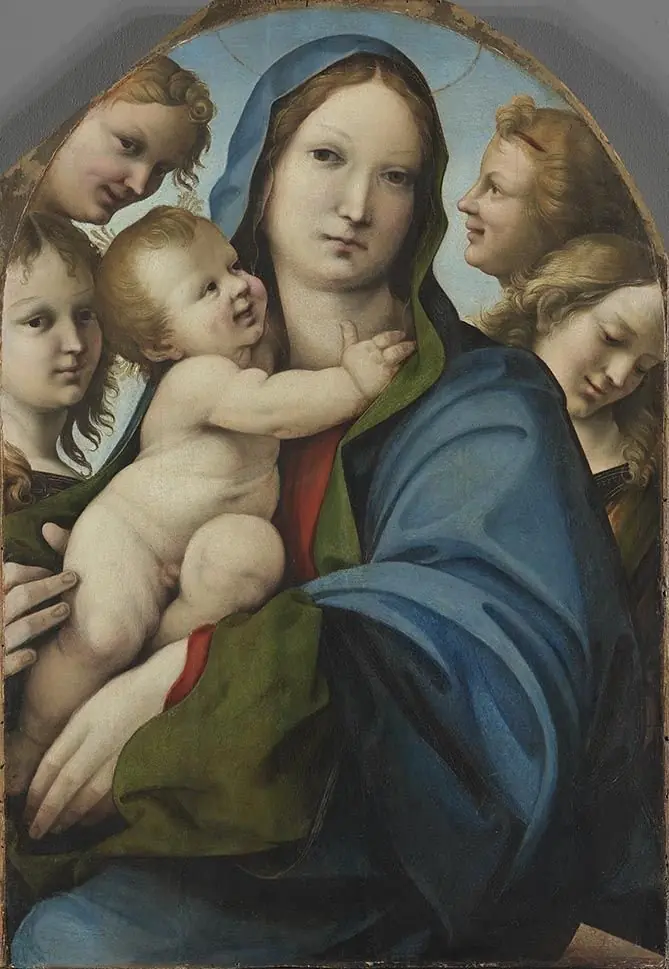 Maria mit dem Kinde und vier Engeln
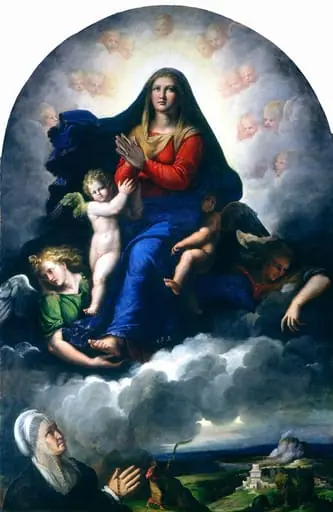 The Apparition of the Virgin
 The Virgin of the Immaculate Conception
 The Virgin of the Chair
 The Immaculate Conception
 Assumption
 The Aranjuez Immaculate Conception
 Woman with a Parasol - Madame Monet and Her Son
 Mrs. Noah Smith and Her Children
 Madonna and Child with the Young Saint John the Baptist
 The Alba Madonna
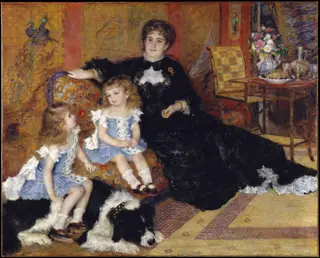 Madame Georges Charpentier and her Children
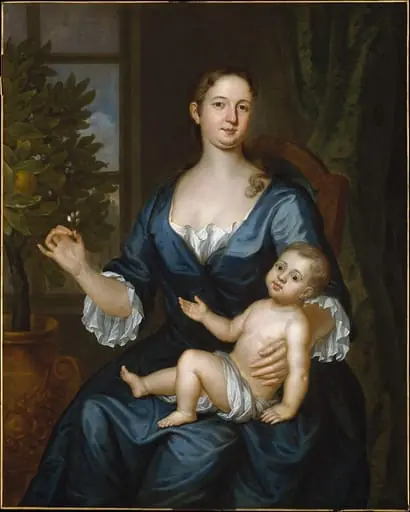 Mrs. Francis Brinley and Her Son Francis
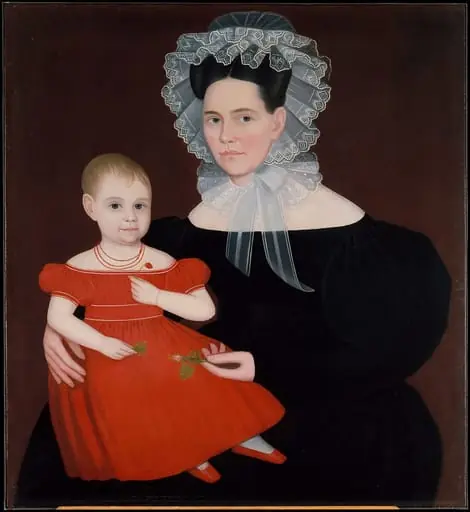 Mrs. Mayer and Daughter
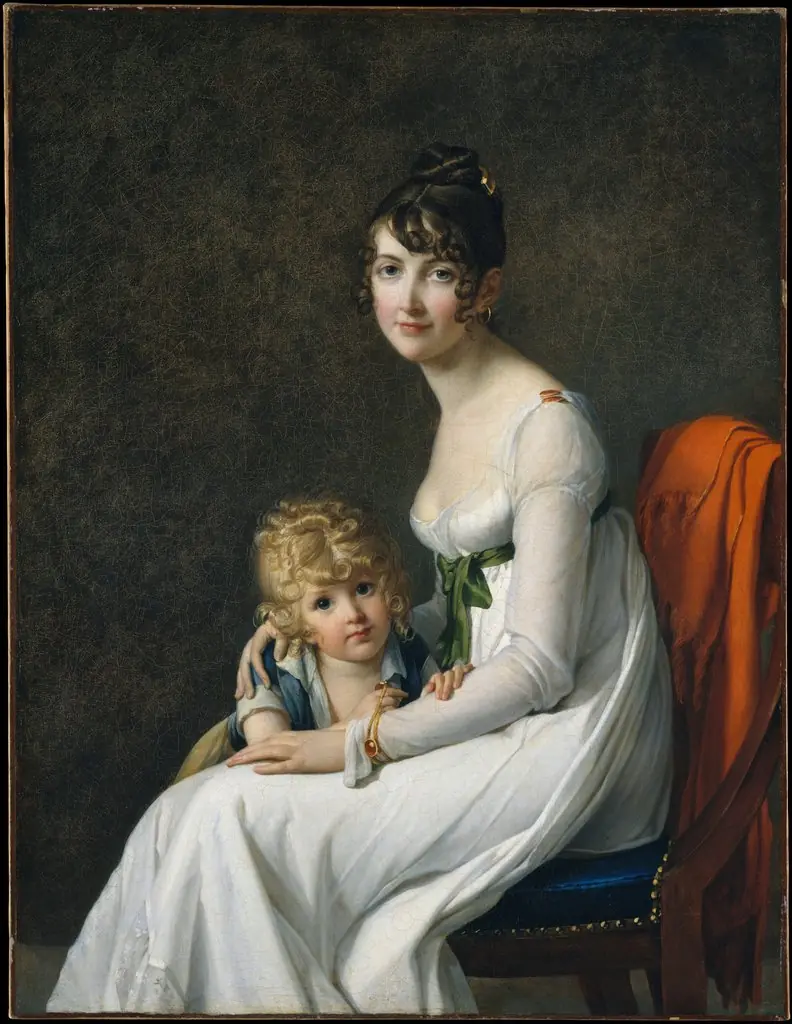 Madame Philippe Panon Desbassayns de Richemont (Jeanne Eglé Mourgue, 1778–1855) and Her Son, Eugène (1800–1859)