Artwork
The Dead Christ with Angels
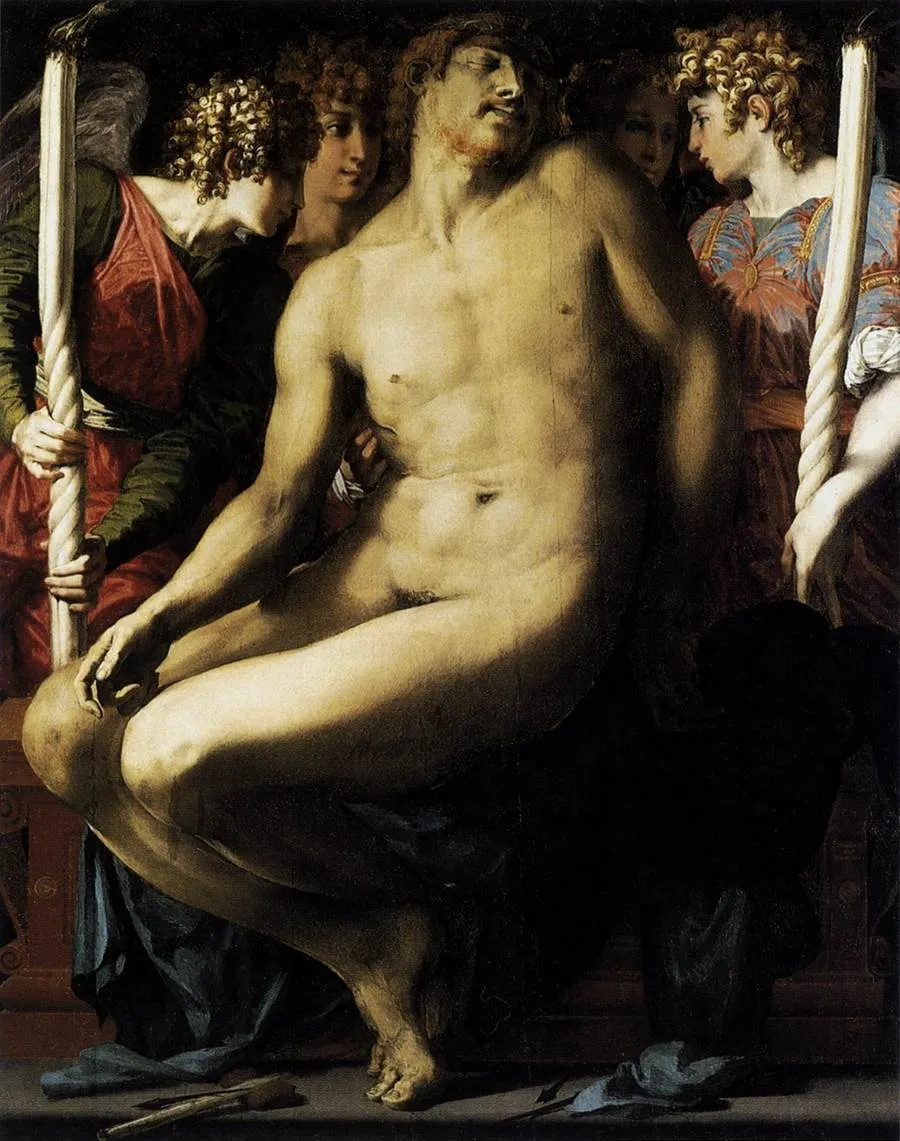
The Dead Christ with Angels is an oil painting by the Mannerist artist Rosso Fiorentino. It is held in the collection of the Museum of Fine Arts Boston.
About this work
Subject & Meaning
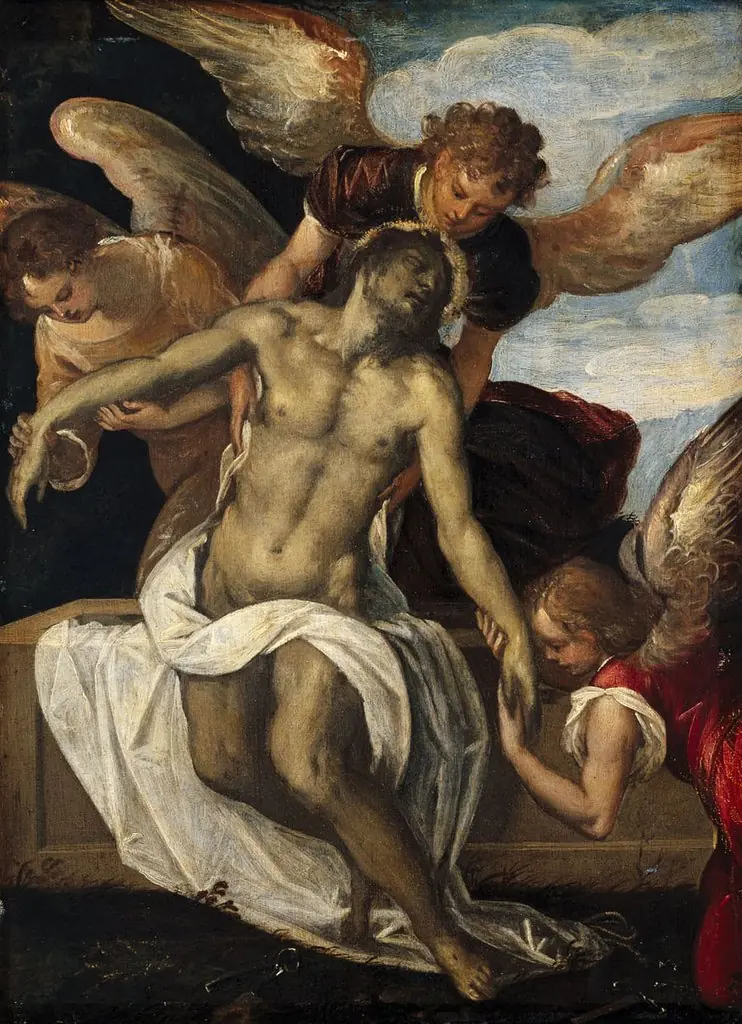
The painting depicts the Lamentation of Christ, showing the dead Jesus seated on a tomb that resembles an altar step, supported by four angels.
The painting depicts the Lamentation of Christ, showing the dead Jesus seated on a tomb that resembles an altar step, supported by four angels. Christ is portrayed nude with a wounded side, wearing the crown of thorns, while instruments of the Passion, including nails and a sponge-topped reed, lie on the ground. Two foreground angels hold large candles, and the composition balances religious tradition with a sensual, sculptural treatment of the human form that recalls classical statuary and Michelangelo.
Scholars interpret the altar-like tomb and the presence of candles as references to the Eucharist, suggesting the body of Christ is being presented on a liturgical table. The work's intense physicality and languid atmosphere blur the line between sacred devotion and a profane aesthetic, potentially evoking the death of Adone while maintaining its function as a religious image intended for a chapel setting.
Technique & Style
The painting is executed in oil on wood panel, measuring 133.4 × 104.1 cm. Stylistically, it adheres to Mannerist principles through its elongated, serpentine figure of Christ and pronounced artificiality in pose and lighting. The body is rendered with pronounced plasticity, its warm illumination accentuating tactile surface and anatomical precision, including unusually detailed pubic hair. Four adolescent angels, two in the foreground, support the lifeless body with minimal exertion; their lithe forms and cangianti drapery contribute to a refined, almost languid elegance. The composition integrates traditional iconographic elements, the Passion tools on the ground, the crown of thorns, and a sepulchral slab functioning as an altar-like step, while inflecting them with contemporary sensuality and ambiguity between sacred and profane interpretation.
History & Provenance
Executed circa 1525-1526, this oil painting was traditionally commissioned by Leonardo Tornabuoni, Bishop of Sansepolcro, though its intended destination remains unspecified in historical records. Giorgio Vasari described the work as a dead Christ supported by two angels, a discrepancy likely due to the painting actually featuring four. The artwork probably remained in Rosso Fiorentino's studio during the 1527 Sack of Rome before being entrusted to Maria Maddalena, a nun at the San Lorenzo in Colonna monastery. Documentation indicates the artist later attempted to reclaim property left behind in Rome, specifically identifying a dead Christ surrounded by angels. Approximately twenty years post-Sack, the panel was recorded in the possession of Monsignor Della Casa in Rome; by 1568, following Della Casa's death, it had passed to his heirs. Scholars have hypothesized an original intended location in the Cesi Chapel of Santa Maria della Pace, suggesting the work may have been rejected or redirected to Tornabuoni after a contract resolution. The Dead Christ with Angels is held in the Museum of Fine Arts Boston (accession number not specified in the sources). It was painted by Rosso Fiorentino in 1525 and has been part of the museum's collection since at least the early 20th century. The work was originally created for Leonardo Tornabuoni, Bishop of Sansepolcro, and was likely produced in Rosso's studio before being transferred to Maria Maddalena at San Lorenzo in Colonna. It later entered the possession of Monsignor Della Casa and eventually was acquired by the Museum of Fine Arts Boston. The painting has been exhibited in museum presentations focusing on Rosso Fiorentino and Mannerist religious art, including displays highlighting its provenance and historical context. The work is documented in archival records as having been in Rome during the Sack of Rome, later moving through Florentine ecclesiastical circles before its acquisition by the museum. It has been referenced in scholarly literature, including Antonio Natali’s 2006 monograph on Rosso Fiorentino, and was featured in a 2015 exhibition at the Museum of Fine Arts Boston titled 'Rosso Fiorentino: Painter of the Mannerist Vision.'
Context
The Dead Christ with Angels occupies a pivotal place in Rosso Fiorentino’s Roman oeuvre, bridging Florentine Mannerist invention with the Roman climate around Clement VII. Vasari’s Lives records the panel as a posthumous Christ supported by two angels made for Bishop Leonardo Tornabuoni, though the four angels shown likely reflect later reworking or a conflation in Vasari’s text.
Scholarship emphasizes the work’s stylistic audacity: the posed, serpentine body of Christ synthesizes Michelangelo’s sculptural force with antique sources such as the Torso Gaddi, while the luxuriant, almost profane handling of nudity distances it from earlier Florentine Pietàs. Antonio Natali links the composition’s altar-like bier and candle-bearing angels to Eucharistic symbolism, suggesting a liturgical destination such as the Cesi chapel in Santa Maria della Pace, where Rosso had frescoed earlier.
Artist & collection

Artist
Rosso Fiorentino stood out in the Italian Renaissance for one reason, he was always bent on doing things his own way.

 Portrait of a Man
 Madonna and Child with Cherubs
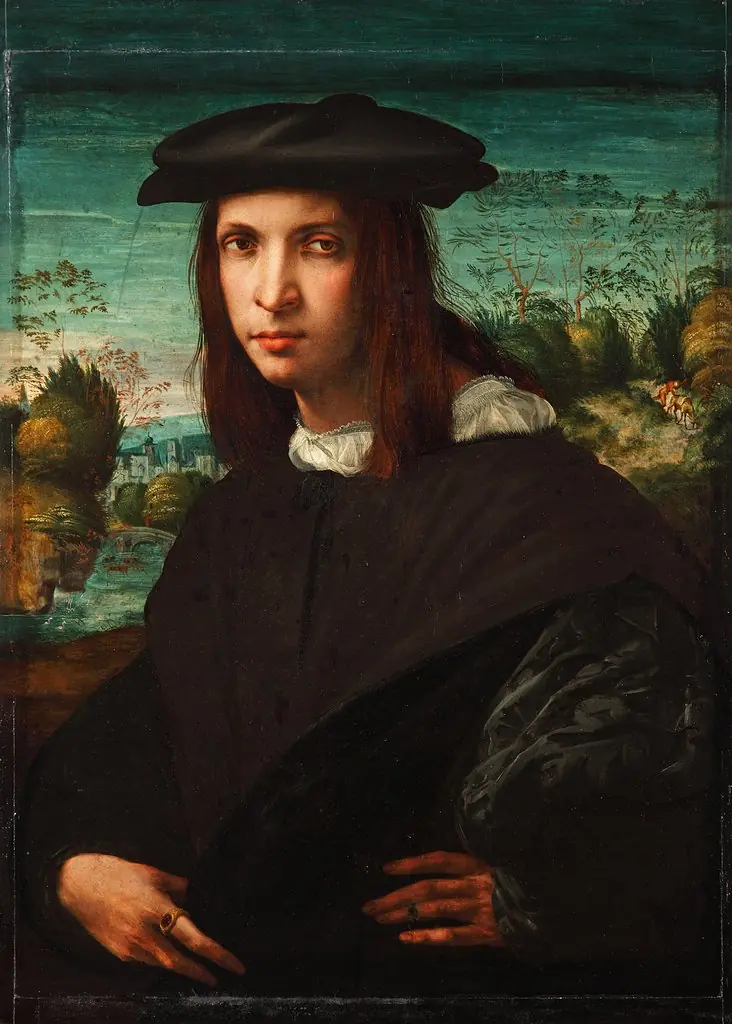 Portrait of a Young Man
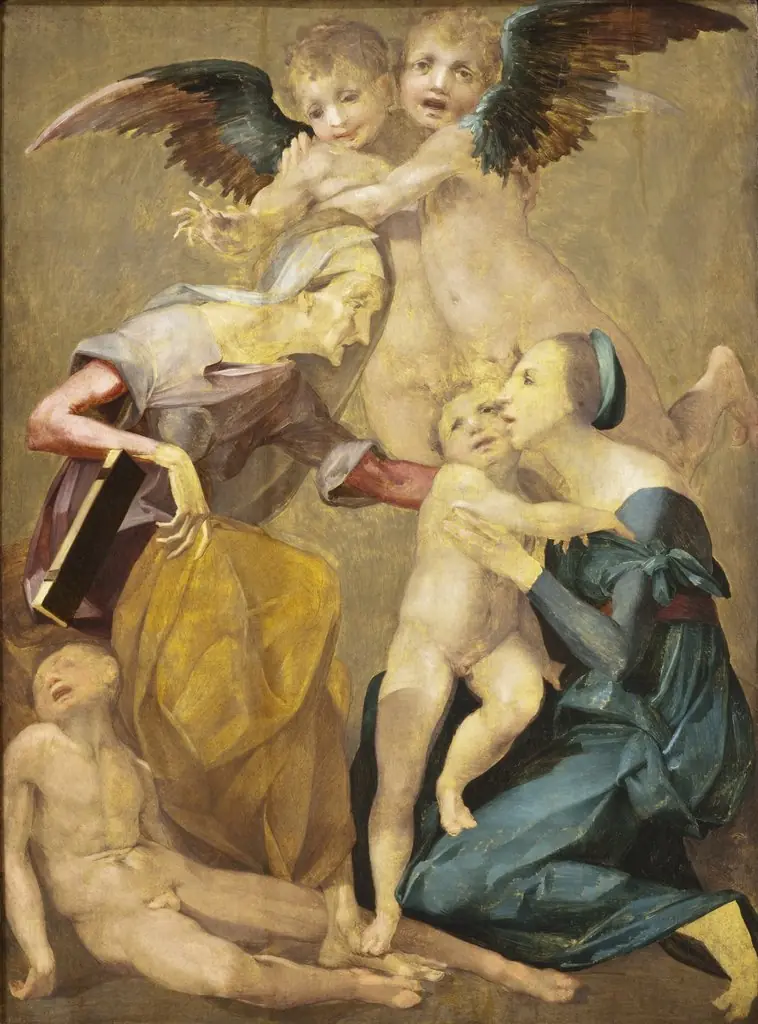 Allegory of Salvation with the Virgin and Christ Child, St. Elizabeth, the Young St. John the Baptist and Two Angels
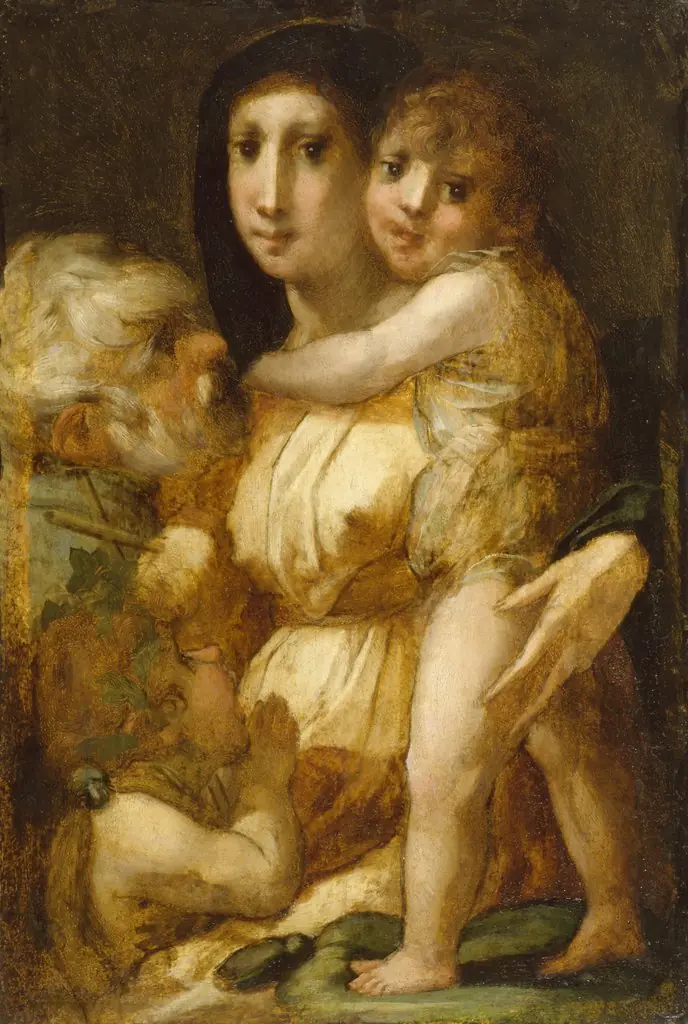 The Holy Family with the Infant Saint John the Baptist
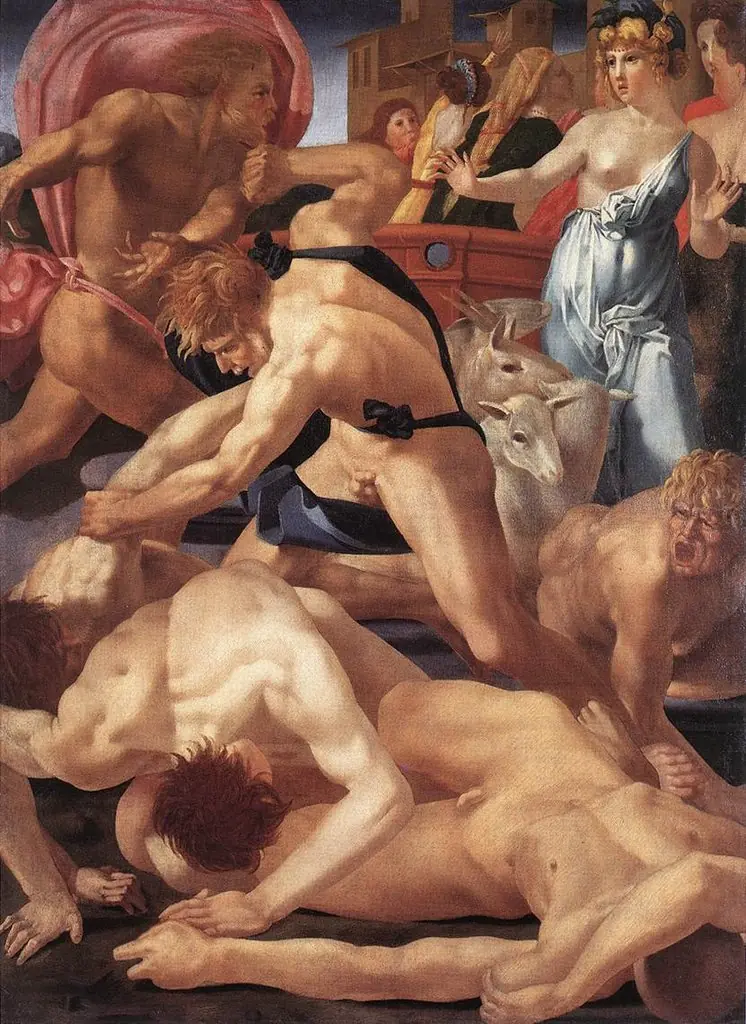 Moses Defending the Daughters of Jethro
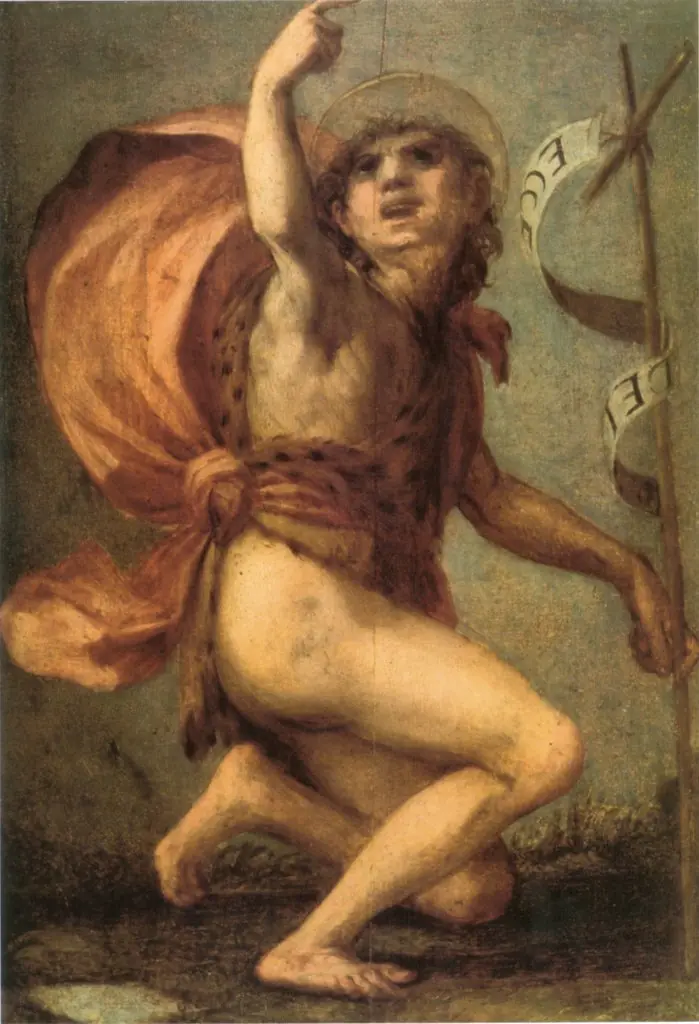 Saint John the Baptist as a Boy
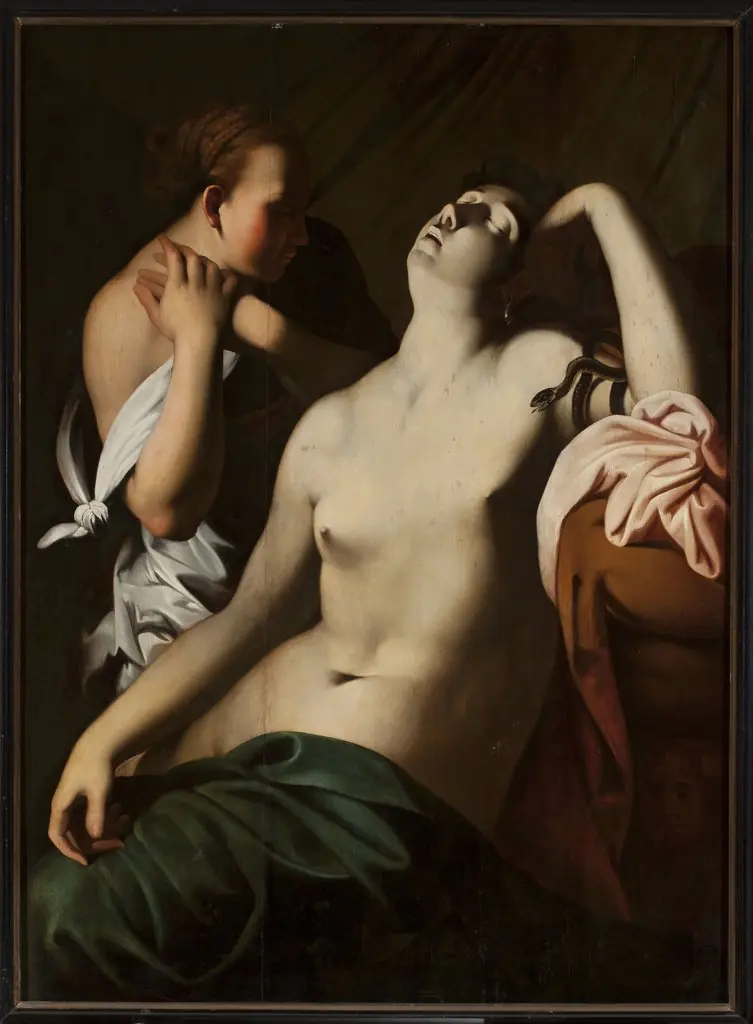 Cleopatra