Artwork
Allegory of Salvation with the Virgin and Christ Child, St. Elizabeth, the Young St. John the Baptist and Two Angels
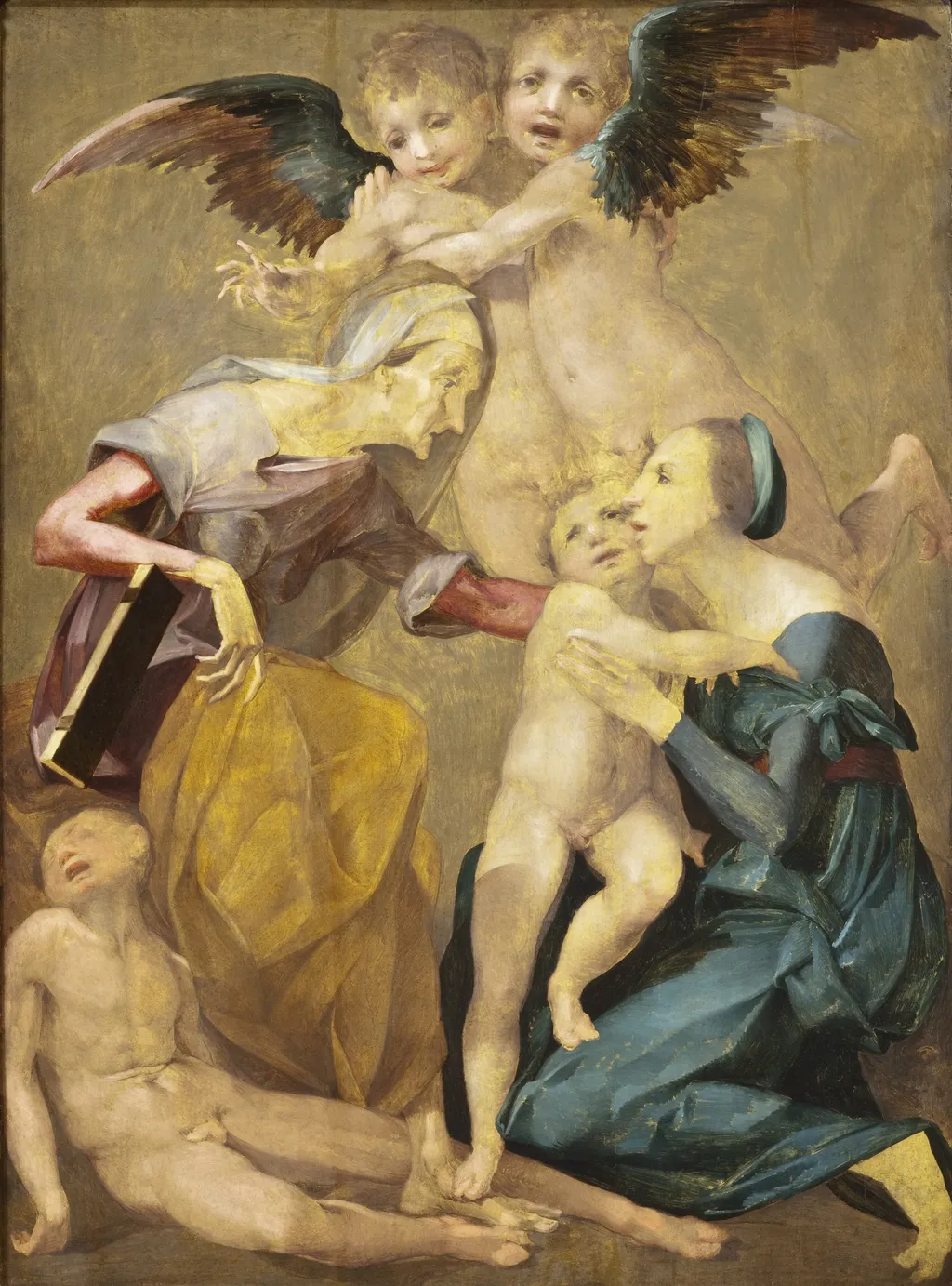
Allegory of Salvation with the Virgin and Christ Child, St. Elizabeth, the Young St. John the Baptist and Two Angels is an oil painting by the Mannerist artist Rosso Fiorentino. It dates from 1522 and is held in the collection of the Los Angeles County Museum of Art.
About this work
Subject & Meaning
Elongated, emaciated figures and acidic tonalities heighten the work's unsettling, mournful mood, replacing the grace of earlier Florentine altarpieces.
Painted in 1522 by Rosso Fiorentino, the panel is classified as an allegory of salvation and is structured around a sacred conversation among the Virgin Mary, the Christ Child, Saint Elizabeth, the young Saint John the Baptist, and two angels. The composition departs from traditional iconography: Mary kneels at the right, holding the squirming Child, while the young Baptist lies below in a tortured sleep that evokes death. At the left, Saint Elizabeth, also interpretable as Saint Anne or the prophetess Anna, rests a skeletal arm on a book and extends the other toward Mary and the Child, her hollow gaze meeting theirs.
The two women share an awareness of the tragic destiny of their sons, communicated through a charged gesture in which Christ places his foot upon Elizabeth's foot, an allegorical act symbolizing ultimate victory over evil and the redemption that will not render their sacrifice vain. Two winged angels float above, their anxious, elongated expressions lending them a dark, demonic character that reinforces the funerary atmosphere. Elongated, emaciated figures and acidic tonalities heighten the work's unsettling, mournful mood, replacing the grace of earlier Florentine altarpieces.
Technique & Style
The painting is executed in oil on poplar panel, with a support size of approximately 161 × 117 cm. Rosso Fiorentino employs an agitated, elongated figural style, rendering the figures, Mary, the Christ Child, Elizabeth (or Anna), the young Baptist, and two angels, with pronounced linearity and attenuated proportions. The composition compresses space into a shallow, almost claustrophobic setting, while the palette shifts toward acidulated, light tones set against sharp, angular color blocks that heighten dramatic contrasts. The handling is marked by rigid, emaciated forms and tense, funereal atmosphere; the work remains unfinished, with visible pentimenti and schematic underdrawing in passages such as the Christ Child’s restless posture.
The figures’ complex, intersecting gestures, including Elizabeth’s skeletal arm resting on a balancing book and the Christ Child’s foot placed atop her raised foot, convey a charged allegory of salvation, emphasizing tragic foreknowledge and spiritual tension.
History & Provenance
The painting was created by Rosso Fiorentino in 1522, as indicated by the artist’s inscription and the date on the original frame. It is associated with his second Florentine period, following his time in Volterra, where he developed a distinctive, experimental formal and expressive approach. The work remained unfinished at the time of his death in 1540, and is noted for its unconventional composition and unsettling iconography, departing markedly from traditional sacra conversazione models.
The painting entered the collection of the Los Angeles County Museum of Art (LACMA) as part of its holdings by the mid-20th century, where it remains today.
The painting is held by the Los Angeles County Museum of Art (LACMA) in Los Angeles, where it has been part of the collection since at least the early 2010s. While the sources confirm the museum's ownership and the work's presence in their online collections database, they do not provide a specific inventory or accession number for the piece. The available records indicate the work is cataloged under the museum's official website, though no further accession details are listed in the provided texts. There is no mention in the sources of any specific exhibitions where this work has been displayed.
Context
Created during Rosso Fiorentino's second Florentine period following his time in Volterra, this unfinished panel represents a decisive break from traditional iconography through bold formal and expressive experimentation. Scholars characterize the work as one of the artist's most disturbing altarpieces, noting a complete loss of the grace and sweetness typical of earlier Florentine religious paintings. The composition features elongated, rigid, and emaciated figures set against an undefined space with compressed depth, utilizing acidic color tones and angular patches to generate strong contrasts.
Critical analysis highlights the dramatic tension within the group, where the anxious expressions of the floating angels have led some to describe them as demonic. The interaction between the saints and the Christ Child is interpreted as a conscious acknowledgment of their children's tragic destinies, creating a funereal atmosphere that underscores the painting's allegorical focus on salvation through sacrifice.
Legacy
The painting exerted influence on later religious imagery through its unconventional composition and emotional intensity, particularly noted for its elongated figures and stark contrasts. Its depiction of St. John in a troubled sleep and the ambiguous gestures of St. Elizabeth contributed to evolving interpretations of sacra conversazione in Mannerist art. The work's psychological depth and use of acidic tonalities were cited as departures from earlier Florentine grace, shaping subsequent devotional imagery.
Its legacy is documented in scholarly studies on Rosso Fiorentino's experimentalism, including analyses of its stylistic innovations in 20th-century art history literature.
Overview
Created in 1522, this oil painting by Rosso Fiorentino brings together the Virgin Mary, the infant Christ, Saint Elizabeth, a youthful John the Baptist, and two attendant angels. The composition is anchored by a central figure in a golden‑yellow robe cradling the naked Christ, while the surrounding characters are arranged in a semi‑circular grouping that emphasizes their relational ties. The work is part of the collection at the Los Angeles County Museum of Art.
Own this work as a print
Artist & collection

Artist
Rosso Fiorentino stood out in the Italian Renaissance for one reason, he was always bent on doing things his own way.

- The Holy Family
 Heilige Familie
 Virgin of the Stairs
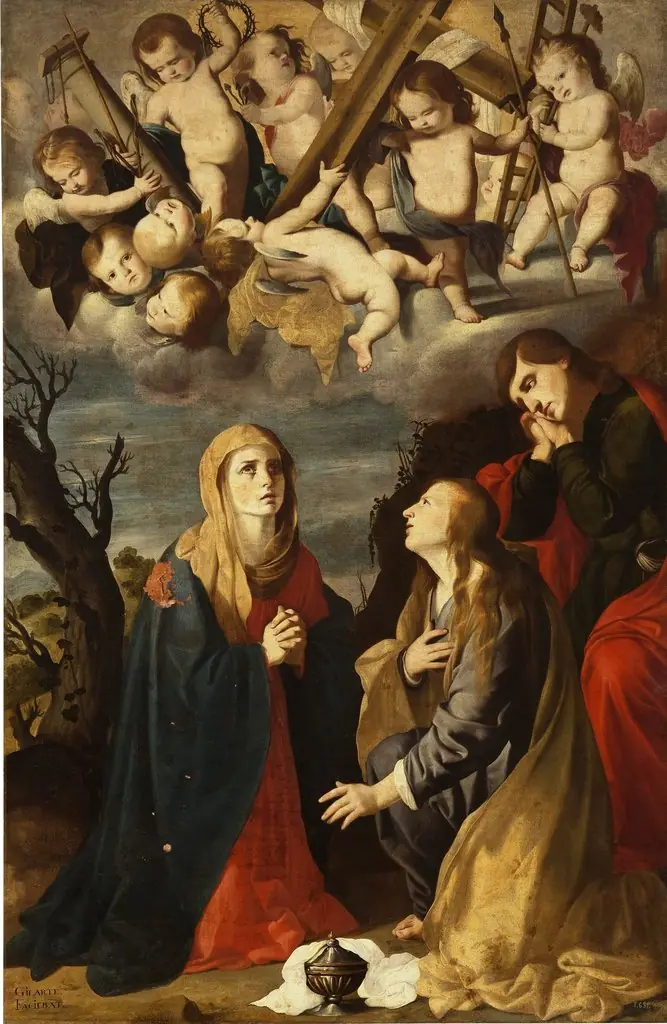 La Virgen con la Magdalena y San Juan
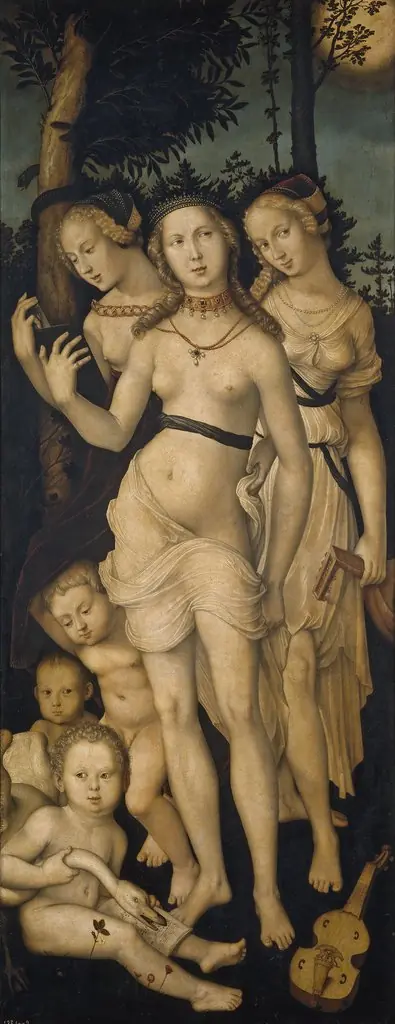 Harmony (The Three Graces)
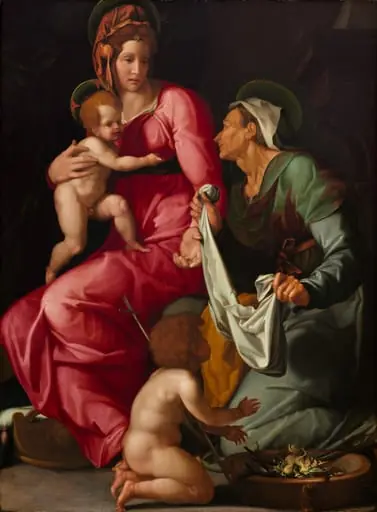 Madonna and Child with Saint Elizabeth and Saint John the Baptist
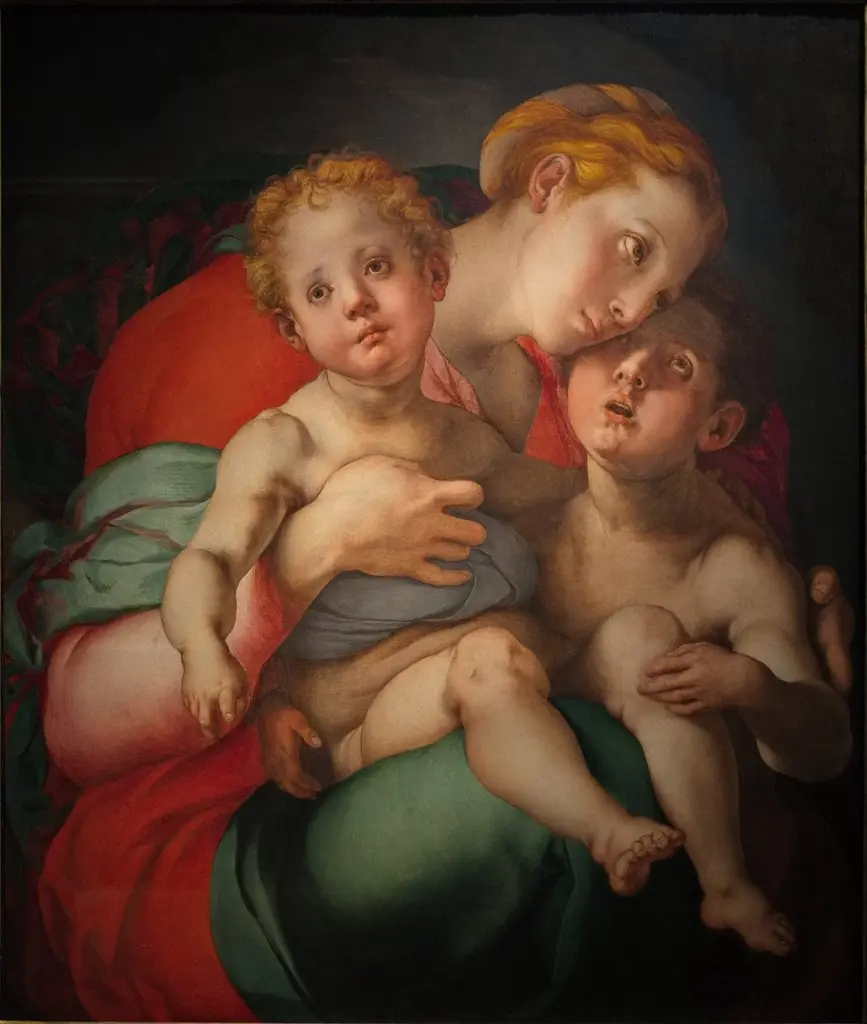 Madonna and Child with Saint John the Baptist
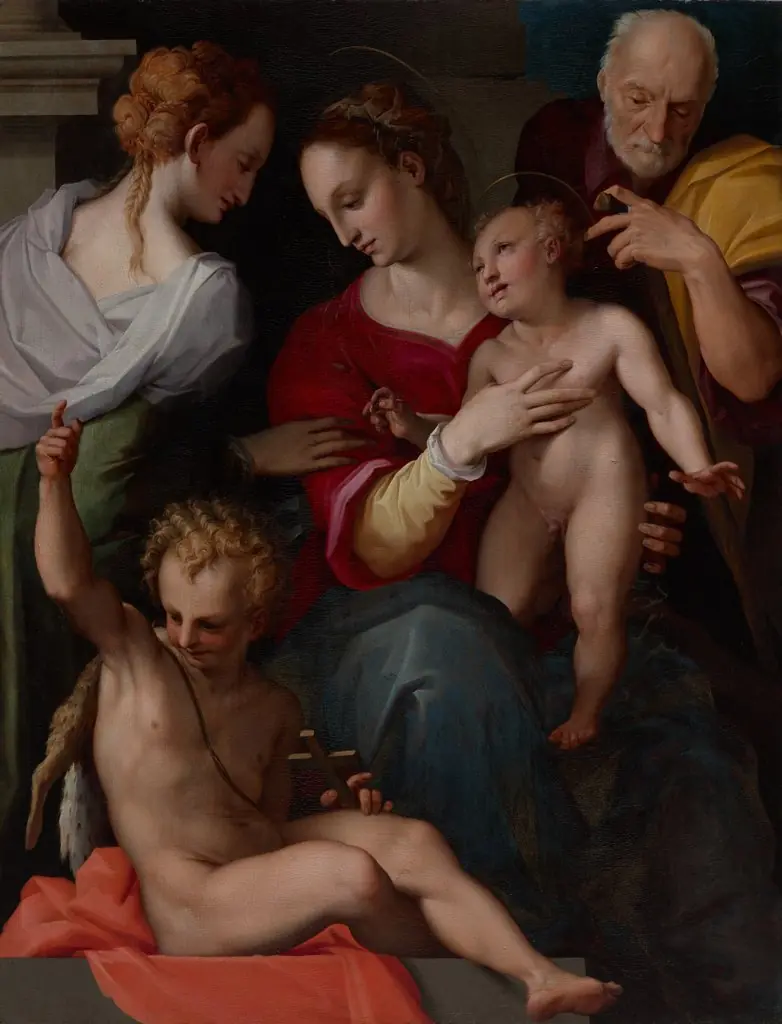 Holy Family with the Mystic Marriage of Saint Catherine
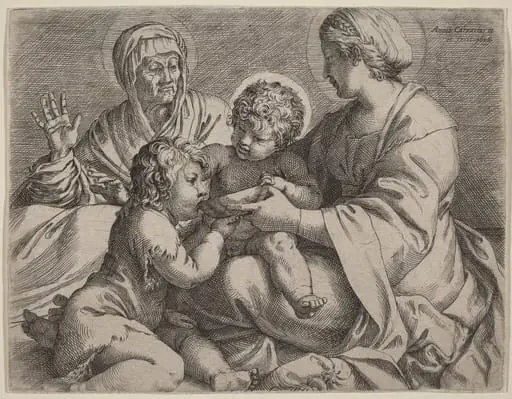 Madonna and Child with Saints Elizabeth and John the Baptist (La Madonna della Scodella)
![The Holy Family with Saints [recto], by Hermann Weyer](https://artifactworldgallery.com/img/hermann-weyer--the-holy-family-with-saints-recto--4d51f9f823625a43-w320.webp) The Holy Family with Saints [recto]
The Holy Family with Saints [recto]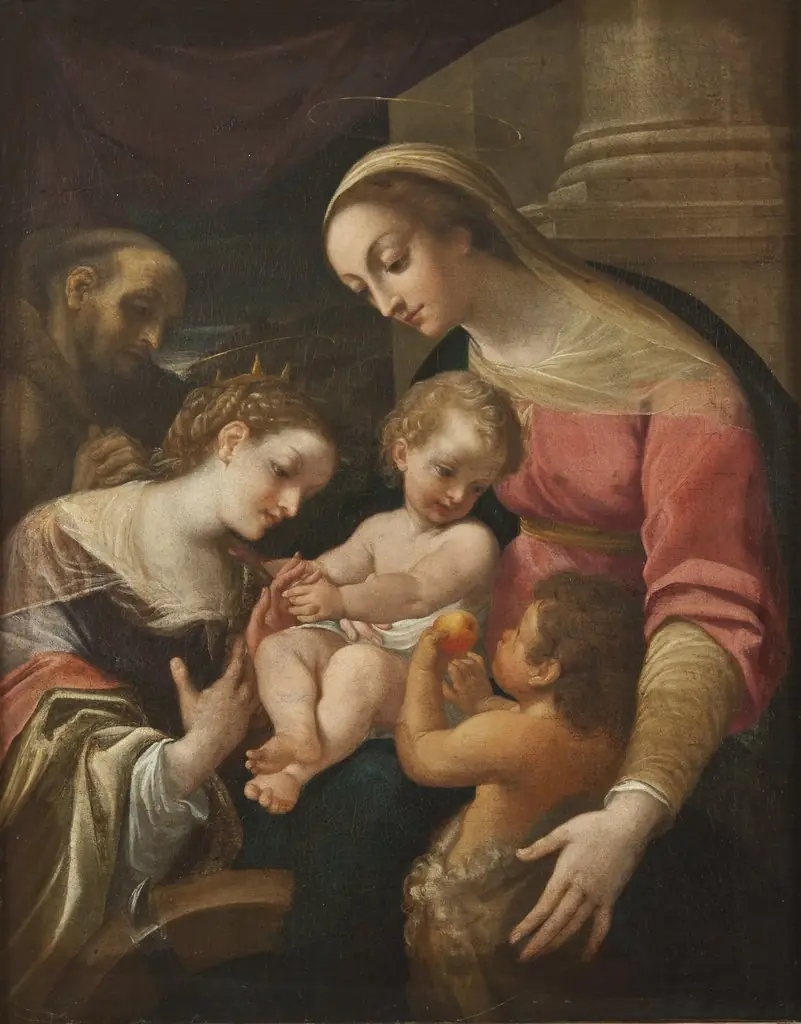 The Mystic Marriage of St Catherine
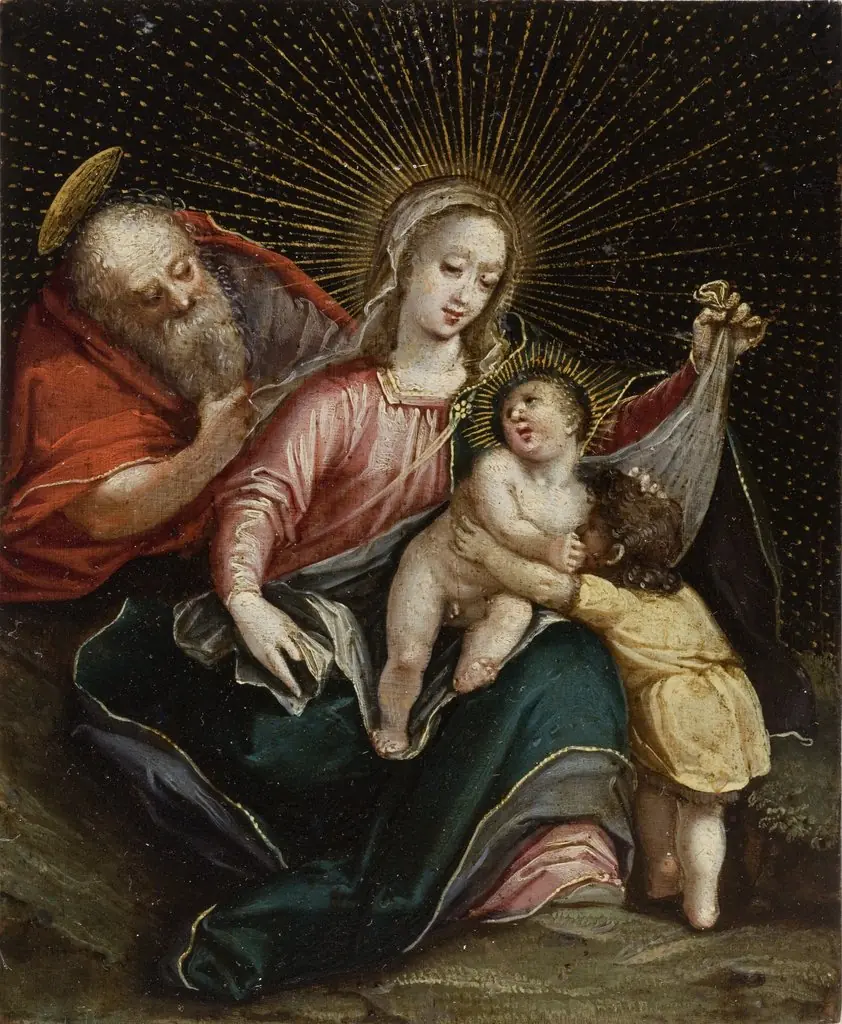 The Holy Family with Saint John the Baptist (La sagrada familia con San Juan Bautista)