Artwork
Bindo Altoviti
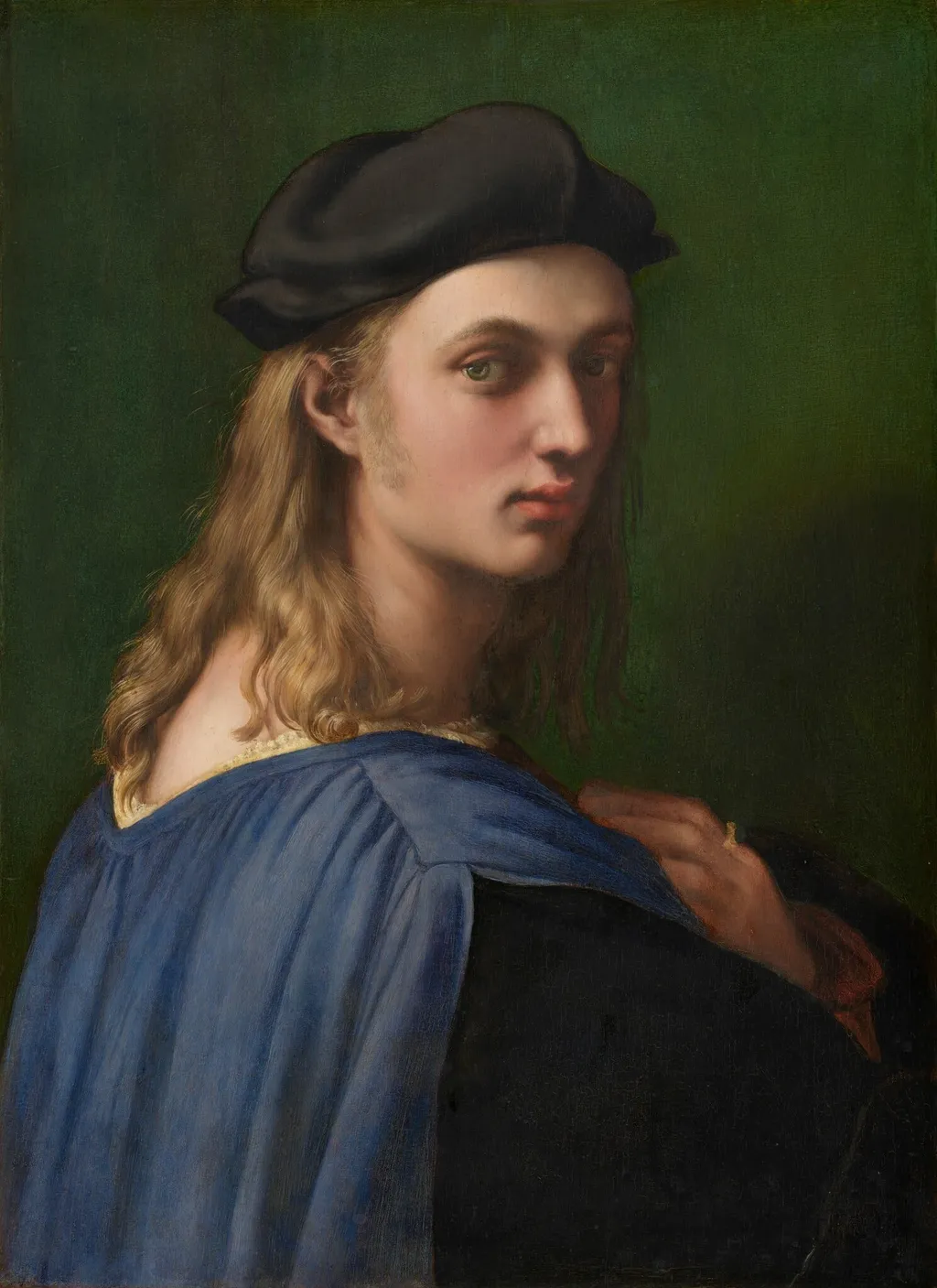
Bindo Altoviti is an oil painting by the High Renaissance artist Raphael. It dates from 1515 and is held in the collection of the National Gallery of Art.
About this work
Subject & Meaning
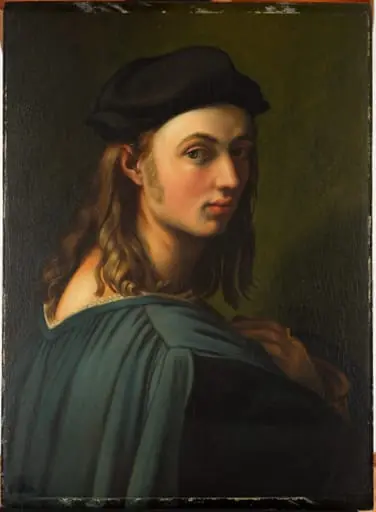
He turns dramatically over his right shoulder to gaze directly at the viewer, his left hand resting near his chest and bearing a gold ring on the index finger.
The painting depicts Bindo Altoviti (1491–1557), a wealthy banker of Florentine descent born in Rome, shown in a three-quarter bust-length pose against a dark green background. He turns dramatically over his right shoulder to gaze directly at the viewer, his left hand resting near his chest and bearing a gold ring on the index finger. He wears a dark cap and a blue mantle cut low at the back, revealing the nape of his neck and long, light curling blond hair.
According to the sources, the golden color of his hair symbolizes nobility and the purity of his feelings. The graceful, almost feminine stance and pronounced chiaroscuro are atypical of Raphael's male portraits and reflect his late-Roman experimentation, particularly the influence of Leonardo da Vinci. The work conveys the sitter's intelligence, spiritual nobility, and cultured refinement, embodying the ideal of the Renaissance uomo universale.
Technique & Style
Raphael executed the Portrait of Bindo Altoviti circa 1515 using oil paint on a wooden panel, measuring approximately 59.7 by 43.8 centimeters. The work features a bust-length figure set against a dark green background, employing a pronounced chiaroscuro technique that heightens the dramatic contrast between light and shadow. Stylistically, the portrait demonstrates Raphael's assimilation of Leonardo da Vinci's influence, particularly in its psychological engagement and the subject's theatrical, three-quarter turn.
The handling of the medium creates a sensuous, almost effeminate quality, emphasized by the subject's long, golden curls cascading over a bare neck exposed by a blue mantle. The composition utilizes a refined, sober palette with closely related tones to accentuate the youthful, delicate features and the direct, intense gaze of the sitter.
History & Provenance
The Portrait of Bindo Altoviti was commissioned around 1515 by the sitter himself, Bindo Altoviti, a Florentine banker based in Rome. According to Vasari, Raphael painted the portrait when Altoviti was a young man, shortly after his marriage to Fiammetta Soderini, possibly as a gift for his wife during his absence from Florence. The work remained in the Altoviti family’s private collection, first in Rome, later in Florence, until 1808, when it was sold to Ludwig I of Bavaria.
It entered the Alte Pinakothek in Munich, where it stayed until 1938, when it was traded to London dealers Thos. Agnew and Sons, then acquired by Duveen Brothers. In 1940, the Samuel H. Kress Foundation purchased the painting, which was subsequently donated to the National Gallery of Art in Washington, D.C., in 1943.
The painting is held by the National Gallery of Art in Washington, D.C., where it has been part of the Samuel H. Kress Collection since its 1943 gift. Its accession is recorded as part of the Kress Collection, though no separate inventory number is published. Prior to its acquisition by Kress, the work was presented at the Alte Pinakothek in Munich and later passed through the dealers Thos.
Agnew & Sons and Duveen Brothers before entering the Kress collection. The National Gallery of Art has displayed the portrait in its permanent collection galleries since 1943, and it was previously exhibited in Munich during the early 19th century before being sold to Bavarian royalty.
Context
The Portrait of Bindo Altoviti was long mistaken for a Raphael self‑portrait in the nineteenth century, but modern scholarship identifies the sitter as the Florentine banker and patron Bindo Altoviti. Analyses stress the work’s departure from Raphael’s typical male portraiture: its graceful, almost effeminate pose, strong chiaroscuro, and psychological engagement reveal Leonardo’s influence and the artist’s experimentation during his late Roman period. The painting belongs to a group of distinguished late portraits (Julius II, Leo X, Castiglione, Margarita Luti) that are regarded among Raphael’s finest and that influenced later masters such as Titian, Rubens and Rembrandt.
Altoviti’s role as a cultured patron and friend of artists further situates the work within the vibrant humanist circle of High‑Renaissance Rome.
Legacy
The portrait's distinctive pose and chiaroscuro, noted for its psychological intensity, influenced later painters such as Titian, Rembrandt and Rubens, who regarded its innovative handling of light and character as a model for portraiture. Art historians point to Raphael's use of Leonardo‑derived sfumato and theatrical composition in this work as emblematic of his Roman period's stylistic shift. Its presence in the National Gallery of Art, part of the Samuel H. Kress Collection, has helped cement its reputation as a canonical High Renaissance portrait, frequently cited in scholarship.
The painting's provenance, from the Altoviti family through Ludwig I of Bavaria to Samuel Kress, illustrates its esteemed status across centuries.
Overview
This oil on panel painting, completed around 1515 by the High Renaissance artist Raphael, depicts the Roman banker Bindo Altoviti. The portrait is currently held in the collection of the National Gallery of Art in Washington, D.C. It captures a prominent figure of the era, known for his cultural interests and wealth, through a distinctive artistic lens.
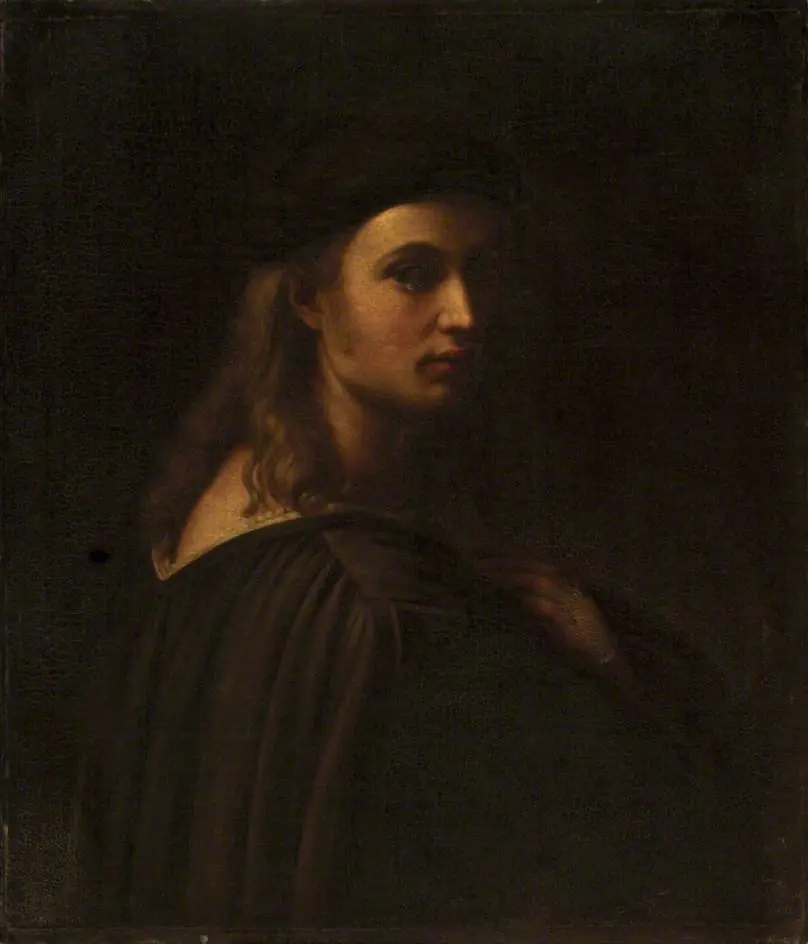
Own this work as a print
Artist & collection
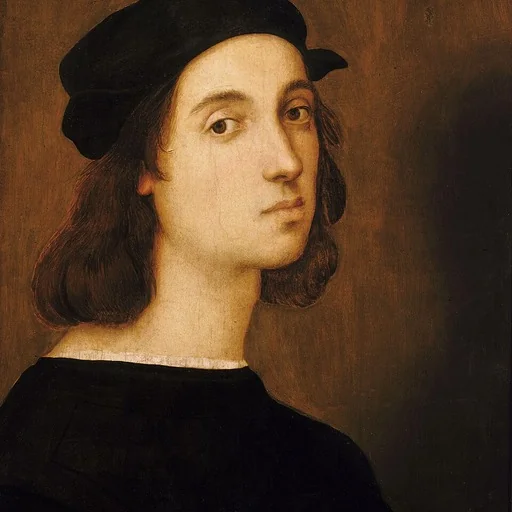
Artist
Raphael was born Raffaello Sanzio in Urbino on April 6, 1483, the son of Giovanni Santi, a painter and poet attached to the ducal court.