Artwork
Fiamma
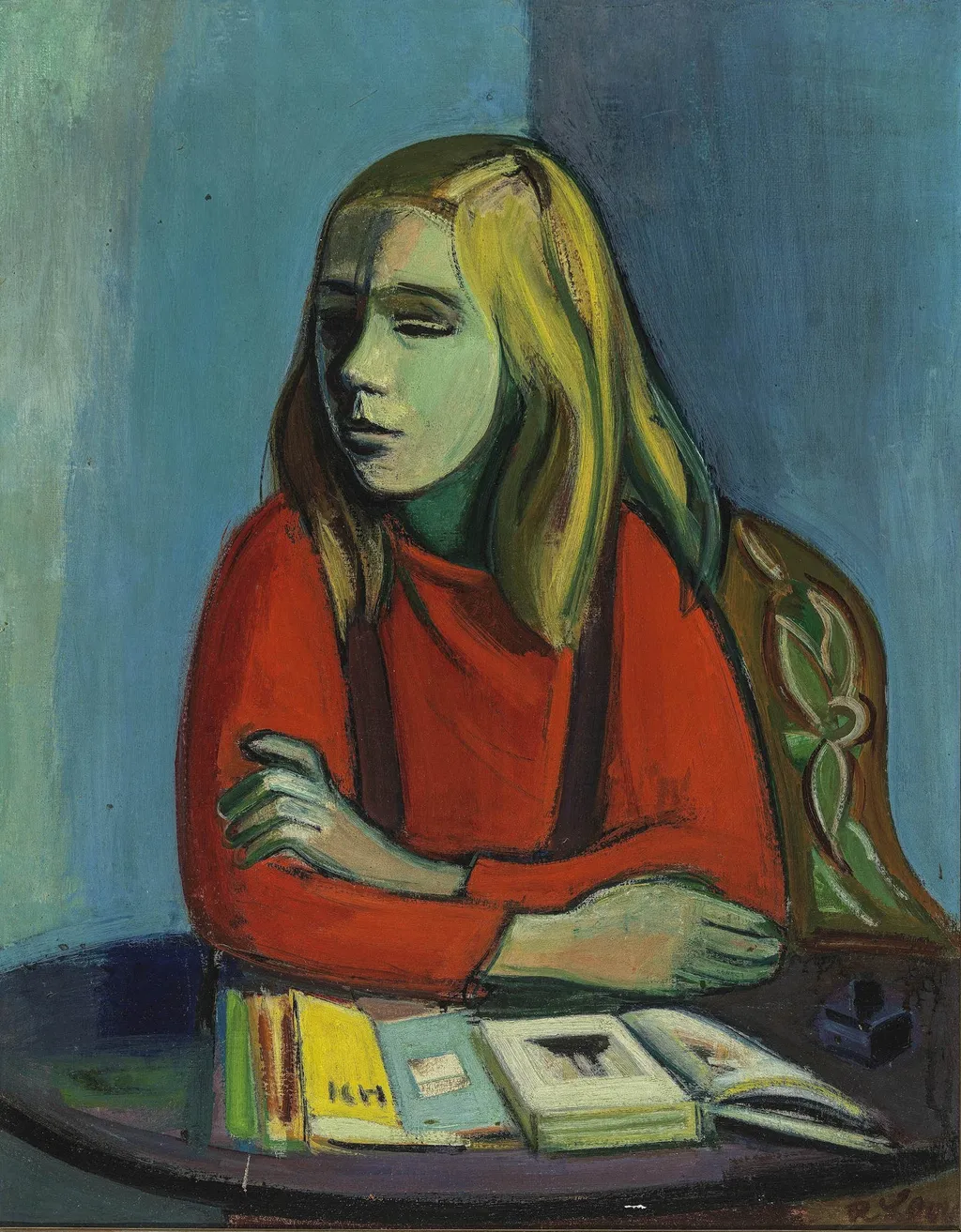
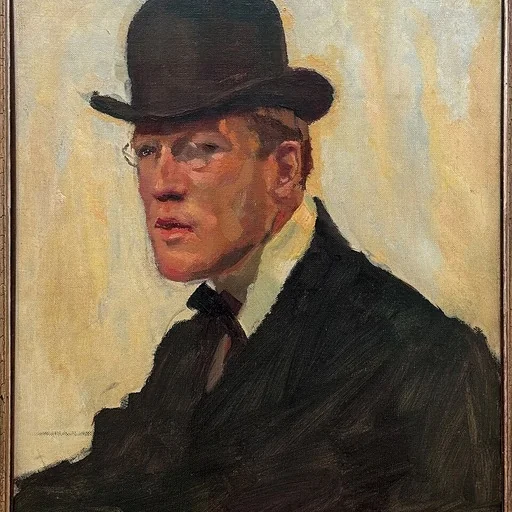
Fiamma is an oil painting by the Abstract Expressionist artist Rudolf Levy. It dates from 1942 and is held in the collection of the Uffizi Gallery.
About this work
Overview
The work is part of the Uffizi Gallery’s collection and reflects Levy’s late stylistic direction, moving toward abstraction while retaining figurative elements.
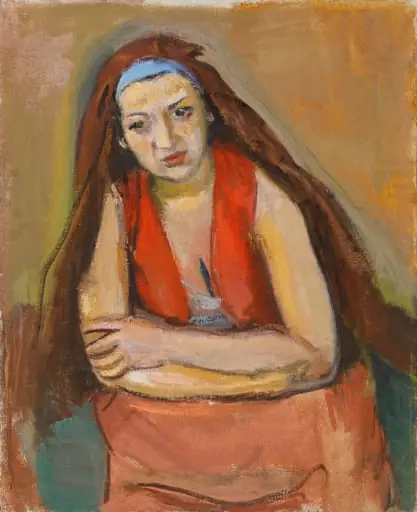
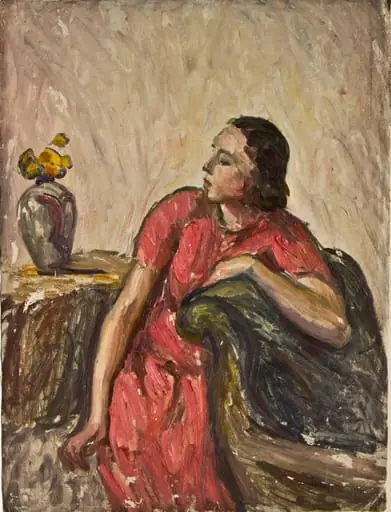
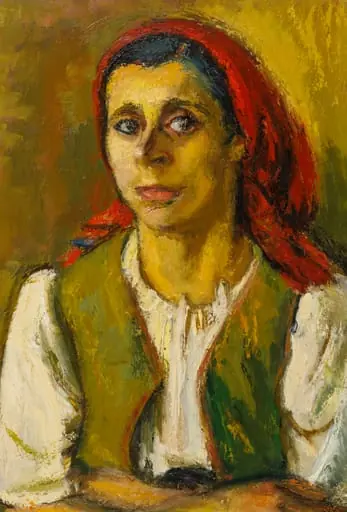
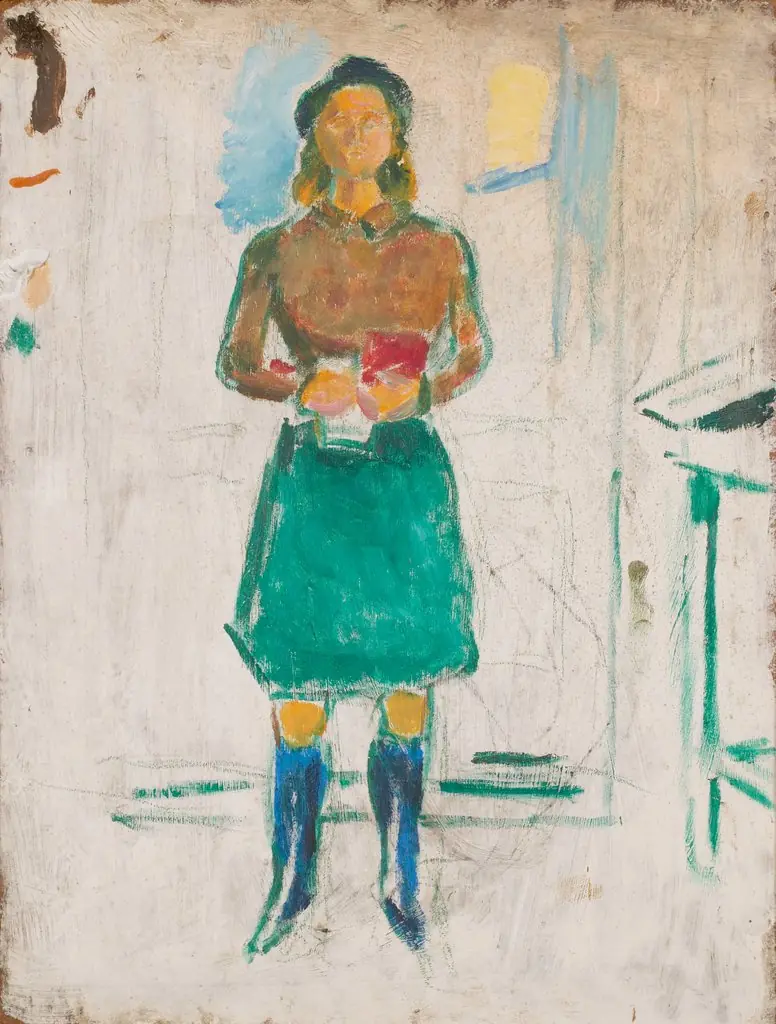
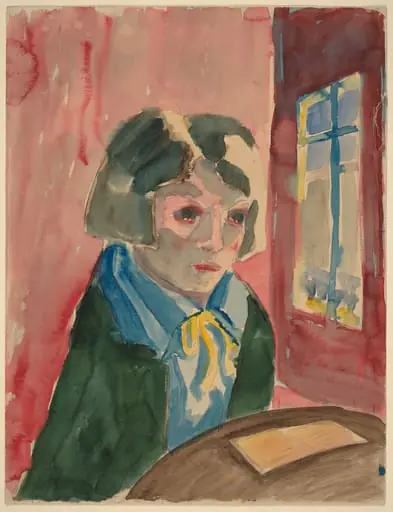
Fiamma is an oil painting completed in 1942 by Rudolf Levy, a German-born artist of Jewish heritage. It depicts a solitary woman in a domestic setting, rendered with simplified forms and strong color contrasts. The work is part of the Uffizi Gallery’s collection and reflects Levy’s late stylistic direction, moving toward abstraction while retaining figurative elements. His career was cut short by the Holocaust; he died in 1944, likely in Auschwitz.
Subject & Meaning
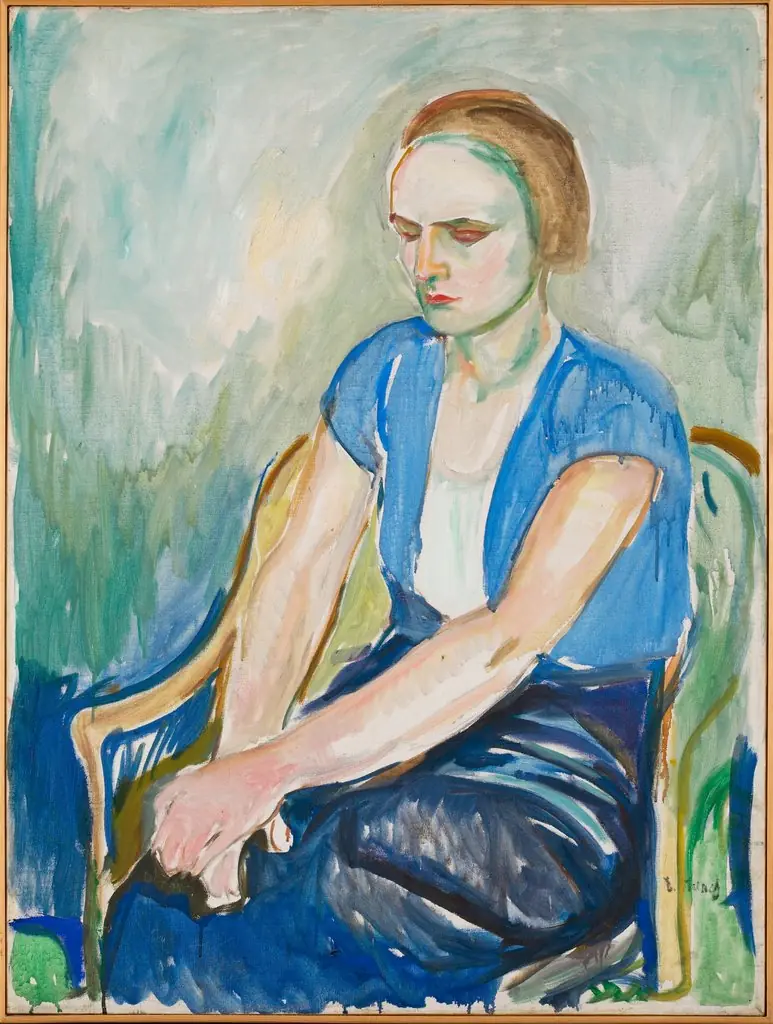
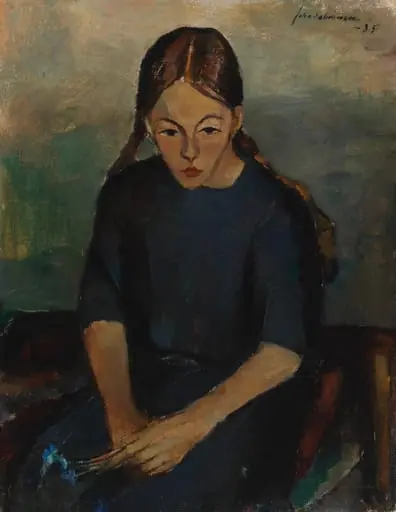
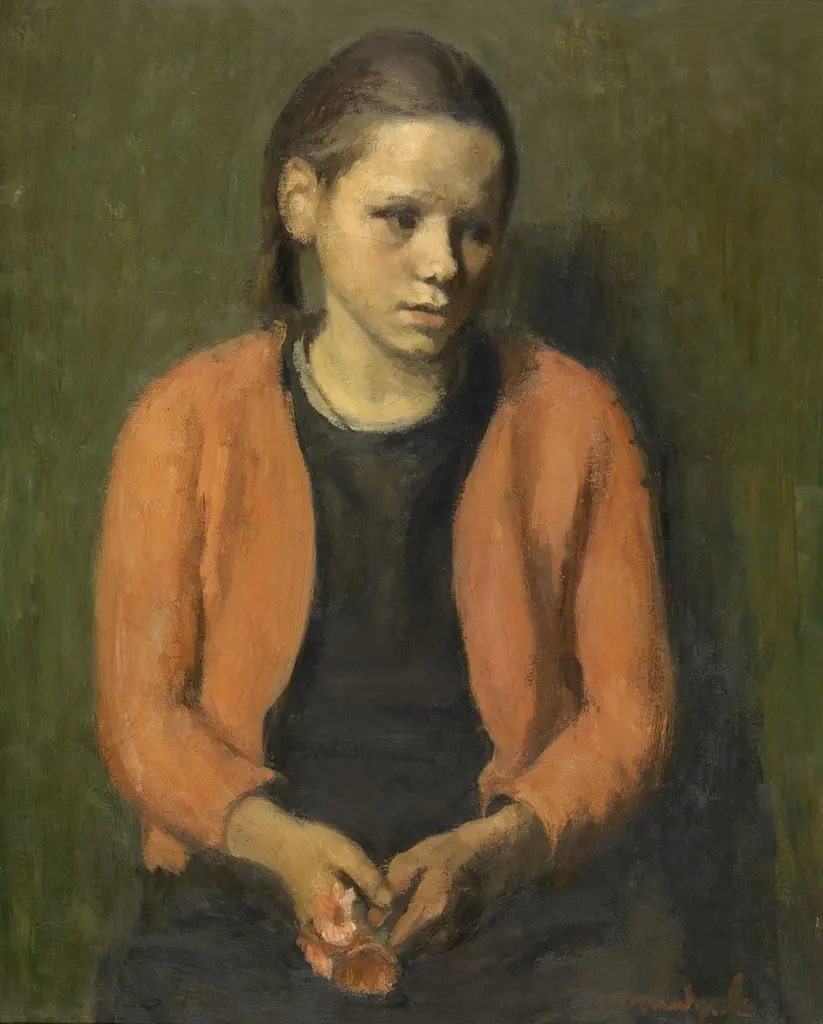
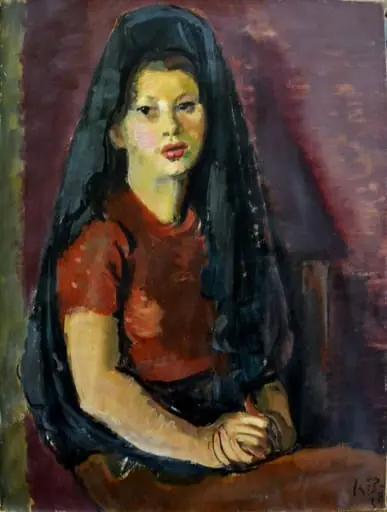
The subject is a woman seated at a table, her arms crossed and gaze lowered toward a pile of books. Her stillness and the cluttered, uneven arrangement of the volumes suggest introspection or exhaustion. The absence of narrative detail invites interpretation: the books may symbolize knowledge, memory, or the weight of intellectual life under duress. Her red shirt and the blue wall create a quiet tension, emphasizing isolation within a confined space.
Technique & Style
Levy employs bold outlines and flat planes of color, reducing the figure and objects to essential shapes. The woman’s face is rendered with minimal detail, echoing the formal economy seen in early 20th-century modernism. The brushwork is deliberate but unadorned, avoiding texture in favor of clarity.
The palette, dominated by red, blue, and earth tones, heightens emotional resonance without sentimentality, aligning with Expressionist tendencies while resisting full abstraction.
History & Provenance
Rudolf Levy painted Fiamma during his final years in Italy, after fleeing Nazi persecution. He was arrested in 1943 and deported to Auschwitz, where he died in 1944. The painting remained in Italy and was later acquired by the Uffizi Gallery.
Its survival is notable, given the destruction of many works by Jewish artists during the war. The gallery’s inclusion of the piece acknowledges both its artistic merit and its historical context.
Context
Created during the height of World War II, Fiamma reflects the psychological strain experienced by artists under fascist regimes. Levy’s style, while distinct, shares affinities with Picasso’s simplified figures and muted emotional tones of the period. Unlike overtly political works, this painting conveys inner turmoil through quiet composition, mirroring the suppressed lives of many persecuted intellectuals in occupied Europe.
Legacy
Fiamma stands as a quiet testament to a life interrupted by genocide. It contributes to the recovery of marginalized modernist voices, particularly those lost during the Holocaust. Though not widely exhibited, its presence in the Uffizi ensures continued visibility.
The painting’s restraint and emotional gravity offer a counterpoint to more dramatic war-era art, emphasizing dignity in solitude.
Own this work as a print
Artist & collection
Artist
Rudolf Levy (15 July 1875, in Stettin – January 1944, in Italy or Auschwitz) was a German expressionist painter of Jewish ancestry.