Artwork
Mary Wood
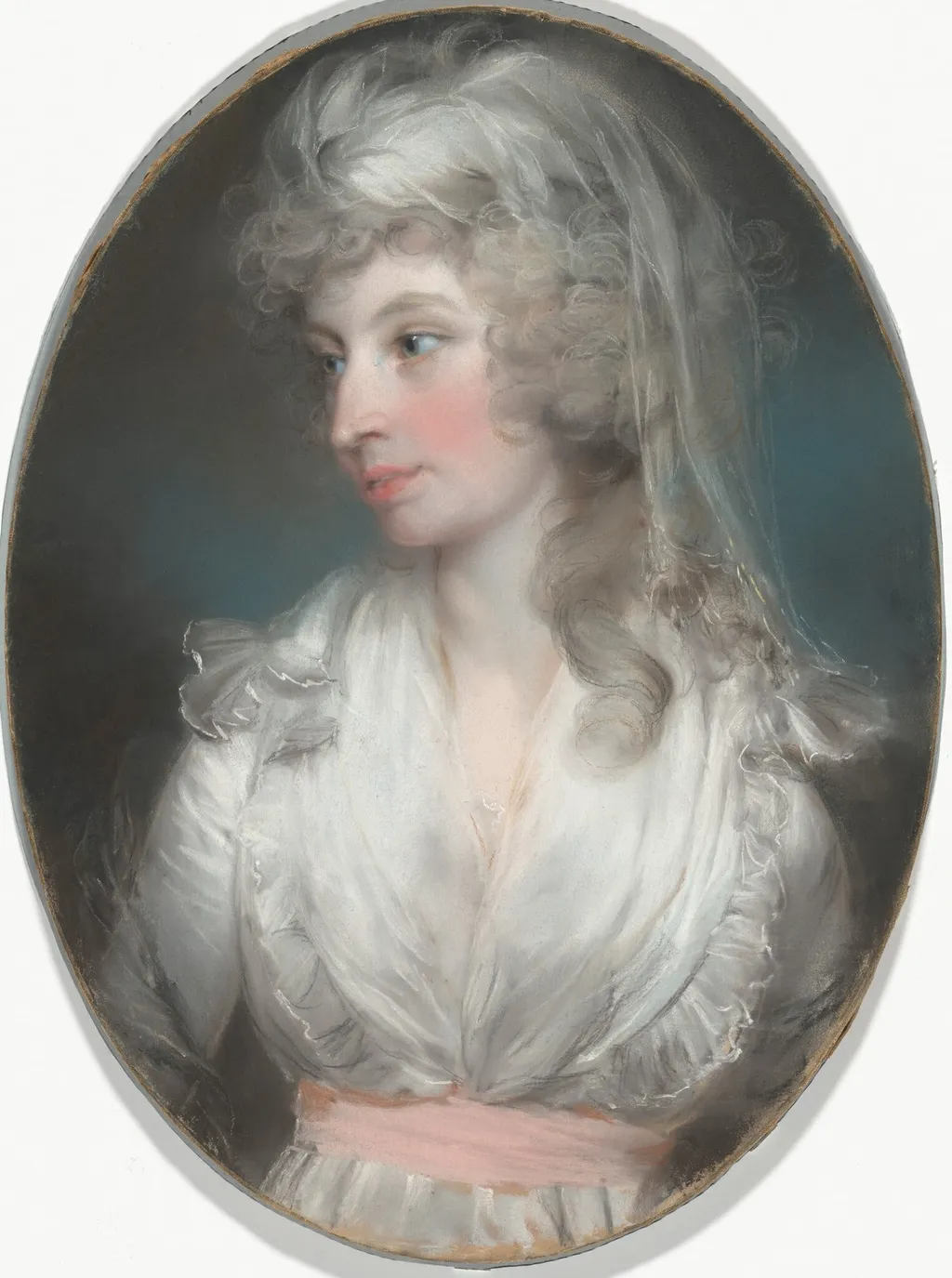
Mary Wood is a pastel drawing by the Romanticist artist John Russell. It dates from 1794 and is held in the collection of the National Gallery of Art.
- Inscription
- Inscribed:center left in graphite: Russell RA. Pinxt / 1794
About this work
Overview
The piece measures within the scale of a typical drawing rather than a large canvas, emphasizing its intimate character.
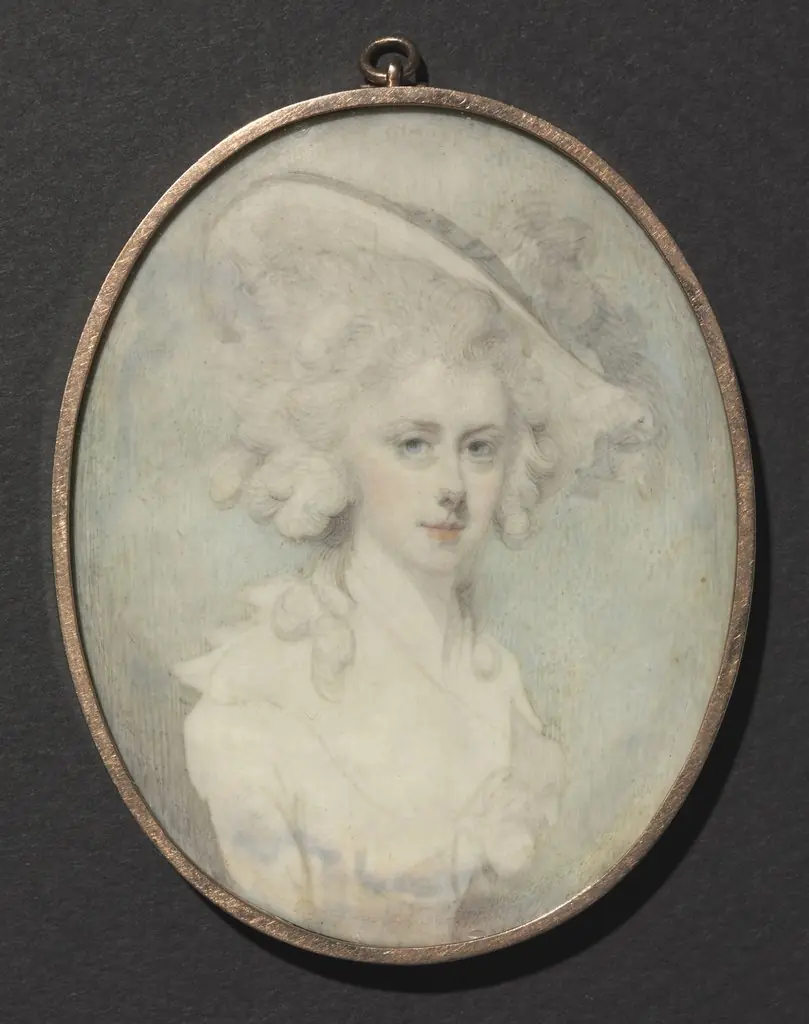
John Russell’s 1794 work titled Mary Wood is a portrait executed in pastel on paper that has been adhered to canvas. The composition presents a solitary female sitter, rendered with a restrained palette and set against an unadorned dark background that draws attention to her features. The piece measures within the scale of a typical drawing rather than a large canvas, emphasizing its intimate character.
Subject & Meaning
The sitter is depicted with loosely curled hair gathered away from her face and dressed in a light, ruffled garment. Her complexion is pale, accented by a subtle pink flush on the cheeks, and her gaze is directed slightly off‑center, suggesting a moment of quiet contemplation. The simplicity of the setting and the modest expression convey a personal, perhaps domestic, portrayal rather than a formal statement.
Technique & Style
Russell employed soft pastel sticks, applying the medium in a manner that allows colors to blend and smudge, creating a velvety surface. This approach was favored in the late eighteenth century for its capacity to render delicate flesh tones and atmospheric effects quickly. The artist’s handling of the pastel yields a slightly blurred quality, enhancing the dream‑like ambience of the portrait.
History & Provenance
Created in 1794, the drawing reflects Russell’s practice of producing portrait studies for patrons and acquaintances. The work’s support, paper mounted on canvas, indicates a common method of reinforcing pastel works for durability. While specific ownership records are limited, the piece has been catalogued among Russell’s surviving drawings, illustrating his engagement with pastel as a primary medium during this period.
Own this work as a print
Artist & collection

 Mrs. William Man Godschall (Sarah Godschall, 1730–1795)
 Mrs. Robert Shurlock Sr. (Ann Manwaring)
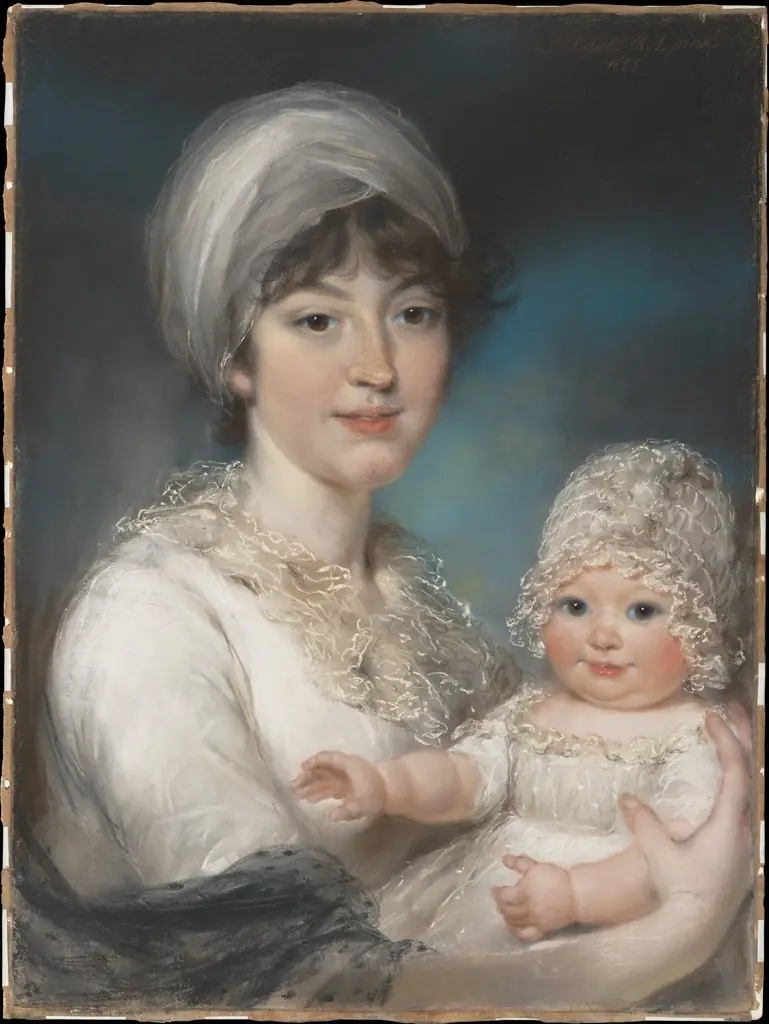 Mrs. Robert Shurlock (Henrietta Ann Jane Russell, 1775–1849) and Her Daughter Ann
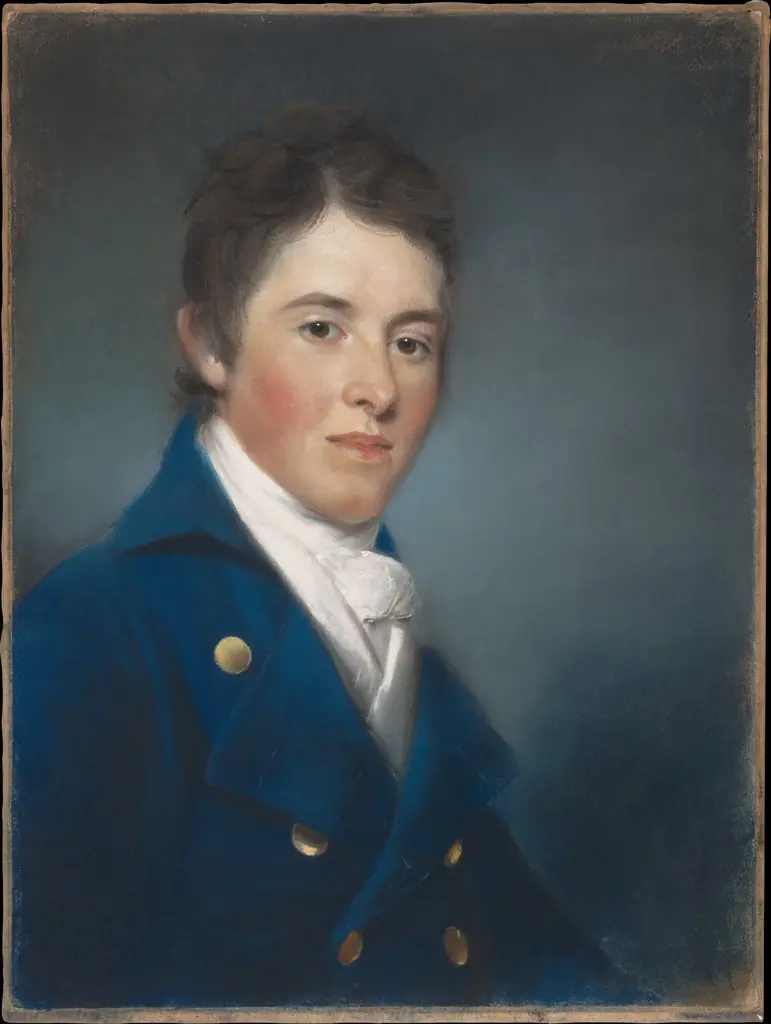 Robert Shurlock (1772–1847)
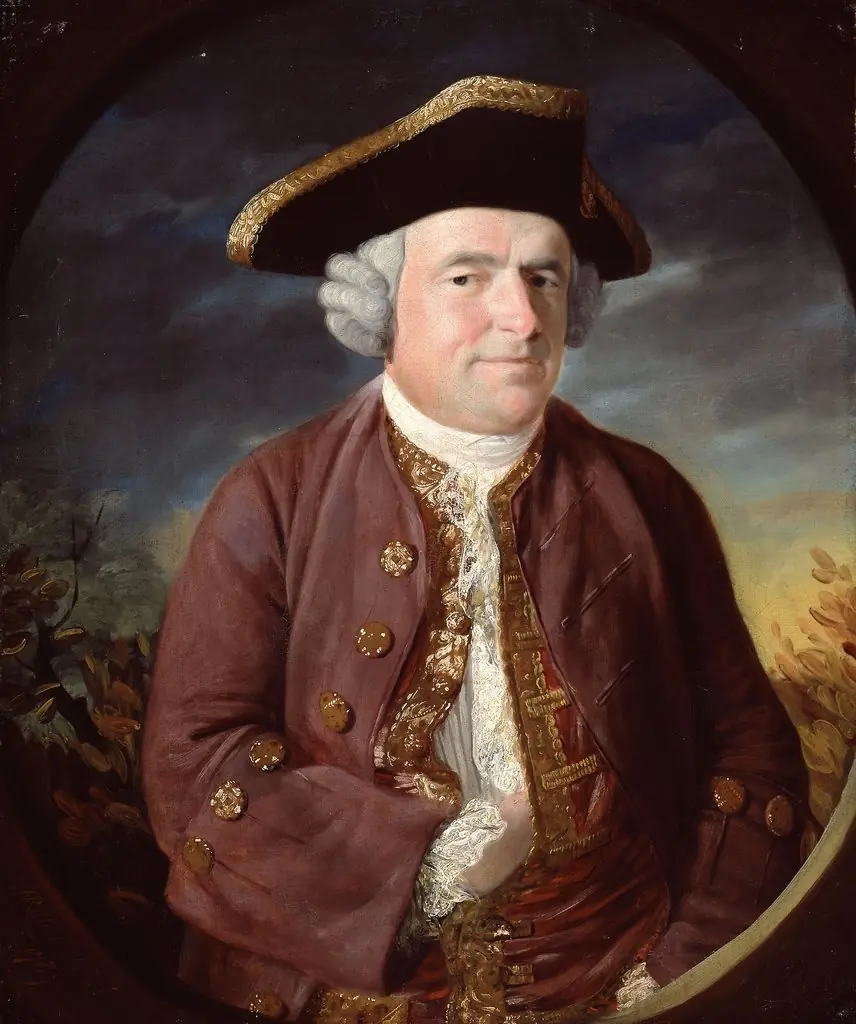 Portrait of a Man in a Tricorn Hat
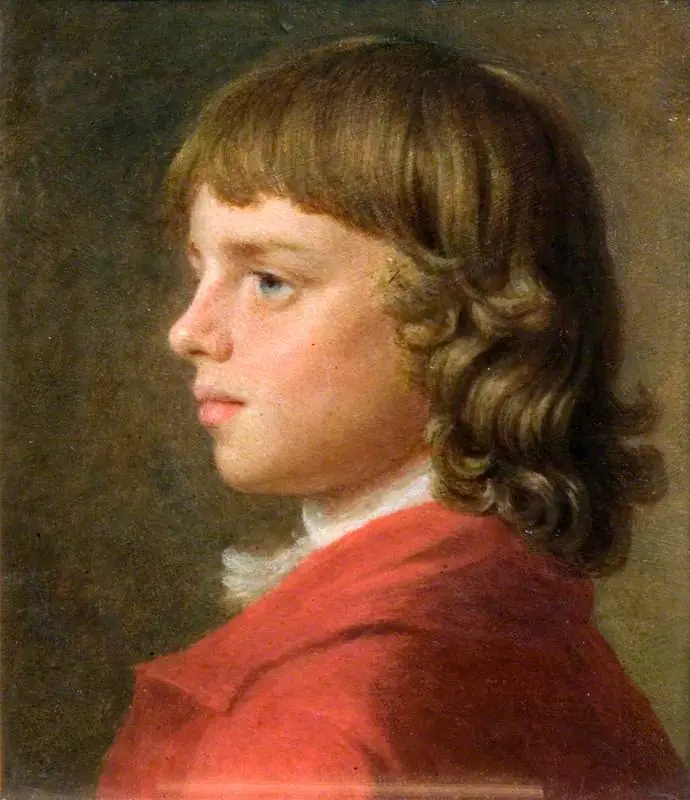 Portrait of a Boy in a Red Coat
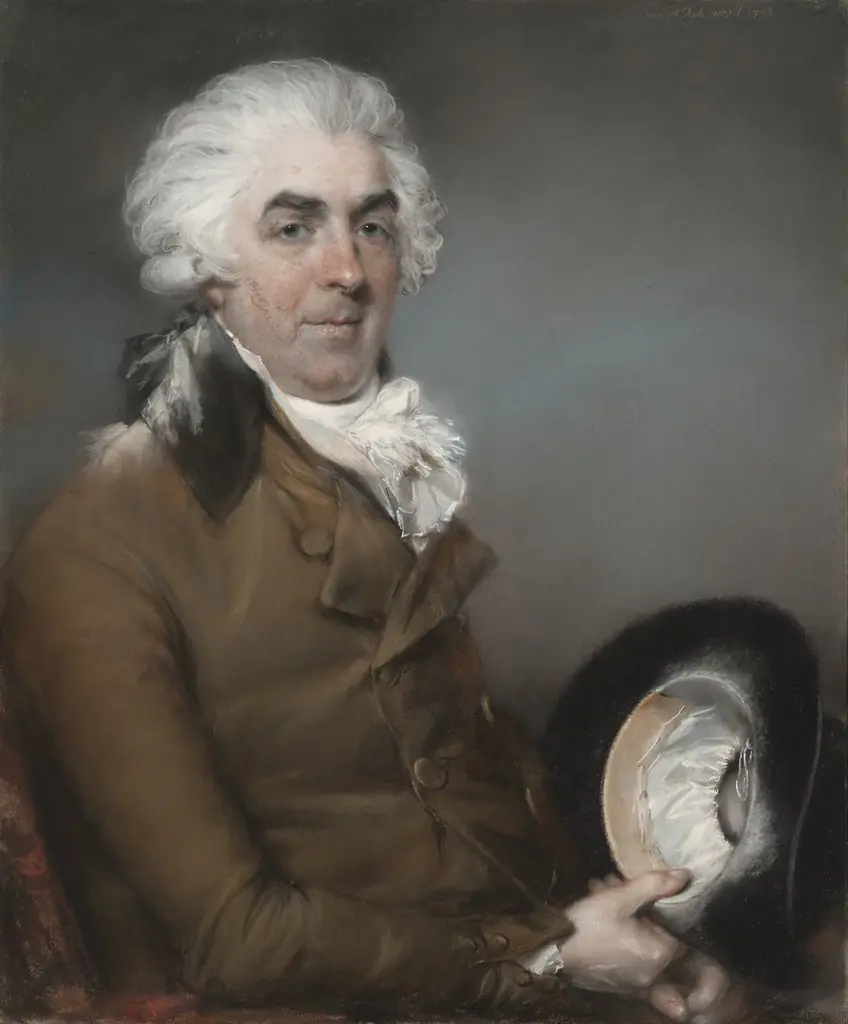 Portrait of George de Ligne Gregory (1740 - 1822)
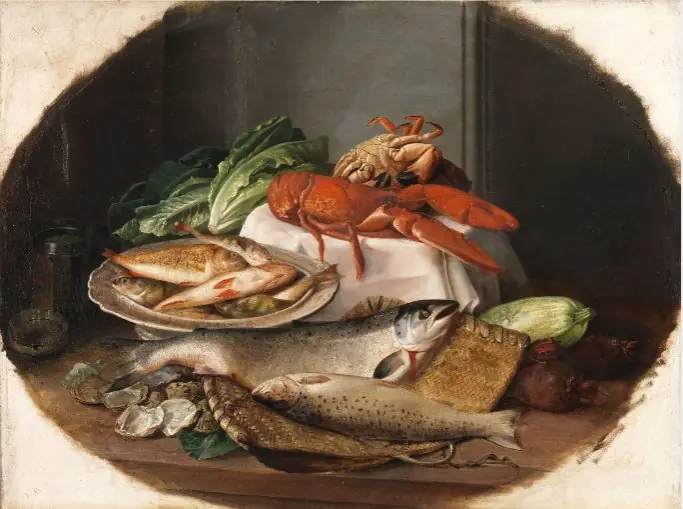 A Still Life with Fish
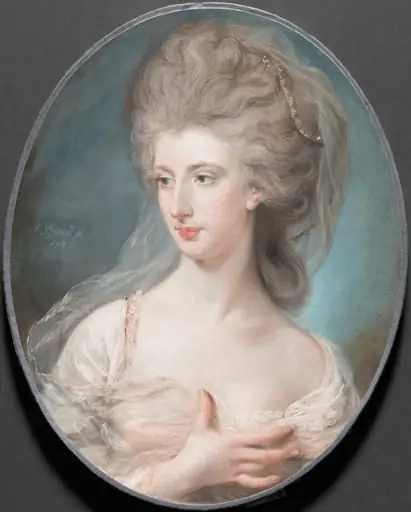 Miss Raymond
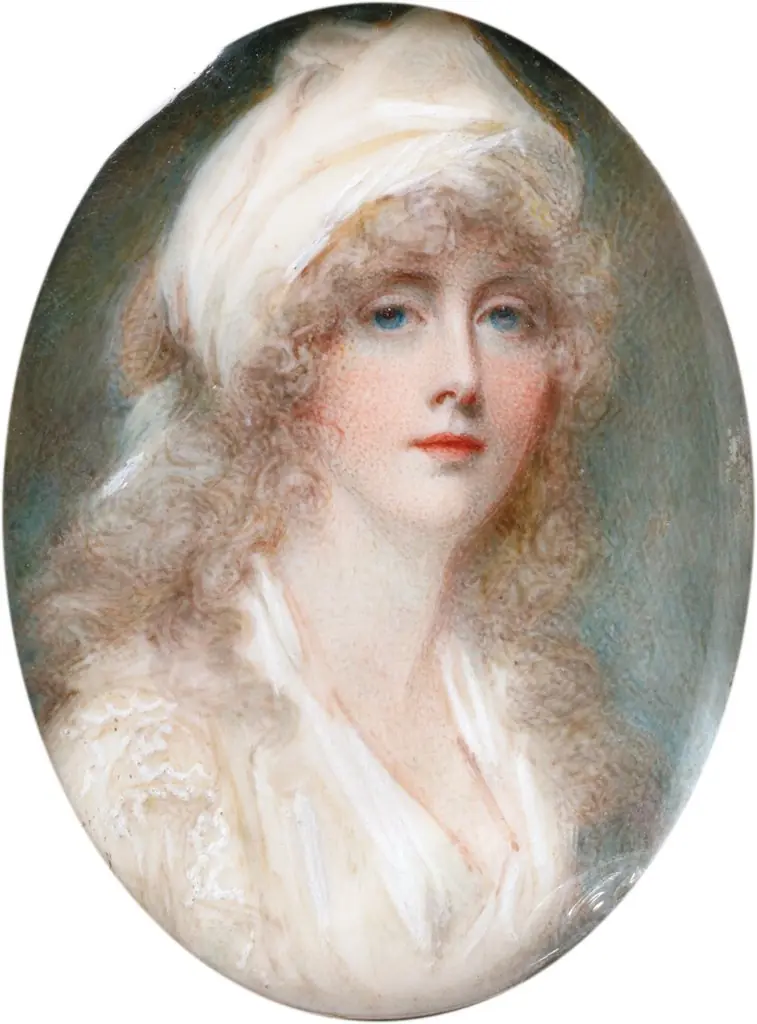 Self-portrait
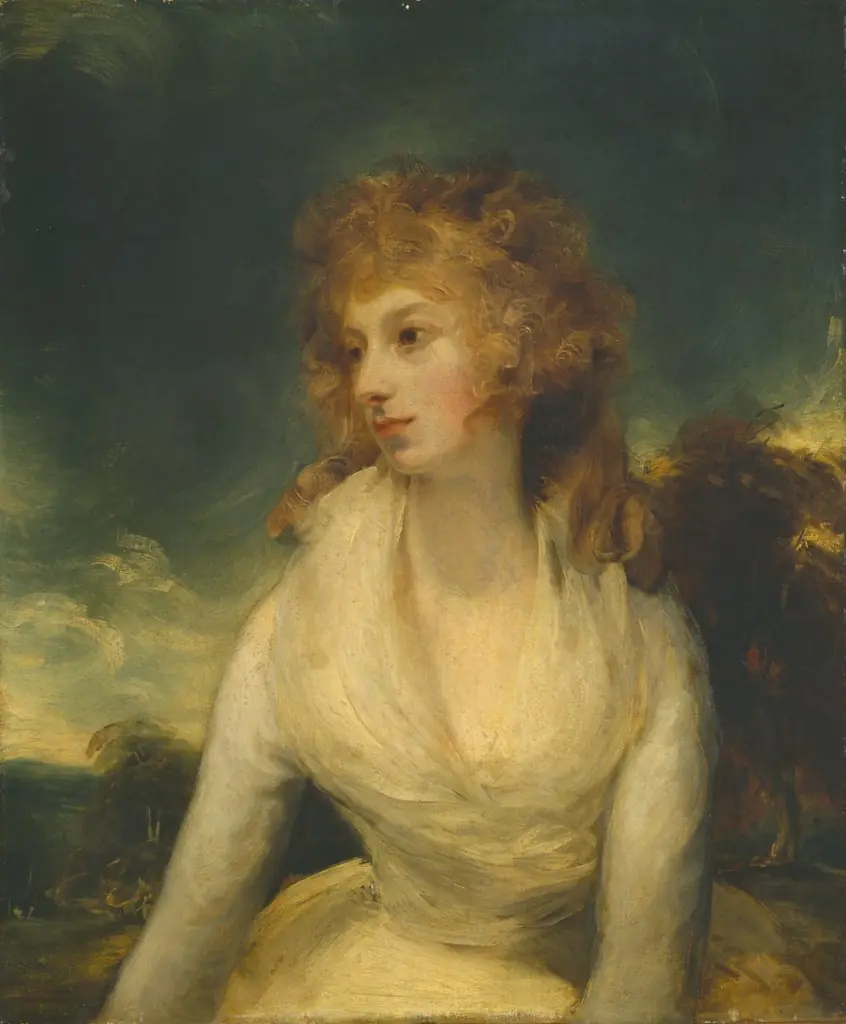 Mrs. Ayscoghe Boucherett
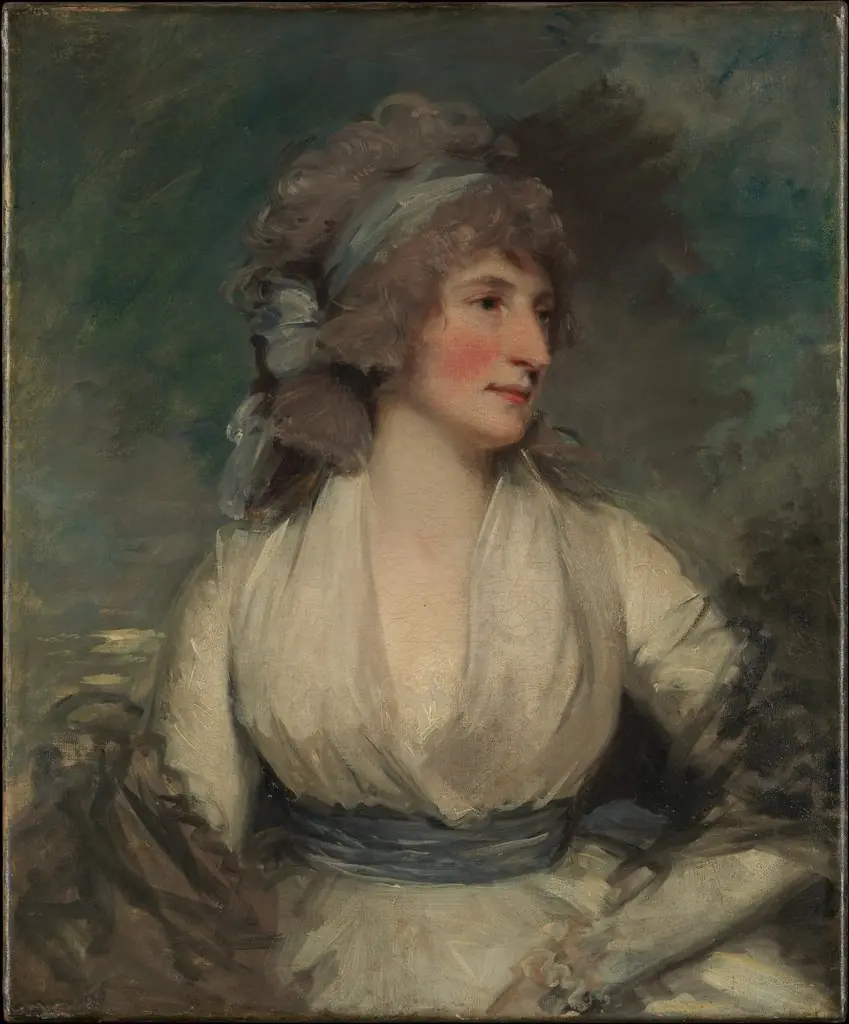 Portrait of a Woman; (reverse, now covered by relining canvas) Study of a Child's Head
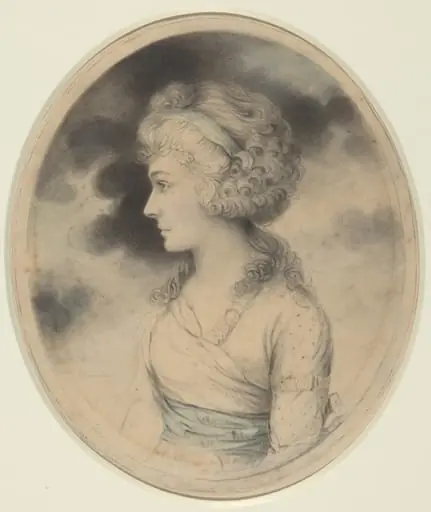 Portrait of a Woman with a Blue Sash
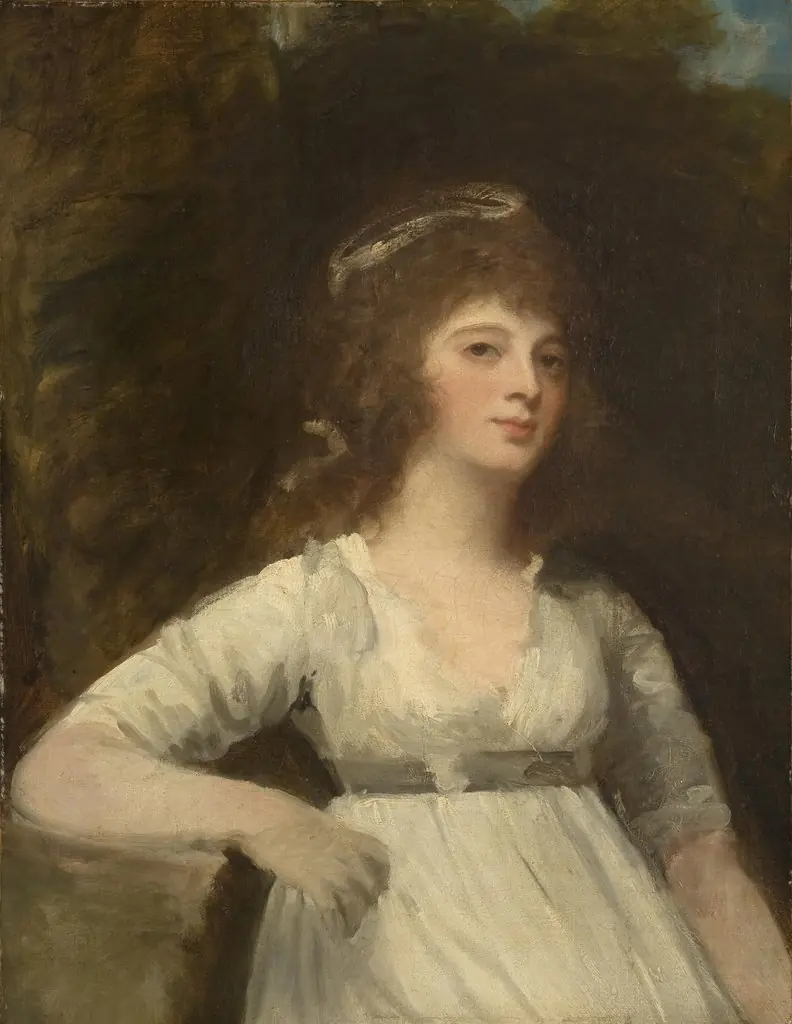 Portrait of Mrs. Finch
 Mrs. John Puget (Catherine Hawkins)
 Portrait of Anna Walmesley
 Mrs. Thomas Horne
 Miss Frances Beresford
 Portrait of a Woman with a Hat
- Mary Barry