Artwork
Buffon
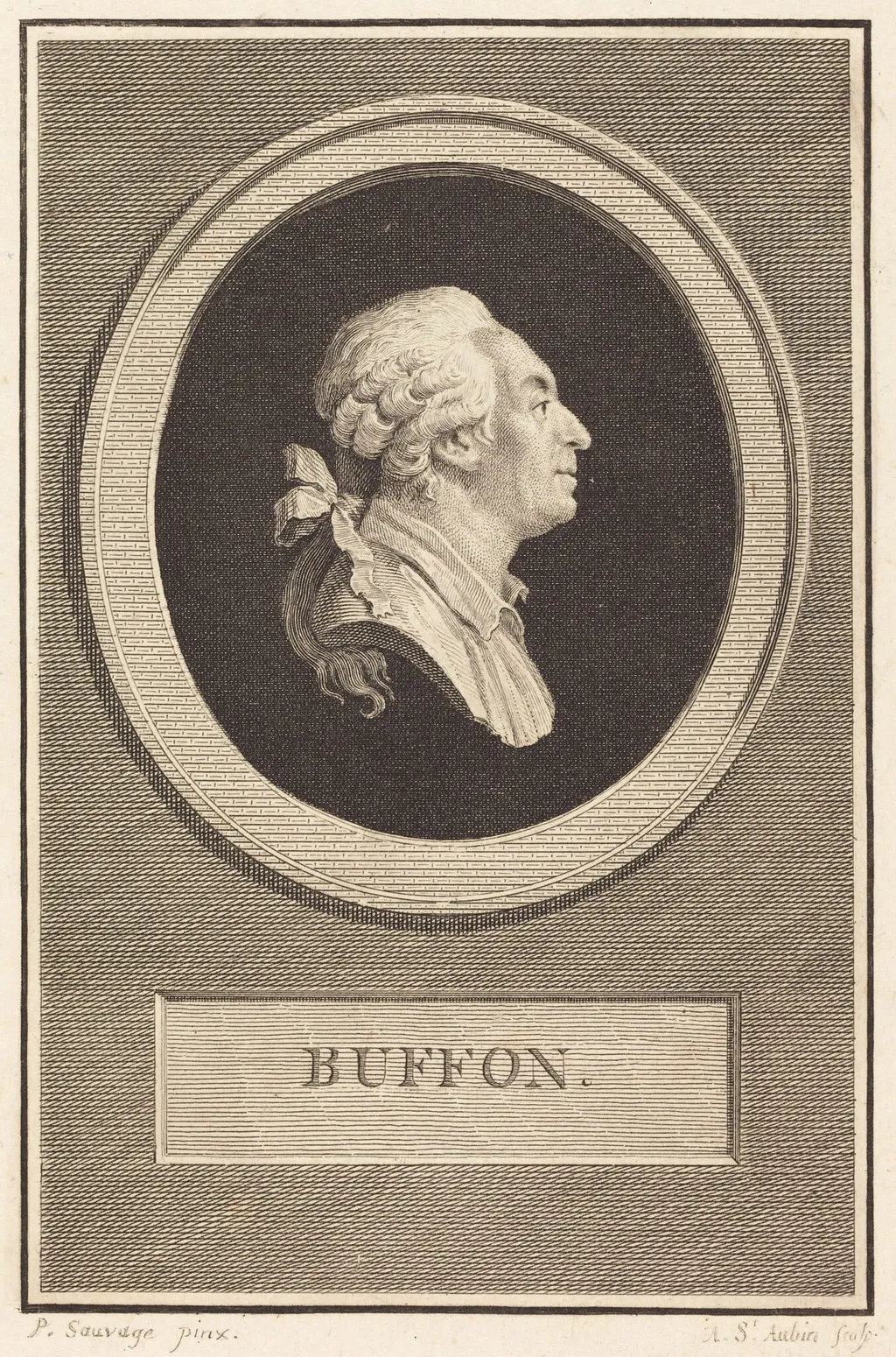
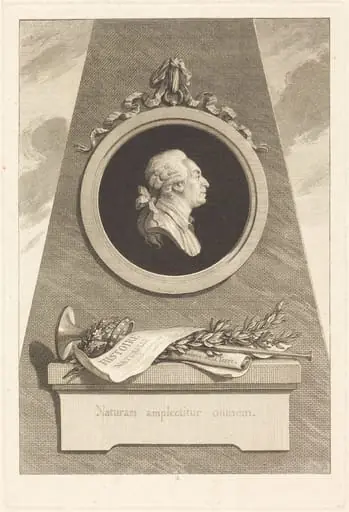
Buffon is an ink print by the Romanticist artist Augustin de Saint-Aubin. It dates from 1798 and is held in the collection of the National Gallery of Art.
- Inscription
- Inscribed:lower center in plate: BUFFON.; lower left in plate: P. Sauvage pinx.; lower right in plate: A.St. Aubin Sculp.
About this work
Overview
Buffon is an engraving over etching on laid paper, created by Augustin de Saint-Aubin in 1798. The work belongs to the late 18th-century French printmaking tradition, associated with a family of renowned designers and engravers.
Subject & Meaning
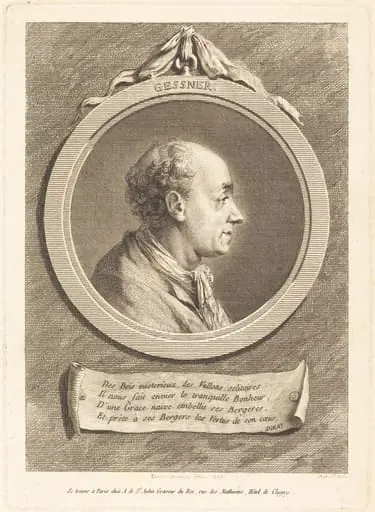
The portrait depicts a man in profile with curly hair, dressed in a dark jacket, white collar, and a neck bow. Identified by the nameplate 'BUFFON' in capital letters, the subject is likely Georges-Louis Leclerc, Comte de Buffon, a prominent French naturalist.
Technique & Style
Executed in a combination of engraving over etching, the portrait showcases Saint-Aubin's technical skill. The dark background, thin border, and strong contrast contribute to a sense of intimacy and formality, aligning with early Romanticism's emphasis on individuality and emotional depth.
History & Provenance
Created in 1798 by Augustin de Saint-Aubin, the engraving's provenance details are not specified here, though it reflects the artist's contribution to late 18th-century French printmaking.
Context
Buffon was created during the late 18th century, a time of transitioning artistic movements. The piece reflects the burgeoning influence of Romanticism, contrasting with the preceding Neoclassicism, and honors the subject's scientific contributions.
Legacy
As a portrait of Buffon, the engraving preserves the likeness of a significant historical figure. Its style and technique exemplify the evolution of French printmaking at the turn of the 19th century, though its broader impact on art history is not extensively detailed in available information.
Own this work as a print
Artist & collection
Artist
Augustin de Saint-Aubin sometimes styled Auguste de Saint-Aubin (3 January 1736 – 9 November 1807), belongs to an important dynasty of French designers and engravers.

 Laban Searching for His Stolen Gods
 Parade (A Theatrical Procession in Paris)
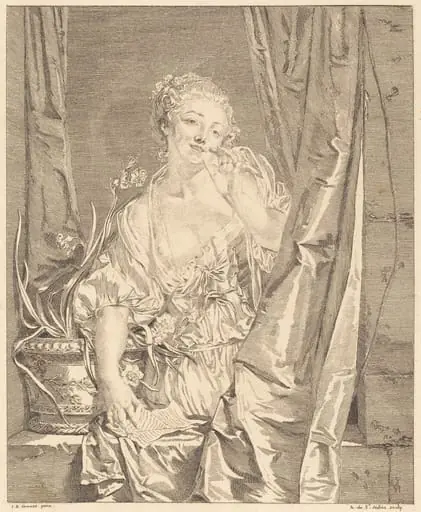 Le baiser envoyé
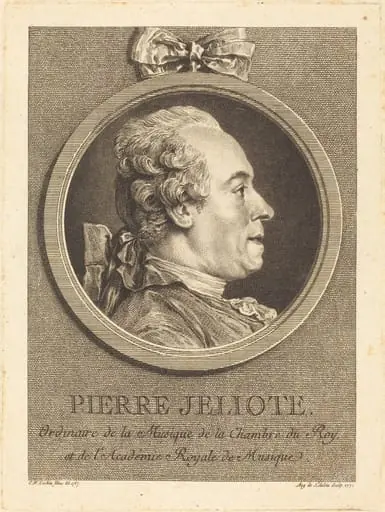 Pierre Jeliote
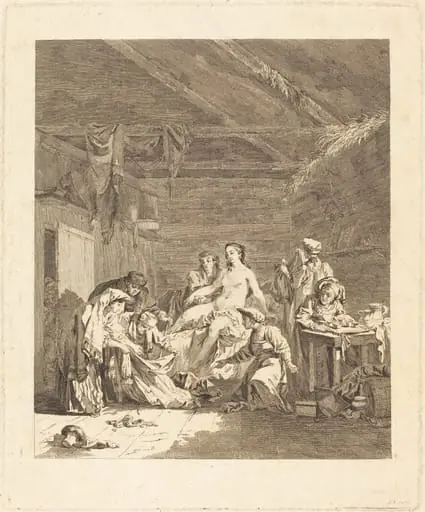 Le lever de la mariée russe (Custom of the Russians after the Marriage Ceremony and before the Wedding Feast)
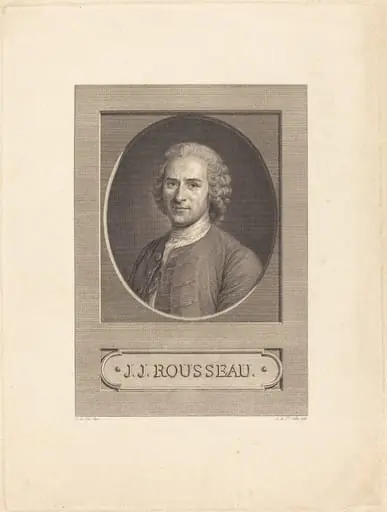 J.J. Rousseau
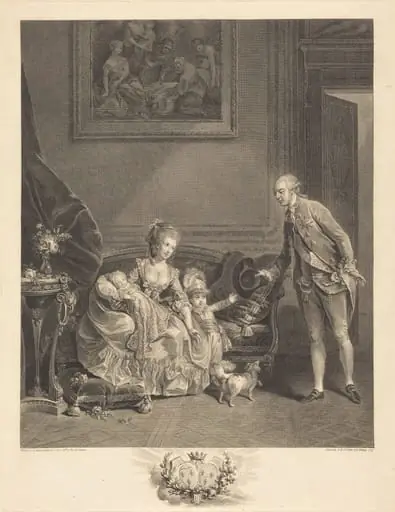 Le duc de Chartres, son epouse et ses enfants
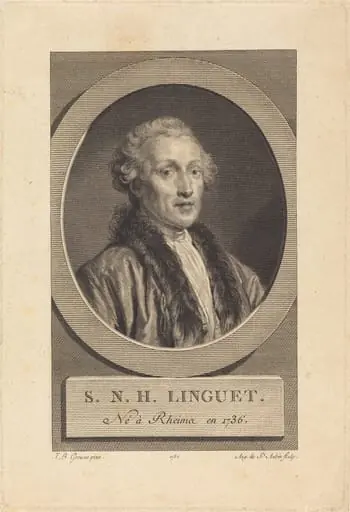 Simon-Nicolas-Henri Linguet