Artwork
Louis XVI, Marie-Antoinette, and the Dauphin
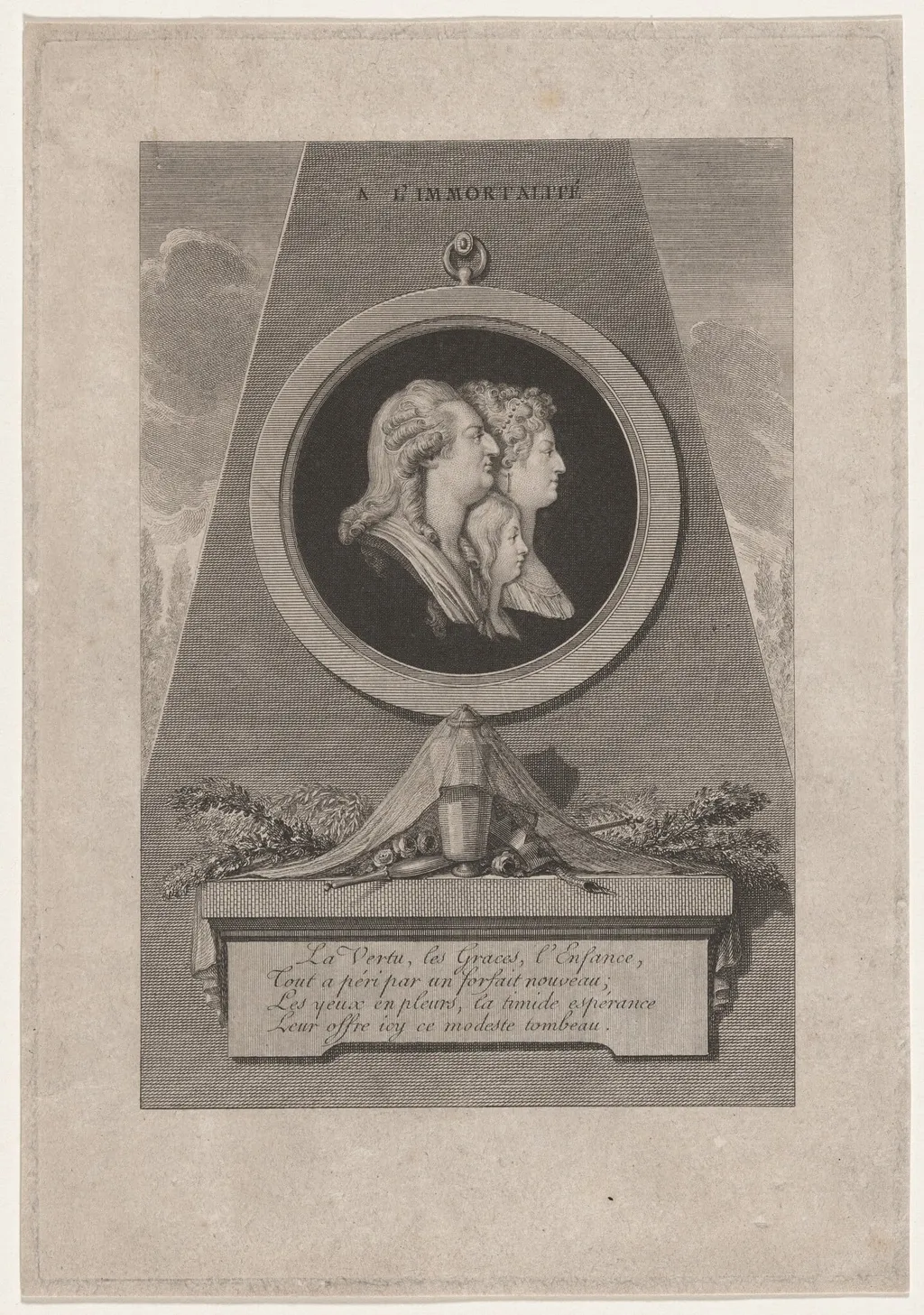
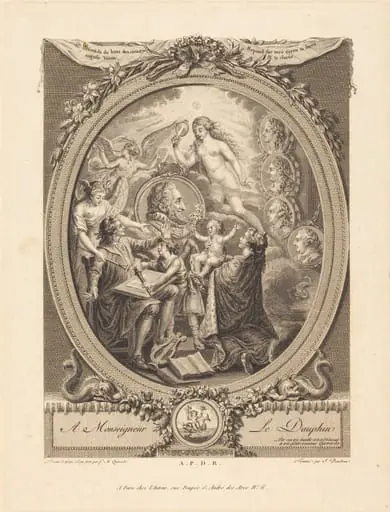
Louis XVI, Marie-Antoinette, and the Dauphin is an ink print by the Romanticist artist French 18th Century. It dates from 1800 and is held in the collection of the National Gallery of Art. The print, titled Louis XVI, Marie‑Antoinette, and the Dauphin, is an etched and engraved image on laid paper.
- Inscription
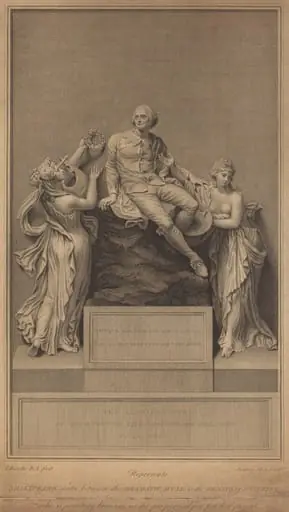
- Inscribed:upper center in image: A L'IMMORTALITÉ; lower center in plate: La Vertu, les Graces, l'Enfance / Tout a péri par un forfait nouveau; Les yeus en pleurs, la timide espérance / Leur offer icy ce modeste tombeau
- Markings
- Marked:none
About this work
Overview
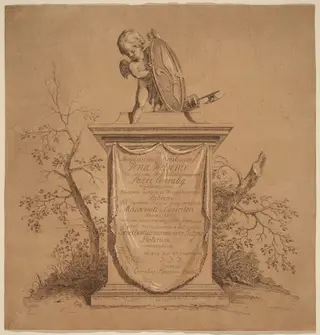
The print, titled Louis XVI, Marie‑Antoinette, and the Dauphin, is an etched and engraved image on laid paper. It presents three figures, a man, a woman, and a child, rendered in profile within a circular frame that rests on a pedestal bearing an inscription and flanked by modest floral motifs. The dark ground surrounding the figures concentrates the viewer’s attention on the intimate grouping.
Subject & Meaning
The work portrays the French royal family: King Louis XVI, Queen Marie‑Antoinette, and their son, the Dauphin. Their faces turn toward one another, the child looking up at the king, suggesting familial affection and the continuity of the dynasty. The composition’s gentle interaction conveys a private, domestic moment rather than a formal state portrait.
Technique & Style
Executed through a combination of etching and engraving, the image balances delicate line work with deeper, incised strokes that define the figures’ silhouettes and the surrounding ornamental frame. The use of laid paper provides a subtle texture, while the stark contrast between the dark background and the finely rendered profiles enhances the sense of depth and focus.
Context
Produced during the late eighteenth century, the print reflects the period’s interest in portraying royalty in more personal, approachable terms. The inclusion of a decorative pedestal and floral elements aligns with contemporary decorative arts, integrating portraiture with ornamental design typical of courtly publications of the era.
Legacy
As a printed representation of the royal family, the image circulated beyond the confines of the palace, contributing to the visual culture surrounding Louis XVI and Marie‑Antoinette. Its intimate portrayal offers historians a glimpse into how the monarchy wished to be seen by the public in the years preceding the French Revolution.
Artist & collection

Artist
An anonymous French hand of the late 18th century made portrait paintings and etched prints.