Artwork
Jean-Victor Moreau
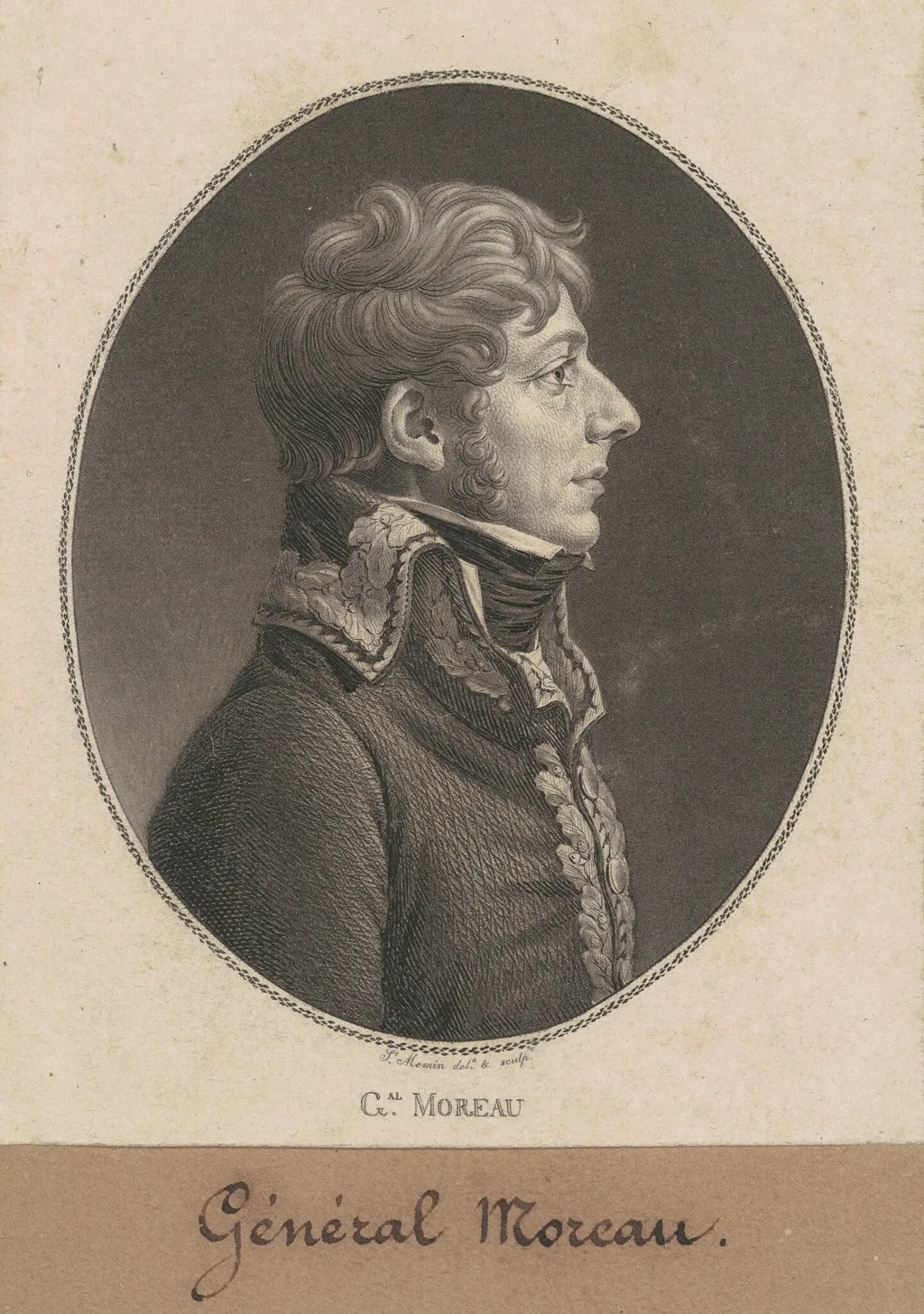
Jean-Victor Moreau is an ink print by the Romanticist artist Charles B. J. Févret de Saint-Mémin. It dates from 1808 and is held in the collection of the National Gallery of Art.
- Inscription
- Inscribed:lower center in plate: St. Memin delt. & sculpt. / Gal. Moreau.; lower center mount in black ink by unknown hand: Général Moreau.
About this work
Overview
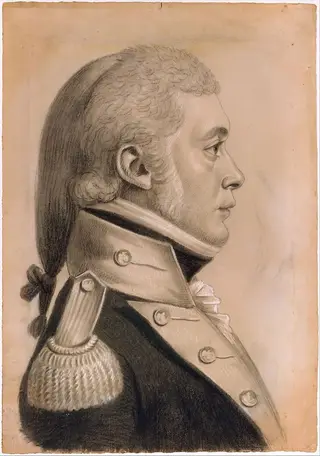
This small print depicts French general Jean-Victor Moreau in profile, rendered in mezzotint and engraving on wove paper. Mounted on a brown paper support, the work measures approximately 7.6 by 6.2 centimeters. Created around 1808 by Charles B. J. Févret de Saint-Mémin, it belongs to the Corcoran Collection and exemplifies the precision of early 19th-century portrait prints in America.
Subject & Meaning
His dark coat and upright posture convey military bearing, while the soft illumination on his face suggests introspection rather than grandeur.
Moreau, a prominent figure in the French Revolutionary Wars, is portrayed with restrained dignity. His dark coat and upright posture convey military bearing, while the soft illumination on his face suggests introspection rather than grandeur. The absence of symbolic elements or background details focuses attention on his character, reflecting a preference for individual presence over political narrative in portraiture of the period.
Technique & Style
Saint-Mémin employed mezzotint to achieve subtle tonal gradations, particularly in the rendering of skin and fabric. Fine engraving lines define the hat’s edge and collar, contrasting with the velvety darkness of the coat. The lighting is carefully modulated, creating a sculptural effect as if caught in a theatrical spotlight. The technique’s capacity for smooth transitions made it ideal for lifelike portraiture in an era before photography.
History & Provenance
The print was produced in the United States during Saint-Mémin’s time there, when he made numerous portrait prints of American and French military figures. It entered the Corcoran Collection in the 19th century and remained part of its holdings until the collection’s dissolution in 2014, after which it was transferred to the National Gallery of Art.
Context
Mezzotint was widely used in the early 1800s for reproducing portraits due to its ability to capture fine detail and tonal richness. Saint-Mémin, a French émigré, became a leading practitioner in America, adapting European techniques to meet demand for likenesses among the political elite. This work reflects a transatlantic exchange of artistic methods and the cultural value placed on visual records of public figures.
Legacy
Though not widely exhibited today, the print remains a representative example of Saint-Mémin’s contribution to American printmaking. Its technical refinement and restrained aesthetic influenced later portrait engravers and illustrate how mezzotint bridged the gap between painting and photographic reproduction in the pre-industrial age.
Own this work as a print
Artist & collection
Artist
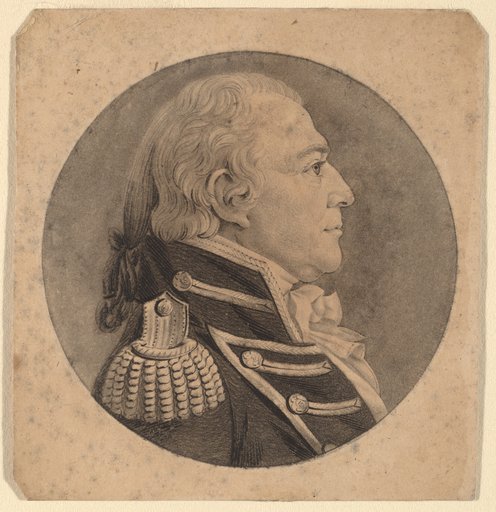
Charles B. J. Févret de Saint-Mémin
Charles Balthazar Julien Févret de Saint-Mémin (French pronunciation: ; 1770–1852) was a French portrait painter and museum director.