Artwork
Tunis Craven
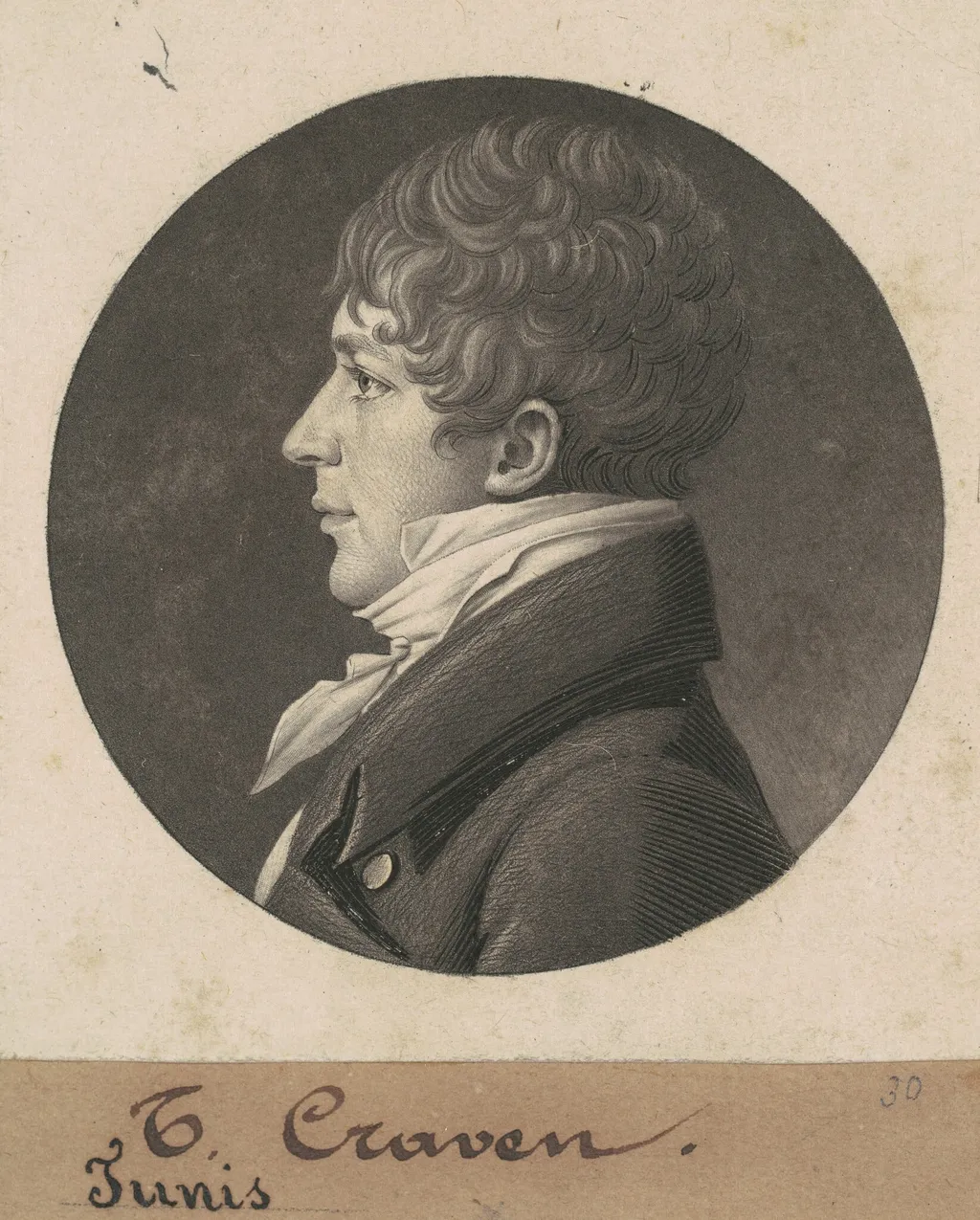
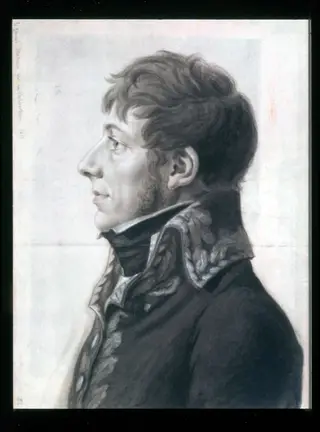
Tunis Craven is an ink print by the Romanticist artist Charles B. J. Févret de Saint-Mémin. It dates from 1805 and is held in the collection of the National Gallery of Art. Charles B.
- Inscription
- Inscribed:lower center mount in black ink by unknown hand: T. Craven. / Tunis
About this work
Overview
Charles B. J. Févret de Saint‑Mémin’s portrait of Tunis Craven, executed in 1805, is a small-scale mezzotint combined with engraving. Measuring just over five and a half centimeters square, the image is mounted on a brown wove paper backing, a format typical for intimate portrait prints of the early nineteenth century. The work belongs to the Corcoran Collection.
Subject & Meaning
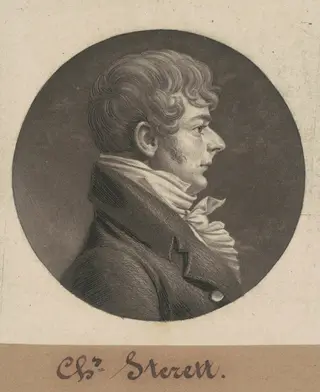
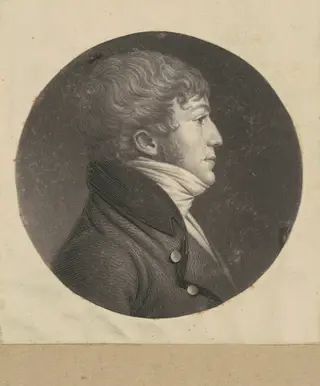
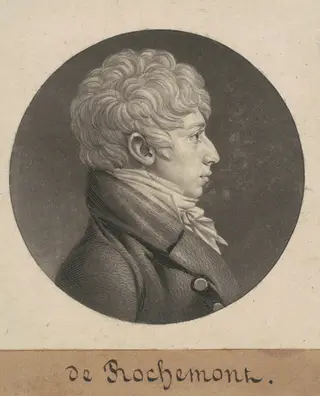
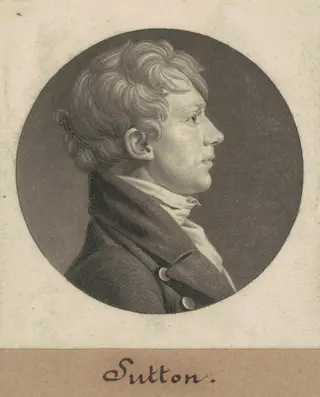
The print presents Tunis Craven in a three‑quarter pose, his attire highlighted by a stark white collar that contrasts with the surrounding deep shadows. The careful rendering of facial features and hair, achieved through delicate line work, gives the sitter a lifelike presence, suggesting both the personal stature of Craven and the period’s interest in individualized portraiture.
Technique & Style
Saint‑Mémin employed a hybrid process, first creating a mezzotint ground to achieve rich tonal gradations, then adding engraved lines for precise detail.
Saint‑Mémin employed a hybrid process, first creating a mezzotint ground to achieve rich tonal gradations, then adding engraved lines for precise detail. The fine cross‑hatching defines skin tones and hair texture, while the dark background enhances the three‑dimensional effect. Printed on soft wove paper, the surface absorbs the ink uniformly, contributing to the subtle tonal range characteristic of his American portrait series.
History & Provenance
After completing his training in Paris, Saint‑Mémin emigrated to the United States, where he produced more than eight hundred portrait prints. This particular image entered the Corcoran Collection, reflecting the artist’s prolific output and the demand for European‑influenced portraiture among American patrons in the early 1800s.
Context
The portrait belongs to a broader body of work that introduced European mezzotint and engraving techniques to American printmaking workshops. Saint‑Mémin’s practice bridged transatlantic artistic traditions, influencing local artisans and establishing a visual record of notable figures like Craven during a formative period in United States cultural history.
Own this work as a print
Artist & collection
Artist
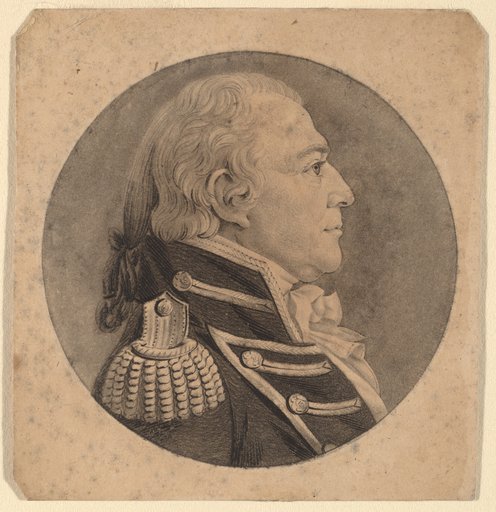
Charles B. J. Févret de Saint-Mémin
Charles Balthazar Julien Févret de Saint-Mémin (French pronunciation: ; 1770–1852) was a French portrait painter and museum director.